
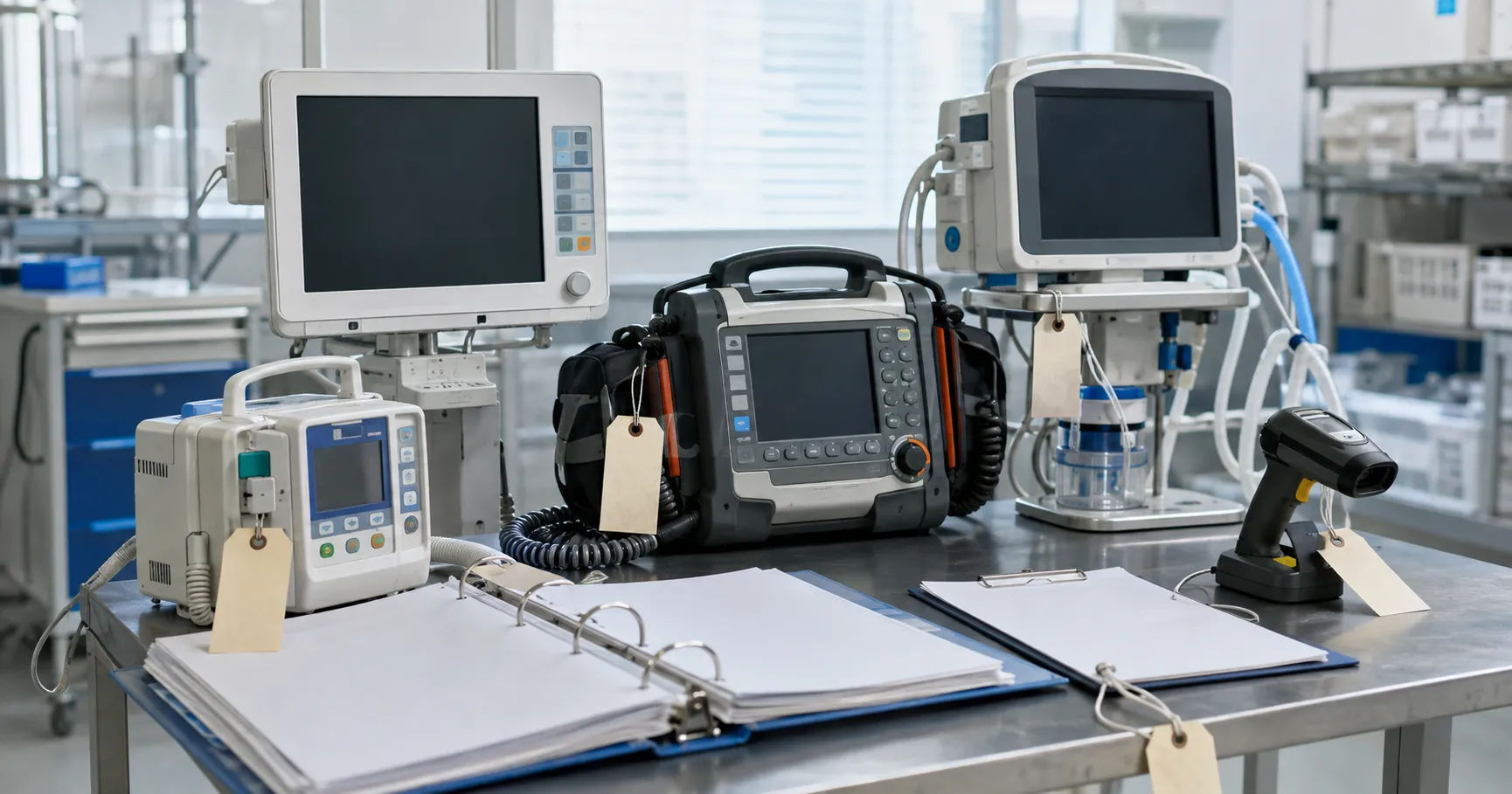
Introduction
A medical device compliance audit checks whether a hospital's equipment matches its obligations — that devices are approved, maintained, safe and properly recorded. Audits may be internal, run by the hospital itself, or external, carried out by a regulator, an accrediting body, or a certification assessor. Either way, the auditor works from evidence, tracing a device from purchase through maintenance to the present day. Hospitals that manage audits well treat them not as an occasional scramble but as the natural outcome of good record-keeping that is kept current year-round.
This guide explains what medical device compliance audits examine, how hospitals prepare for them, and how good practice turns an audit into a routine event. It's written for quality, biomedical engineering and procurement teams across the UK, Europe, the US, the Gulf and South Africa.
What to hold onto — the short version
-
Auditors follow evidence. An audit is only as good as the records behind each device.
-
Prepare all year. Audit-readiness is a habit of continuous record-keeping, not a last-minute effort.
-
Findings need action. What matters most is a clear, tracked response to anything an audit uncovers.
What an audit actually examines
A compliance audit typically assesses whether the inventory is complete and accurate, whether each device holds valid regulatory approval, and whether maintenance, testing, and calibration have been performed on schedule and recorded. It checks how recalls and hazard notices are acted on, how device incidents are reported, and whether staff are trained and competent to use the equipment. Increasingly, it also considers connected devices and data. The common thread is traceability: for any device, can the hospital show a complete, honest history on demand?
How hospitals prepare
-
Keep a live inventory. Maintain an accurate, up-to-date record of every device and its locations.
-
Hold approvals on file: store regulatory approval and technical documentation for each device.
-
Log maintenance as you go. Record inspection, testing and calibration when done, not retrospectively.
-
Run internal audits. Test your own records before an external auditor does.
-
Track corrective actions. Record findings and the actions taken to close them.
-
Assign clear ownership. Make sure someone owns the audit trail for each area.
An example makes the point. Suppose an external assessor visits a hospital in Europe and asks for the maintenance history of ten ventilators chosen at random. A hospital that logs maintenance as it happens produces ten clean records in minutes. One that catches up on paperwork before audits finds a gap on the third ventilator, and a single gap invites the auditor to look harder at everything else. The difference is not effort on the day; it is the habit built over the preceding year.
Internal audit vs external audit
|
|
Internal audit |
External audit |
|
Run by |
The hospital itself |
Regulator, accreditor or assessor |
|
Purpose |
Find and fix gaps early |
Verify compliance independently |
|
Frequency |
Regular and routine |
Periodic or scheduled |
|
Best outcome |
Nothing left for the external audit |
Confirms what you already knew |
How to handle findings
-
Record each finding clearly, with the device or system it relates to.
-
Identify the root cause rather than only the symptom.
-
Agree a corrective action, with an owner and a date.
-
Complete the action and keep evidence that it is done.
-
Check later that the fix held, and feed lessons back into practice.
Good records make audits routine.
The hospitals that find audits least stressful are those for which the audit reads back what they already know. National regulators such as the MHRA and the FDA set the obligations a device must meet, quality-management principles from ISO shape how records are kept, and accreditation bodies assess the whole. Buying approved, fully documented equipment from suppliers who provide the evidence up front means the audit trail starts complete. From there, logging maintenance and acting on findings as they arise keeps it that way, so the next audit is a formality rather than a fire drill.
More from Business
-
Buyers — source approved, fully documented equipment.
-
Suppliers — list your equipment and reach buyers worldwide.
-
Advertise — promote your products and services to a clinical audience.
-
Business overview — explore everything MediGear offers healthcare organisations.
Disclaimer
This article is for general information only and does not constitute regulatory, clinical, legal or procurement advice. Audit requirements, regulations and their scope vary and change over time. Always confirm current requirements with the relevant regulator, accrediting body or assessor, and consult qualified quality, biomedical engineering, regulatory and procurement professionals for decisions specific to your organisation. medigear.uk accepts no liability for actions taken based on this content.
Keep Every Medical Device Audit-Ready
We supply medical equipment to healthcare organisations across the UK, Europe, the US, the Gulf and South Africa — genuine, approved and fully documented, so the evidence an auditor asks for is already in place.
Frequently Asked Questions
A compliance audit typically checks whether the device inventory is complete and accurate, whether each device holds valid regulatory approval, and whether maintenance, testing and calibration are done on schedule and recorded. It also looks at how recalls and hazard notices are acted on, how device incidents are reported, and whether staff are trained. The common thread is traceability: can the hospital show a complete history for any device on demand?
The hospital itself conducts an internal audit to identify and address gaps early, and it is best done regularly. An external audit is carried out independently by a regulator, an accrediting body, or a certification assessor to verify compliance. The ideal is that internal audits leave nothing for the external one to find, so the external audit confirms what the hospital already knew.
The most effective preparation is continuous rather than last-minute: keep a live, accurate inventory, maintain regulatory approvals and documentation on file, and log maintenance, testing, and calibration as they occur. Running internal audits, tracking corrective actions and assigning clear ownership of each audit trail all help. Audit-readiness is a year-round habit of good record-keeping, not an effort mounted just before the assessor arrives.
Each finding should be clearly recorded against the device or system it relates to, its root cause identified rather than just its symptoms, and a corrective action agreed with an owner and a date. The action is then completed with evidence kept, and checked later to confirm the fix held. A clear, tracked response to findings is often what matters most in how an audit is judged.
Auditors work from evidence, tracing a device from purchase through maintenance to the present. If records are complete and current, the audit reads back what the hospital already knows. If paperwork is caught up only before audits, a single gap invites closer scrutiny of everything else. The difference is the habit of logging as you go, built over the year rather than on the day.
MediGear supplies medical equipment to healthcare organisations across the UK, Europe, the US, the Gulf and South Africa. As a distributor, we provide genuine, approved,d and fully documented equipment, so the approvals and manuals an auditor requests are in place from the start. Requirements vary by hospital and market, so we work with your team to provide equipment and documentation that align with your compliance and audit processes.