
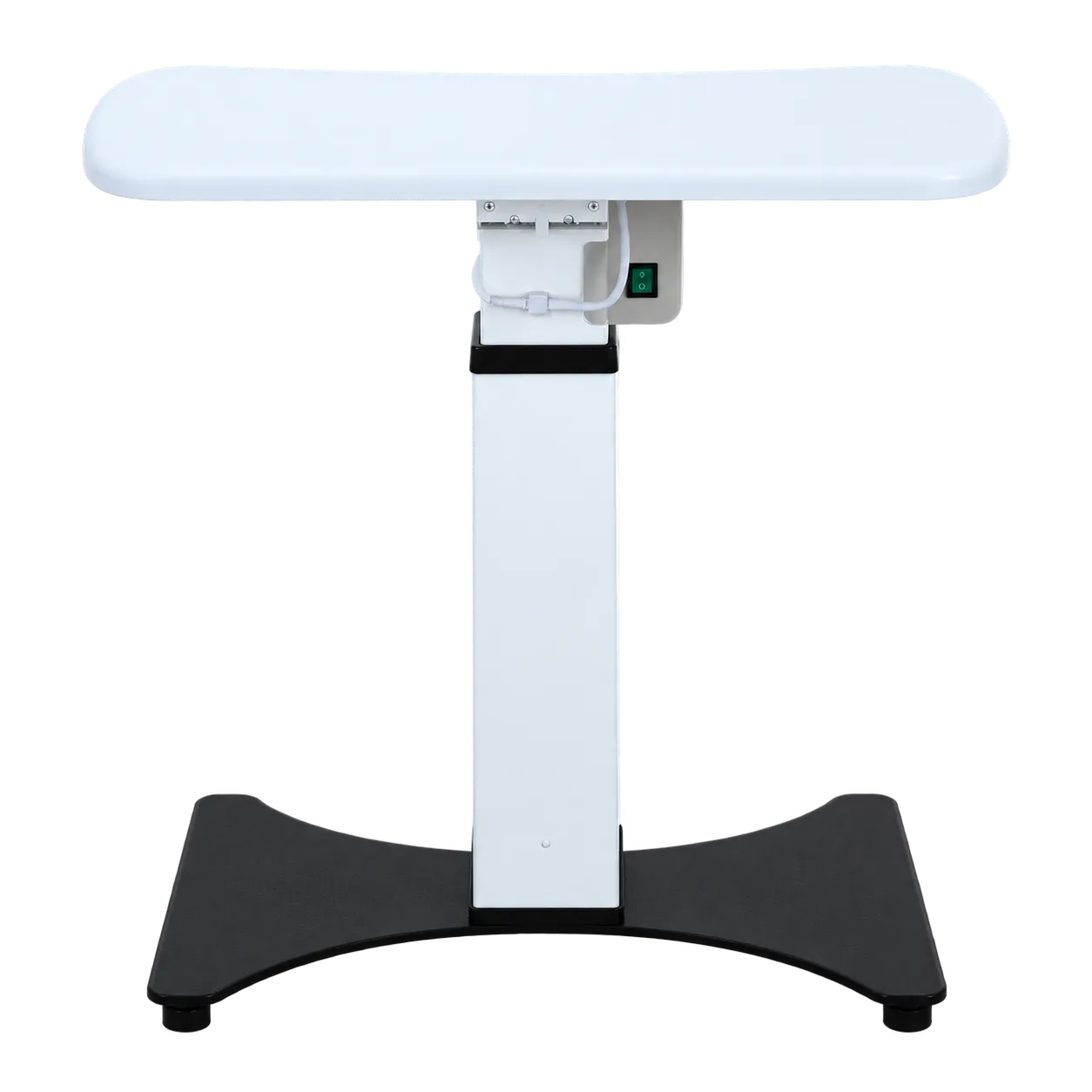
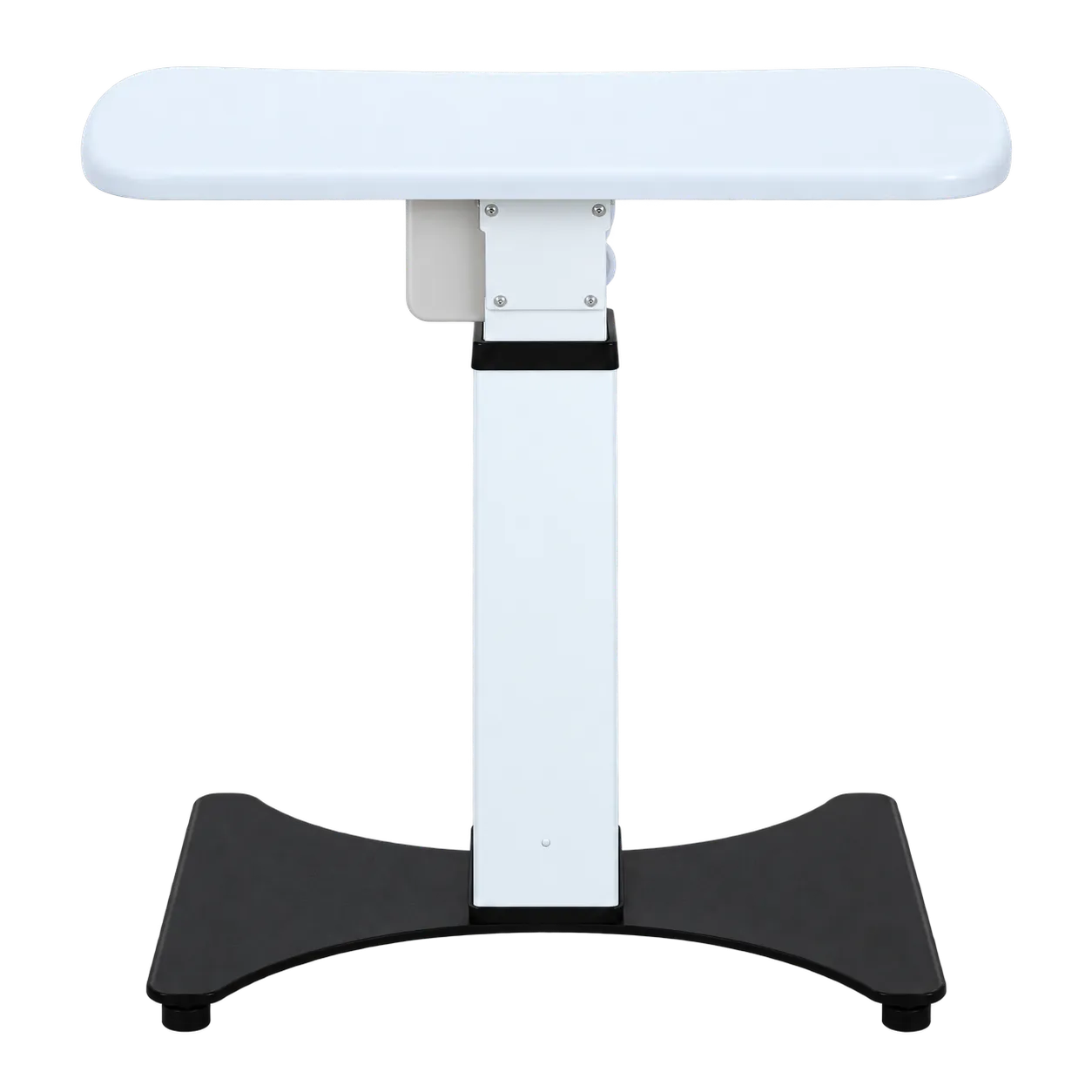
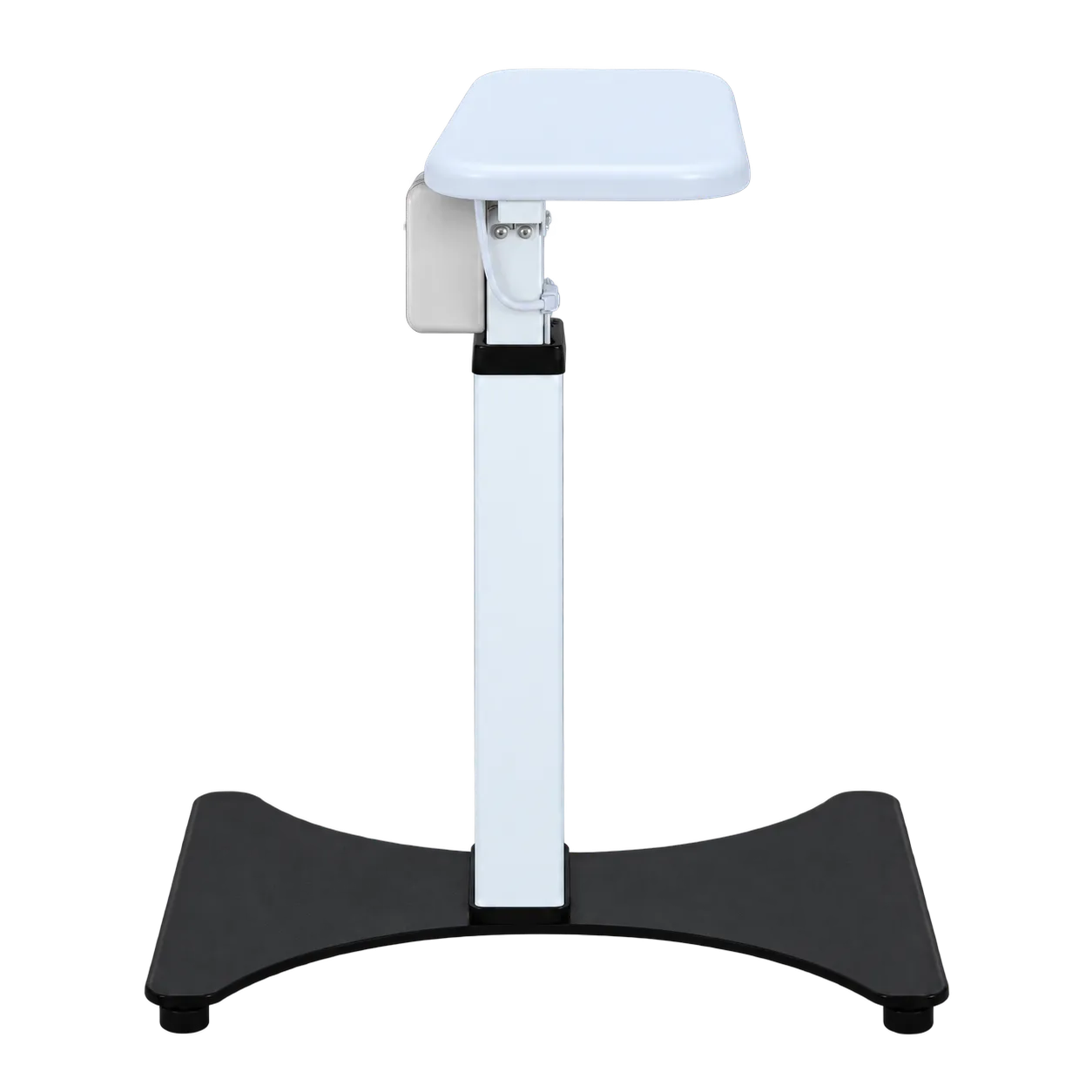
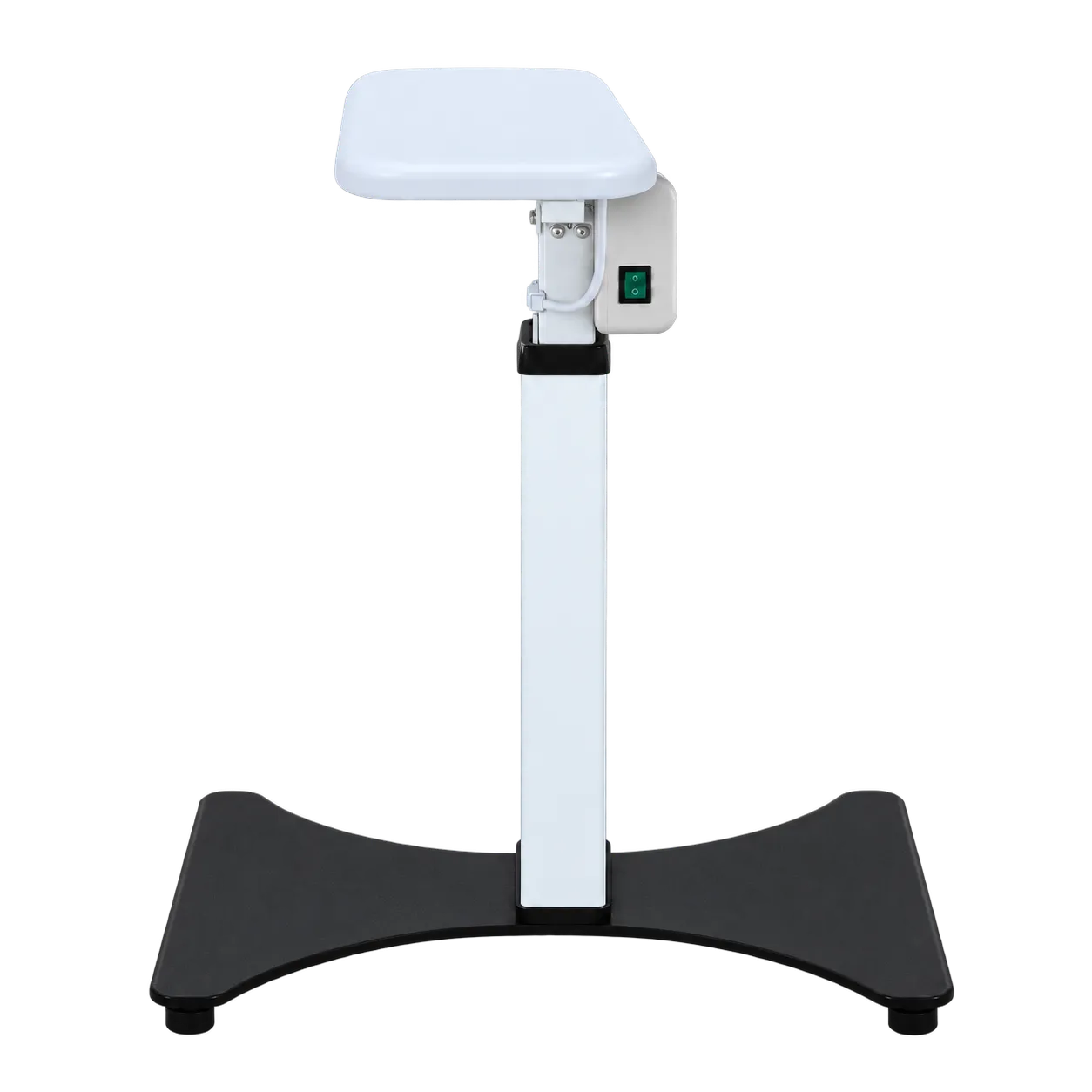
Rooms serving a wide spread of patients benefit most. A community practice seeing children, tall adults and wheelchair users through the same instrument position has to compromise on a short-travel table. With roughly twice the movement, one station can be set correctly for each in turn, subject to the height range we confirm.
Heavy imaging positions suit the 120 kg rating. Combined OCT and fundus systems, biometers and topographers with accessories all fall comfortably within it, and the winged pedestal gives a broad, stable footing for a fixed instrument.
Hospital eye service imaging suites can use it where one room handles a full clinic list, with the long stroke saving time between patients of different heights and the pedestal keeping the floor area tidy.
Myopia management clinics, which measure children's axial length alongside adult work, gain from a range that spans both without a booster seat.
Accessible provision may be improved, since the long stroke may reach lower than most tables here. That depends on the confirmed height range and on knee clearance around the column and winged base, so it should be trialled rather than assumed.
Teaching clinics benefit from a station that suits students and patients of very different heights without adjustment beyond the table itself.
Slit lamp and other movement-sensitive positions should be lean-tested, since a high loading figure says nothing about stiffness.
Practices needing a mobile table should look elsewhere in the range, as no castors are shown, and this model is planned as a fixed station.