
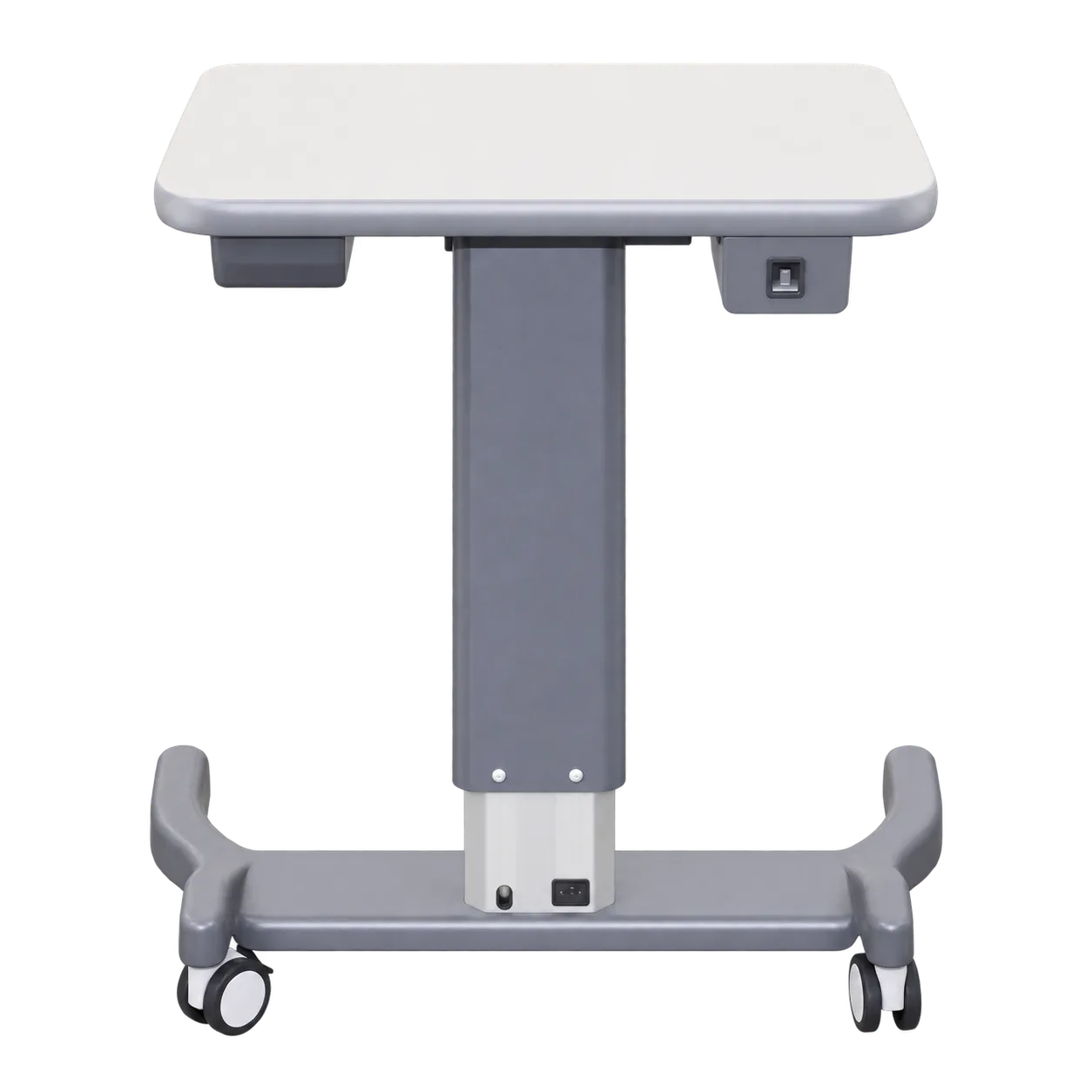
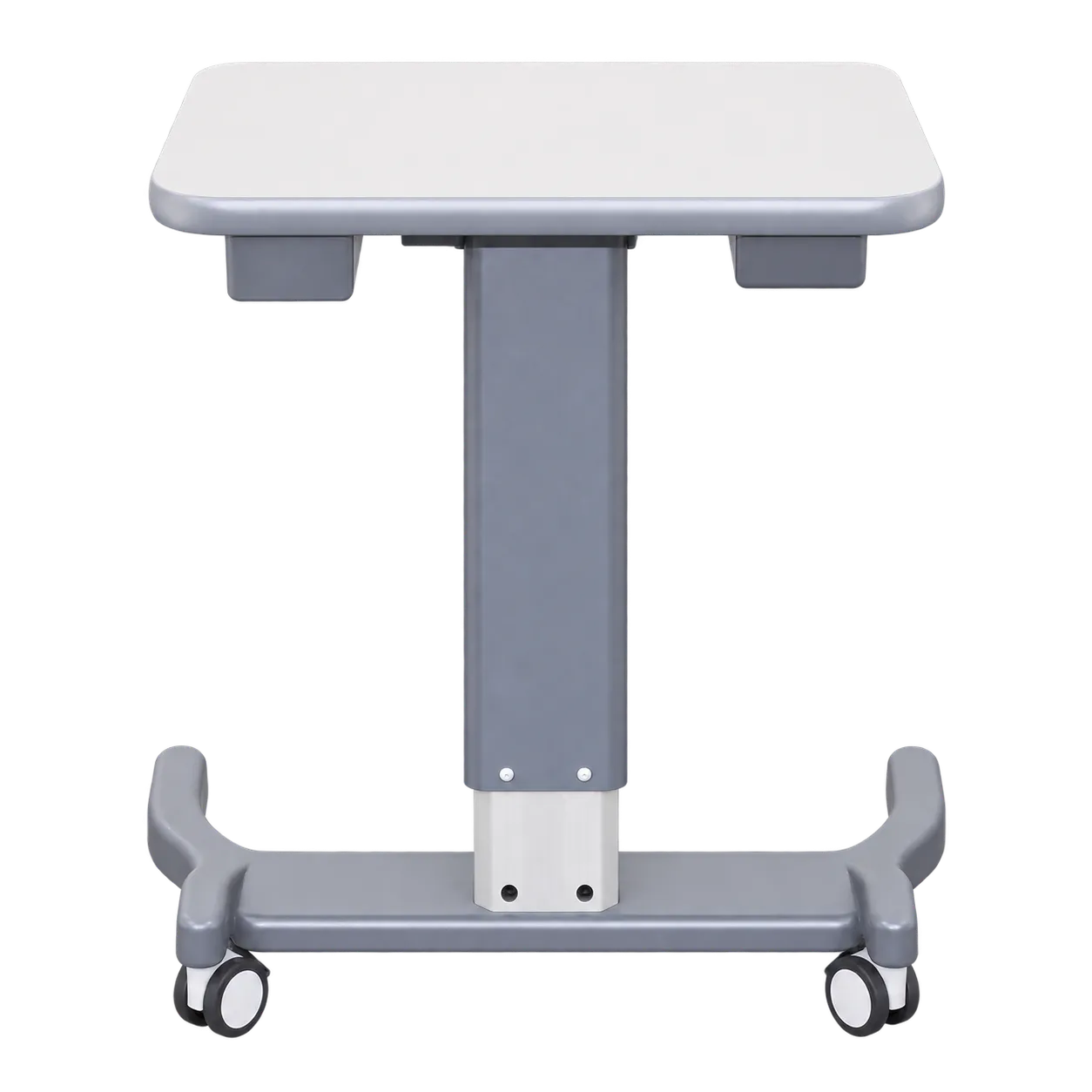
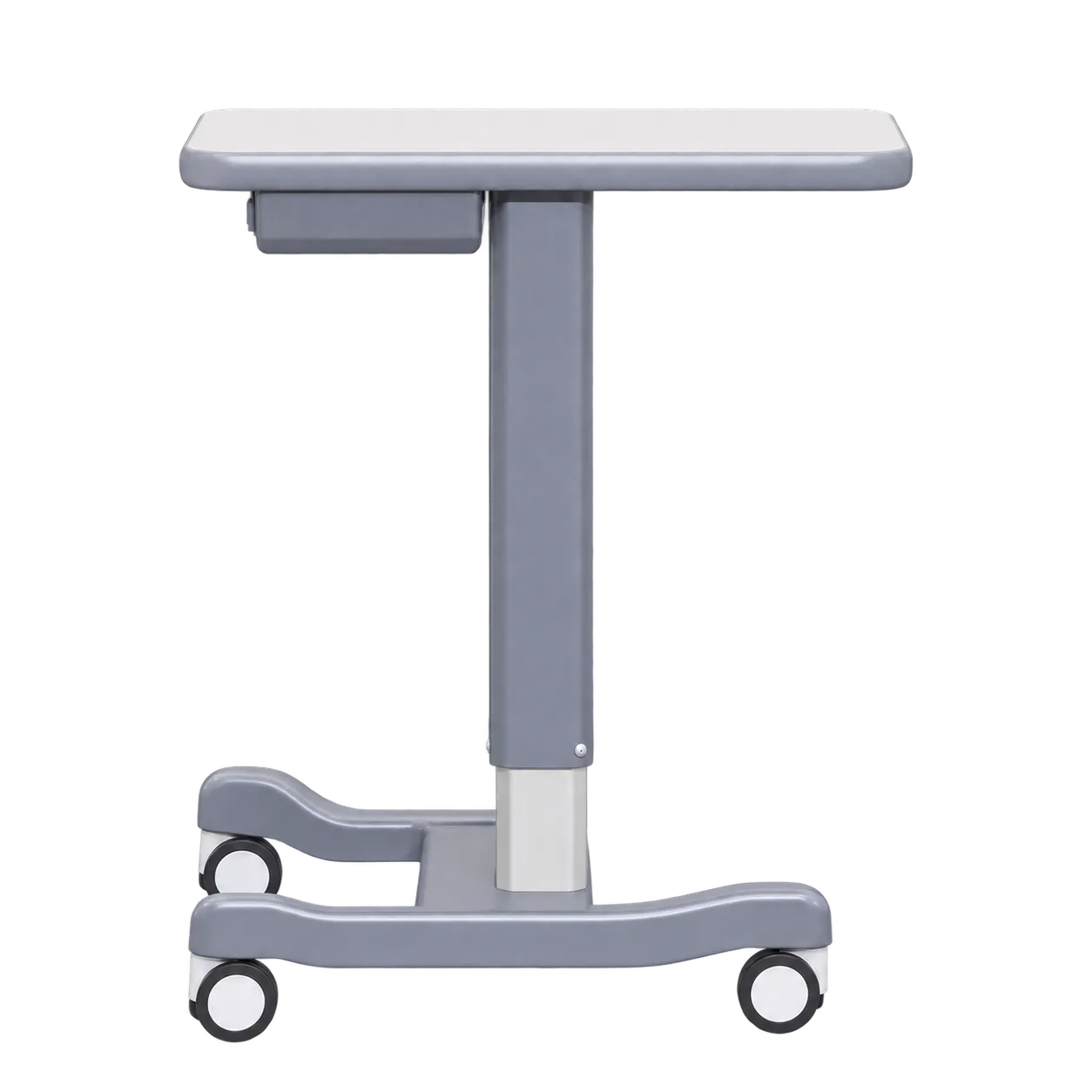
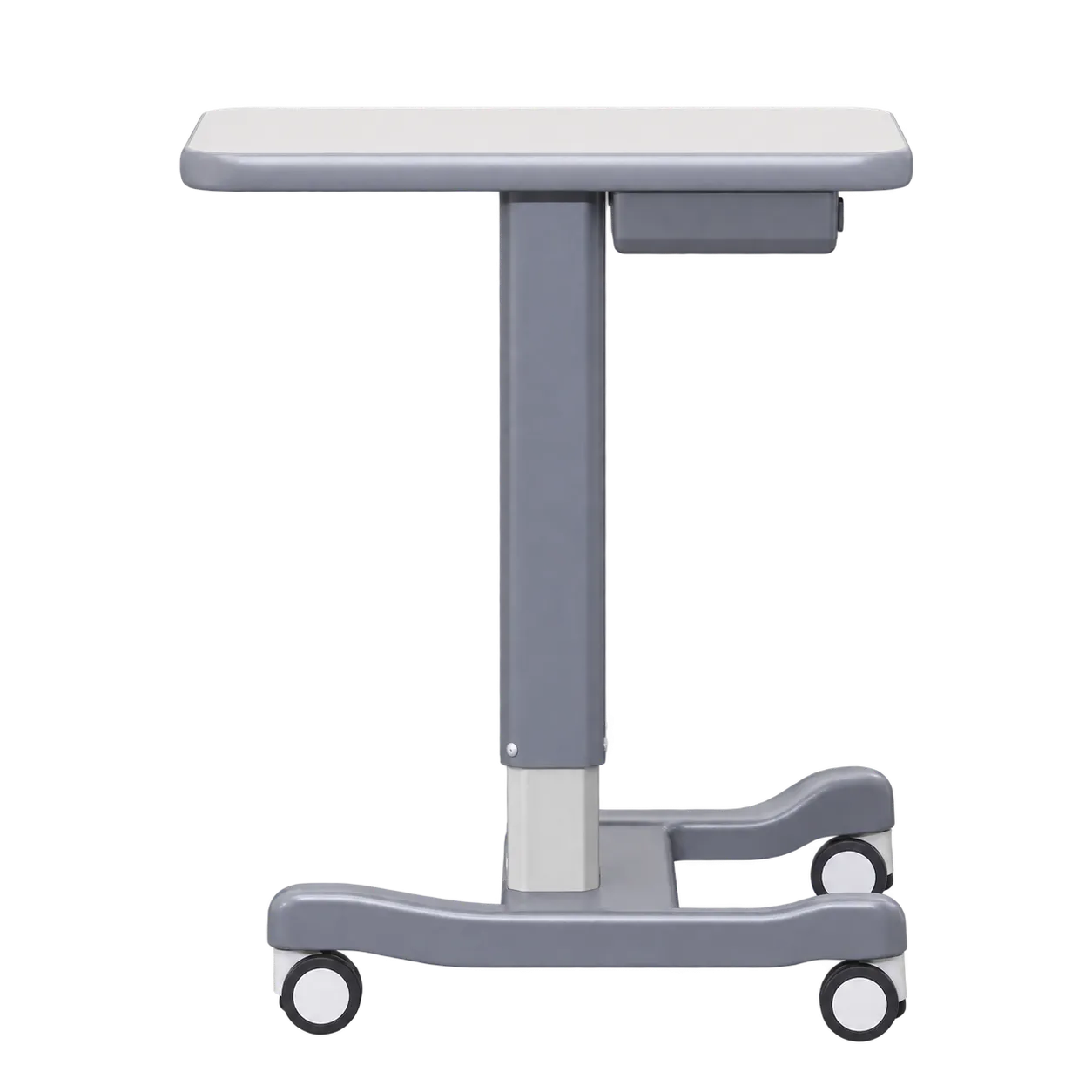
Imaging and topography positions are the natural home. Corneal topographers, axial length biometers and combined OCT and fundus systems are among the heaviest tabletop instruments in eye care. A table with a published 100 kg rating lets a practice match the instrument to a number, instead of hoping an unspecified table will cope.
Myopia management clinics benefit particularly. Monitoring children's axial length and corneal shape over time relies on biometry and topography, often on instruments with significant weight. A rated, mobile table lets those instruments share a room with other work and be wheeled into position for monitoring appointments.
Contact lens practices, including orthokeratology and specialty fitting, use topographers heavily and can dedicate a WZ-3H to one, with the drawer holding fluorescein strips, lens cases and removal tools.
Multi-room practices gain from the combination of a high rating and a light, wheeled frame. A heavy instrument can be moved between rooms on a table one person can push, provided the top is lowered and the instrument secured first.
Slit lamp positions with imaging modules can use the rating for the extra weight of cameras and beam splitters, although a lean test is worthwhile, since a light frame may flex more than a heavy one.
Hospital eye service outpatient clinics and university optometry clinics can use it where instruments move between rooms, supporting the orderly, well-equipped rooms the GOC expects.
Paediatric pre-test should check the lower end of the range, since 650 mm may need a raised seat for younger children.
Wheelchair users are partly served. The height range suits many, but the column and H-frame limit clearance, so practices with many wheelchair users usually keep a dedicated accessible position as well.