
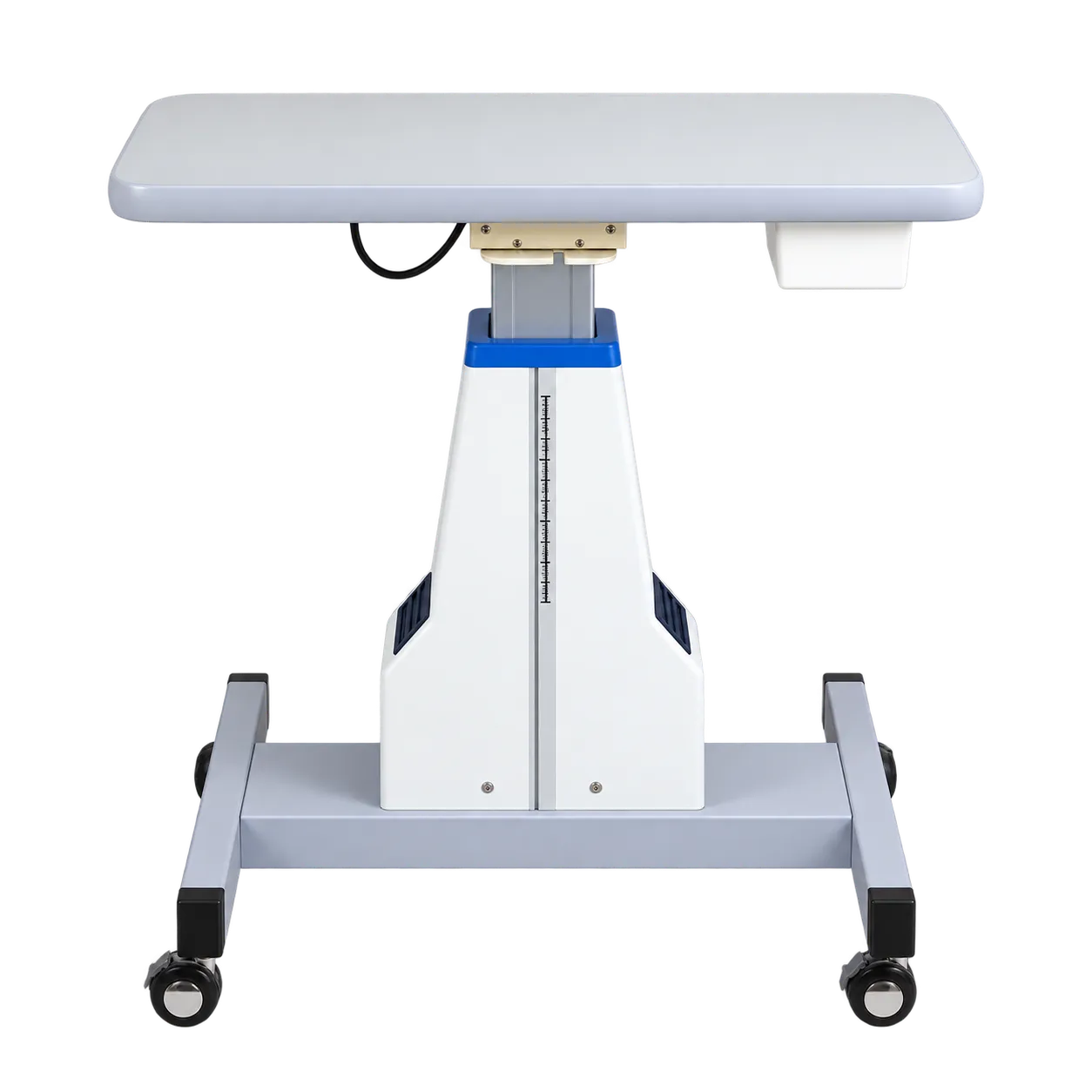
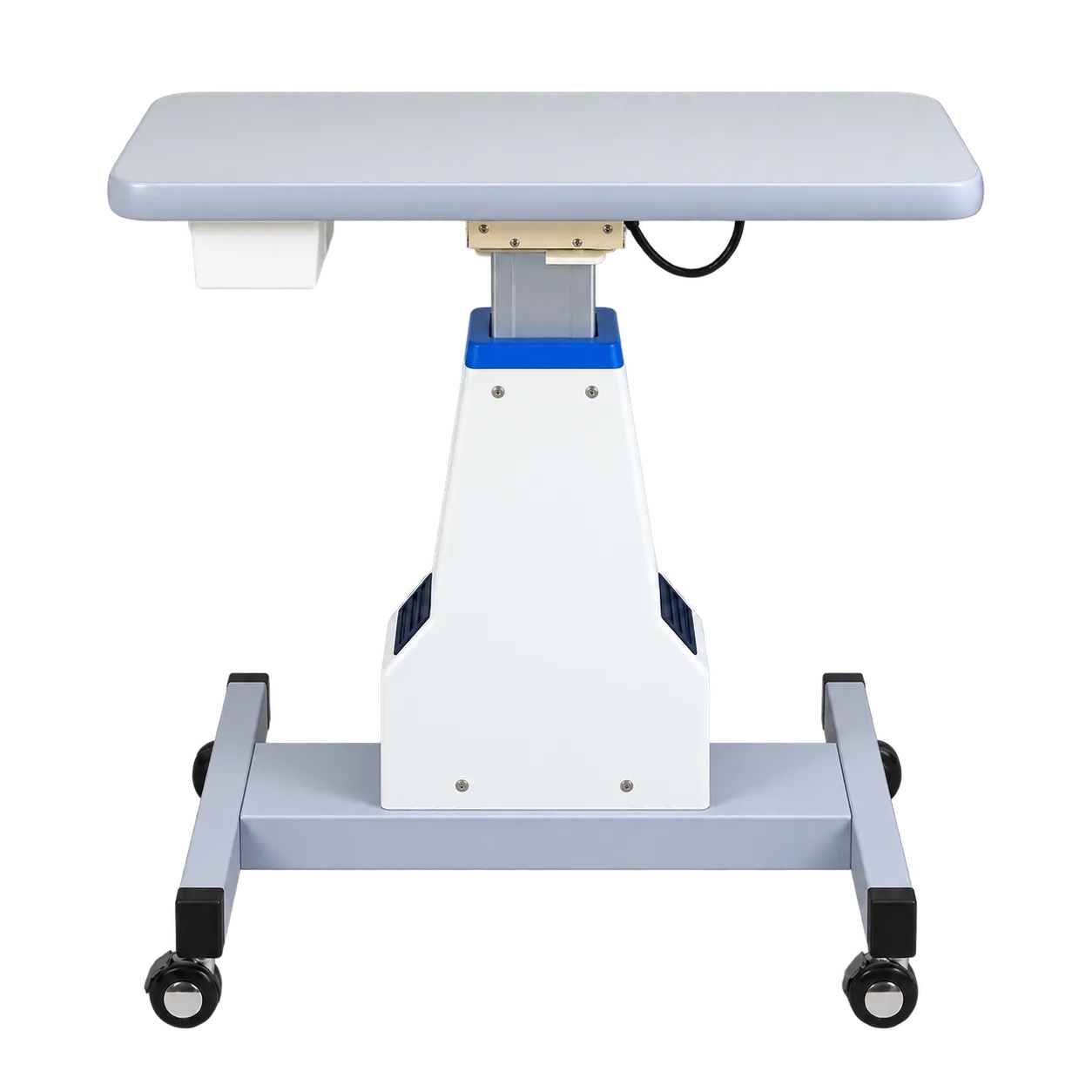
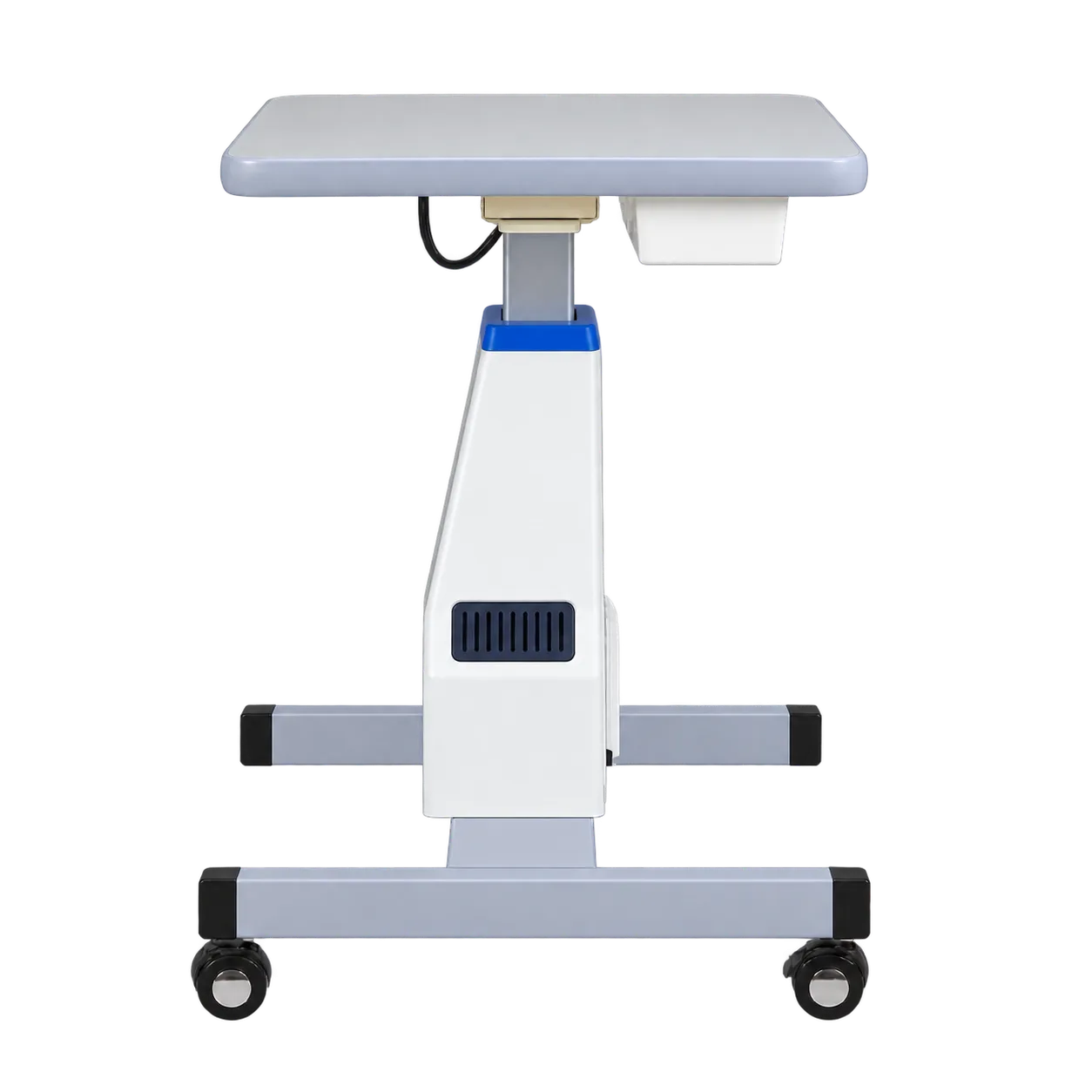
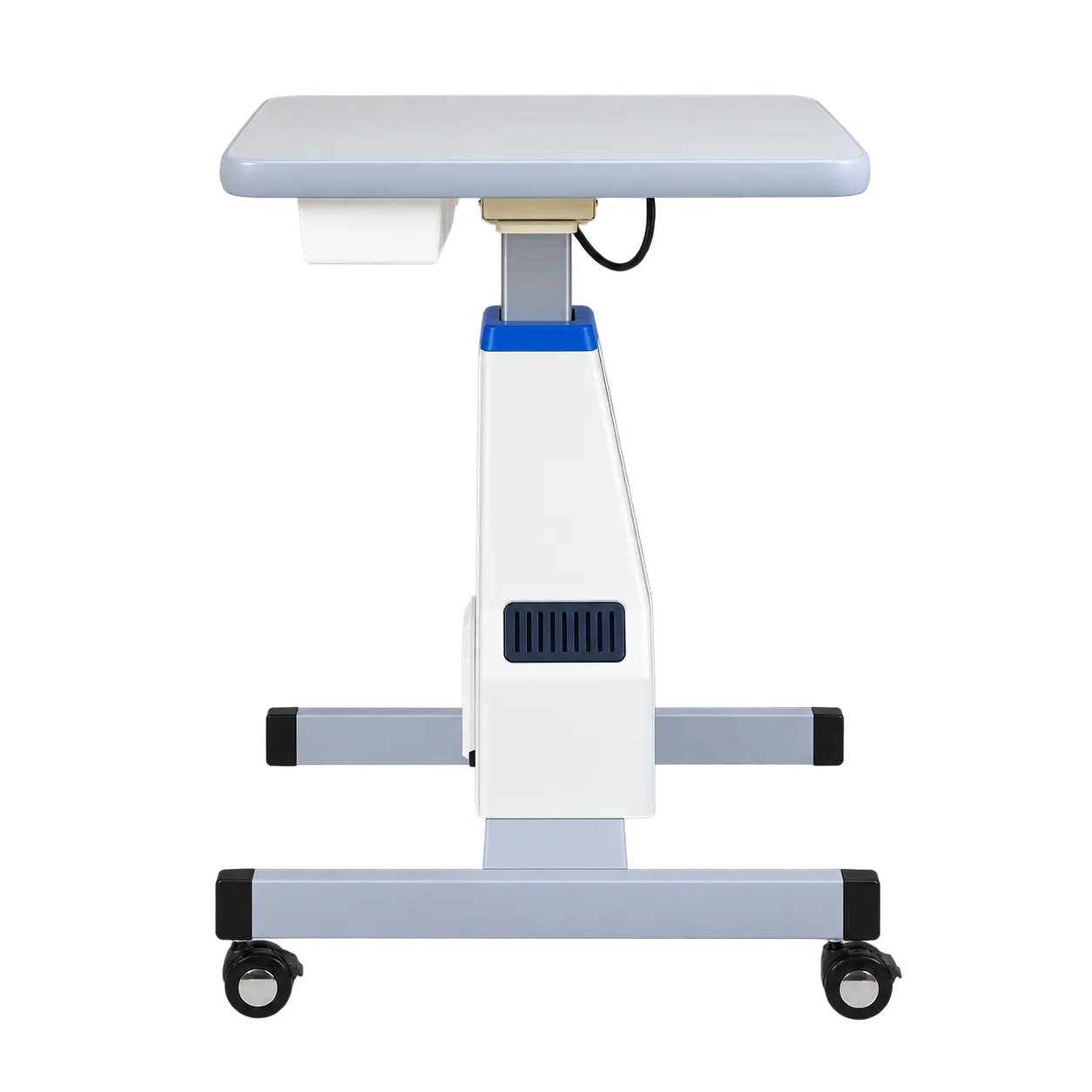
Compact pre-test positions are the natural home. At 480 × 400 mm the top is among the smallest here, which suits a lensmeter, tonometer or compact autorefractor in a narrow room. The socket on the column means one lead to the wall, which keeps a small space tidy.
Dispensaries can use it for a lensmeter with the drawer holding small tools, and the table can be wheeled aside when the counter space is needed.
Visual field screening deserves a specific note. Owner reports for this model describe movement when a patient leans into a field machine, settling once testing starts. Perimetry depends on the patient holding a steady position, so if field screening is the main use, arrange a trial or consider a heavier table.
Practices adding a second or third instrument position gain from a light table with a socket built in, since the room needs only one free wall outlet.
Domiciliary and outreach bases benefit from the 20 kg weight, which one person can lift over a step into a van or hall.
Hospital eye service and university clinics can use it as a compact station where space is short, with the same trial recommendation for tall instruments.
Wheelchair users need the approach checked, since the column widens towards its base and may reduce foot clearance.
Practices running heavier imaging instruments should look to a table with a higher rating, as 75 kg is lower than several alternatives here.