
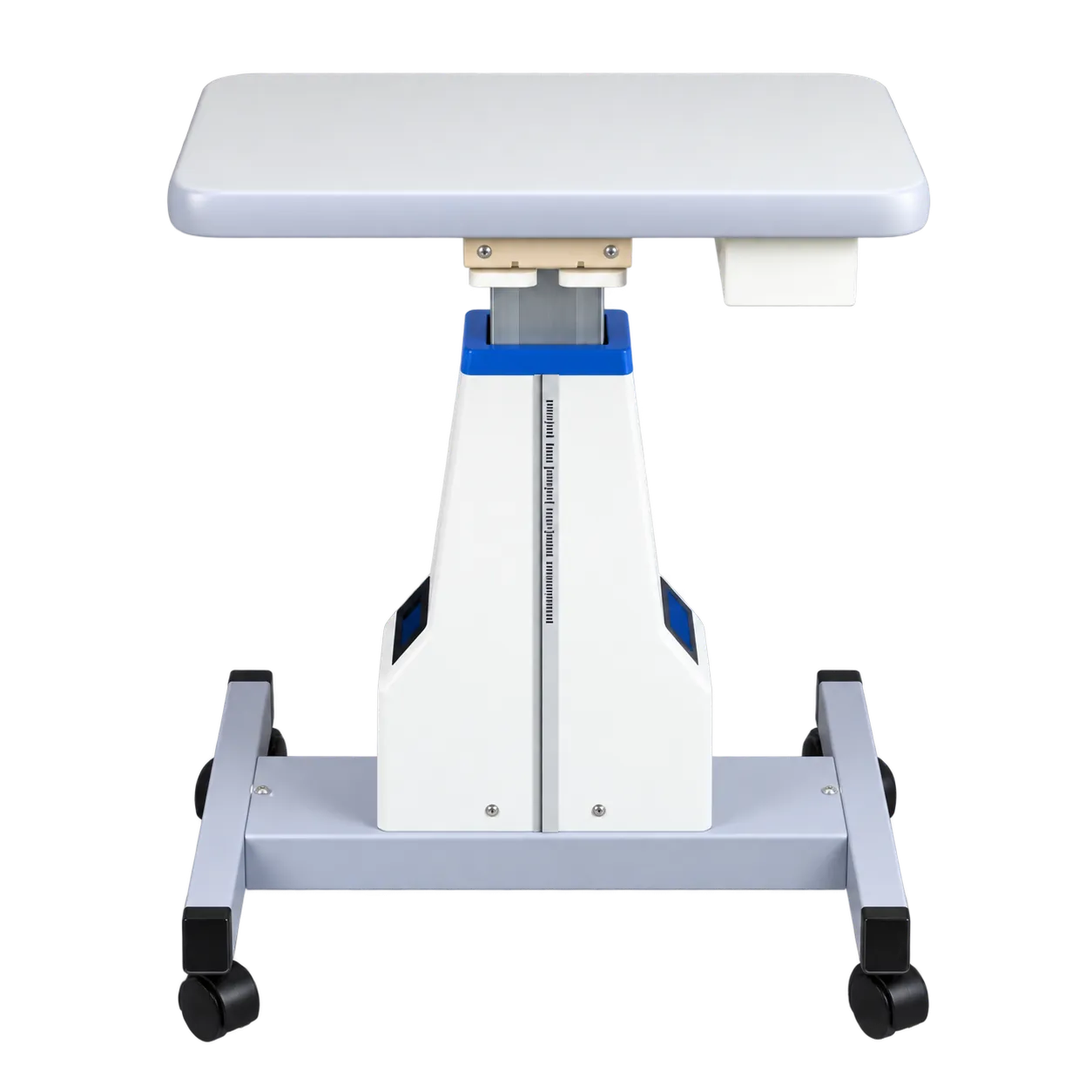
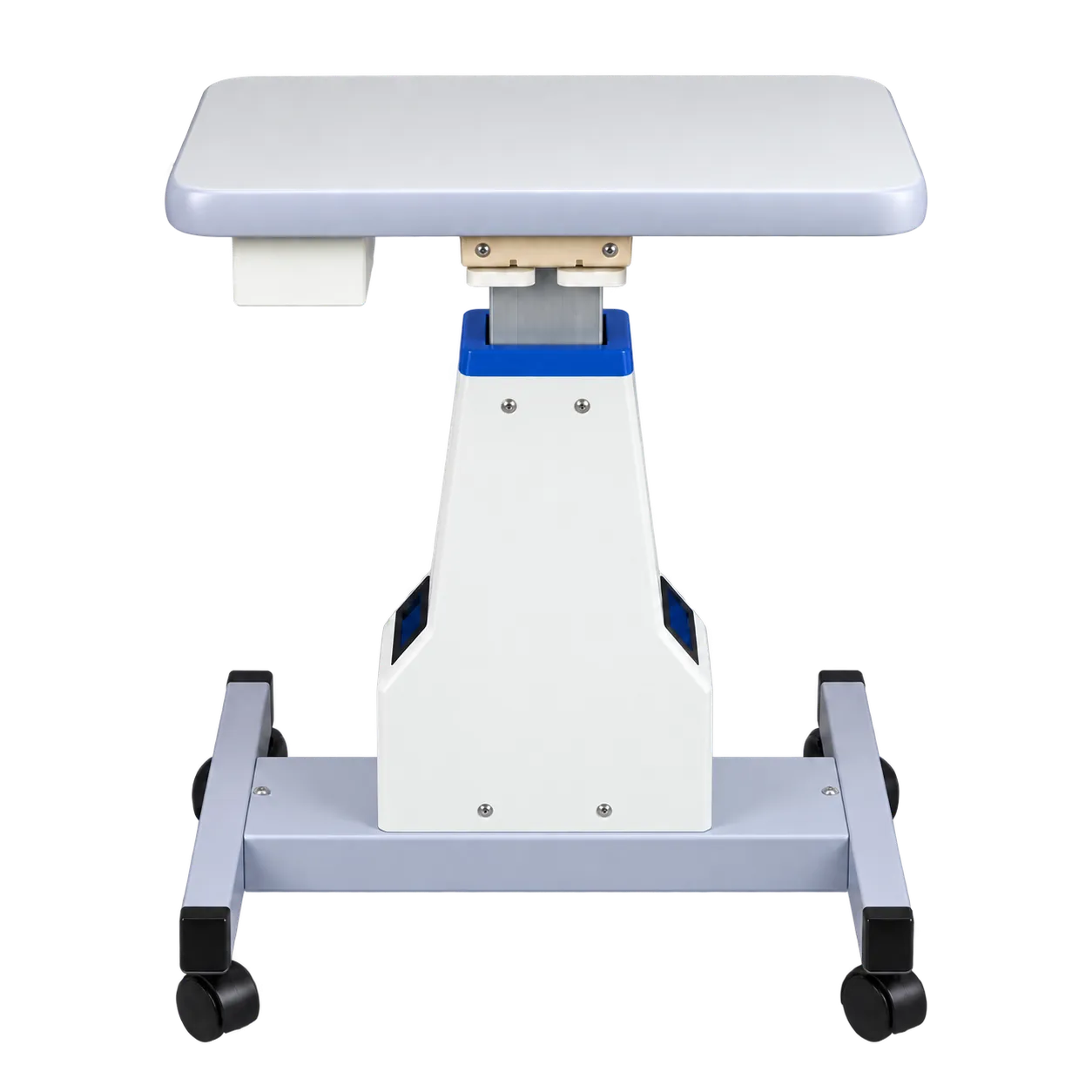
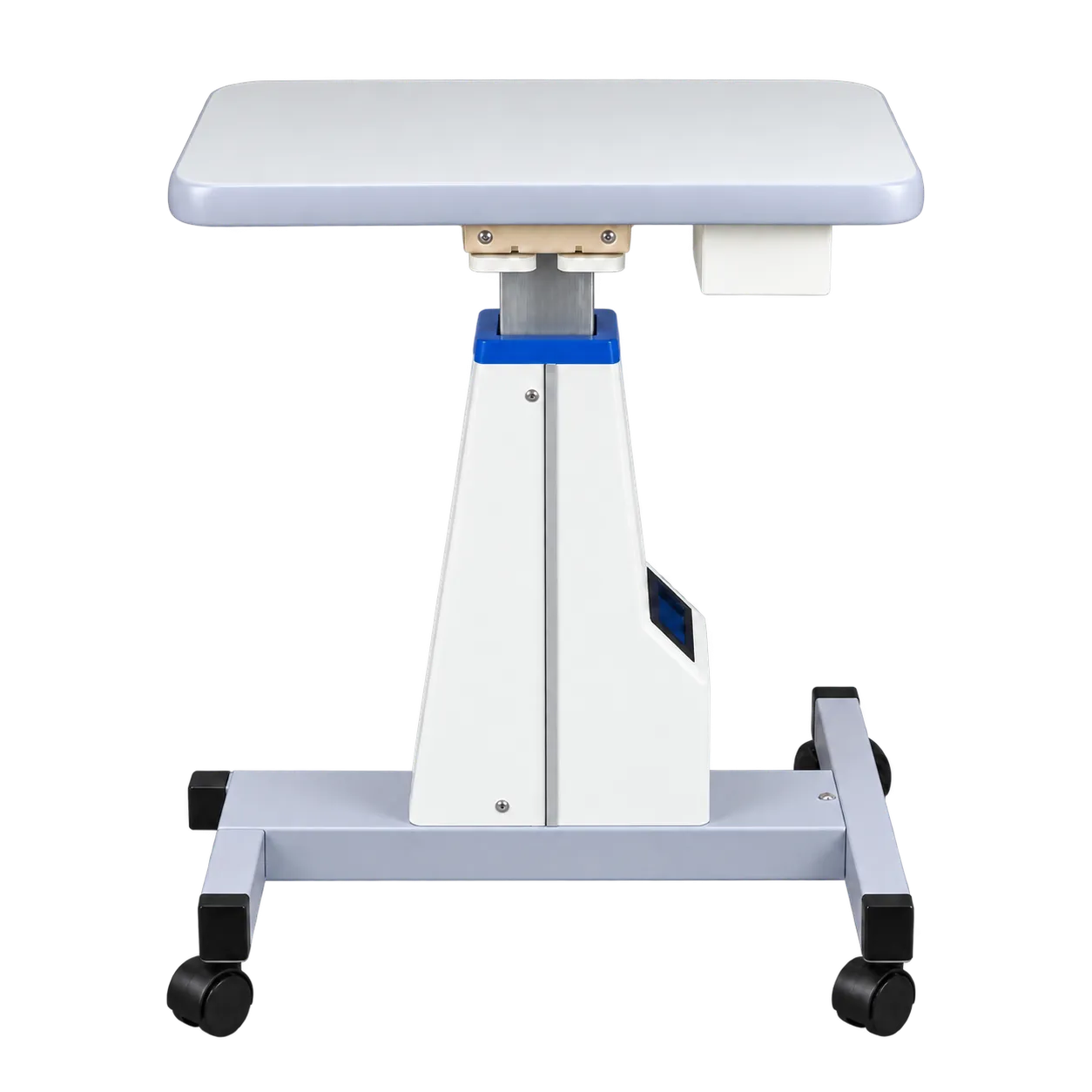
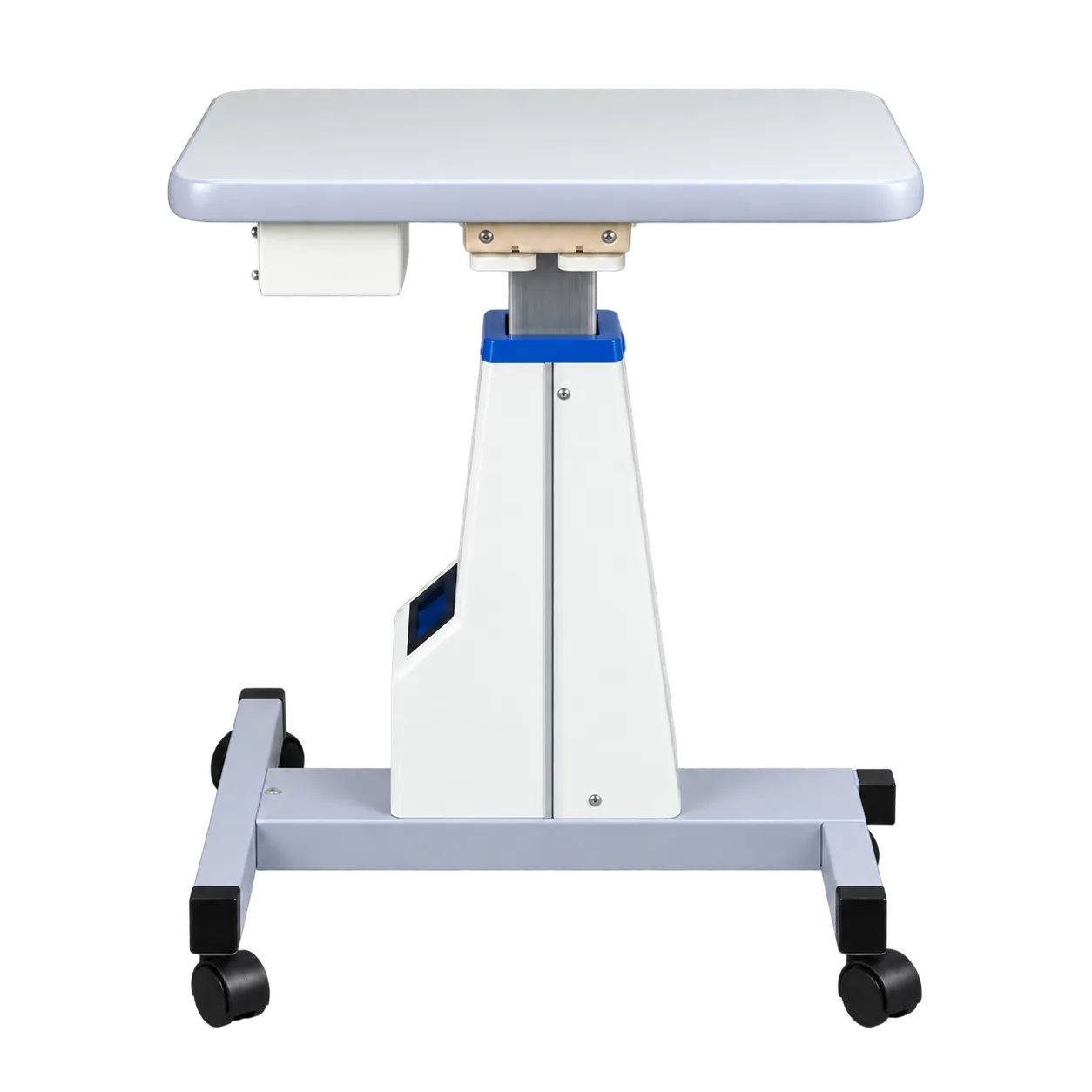
Domiciliary optometry is the clearest fit. UK domiciliary services see patients in their own homes and care settings, and every item of equipment has to be carried in and out. At 18 kg, one person can manage the table alone, which makes a powered instrument height practical where a fixed table would never go.
Outreach and community clinics held in village halls, health centres and care homes gain the same benefit. Equipment that packs away between sessions needs to be light enough to move without a second pair of hands.
Practices short of storage can keep it as a spare table, wheeled out for busy sessions and tucked away afterwards without occupying a room permanently.
Small pre-test positions suit the 480 × 400 mm footprint, particularly where a lensmeter, keratometer or tonometer is the only instrument.
New and low-cost fit-outs can use it where the instrument is light and the budget is tight, provided the 55 kg rating covers what will sit on it.
Teaching and demonstration use benefits from a table that moves easily between rooms for student sessions.
Heavier imaging work is outside its scope, since 55 kg is the lowest rating here and combined imaging systems belong on a higher-rated table.
Movement-sensitive testing, particularly with tall field instruments, needs a lean test first, as a light table moves more readily than a heavy one.