
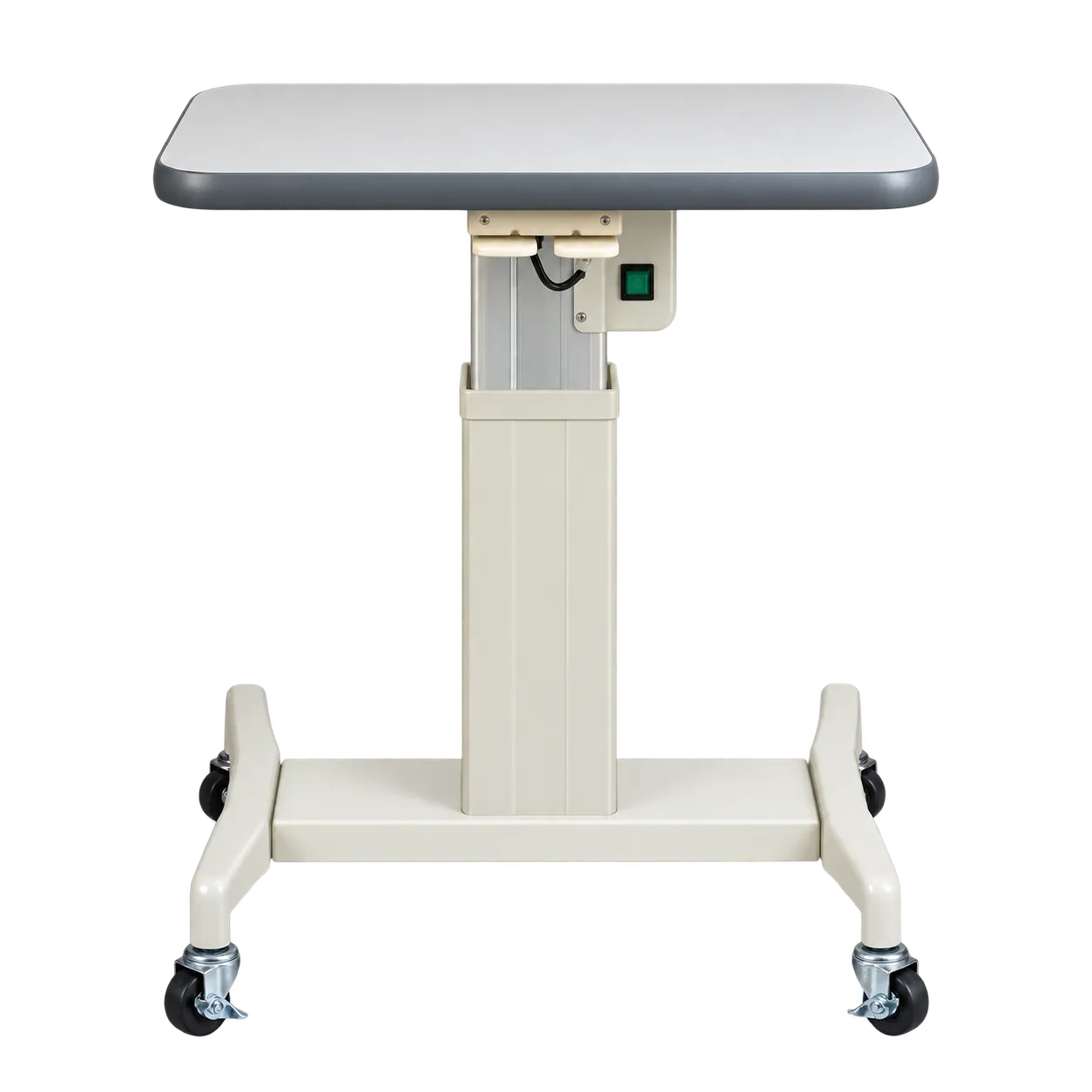
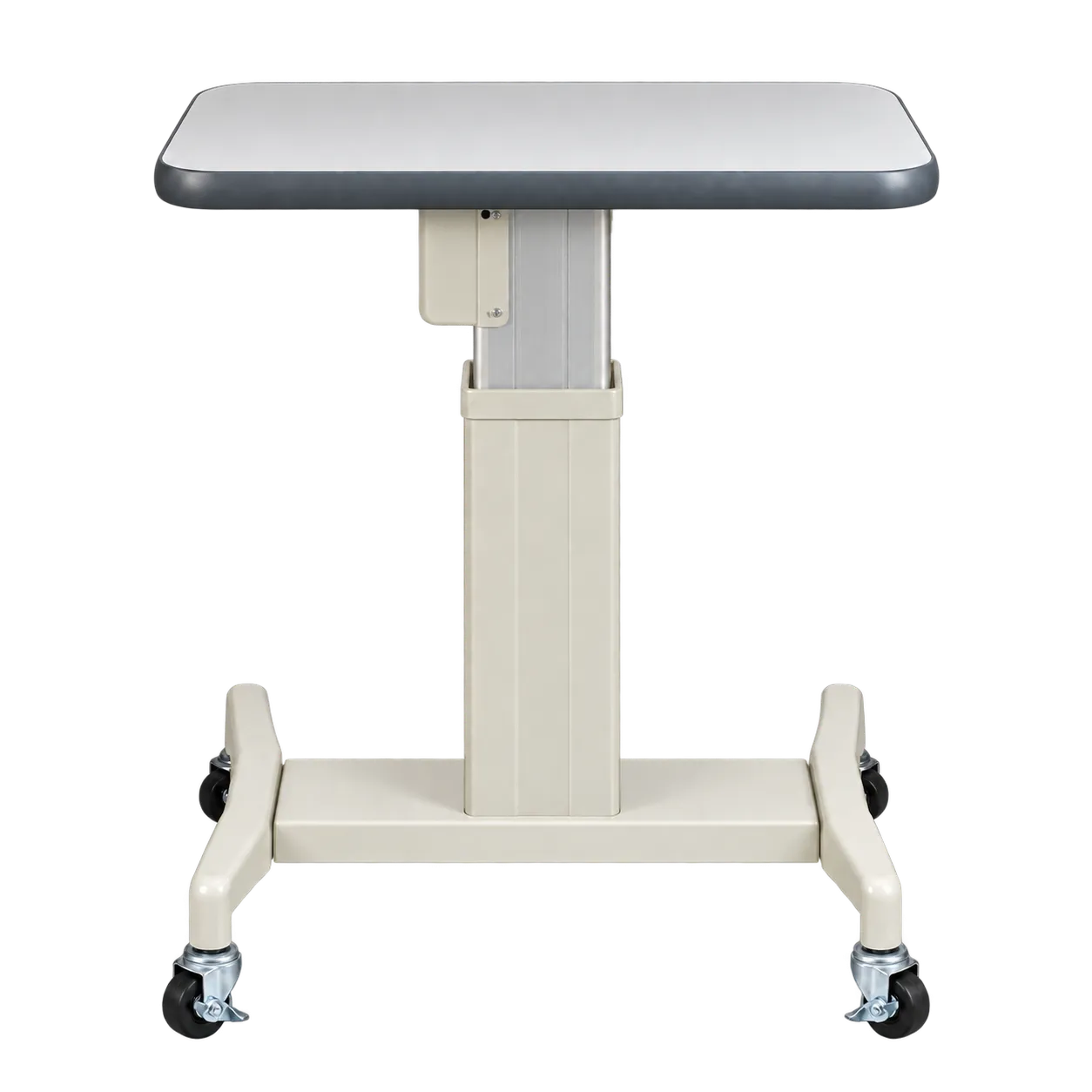
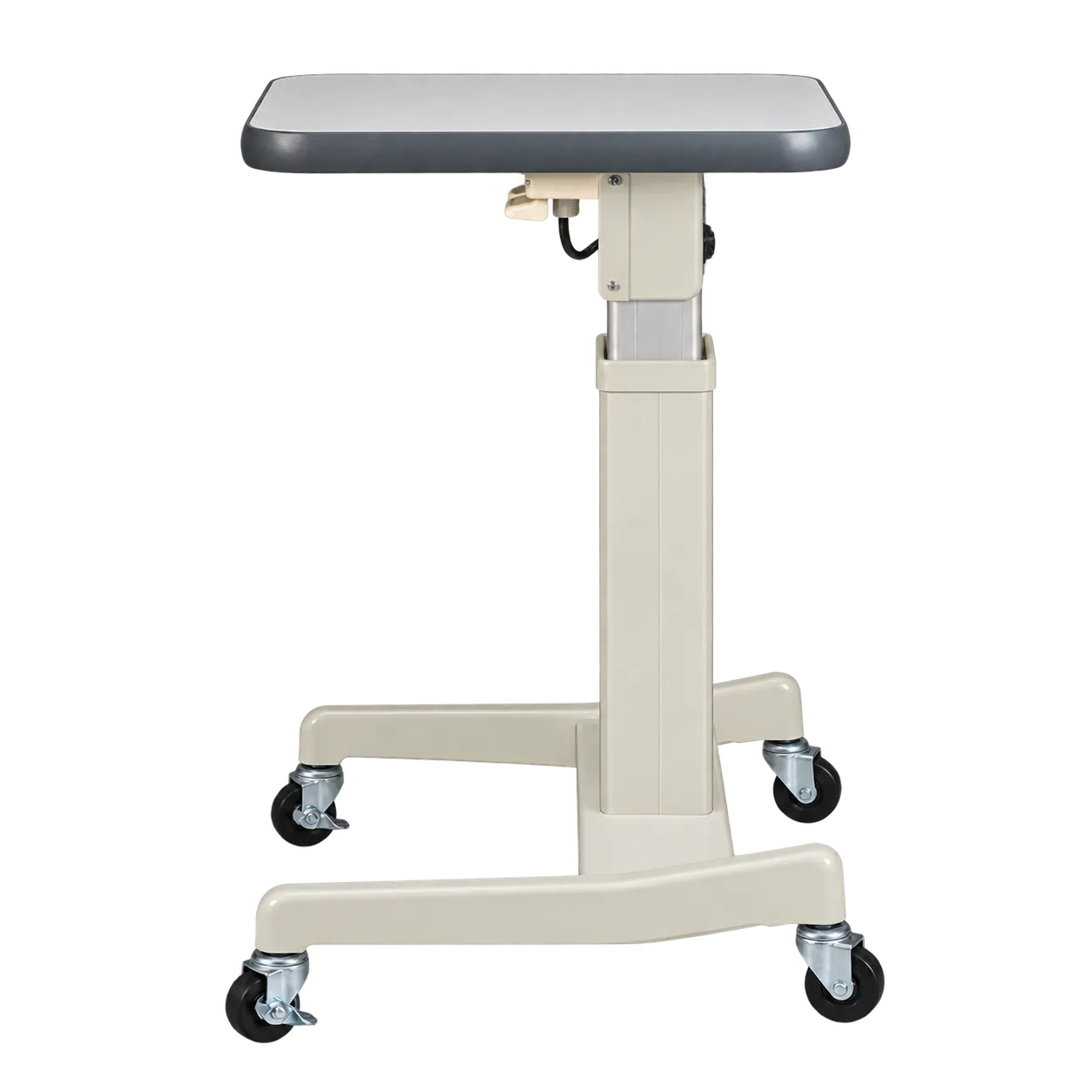
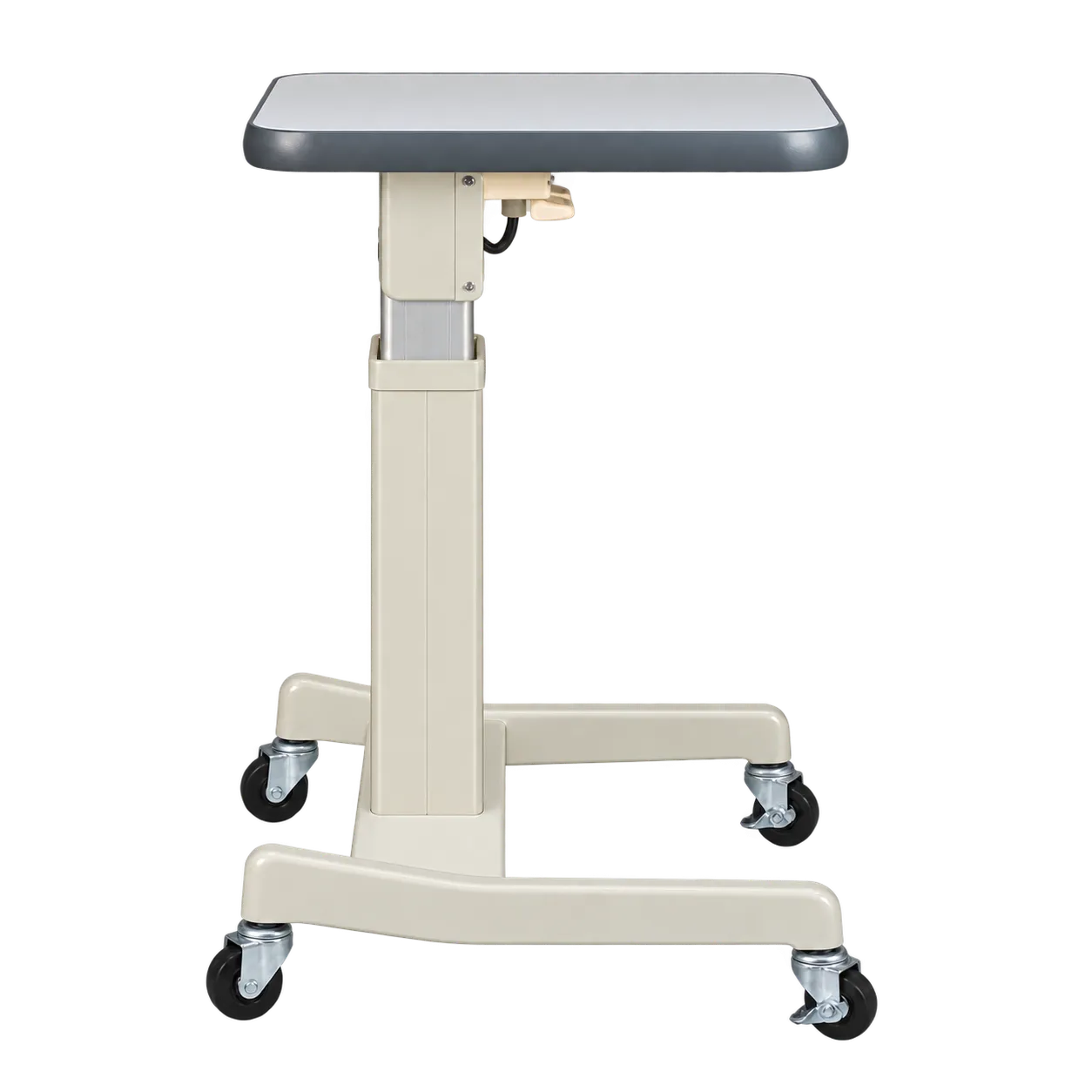
Second and third pre-test positions are the natural home. A practice that already has a well-equipped main station often needs another table for a busy Saturday or a second instrument, and drawers and poles would go unused. A plain table at the lowest cost in the range fills that gap.
New practices and fit-outs on a budget can furnish several rooms for the price of fewer specified tables, adding features later where a room proves to need them.
Locum and shared rooms benefit from the 20 kg weight and braked castors. A table that one person can wheel between rooms, and lock in place on arrival, suits spaces reconfigured week to week.
Dispensaries can use it for a lensmeter, with the higher 675–865 mm range suiting a dispenser who prefers to stand.
Domiciliary and outreach bases that store equipment between sessions gain from a table light enough to move and lift over a step into a van or a hall.
Hospital eye service and university clinics can use it as a spare or overflow table, with visible brakes supporting safe use in busy corridors and shared rooms.
Practices seeing many young children should note the 675 mm lowest setting, which is higher than some tables here and may not bring an instrument low enough for a child on an ordinary chair.
Wheelchair users need the same check, since the lowest setting and the clearance around the column and base both matter.