
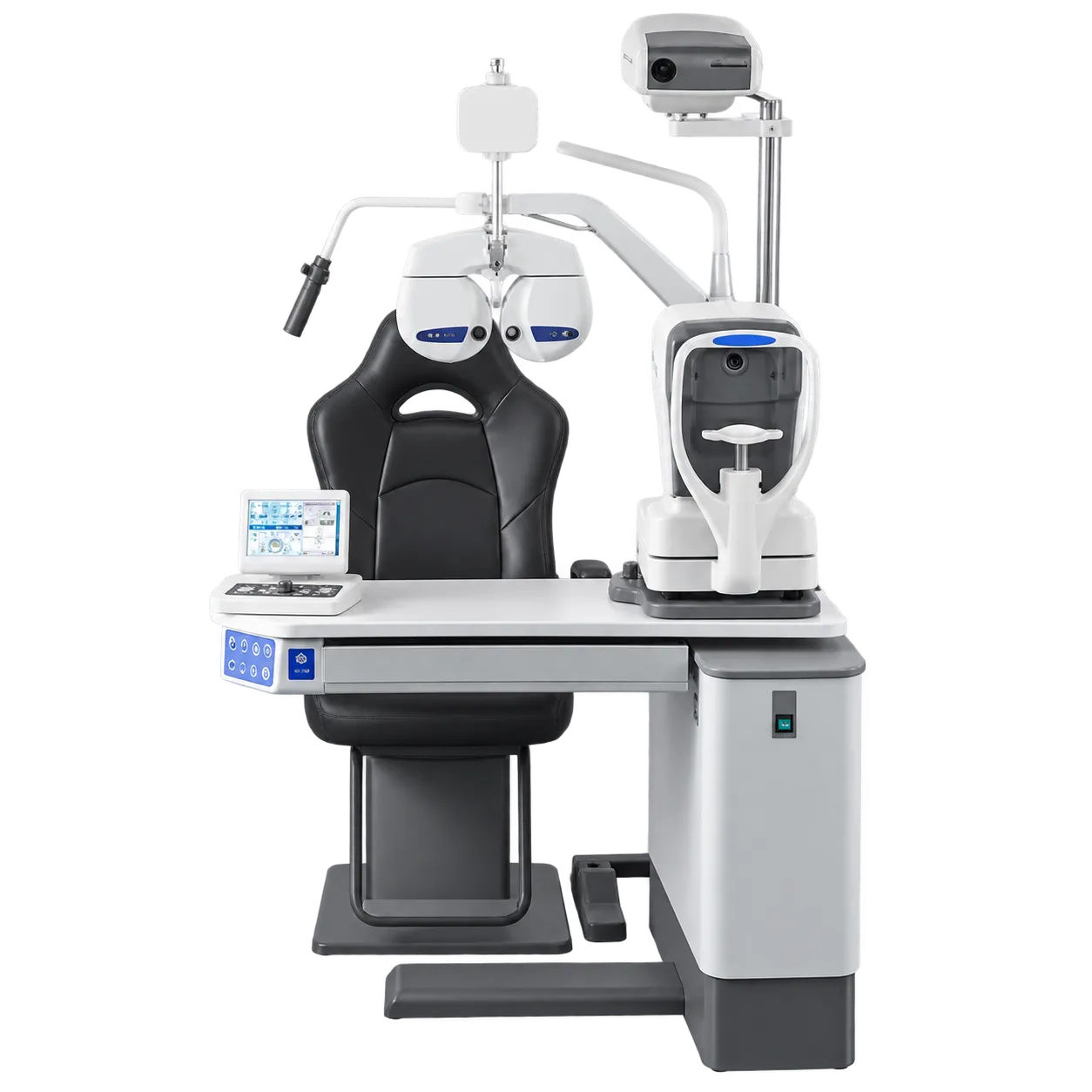
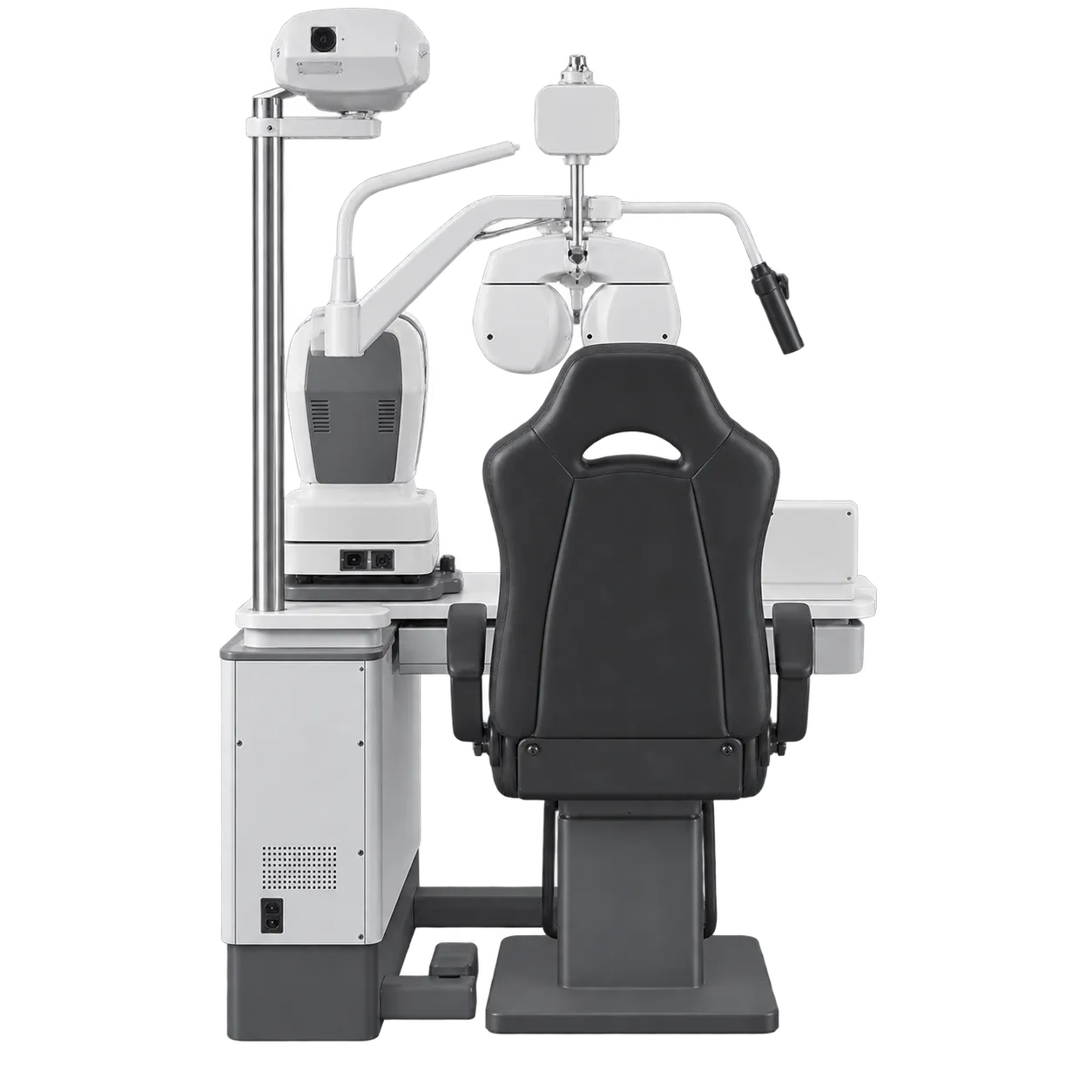
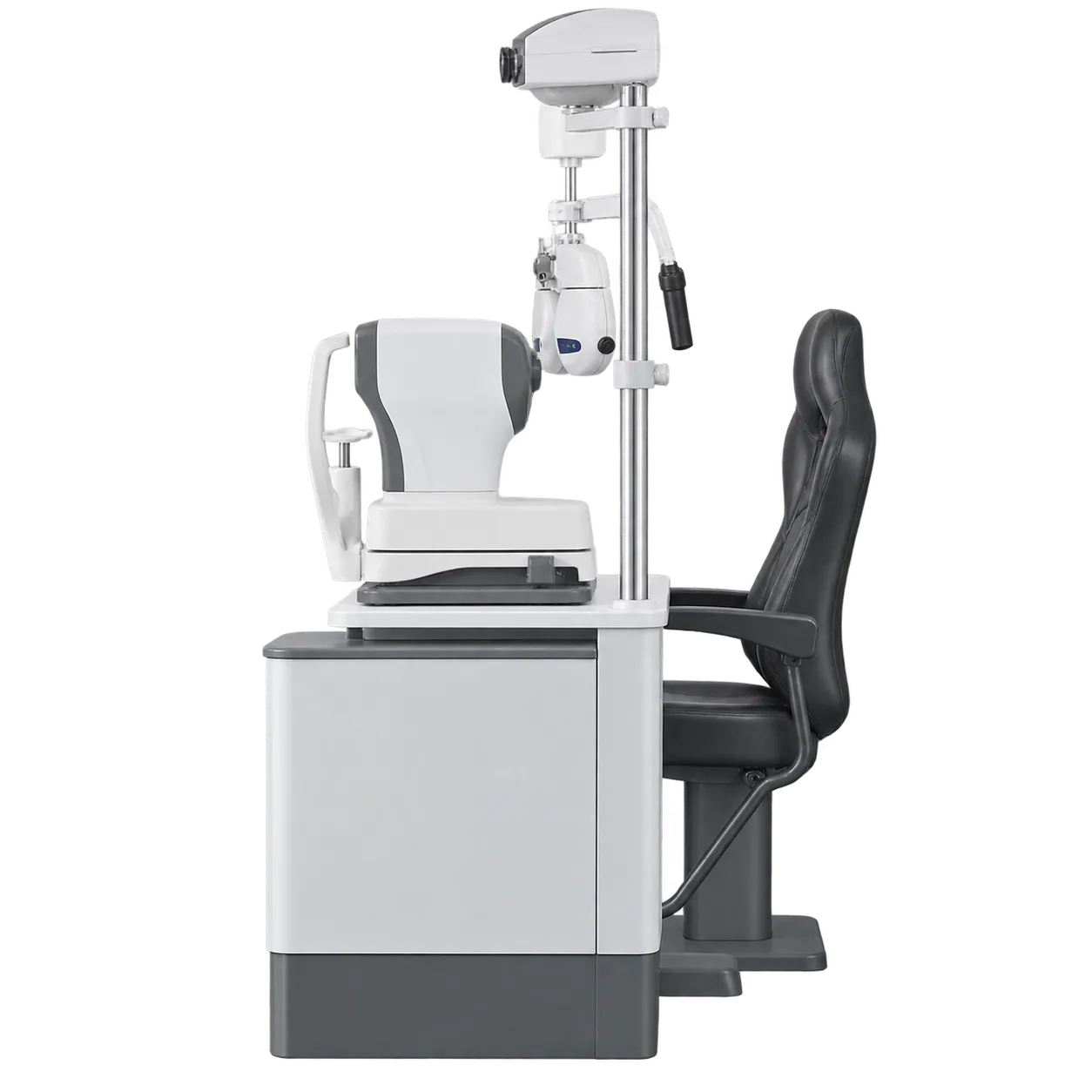
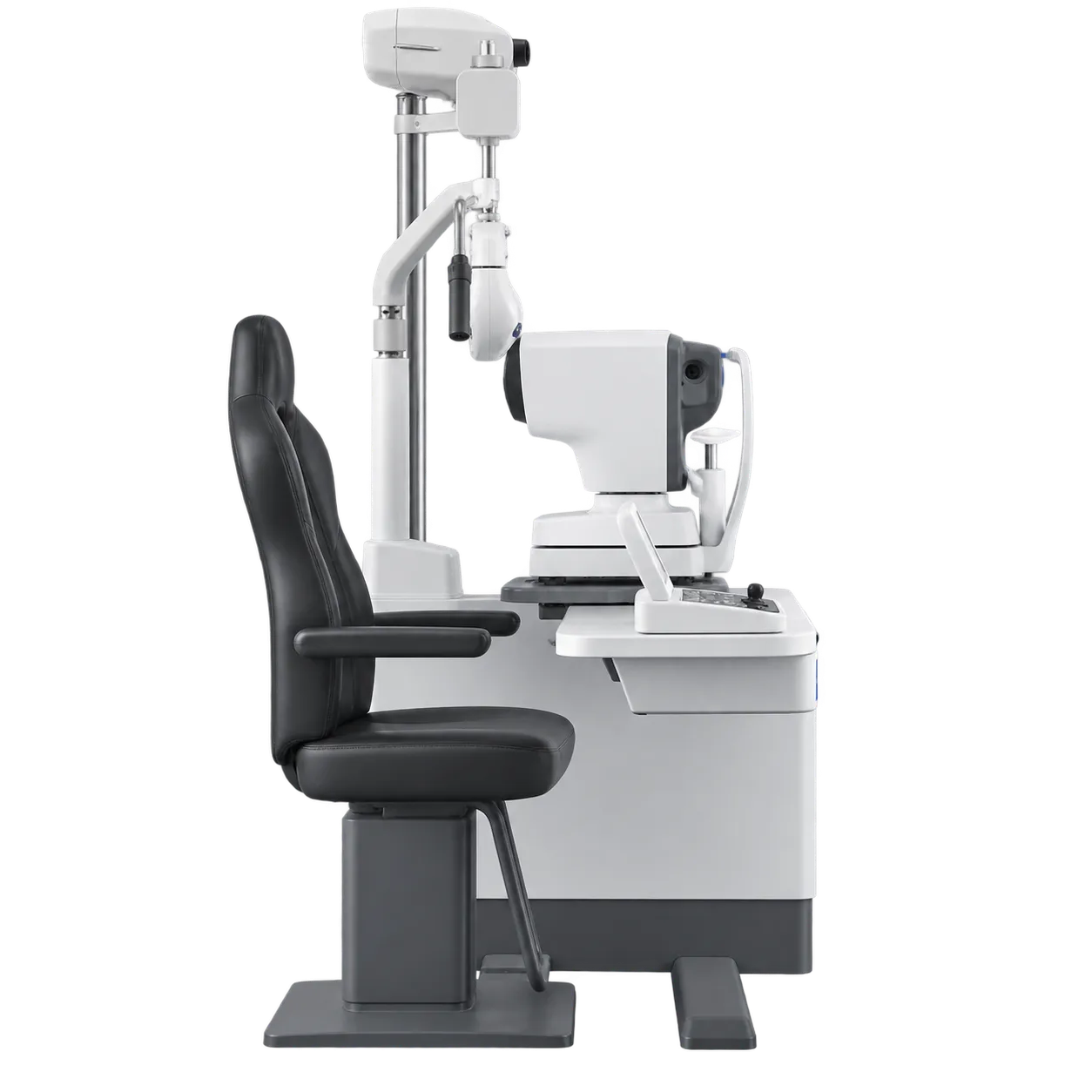
Rooms serving both a range of patients and a range of clinicians benefit most, which is to say most rooms. Patient eye height varies with stature, with mobility and with how far a patient can sit forward; clinician working height varies with the person and with whether they are seated or standing. A unit adjusting only one of those forces the other to accept whatever results. Independent elevation of table and chair means neither has to.
Shared consulting rooms compound the point. Where several clinicians use one position across a week, a table fixed at one height suits whoever it was set for. A 150 mm table range resettable between sessions removes that, and the separate 150 mm chair range means the patient is still positioned properly whatever the table is doing.
Seated examination benefits specifically from the 30 mm board. Knee clearance beneath a working surface is the constraint that determines whether a clinician sits square to the patient or twists to one side, and board thickness comes directly out of it. A thin board at a settable height is a materially better working position than a thicker one.
Accessibility is served by a chair descending to 600 mm, lower than several units in this range, which makes transfer easier for patients using sticks, frames or wheelchair transfer.
Three things need settling before ordering. Chair loading is not published — the manufacturer says the chair bears heavy weight without giving a figure, where several units in this range state 200–250 kg. Overall unit dimensions and weight are absent, so a room cannot be planned from the datasheet. And the sliding board's dimensions are given without any description of how it deploys or what it carries.