
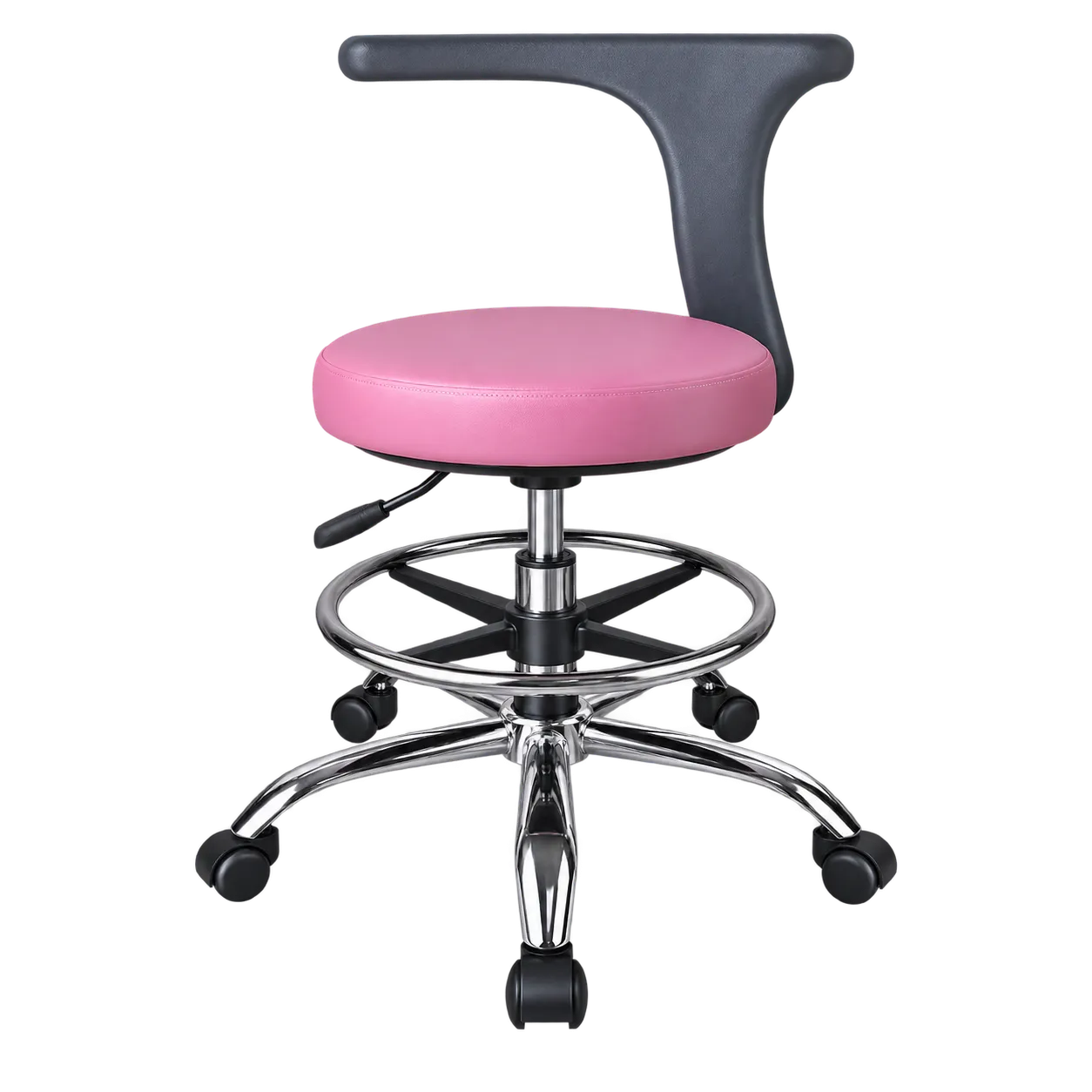
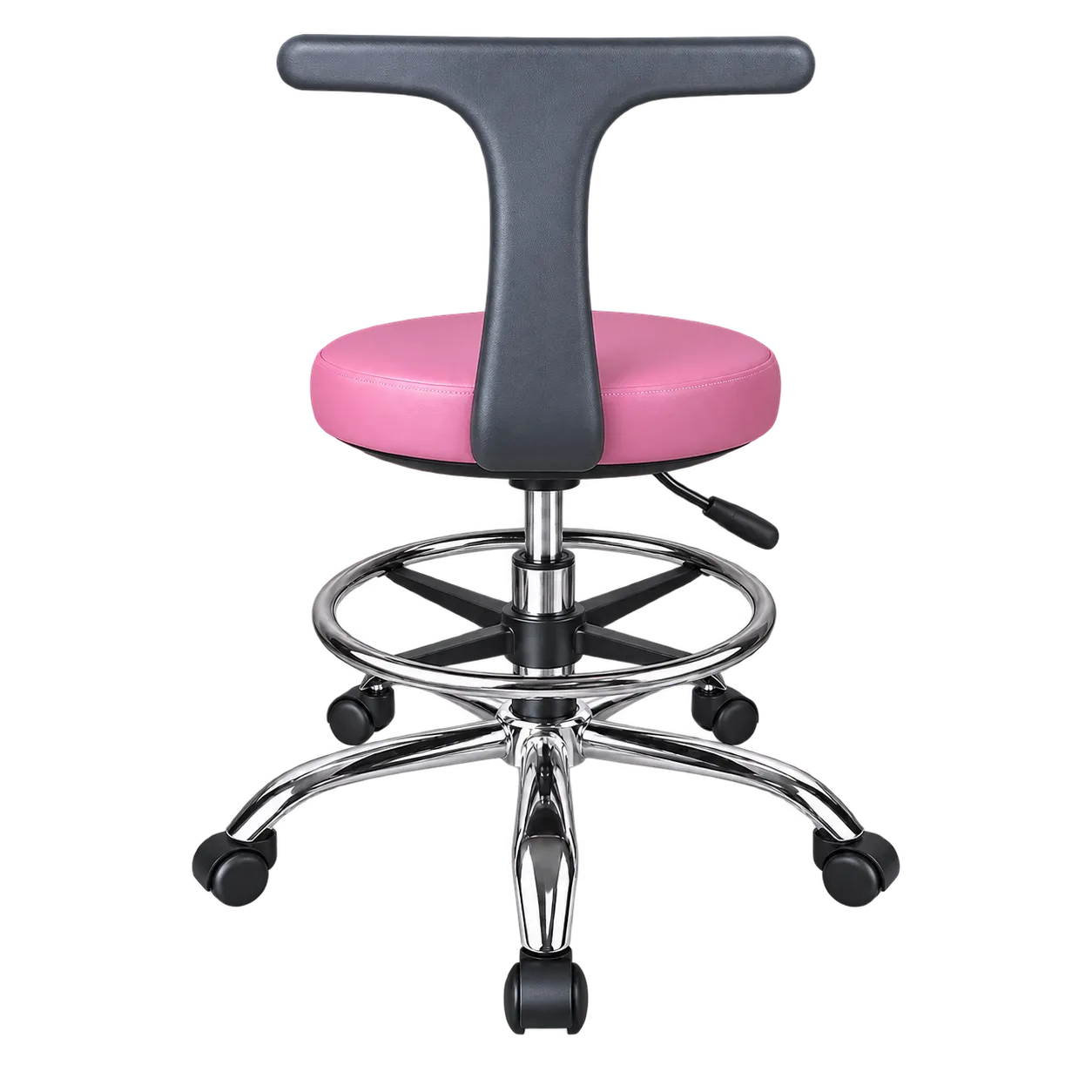
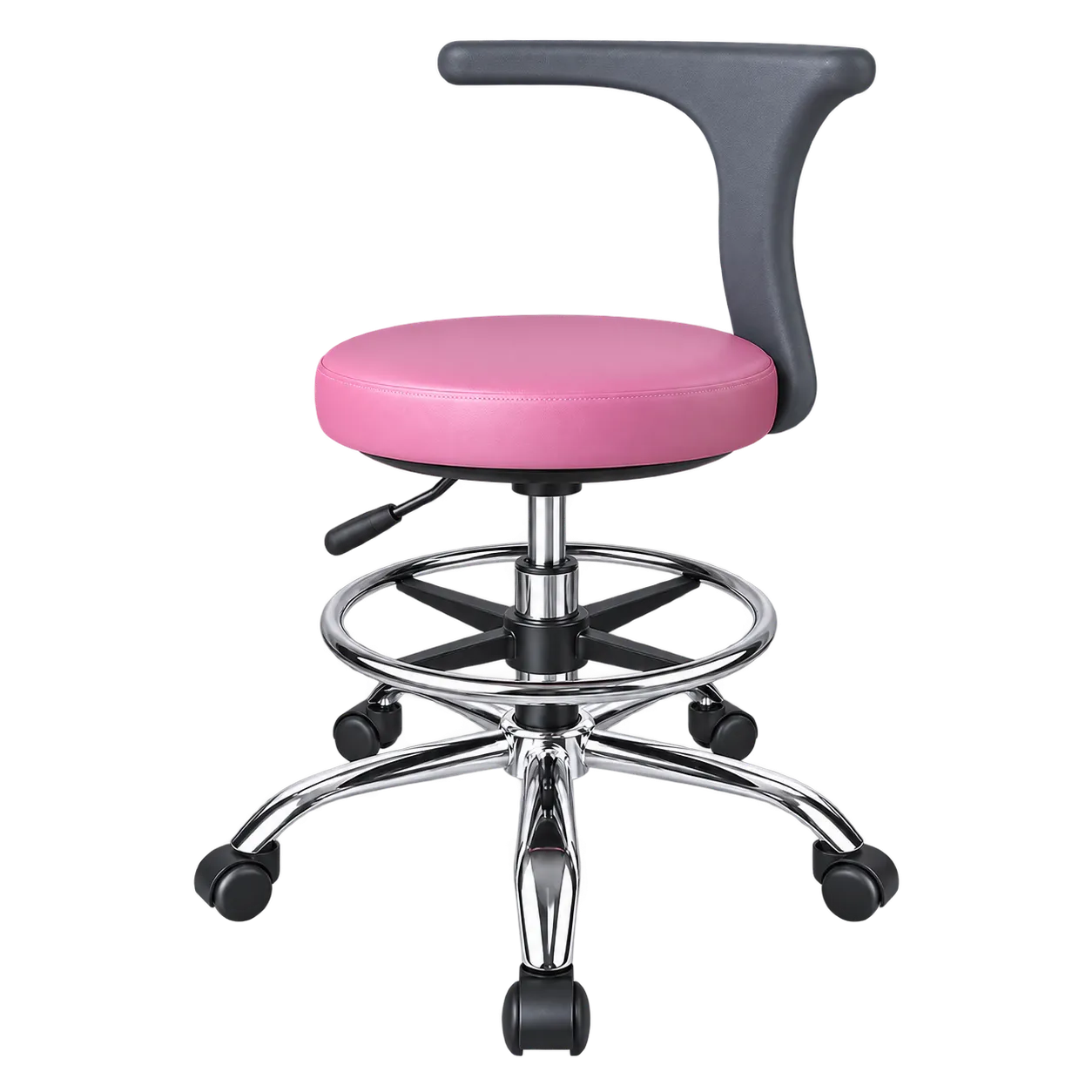
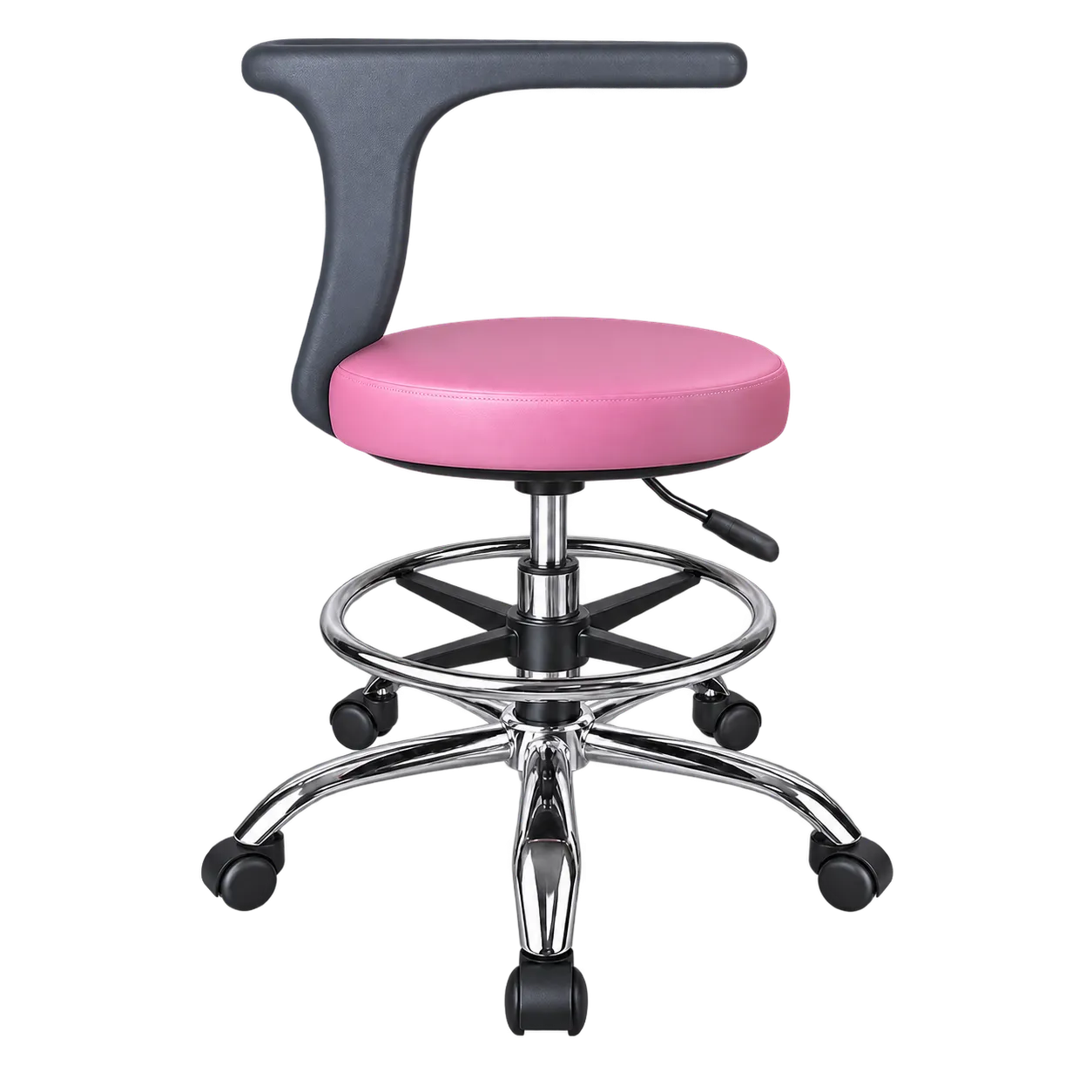
Raised instrument positions are the natural home. Where a slit lamp or a table sits high, the clinician's stool goes up with it, and a foot-ring is the difference between a comfortable list and an uncomfortable one.
Standing-height benches suit the stool particularly well. Practices with a dispensing counter or workshop bench at counter height need seating that reaches it, and a draughtsman-style stool is the established answer.
Contact lens fitting and teaching benefit, since practitioners sit close to the patient for extended periods and often at a raised working height.
Dispensing and adjustment work at a high bench keeps staff seated with their feet off the floor, which is exactly what the ring addresses.
Shared consulting rooms gain from quick gas-lift adjustment, though whether the foot-ring also adjusts is the question that decides how well the stool suits clinicians of different heights.
Patient-facing rooms suit the polished chrome and rose upholstery, which read as less utilitarian than a black nylon base.
Staff wellbeing is the underlying case. Sustained seated postures with unsupported legs contribute to the musculoskeletal complaints common across clinical work, and a foot-ring is a simple mitigation.
Conventional desk-height work does not need this stool, and practices whose clinicians sit low all day will find a plain stool adequate and cheaper.