
Gain Adjustable Across 0 to 120 Decibels
Adjustable gain across the full range lets the operator lift a weak returning signal, which is frequently what makes measurement possible in a dense cataract.
Stated Compact Dimensions
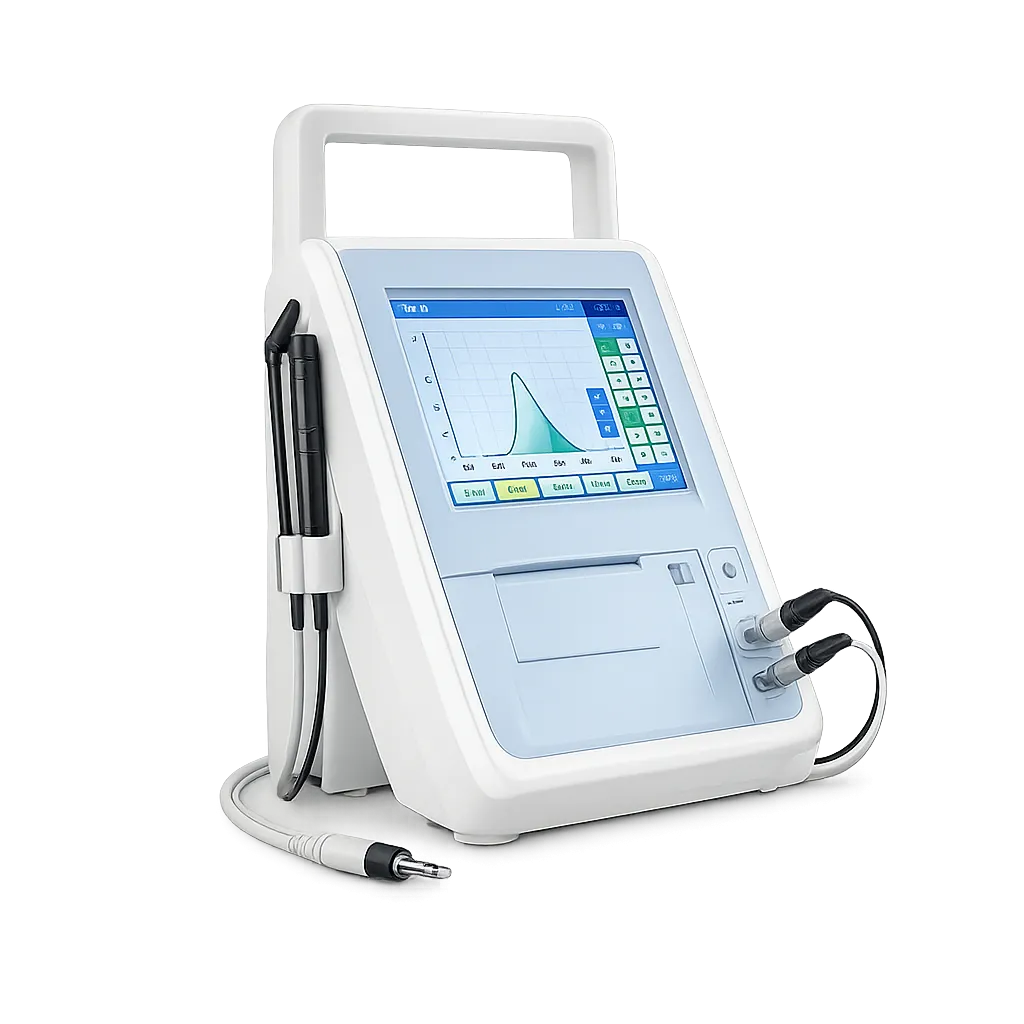
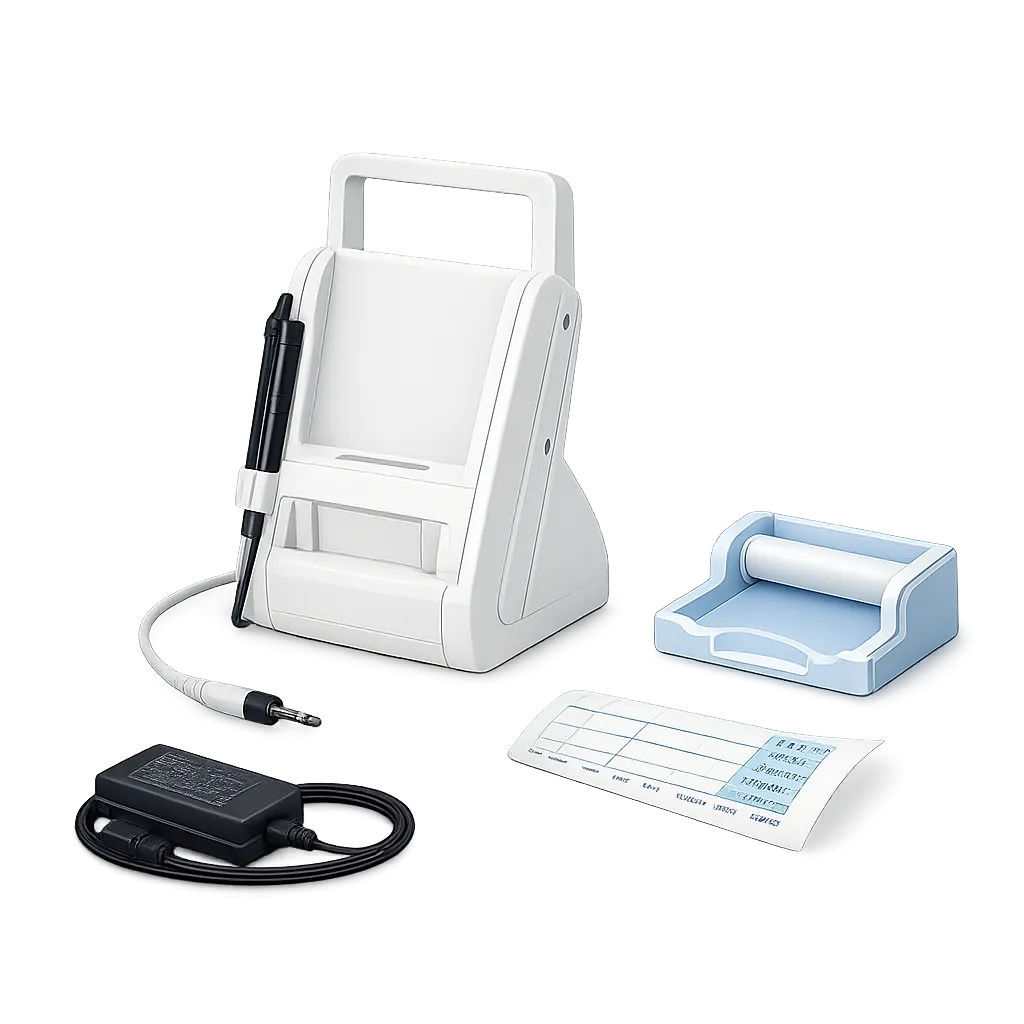
The housing measures 200 by 168 by 165 millimetres, so a clinic can establish whether it fits an intended position before committing rather than discovering the answer on delivery. The printer and touchscreen sit within that same footprint.
Resolution to 0.01 Millimetres
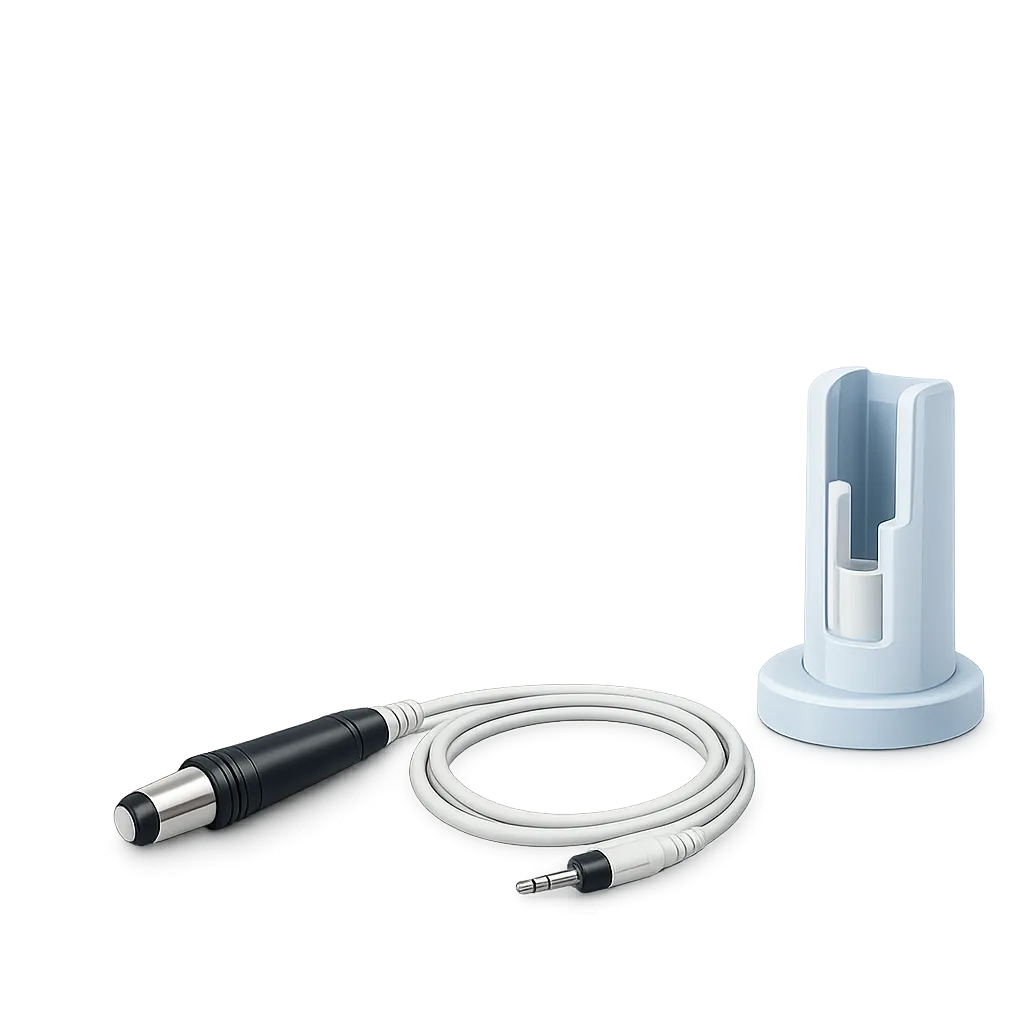
The 10MHz biometry probe resolves to 0.01 millimetres with accuracy of plus or minus 0.02 millimetres, measuring across 15 to 35 millimetres at 1640 metres per second.
Four Measured Parameters
Anterior chamber depth, lens thickness, vitreous length and axial length are all reported, feeding the lens power calculations that require them.
Four Eye Modes
Normal, aphakic, pseudophakic and dense cataract settings adapt measurement to the state of the eye, since lens condition changes how ultrasound travels through it.
Six Lens Power Formulas
SRK-II, SRK-T, Binkhorst, Holladay, Hoffer-Q and Haigis are all provided, letting a surgeon apply whichever formula suits the eye being measured. Formula performance varies considerably across differing axial lengths.
Micrometre Corneal Resolution
The 20MHz corneal probe measures across 0.23 to 1.3 millimetres, resolving to 1 micrometre with accuracy of plus or minus 5 micrometres.
Touchscreen and Internal Printer
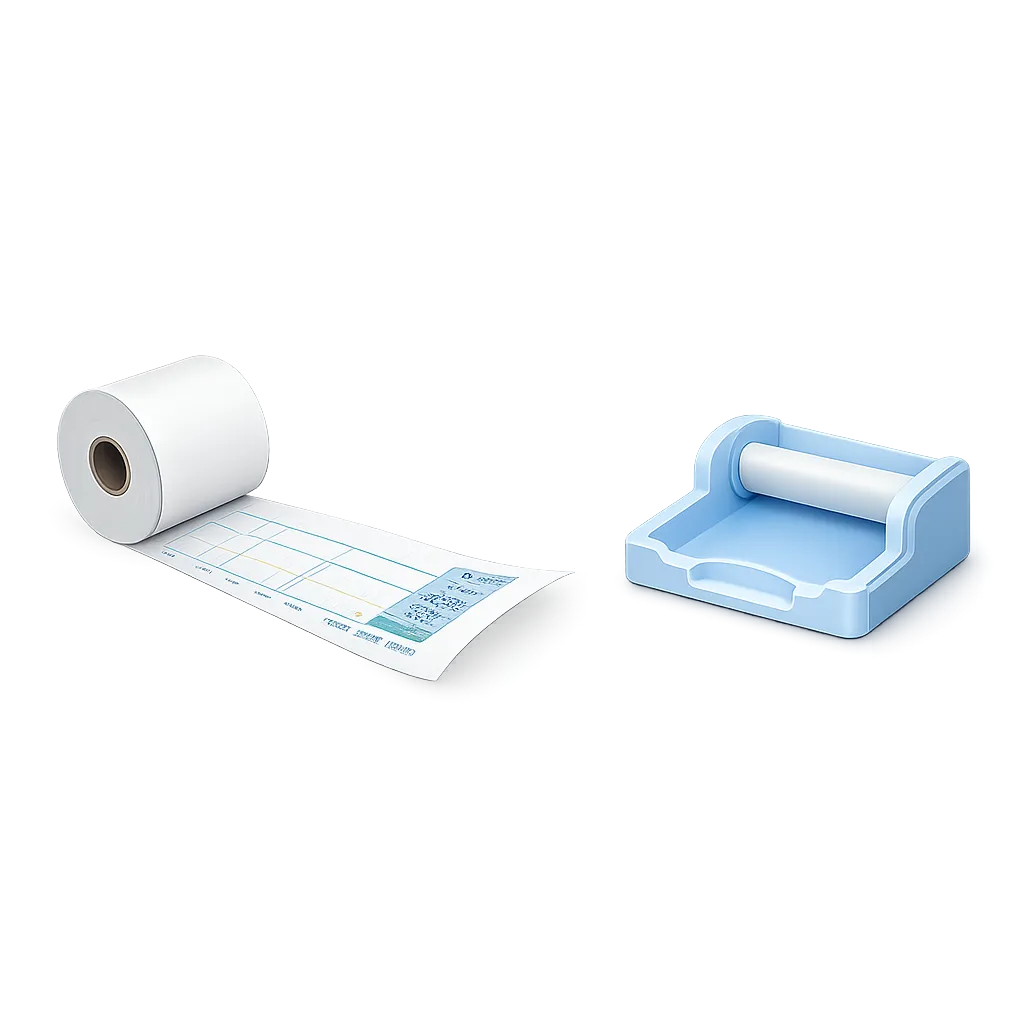
A 5.7 inch colour touchscreen handles patient entry and operation, while an internal thermal printer produces reports at the instrument itself.