
Fully Integrated Body
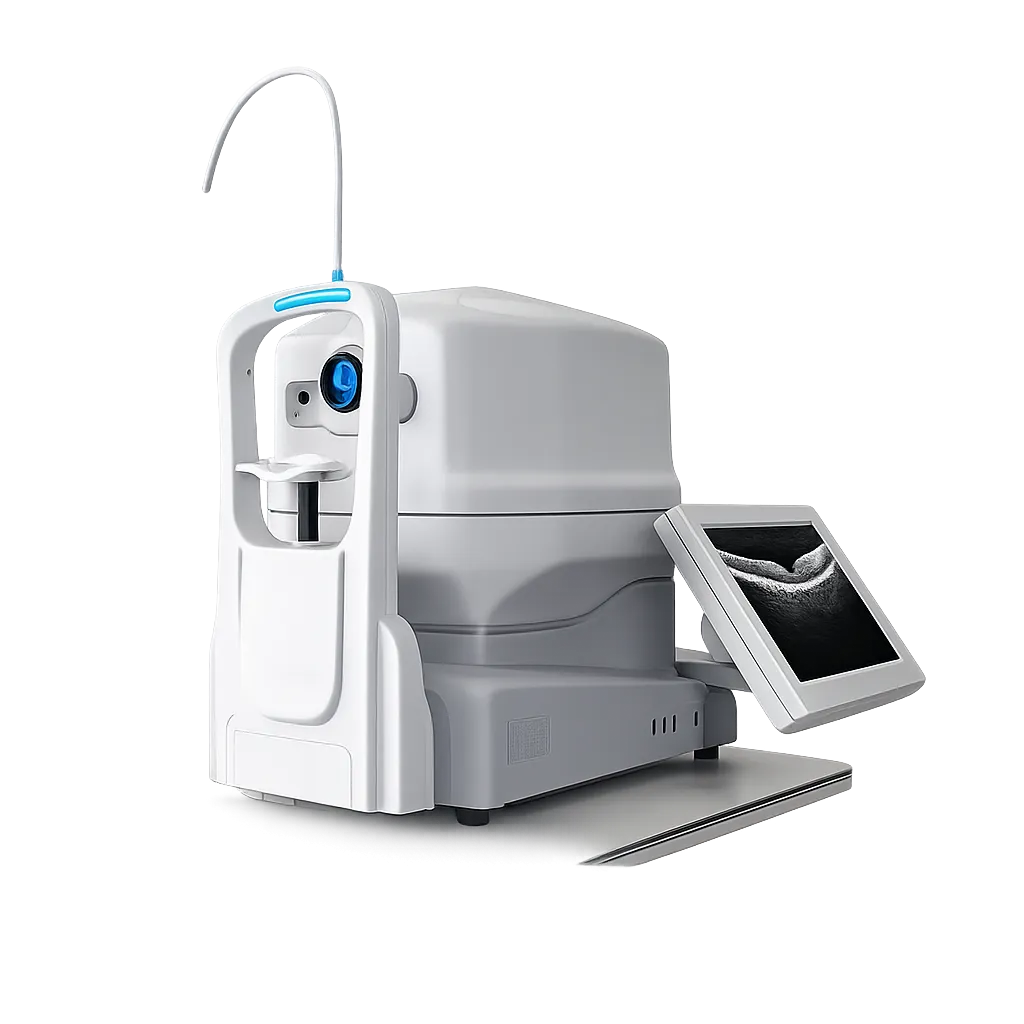
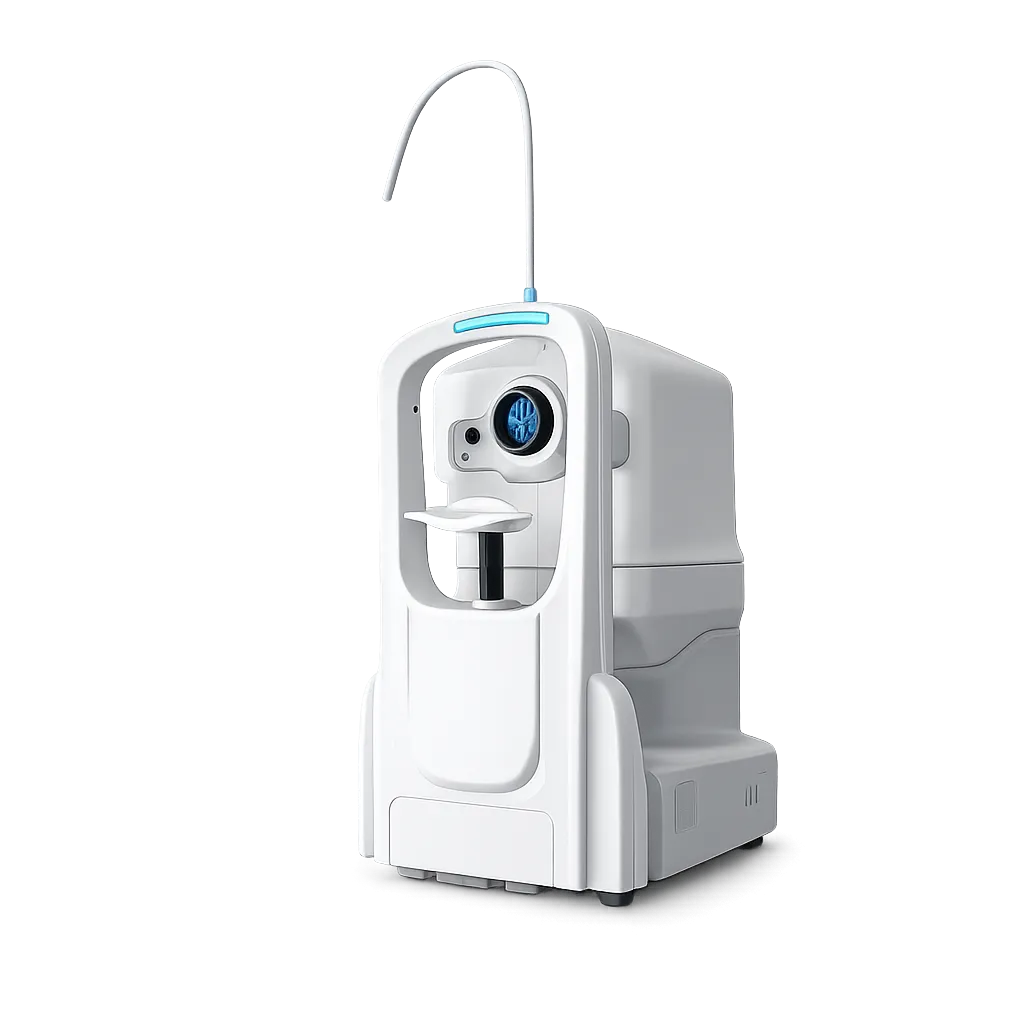
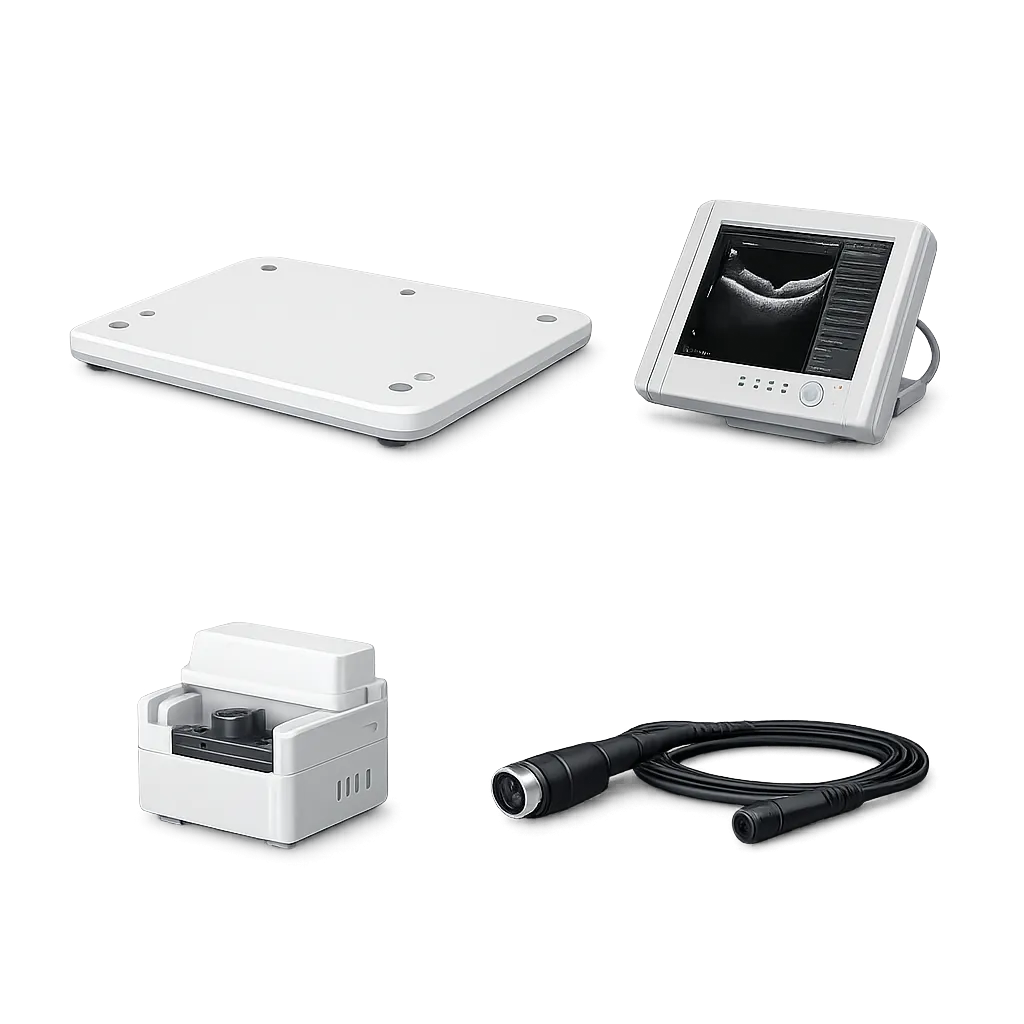
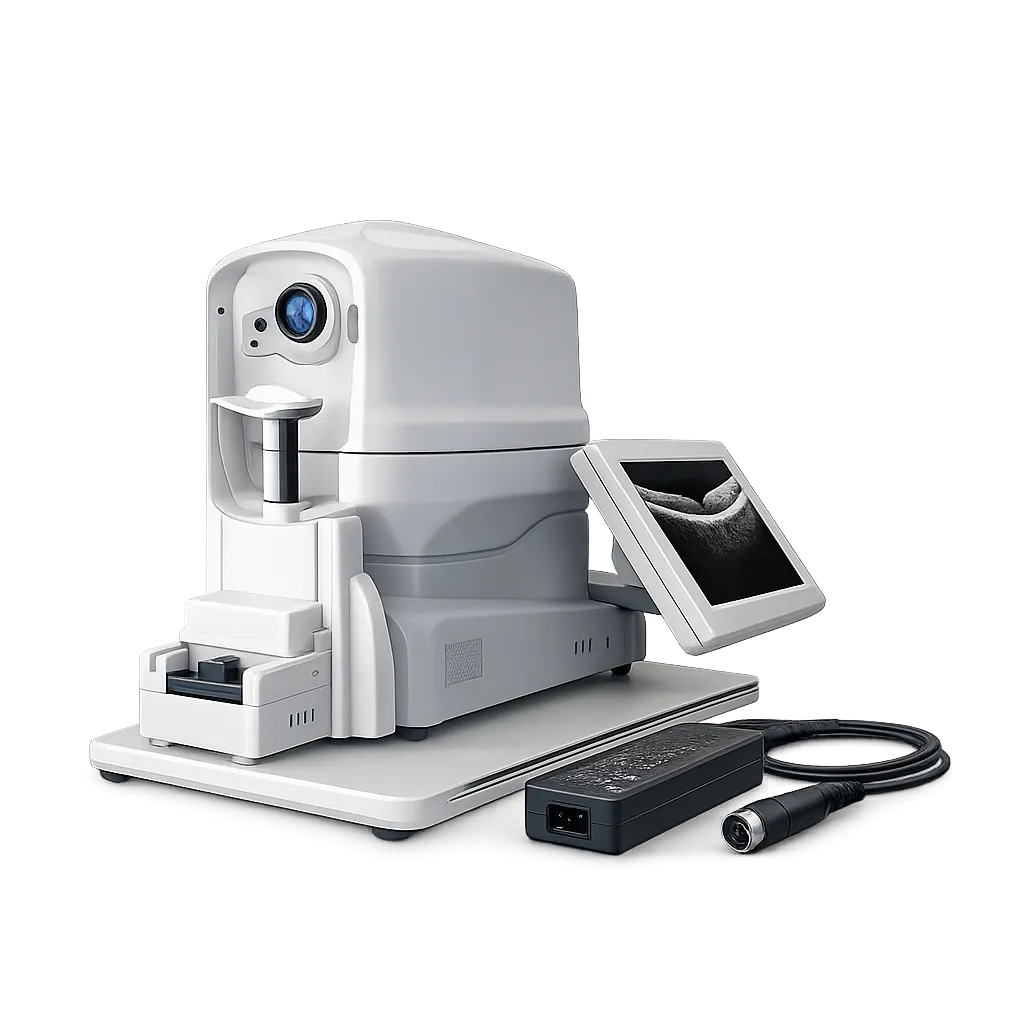
Everything the machine needs sits inside one compact housing. The optics, the capture electronics, the processing computer and the display are assembled as a single working instrument rather than a set of parts a clinic must gather and connect.
Internal Computer for Acquisition and Processing
The manufacturer material states that data acquisition and processing are accomplished by the computer built into the machine. That removes the need for a separate workstation beside the instrument and keeps the imaging software and the scanner together on one device.
USB and External Drive Transfer
Captured data can be moved off the machine using USB or an external hard drive. Clinics can carry studies to a reporting station, archive them or pass them onward without depending on a fixed network link.
Peripheral Ports for Keyboard and Printer
The computer ports accept peripheral devices such as a keyboard or a printer. Typing patient details at the machine, or producing a paper copy of an image for the notes, needs no hardware beyond the peripheral itself.
Single Screen Working
A screen carried on the side of the body presents the live camera view and the captured tomogram together. Alignment, focusing, capture and first review all happen from one seated position at the instrument.
Uncomplicated Installation
The manufacturer describes installation as requiring no complex connection or setup. Bringing the instrument into service is mainly a matter of siting it, connecting the supply and switching on.
Small Room Footprint
The compact body is intended to fit into even a small space. Practices with a single crowded diagnostic room can accommodate the instrument without clearing a dedicated area for a tower and monitor.