
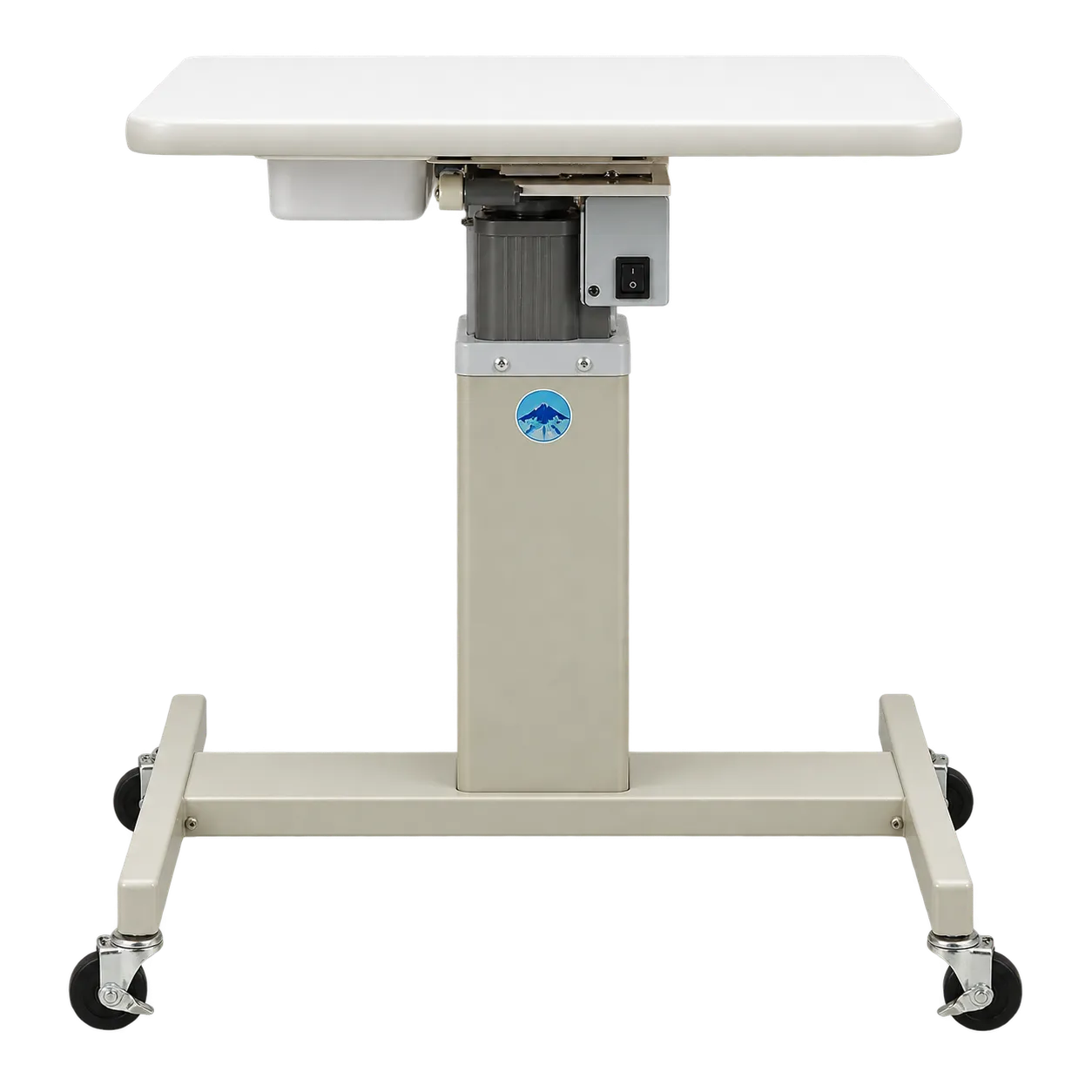
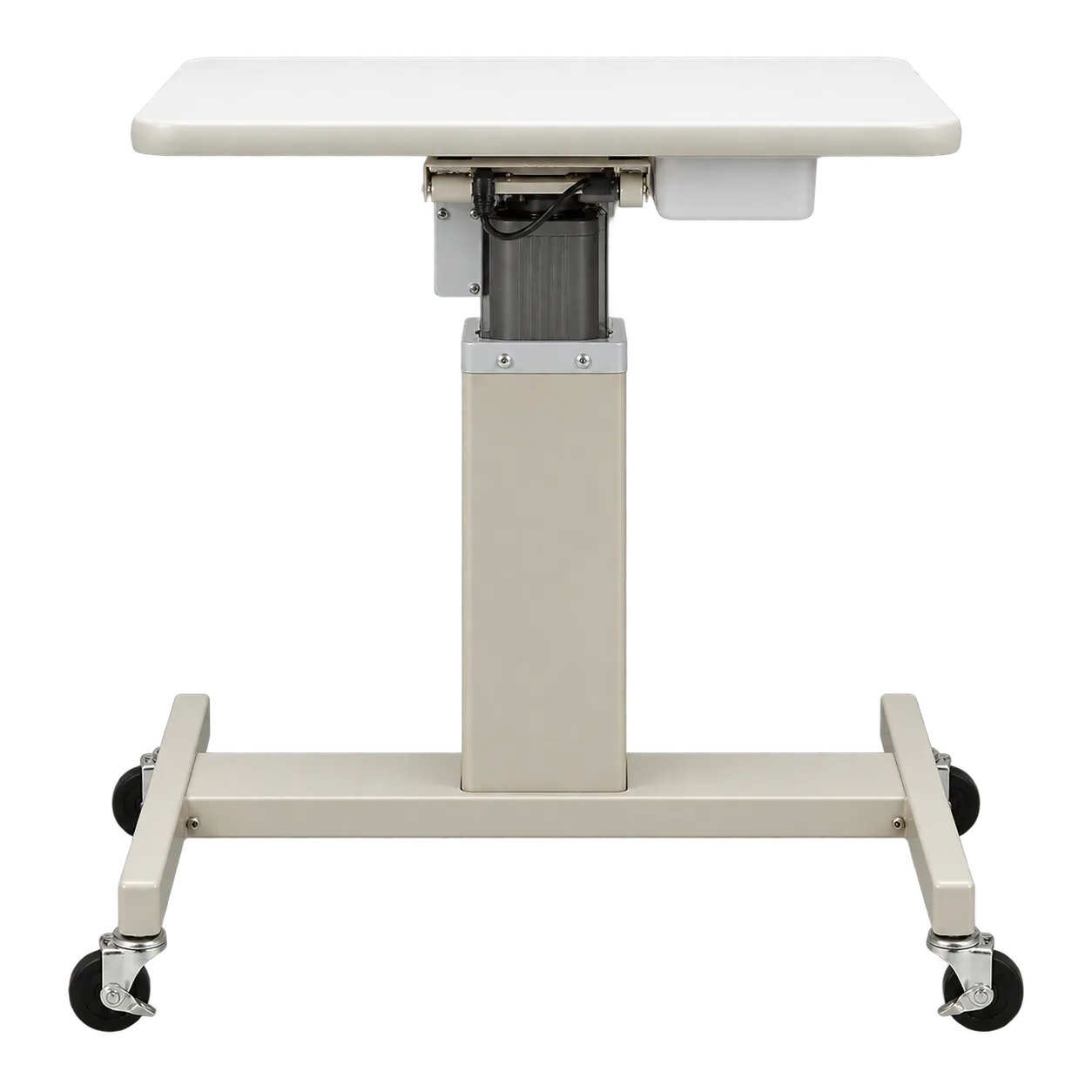
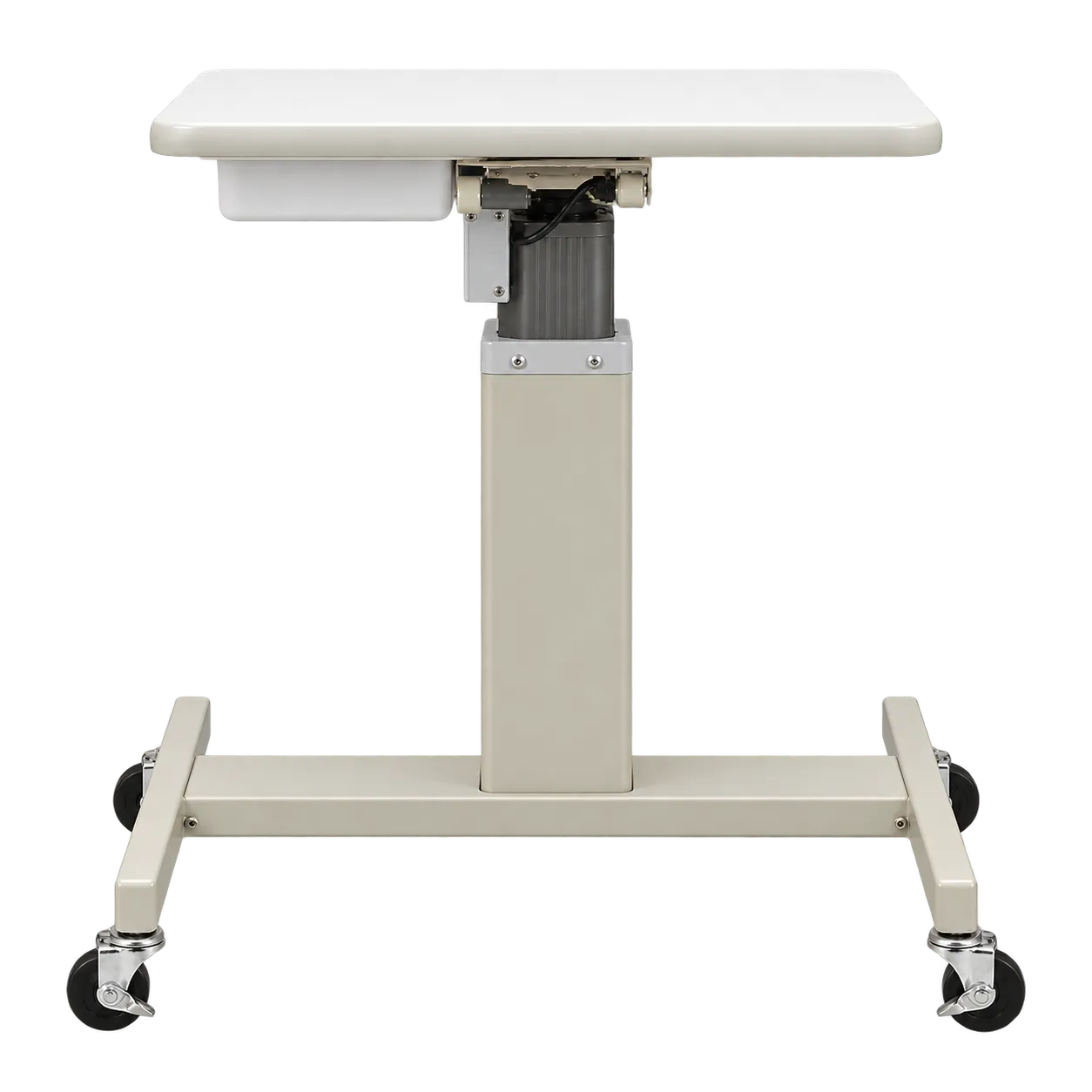
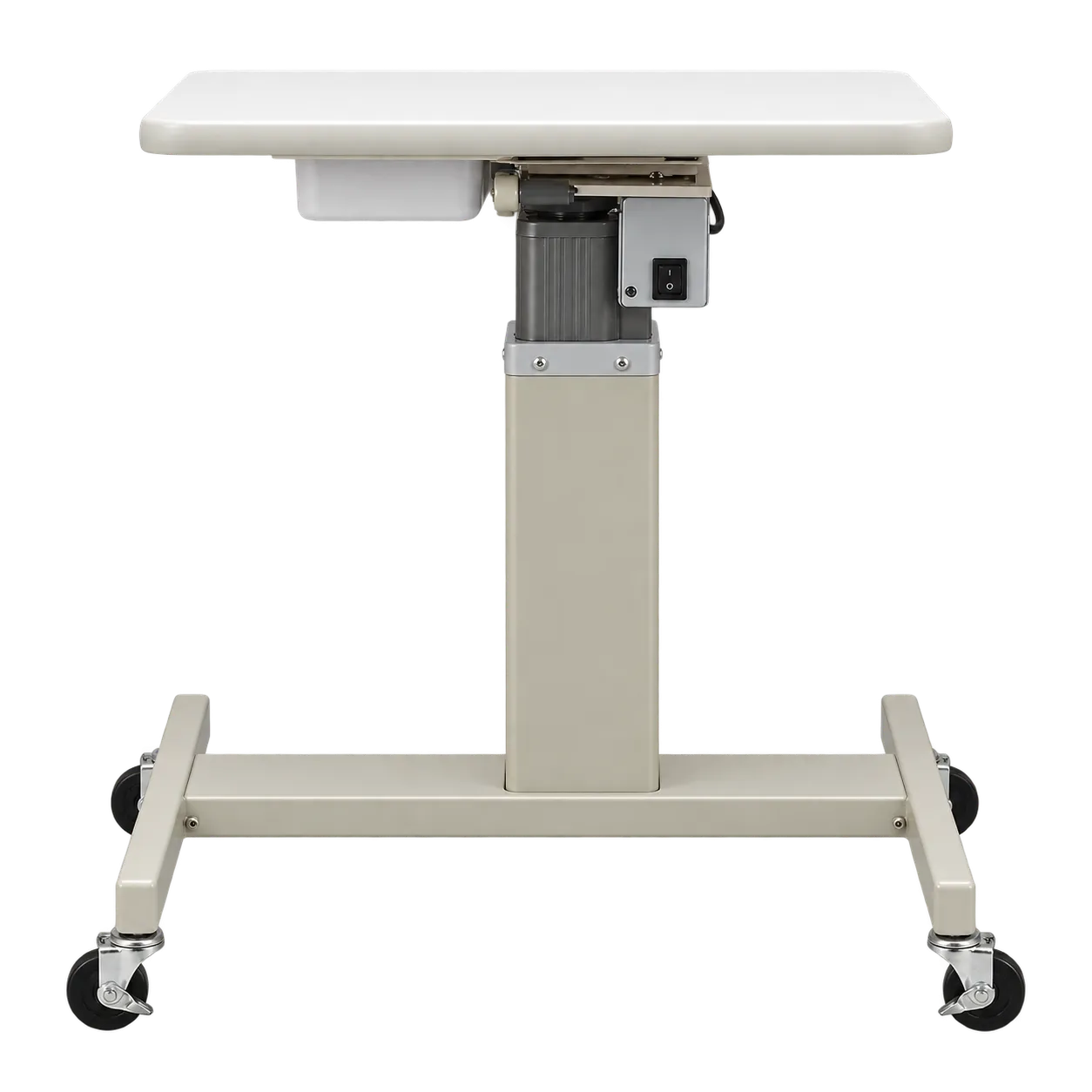
Multi-room practices are the natural home. Where one autorefractor or tonometer serves two consulting rooms, or a pre-test station is wheeled aside for a busy clinic session, the table moves several times a day. A published weight around 18 kg net and an aluminium base make that easy, and the base cannot rust where it gets knocked against door frames.
Pre-test rooms benefit from the hydraulic lifter. Optical assistants working through a list often change the height after the patient has settled at the chinrest, and a top that eases into motion keeps the patient in place. Non-contact tonometry, where patients tend to brace before the air puff, gains from the calmer movement.
Front-of-house optician settings suit the combination. A pre-test instrument in view of the shop floor or reception benefits from a base that stays presentable under daily cleaning, provided the disinfectant is aluminium-compatible.
Slit lamp positions gain from gentle height adjustment mid-examination and the 100 × 100 mm column beneath a generous top. Anterior segment assessment and contact lens aftercare go more smoothly when adjustments do not disturb the patient, supporting the standard the GOC expects. As with any aluminium base, a quick lean test with your own slit lamp is worthwhile.
Hospital eye service outpatient clinics and university optometry clinics suit the black rubber castors on clinical vinyl, subject to confirming the tread for pale floors and checking that the local cleaning regime is compatible with aluminium.
Paediatric clinics benefit from gentle movement that is less likely to startle a child, with the lower end of the range reaching around 630 mm.
Wheelchair users are partly served: the height range suits many, but the column and curved base have no published clearance figure, so practices with many wheelchair users usually keep a dedicated offset-column table as well.