
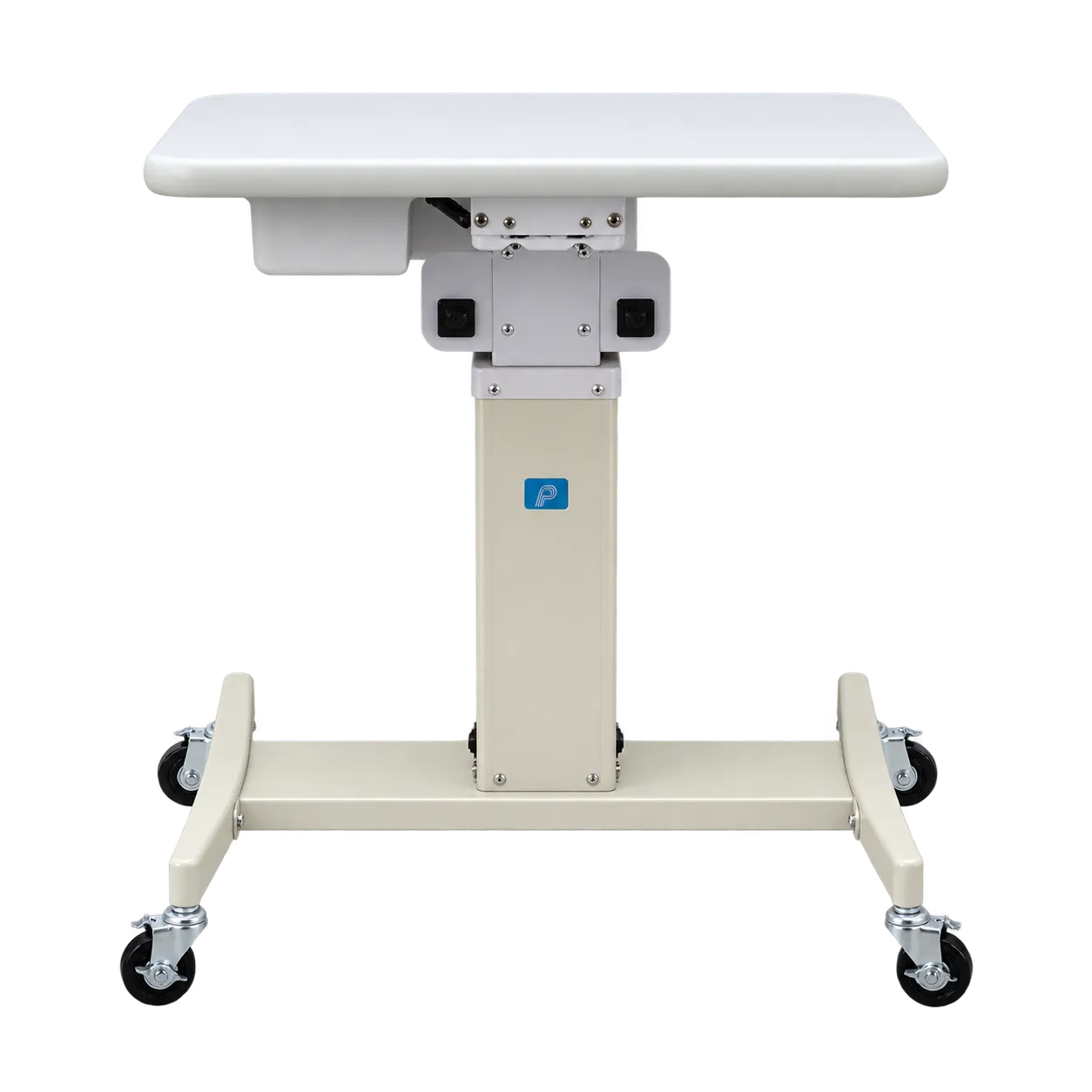
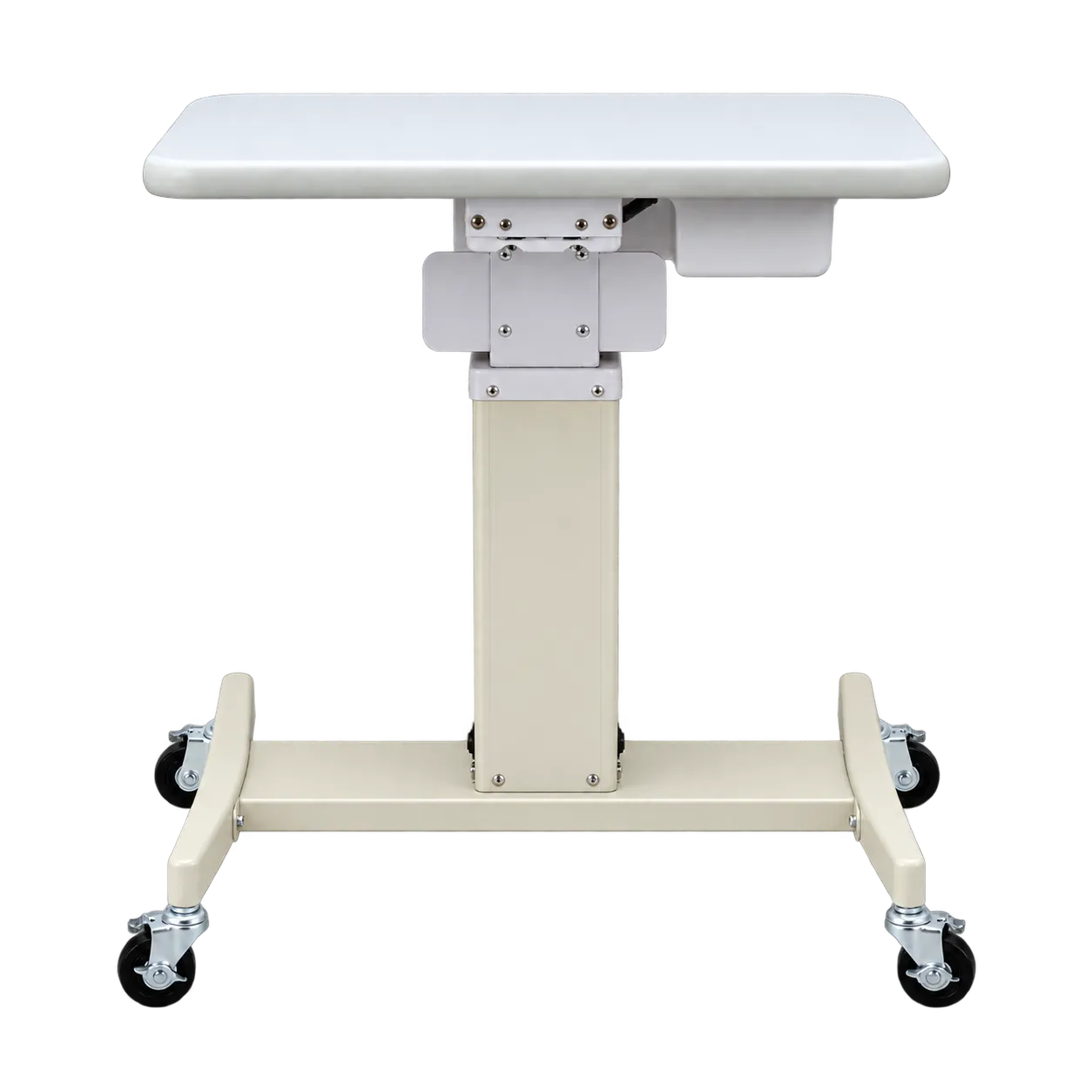
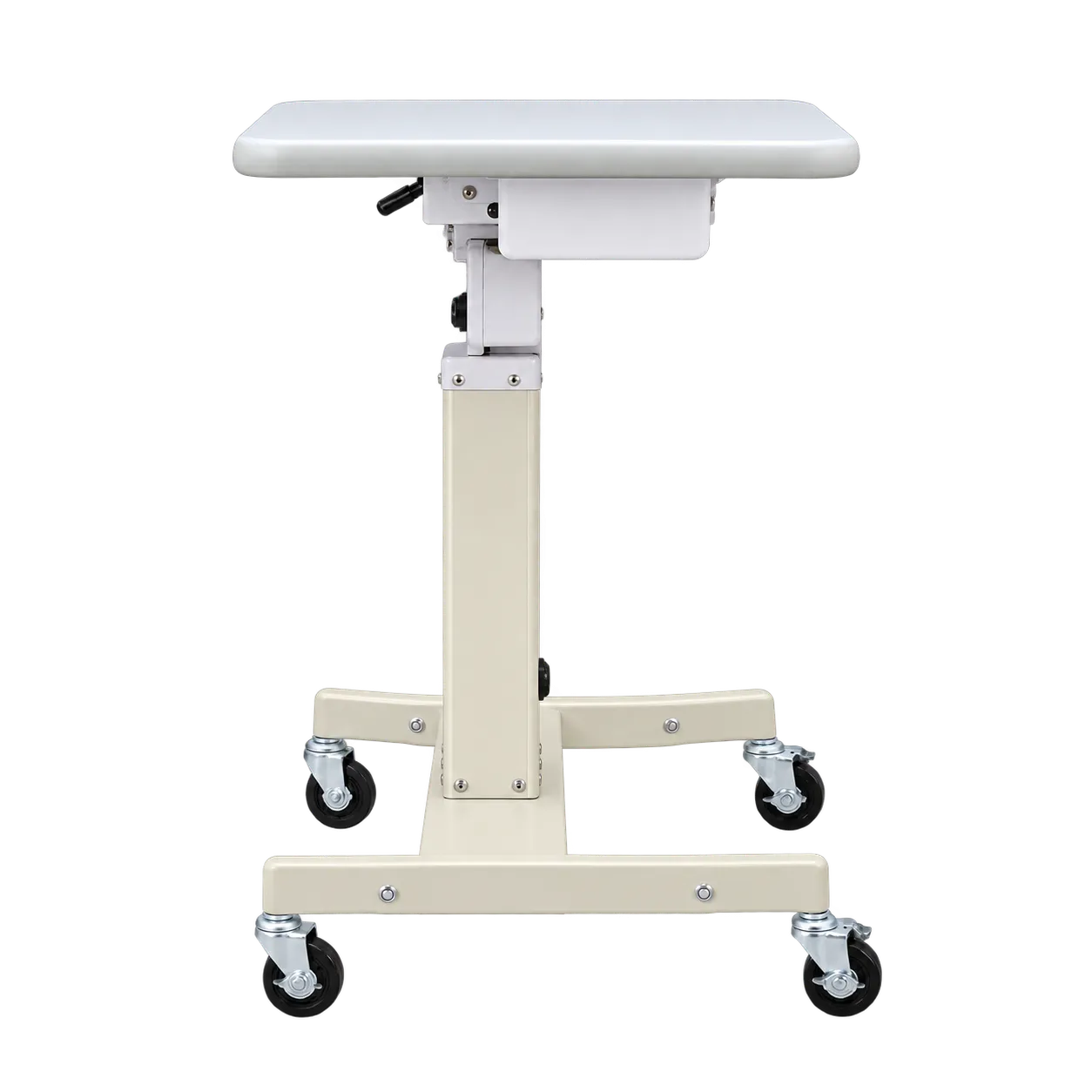
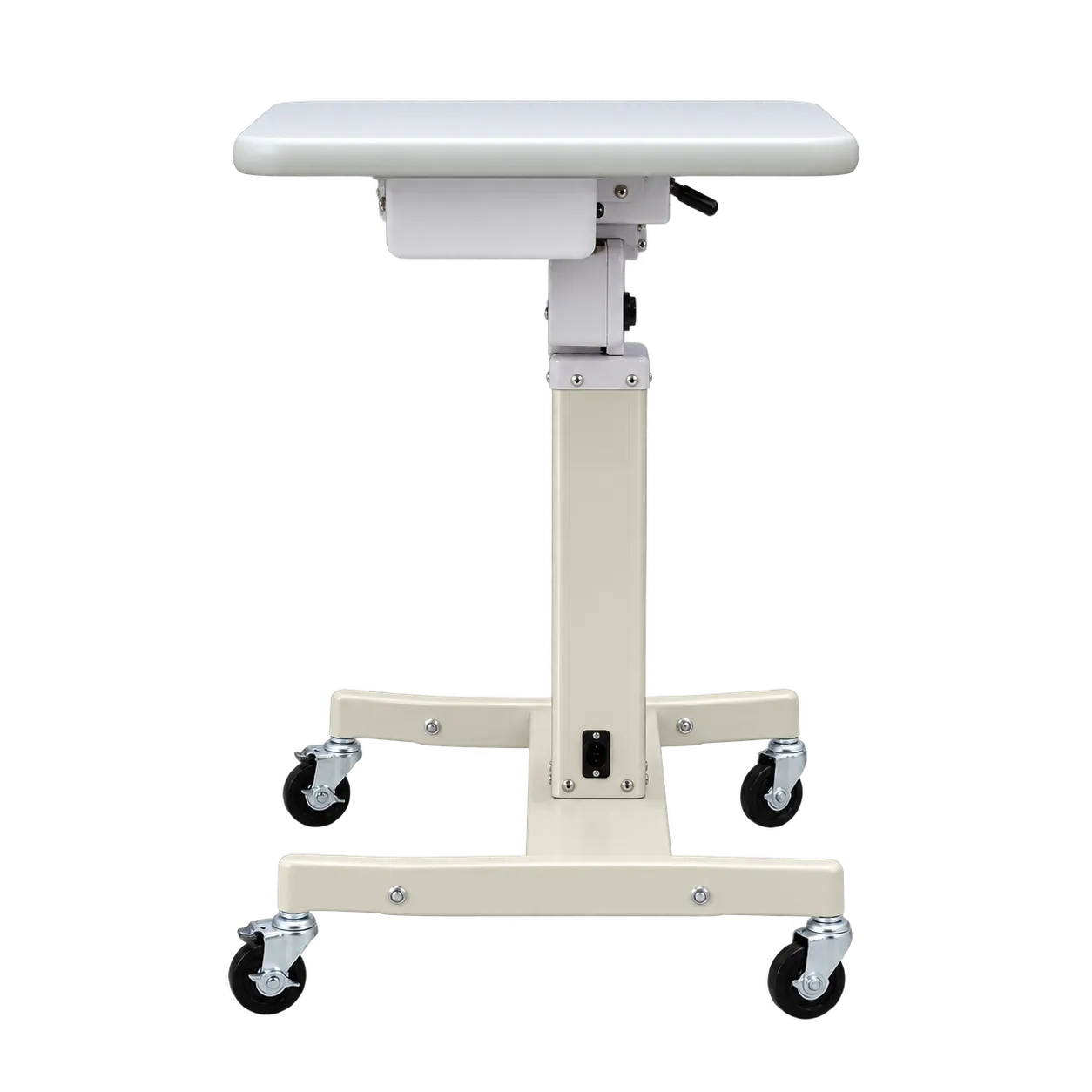
Pre-test rooms are where a gentle lift earns its place. Autorefraction, keratometry and non-contact tonometry are usually carried out by optical assistants working through a list, and the height often changes after the patient has settled at the chinrest. An abrupt start at that moment can lift the chin or push the forehead back, costing a re-alignment. A top that eases into motion keeps the patient in place and the list moving.
Non-contact tonometry benefits in particular. Patients are often tense before the air puff, and anything that makes the preparation feel smoother helps them hold still. The 480 × 550 mm top leaves room beside the instrument for printouts or a spare chinrest paper.
Slit lamp positions gain from the same gentle movement when a clinician fine-tunes height mid-examination, and from the 100 × 100 mm column beneath a generous top. Anterior segment assessment and contact lens aftercare go more smoothly when adjustments do not disturb the patient, supporting the standard of examination the GOC expects.
Hospital eye service outpatient clinics and university optometry clinics suit the black rubber castors on clinical vinyl, subject to confirming the tread compound for pale floors.
Paediatric clinics benefit from gentle movement and the lower end of the range. A child on a raised seat reaches a chinrest near 630 mm, and a top that does not lurch is less likely to startle them.
Busy multi-site practices should weigh the maintenance profile. A hydraulic lifter needs occasional checks for seal wear, so practices with in-house or contracted equipment servicing are best placed to keep it performing.
Wheelchair users are partly served: the height range suits many, but the column and two-rail base limit knee and footplate clearance, so practices with many wheelchair users usually keep a dedicated offset-column table as well.