
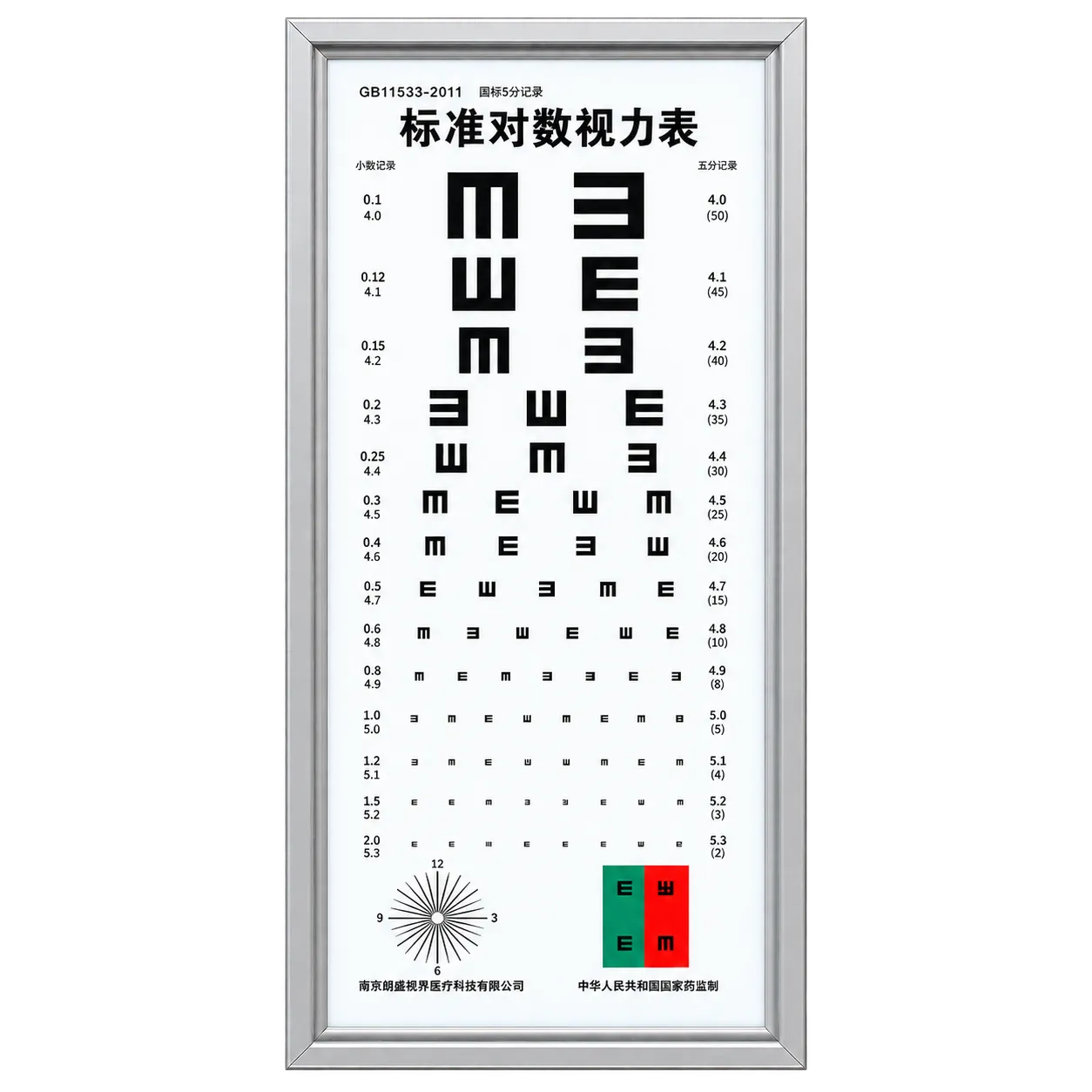
Rooms of two and a half to three metres are the target, and there are a great many of them. Converted retail units, upper-floor consulting rooms, community clinic rooms, school medical rooms and screening positions in shared premises frequently cannot deliver a 5 metre direct lane, and a mirrored arrangement is not always practical either — the mirror needs its own wall position, a sight line clear of the patient's head, and regular cleaning of a surface that is easy to overlook. A chart drawn for 2.5 metres removes the whole question.
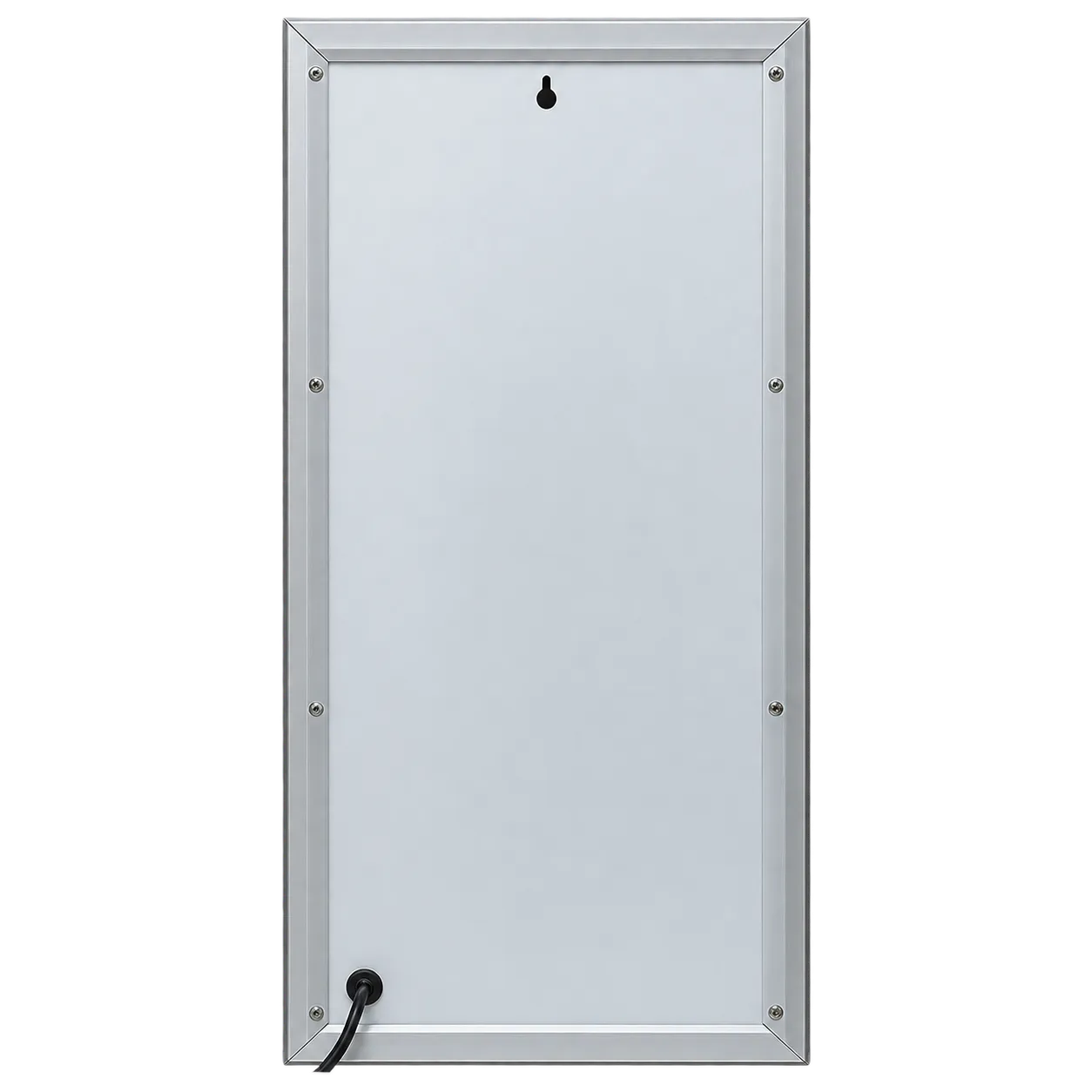
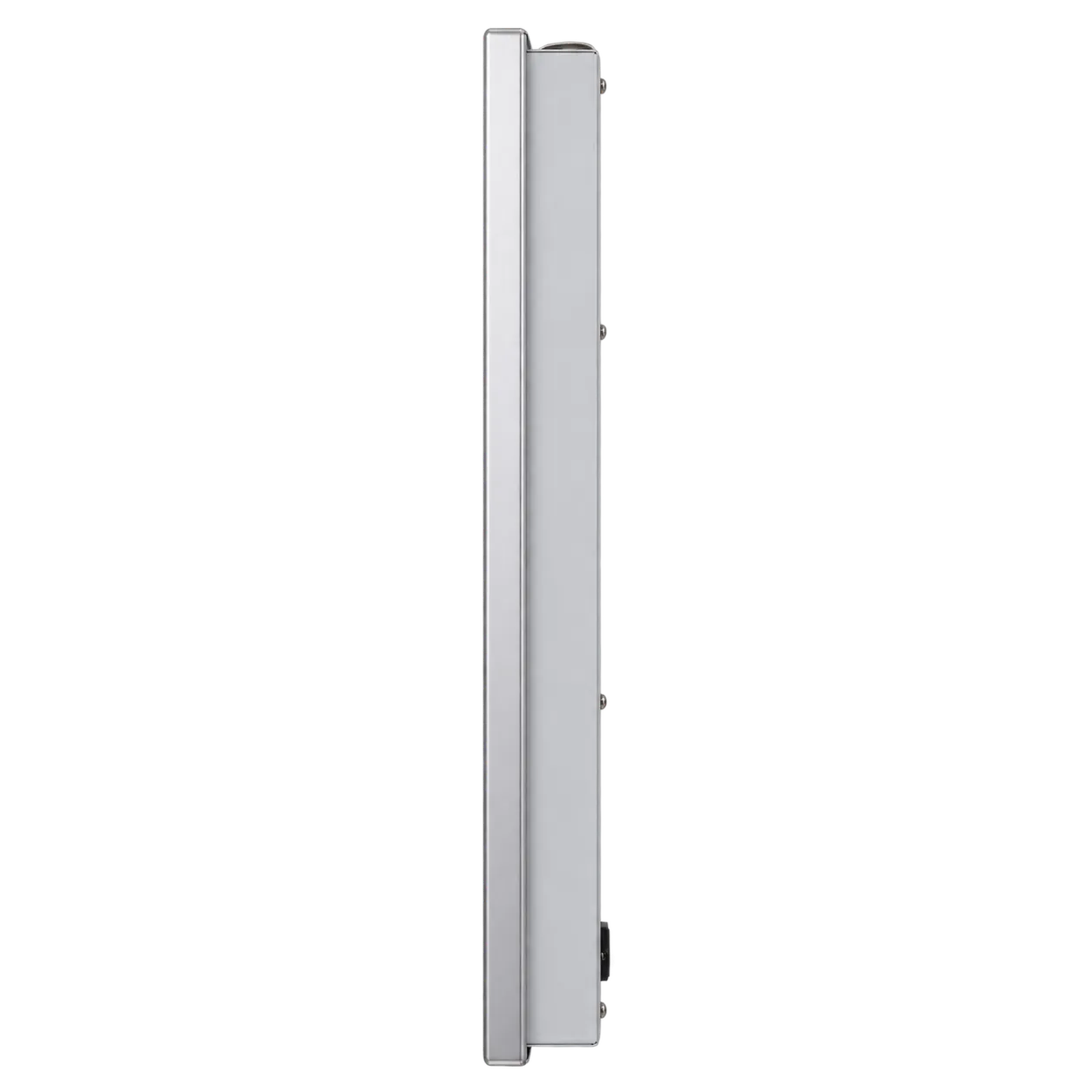
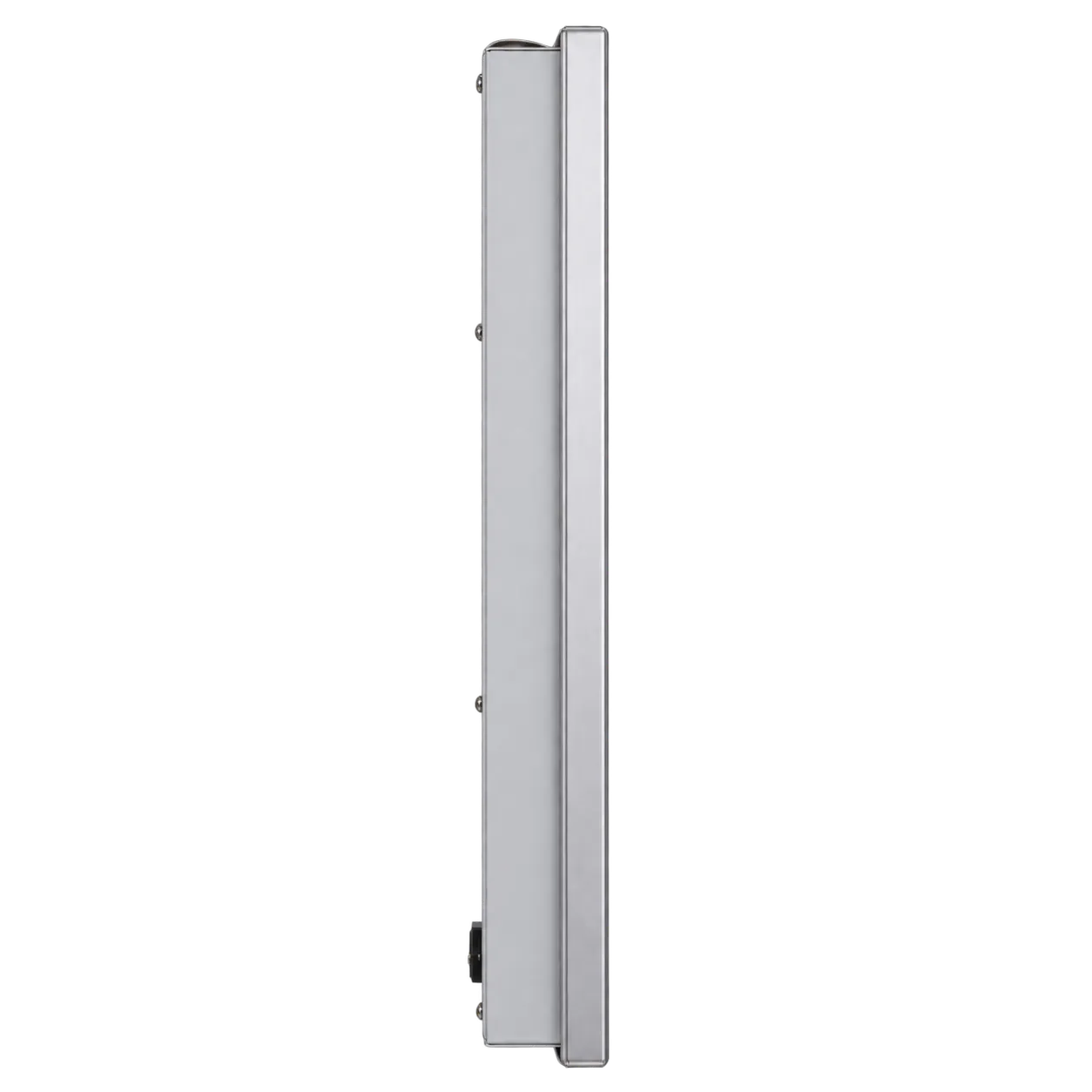
Screening services benefit from the weight as much as the distance. At 1.7 kg per unit and 9.4 kg for a carton of five, a service equipping or rotating between multiple sites can carry a full set without difficulty, and mounting each takes minutes on any sound wall.
Mixed-population screening is served by the five illustrated faces. Tumbling E and Landolt C measure patients who cannot name Latin letters — pre-literate children, those educated in other scripts, patients with speech difficulty — while the letter, numeral and children's faces cover the rest. A service running several rooms can match each to the population it sees.
Two points require attention before ordering, and the first is not negotiable. This chart must be used at 2.5 metres: the optotypes are sized for that distance, and using it at 5 metres produces a systematically wrong acuity across every patient. Measure the room and confirm the distance before fixing anything. Second, the printed face is permanent, so the variant should be chosen against the population the room actually serves rather than accepted as supplied.