
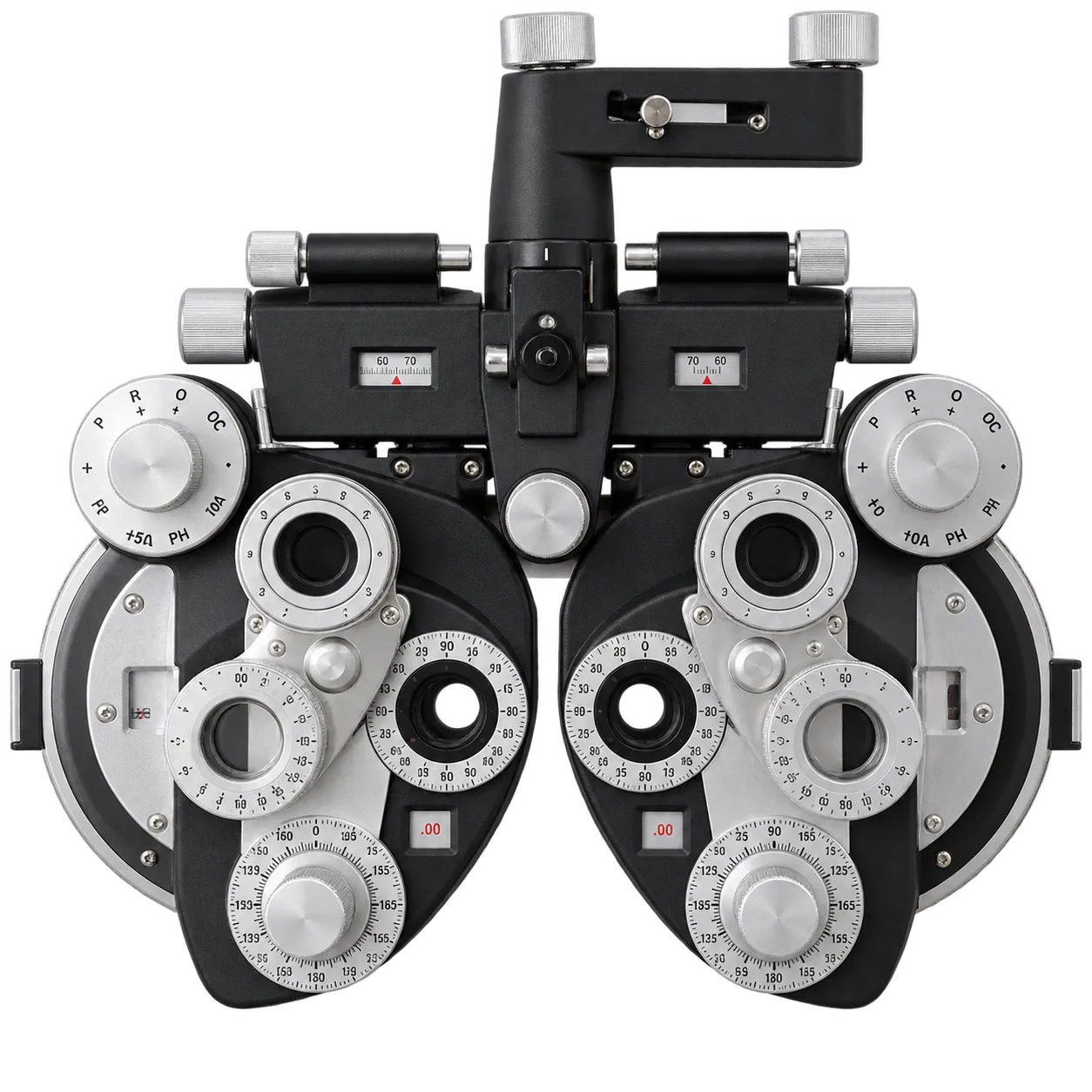
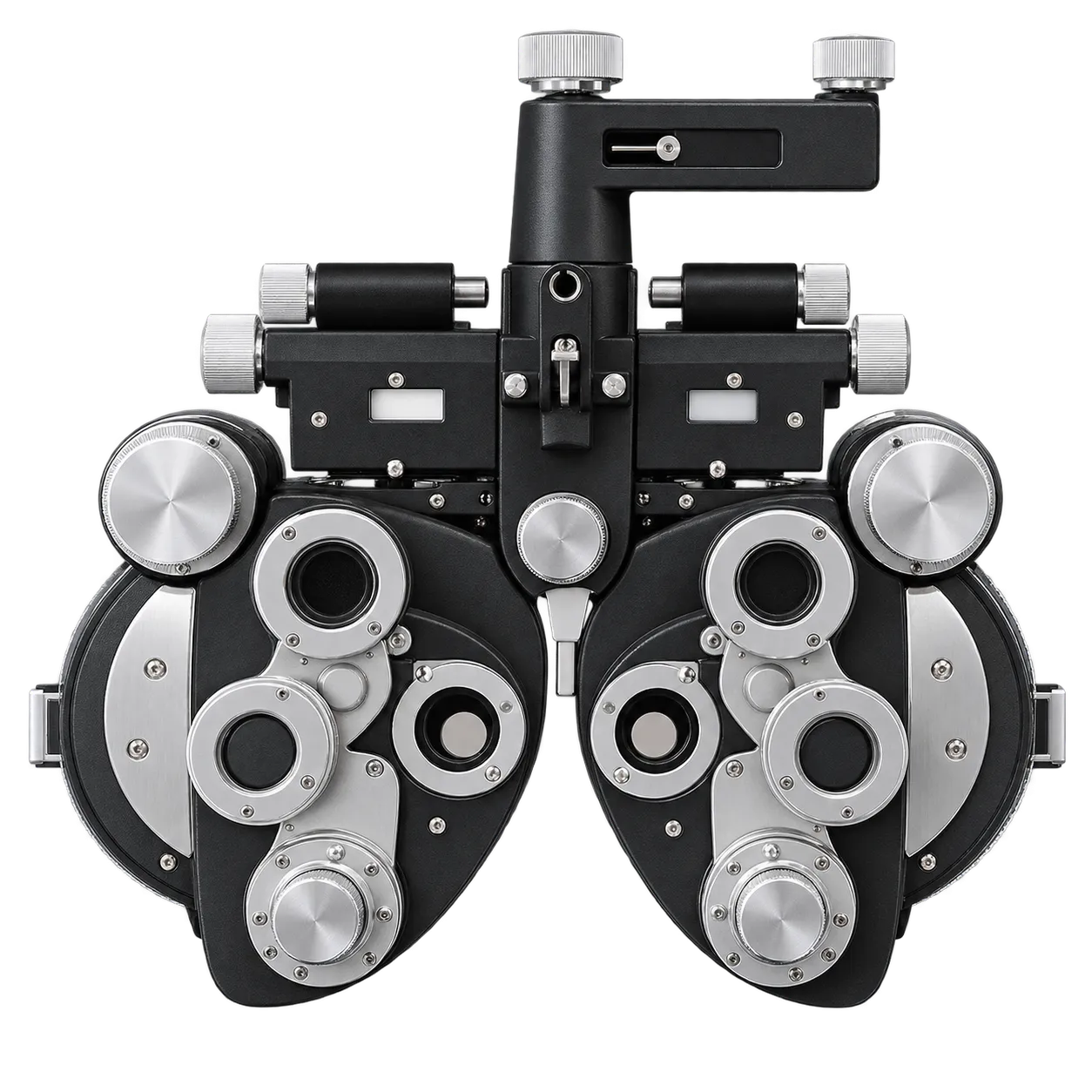
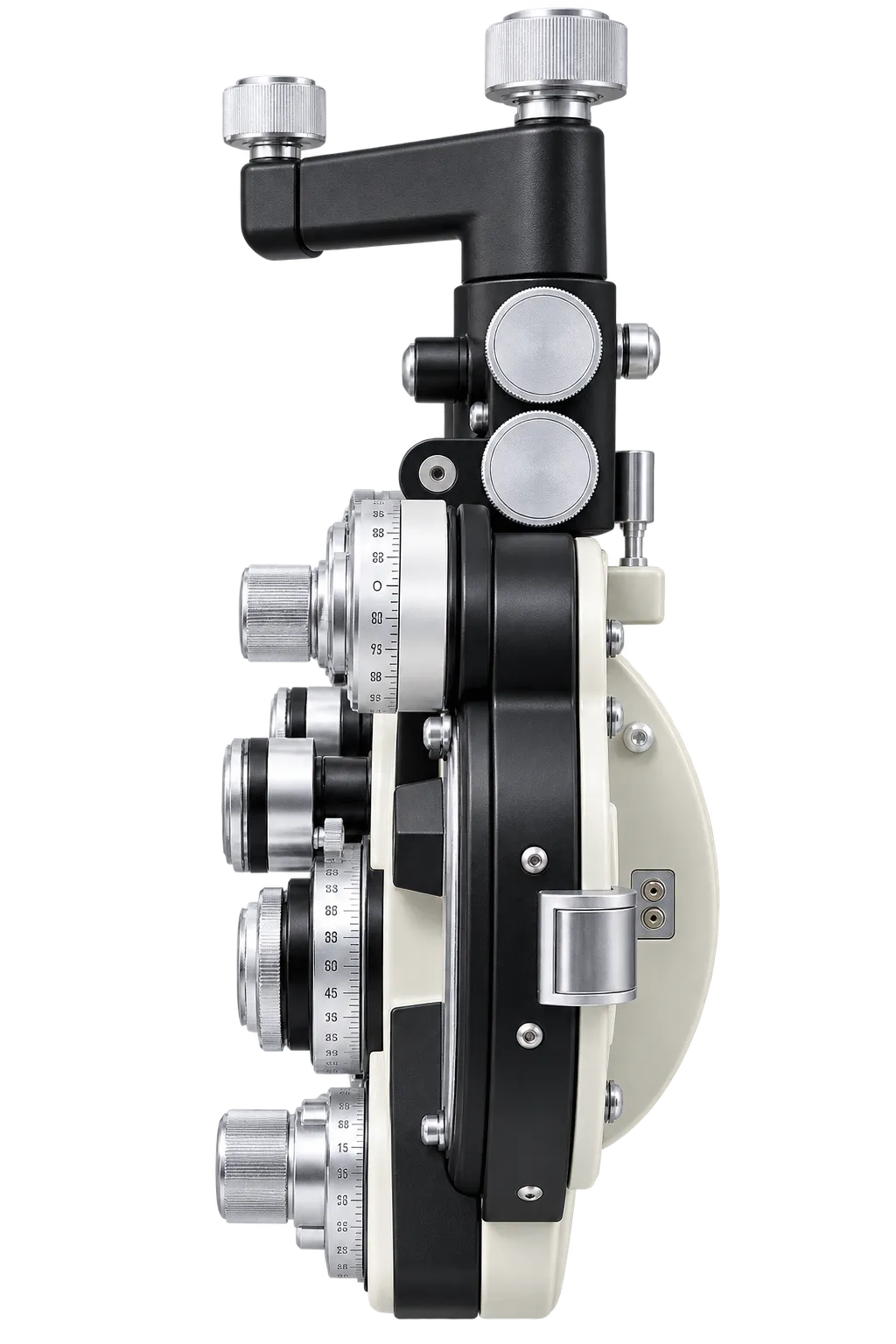
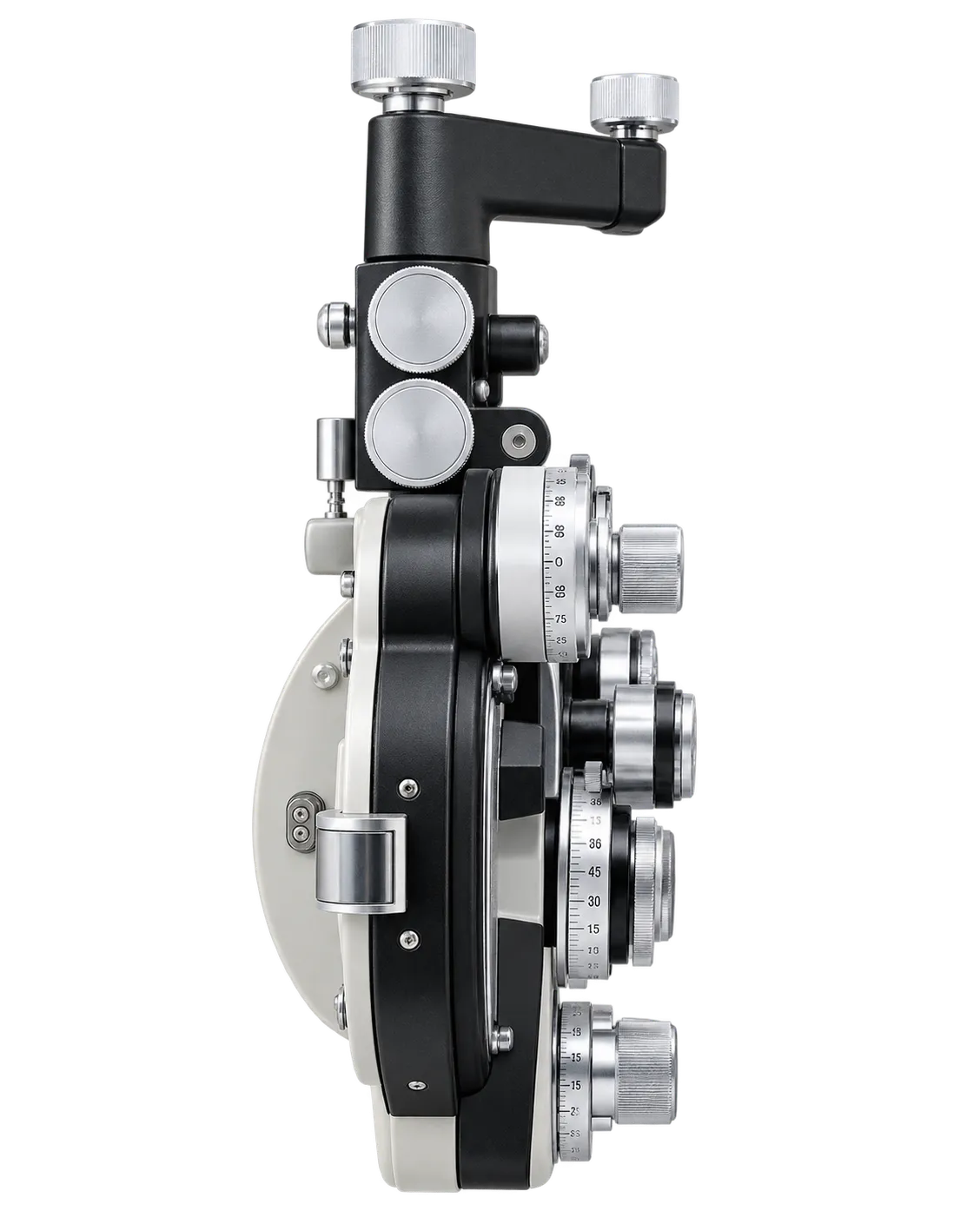
High-volume community optometry is the setting this instrument is shaped for. A practice running ten-minute sight test intervals performs the same sequence of adjustments dozens of times a day, and the ergonomic decisions behind the KF-Z3000 — grouped controls, enlarged scales, an interlocked cross cylinder — each remove a fraction of a second and a fraction of attention from every cycle. Individually trivial, collectively meaningful across an appointment list.
Presbyopic clinicians benefit disproportionately from the enlarged scales. A significant proportion of practising optometrists are themselves presbyopic, and reading small figures at arm's length in a dimmed room is precisely the task their own near correction handles least well. Larger markings are a small accommodation that removes a daily irritation.
The fully specified auxiliary dial supports the complete routine sequence without supplementary equipment. Duochrome refinement of the spherical endpoint and binocular balance run from the separate green and red lens positions; phoria measurement runs by von Graefe using the dissociating prism or by Maddox rod in either meridian and either colour; the pinhole separates refractive from pathological causes of reduced acuity; and the fixed ±0.50D cross cylinder supports near addition by the fused cross cylinder technique. General Optical Council registrants performing these steps routinely have every one of them on the dial.
Teaching environments gain from both the legibility and the documentation. A supervisor observing a trainee can read the instrument state from a normal position, and a fully listed dial makes it straightforward to teach what each position does. Two limitations should be weighed honestly: the 5° cylinder axis step limits precision on high cylinders, where trial frame confirmation remains advisable, and any phoropter requires an upright seated patient able to reach the head, so paediatric and position-limited patients need trial frame refraction alongside.