
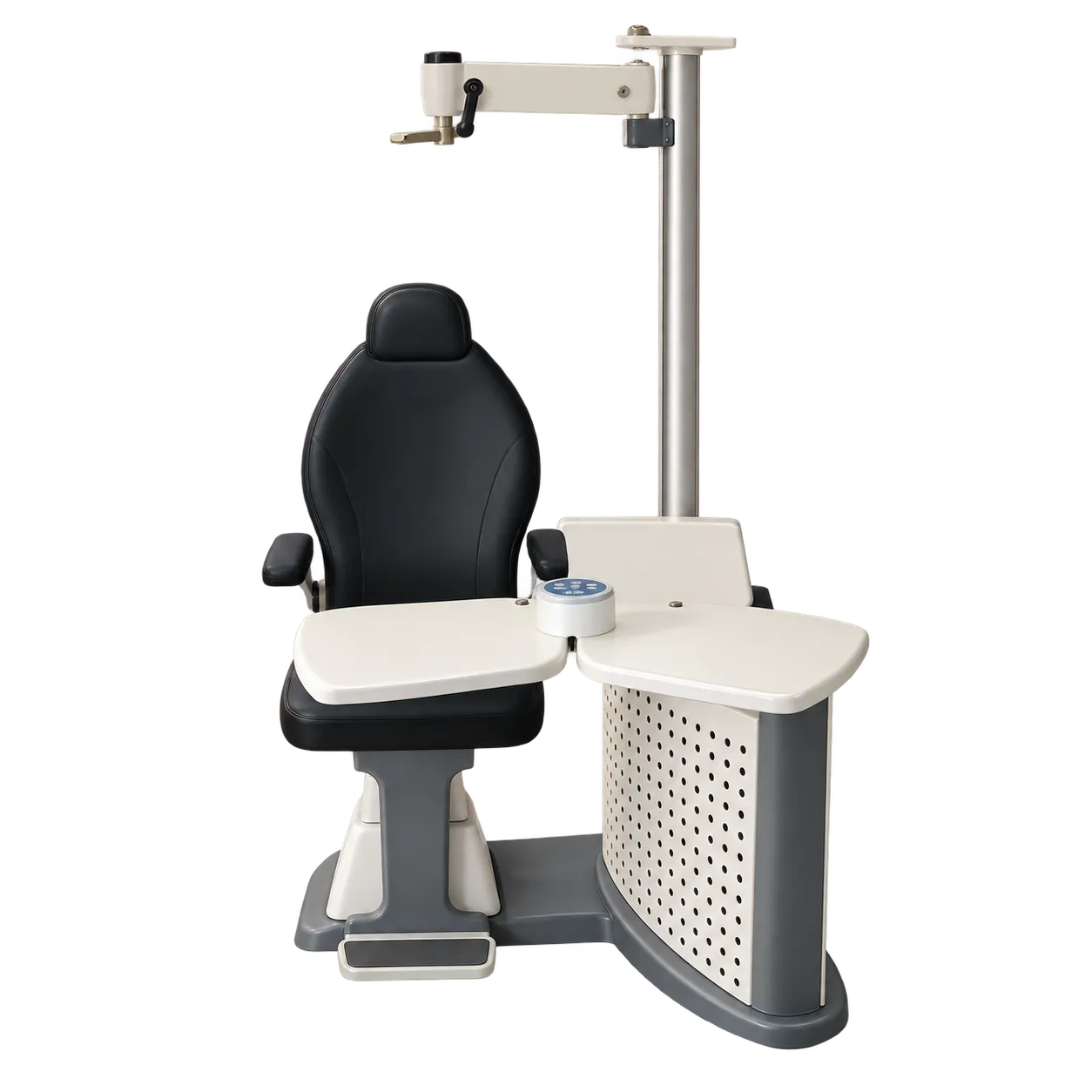
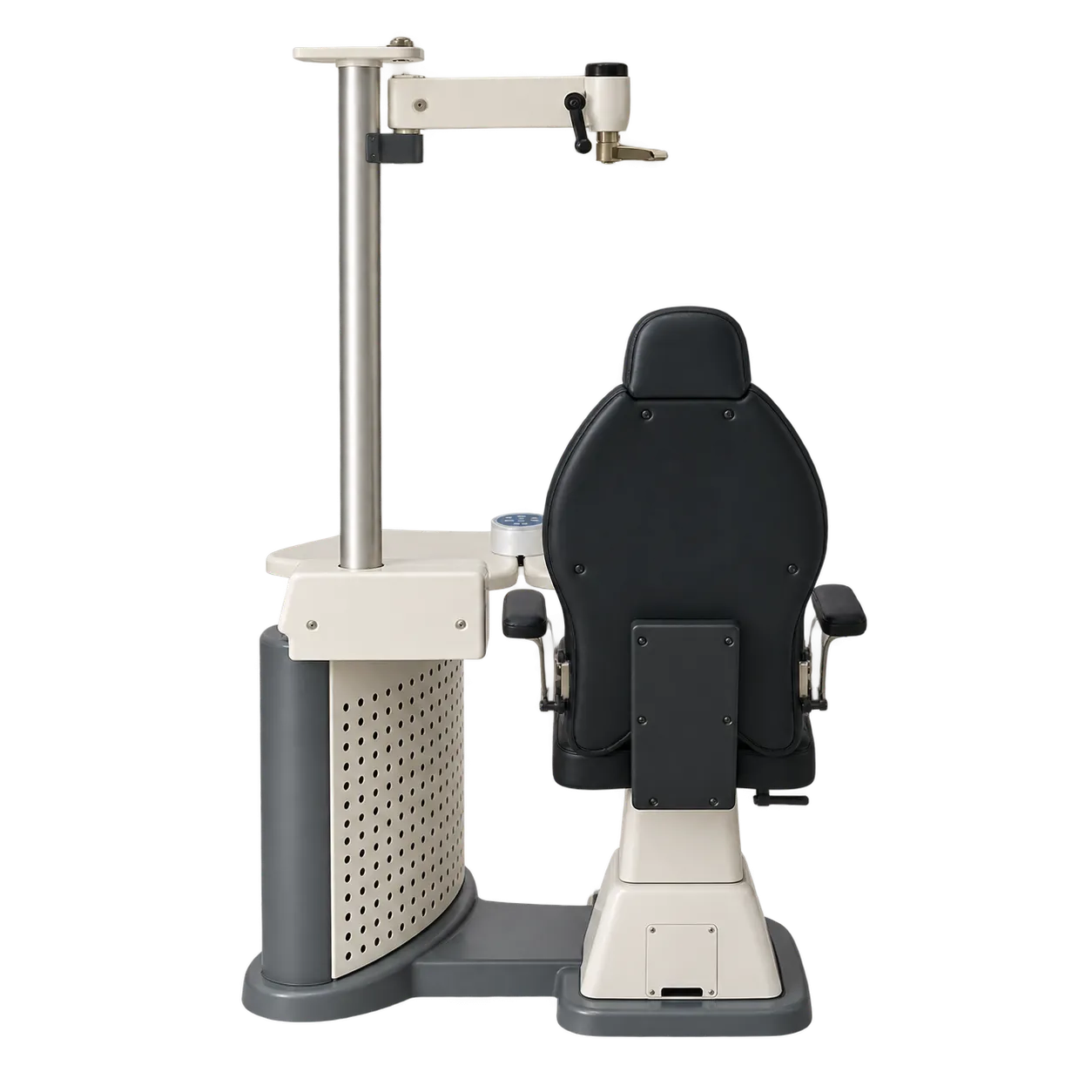
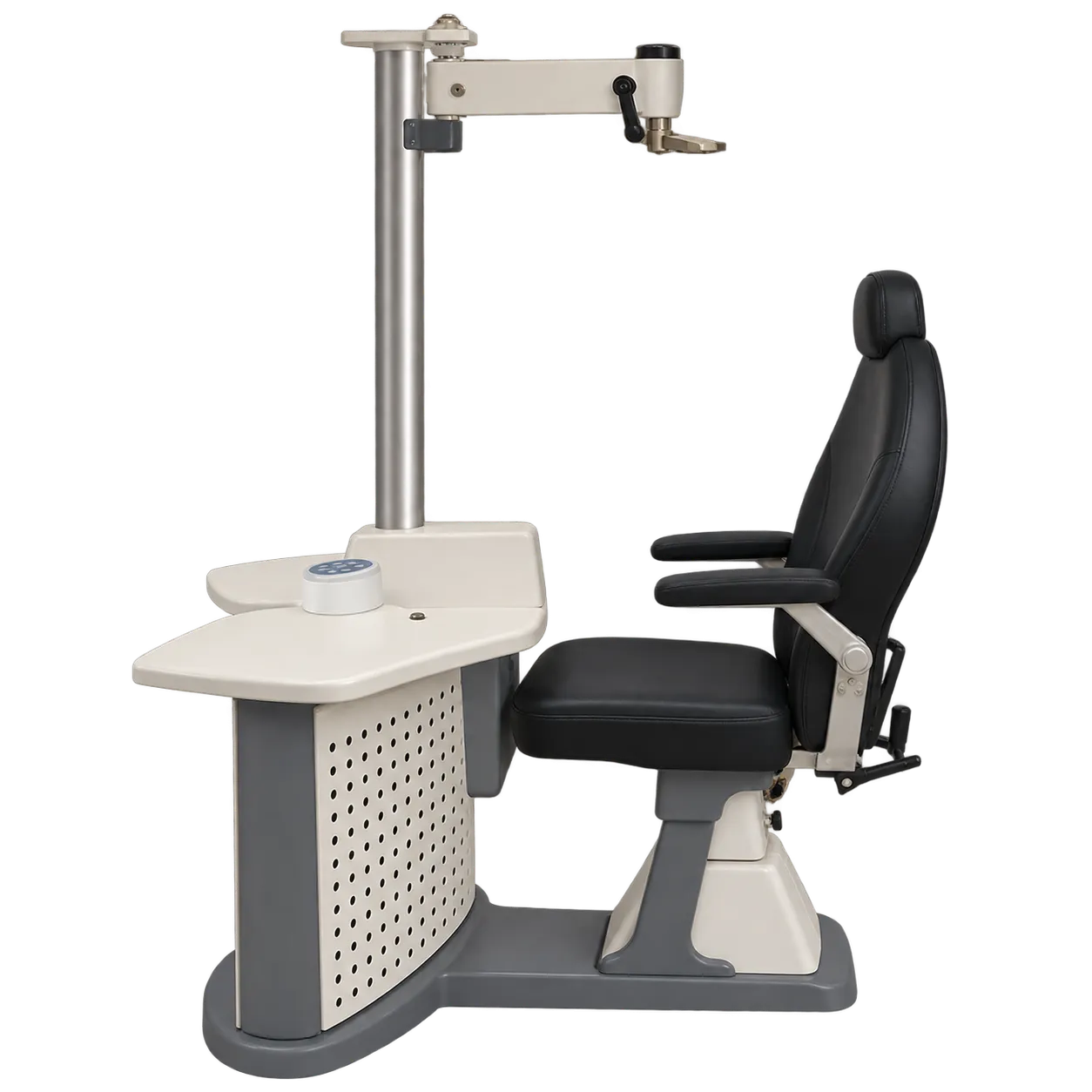
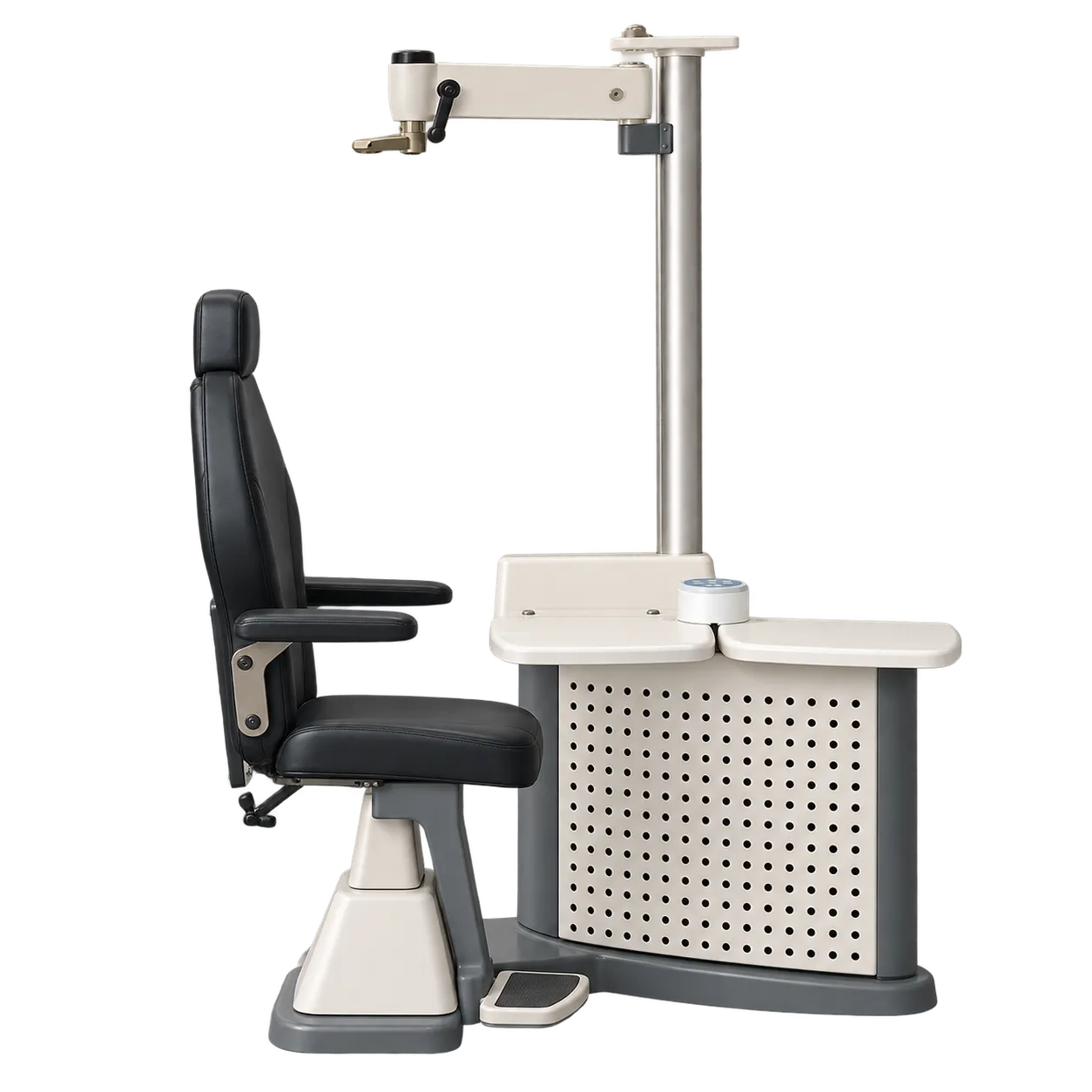
Instrument-heavy consulting rooms are the direct application. A practice running a slit lamp, an autorefractometer and a third device — a tonometer, a keratometer, or whatever the caseload requires — otherwise faces the familiar problem that a flat bench comfortably holds two and awkwardly holds three. The third instrument migrates to a trolley, a shelf or a windowsill, and is moved into position each time it is needed. Three stations arranged around a rotation axis give each device a permanent home, which removes both the moving and the repeated realignment that follows it.
Alignment consistency is the clinical benefit rather than mere tidiness. Every time an instrument is placed into position it must be aligned to the seated patient again, and each alignment is a small opportunity for error and a delay while the patient waits. Fixed stations at a constant radius keep that geometry established.
Practices anticipating expansion can specify it sensibly for two instruments now and a third later, since the station exists whether or not it is occupied. Over a ten to fifteen year service life that is a reasonable way to buy.
Accessibility is served identically to the rest of the range, with a rated 200–250 kg chair loading, a 540 mm minimum seat height for straightforward transfer and a 160° backrest.
Two things should be settled before ordering. The chair movement mechanism is unstated here, unlike the integrated refraction model in this range which specifies an electric lift — and it determines electrical requirement, installation, maintenance and price. And at 200 kg the delivery and installation arrangement is unpublished, which matters considerably for upper-floor premises and narrow access; a unit of this mass is not carried upstairs casually.