
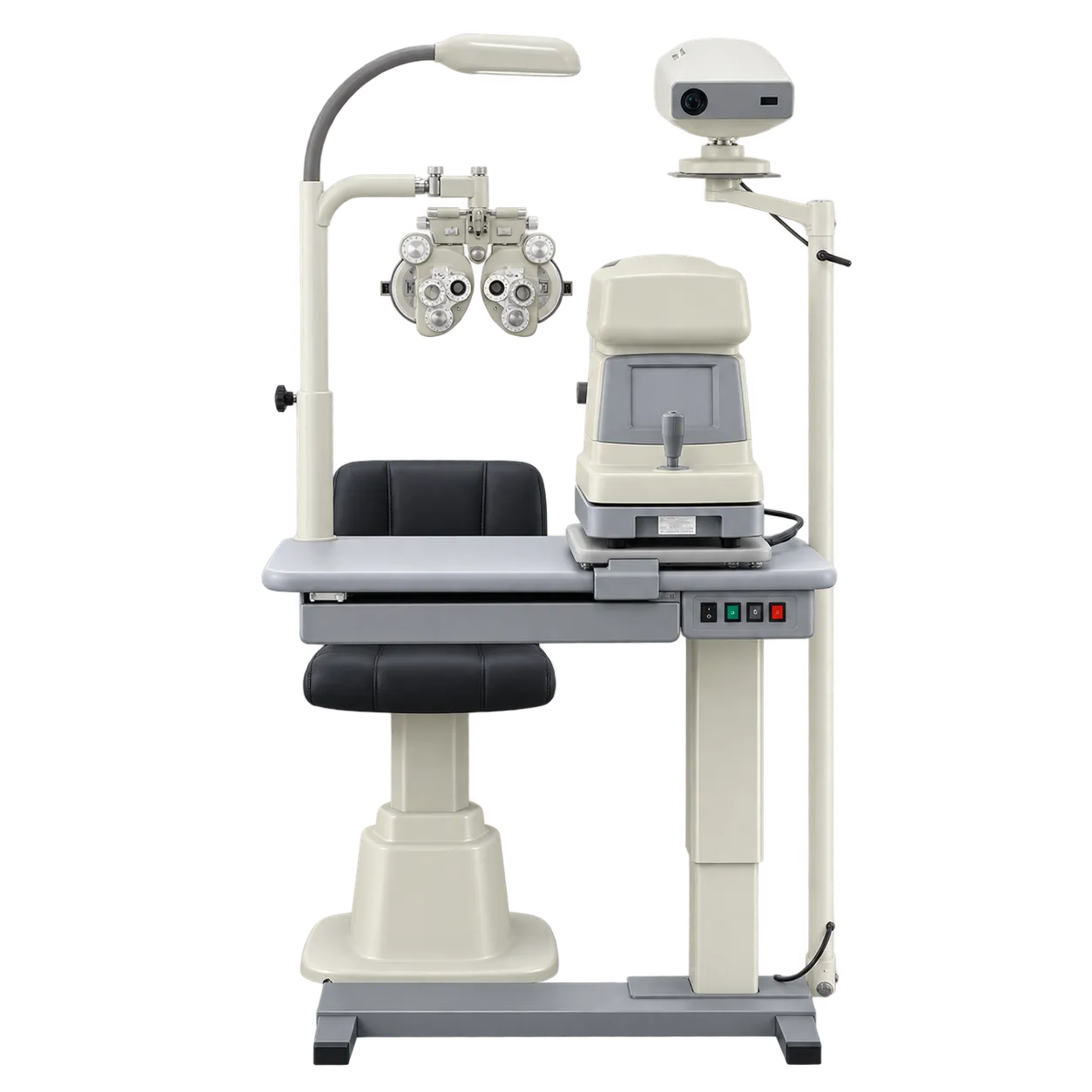
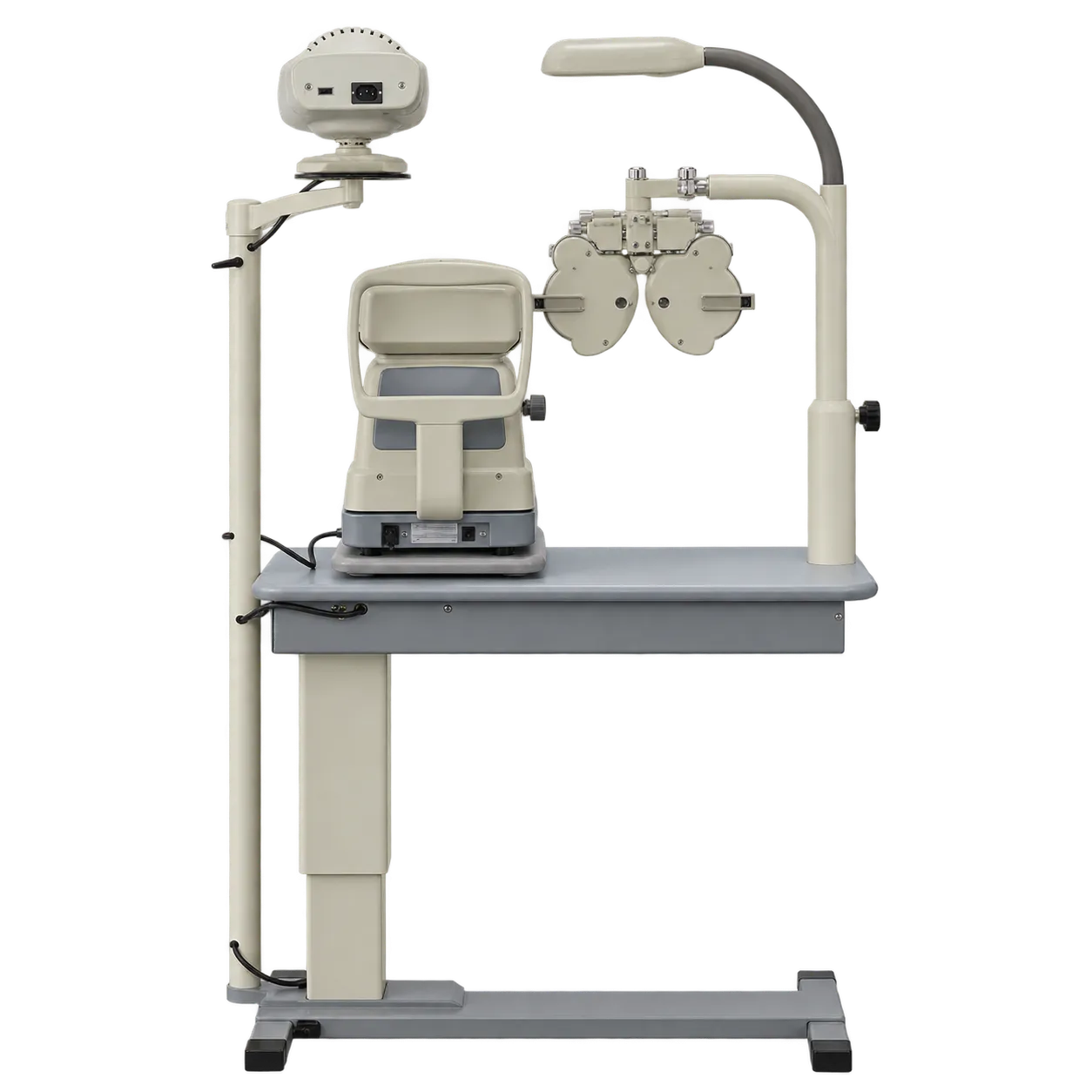
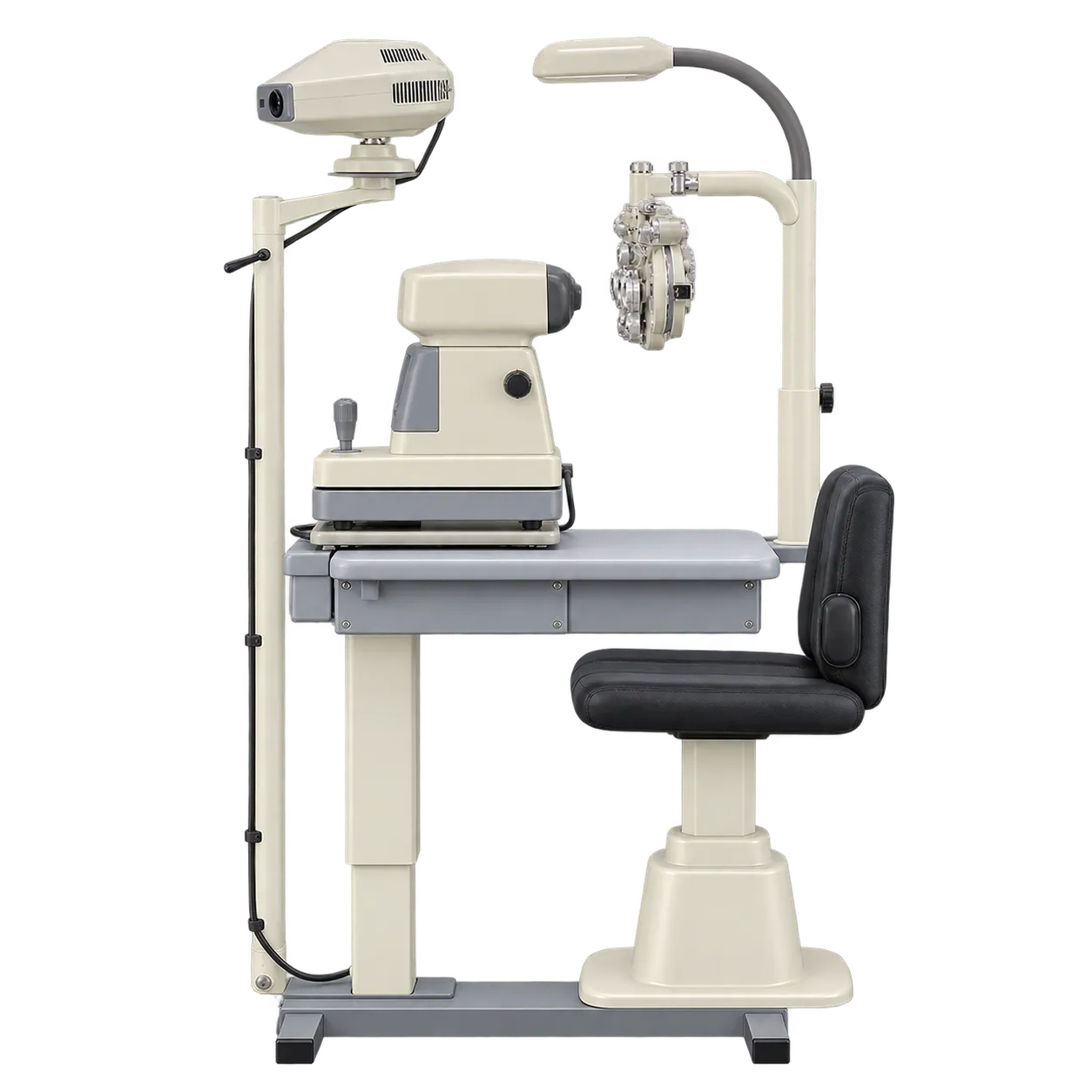
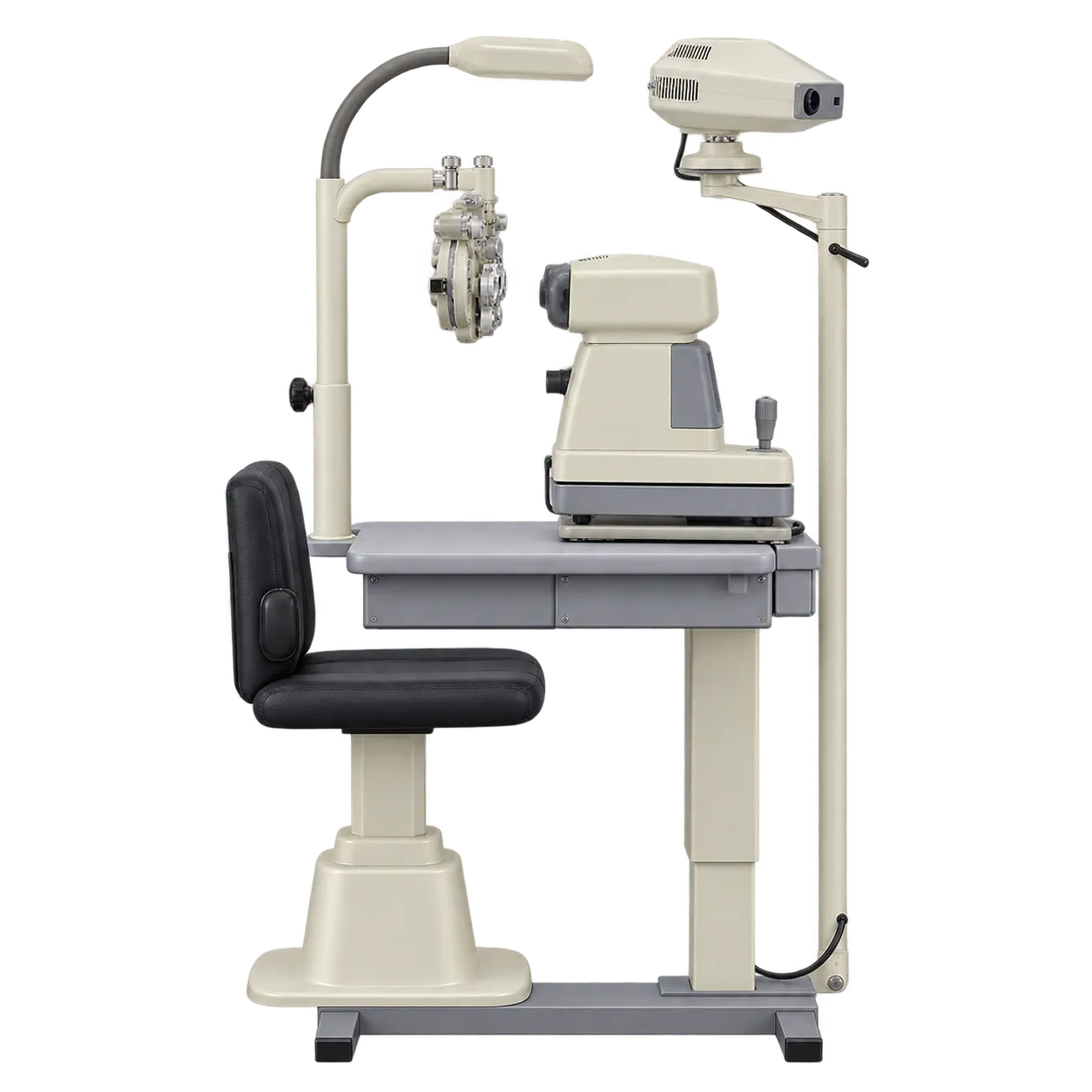
Practices buying across two budget years benefit most, and the mechanism is procurement rather than clinical. A powered chair lift is frequently the line removed when an order is trimmed to a number, and without a provision for one, adding it later means either a separate powered chair or an installer returning to run a supply. A DC24V socket fitted from the outset turns that future purchase into a plug-in, so the table can be committed to now and the lift when funds allow.
Accessibility planning gains from the same provision. A practice that cannot fund a powered lift this year but expects to need one — for an ageing patient list, or to meet a commitment it has made — can buy the capability now and the component later, rather than facing a second full purchase.
High-volume rooms benefit from the switch panel. Four rockers controlling lamp, chair and phoropter from one position at the operator's hand is a small saving noticed forty times a day, against arrangements where each function has its own control somewhere else.
The 360° hand-rotating phoropter arm is published here and absent from the table-only model's datasheet, despite identical technical data otherwise.
Small internal rooms suit the 80 W total draw, the lowest in this catalogue and a third below most comparable units — noticed as heat by mid-afternoon rather than as cost.
Two things need requesting. No chair specification is published at all — no lift range, loading, backrest angle or weight — which matters because a chair without a stated loading cannot answer an accessibility question. And the named optional lift units should be confirmed as current, along with price and lead time, since a provision is only useful if the component it waits for is still available.