
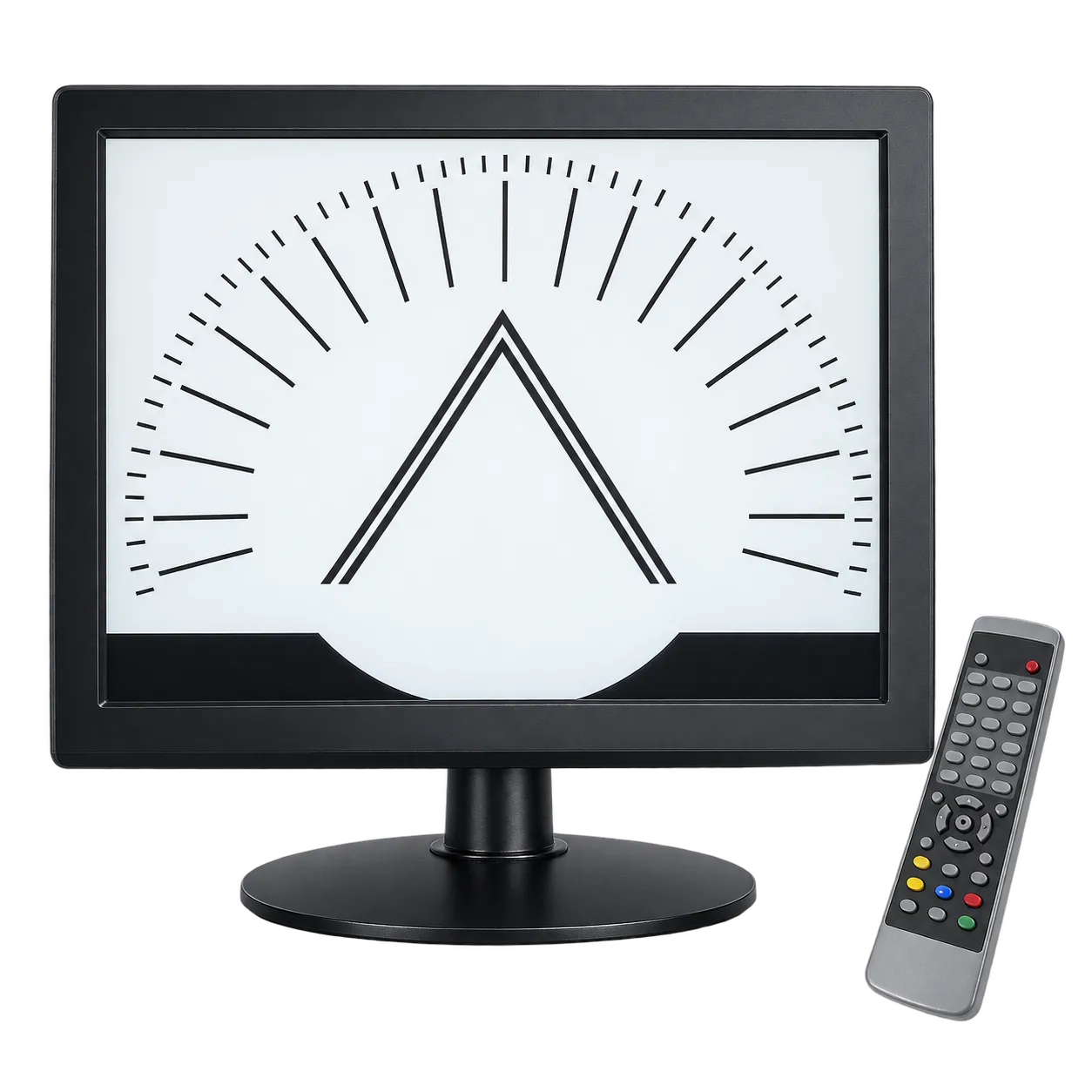
Repeat and monitored patients are where randomised sequencing pays for itself. Any patient attending frequently — glaucoma monitoring, diabetic review, amblyopia therapy, post-operative follow-up — sees the same chart repeatedly, and a familiar sequence quietly inflates the recorded acuity. Because the change is gradual and the patient is not consciously cheating, there is no signal for the clinician to notice. Randomising each presentation removes the mechanism, which matters most in exactly the pathways where a change in acuity is the outcome being measured.
Occupational and licensing assessment is the second setting. Vocational drivers, applicants to roles with vision standards, and patients concerned about a licence all have a reason to pass, and a chart that cannot be learned protects both the assessment and the assessor. Practices doing this work regularly gain a defensible position rather than a hopeful one.
Paediatric and communication-limited patients are served by the chart versions. Tumbling E, Landolt C and child optotypes cover patients who cannot name letters — preschool children, patients who read a script other than Latin, and those with speech or communication difficulty — and all appear on the same 19-inch panel at the same set distance, so results are directly comparable with letter-chart measurements taken from the same unit.
Low vision assessment uses the lower end of the acuity range. Reaching 6/150 means an acuity can be measured rather than recorded as counting fingers, which matters for monitoring progression and for certification pathways where a measured value is required. Two practical points belong in the decision: the distance must be set accurately at installation and recorded, since the display scales optotype size to that figure and an incorrect setting produces a systematically wrong acuity; and the CV-7000 data link should be confirmed against your specific vision tester before order rather than assumed.