
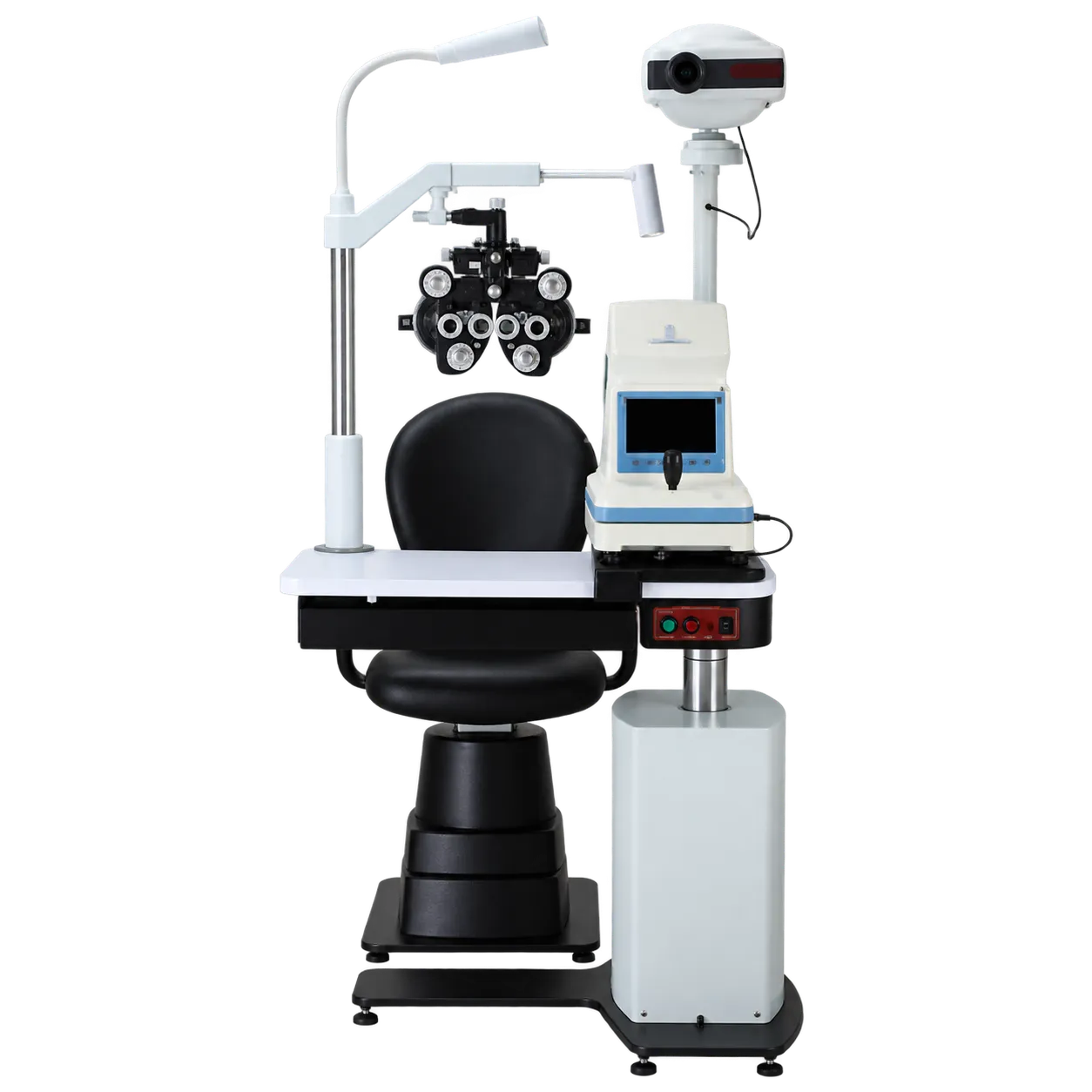
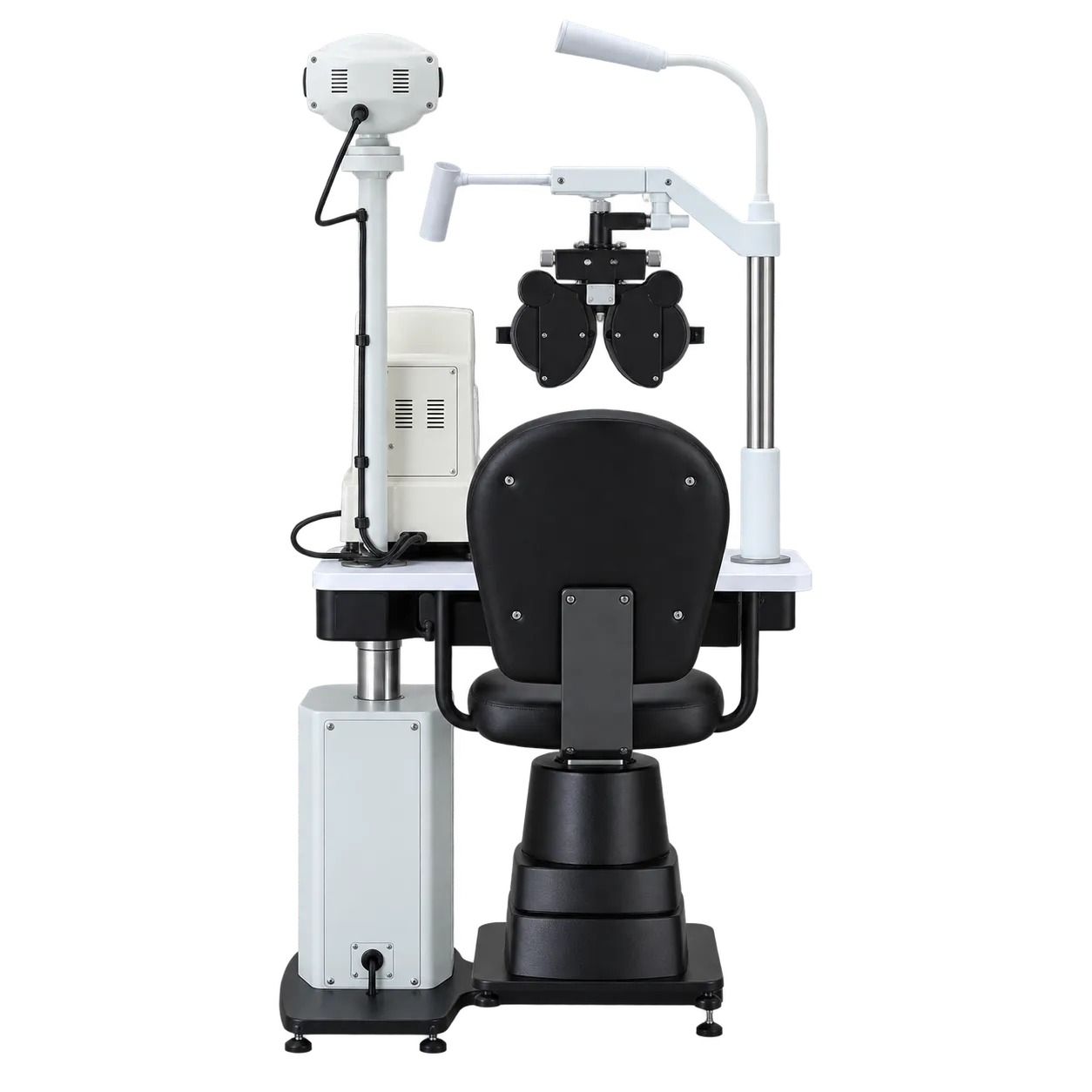
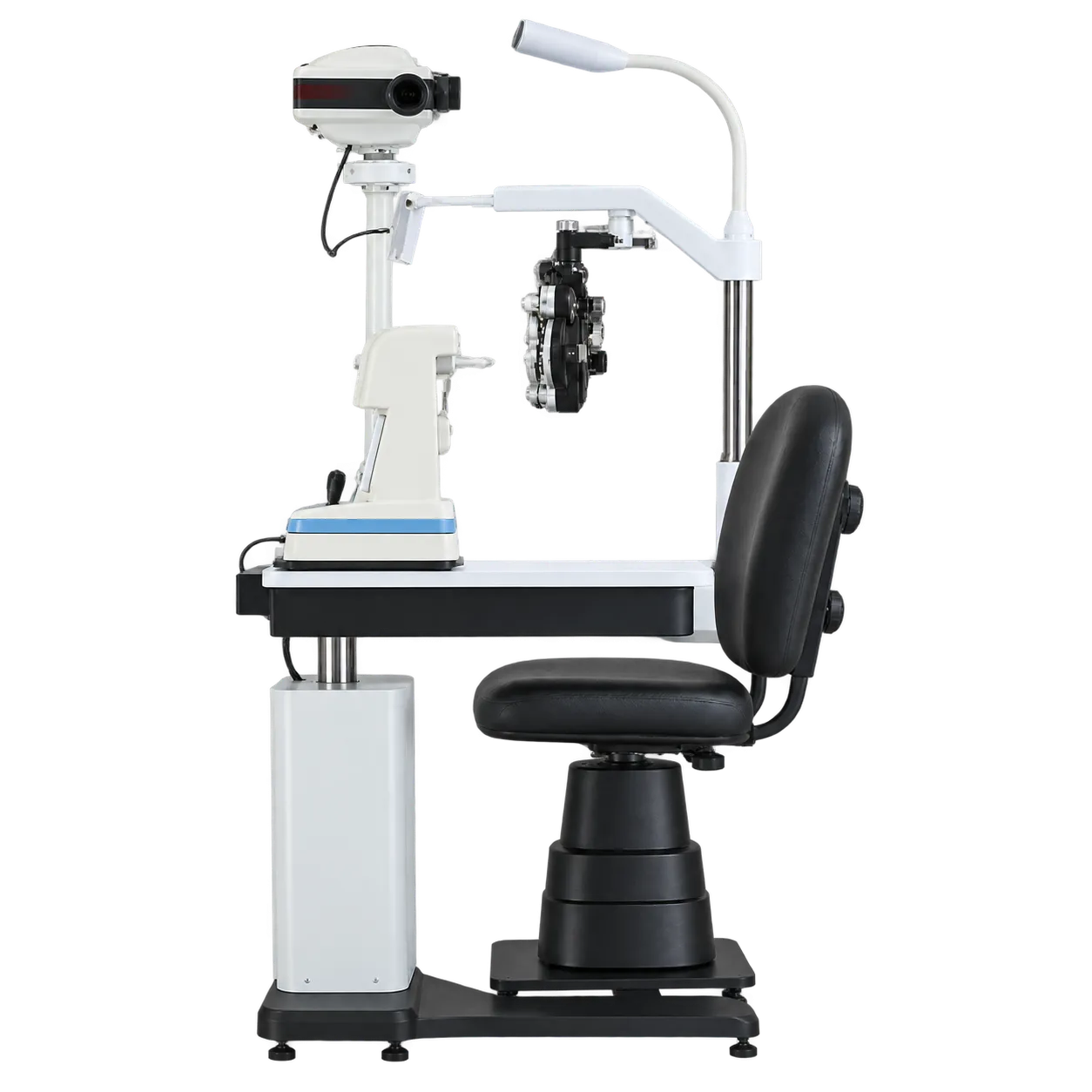
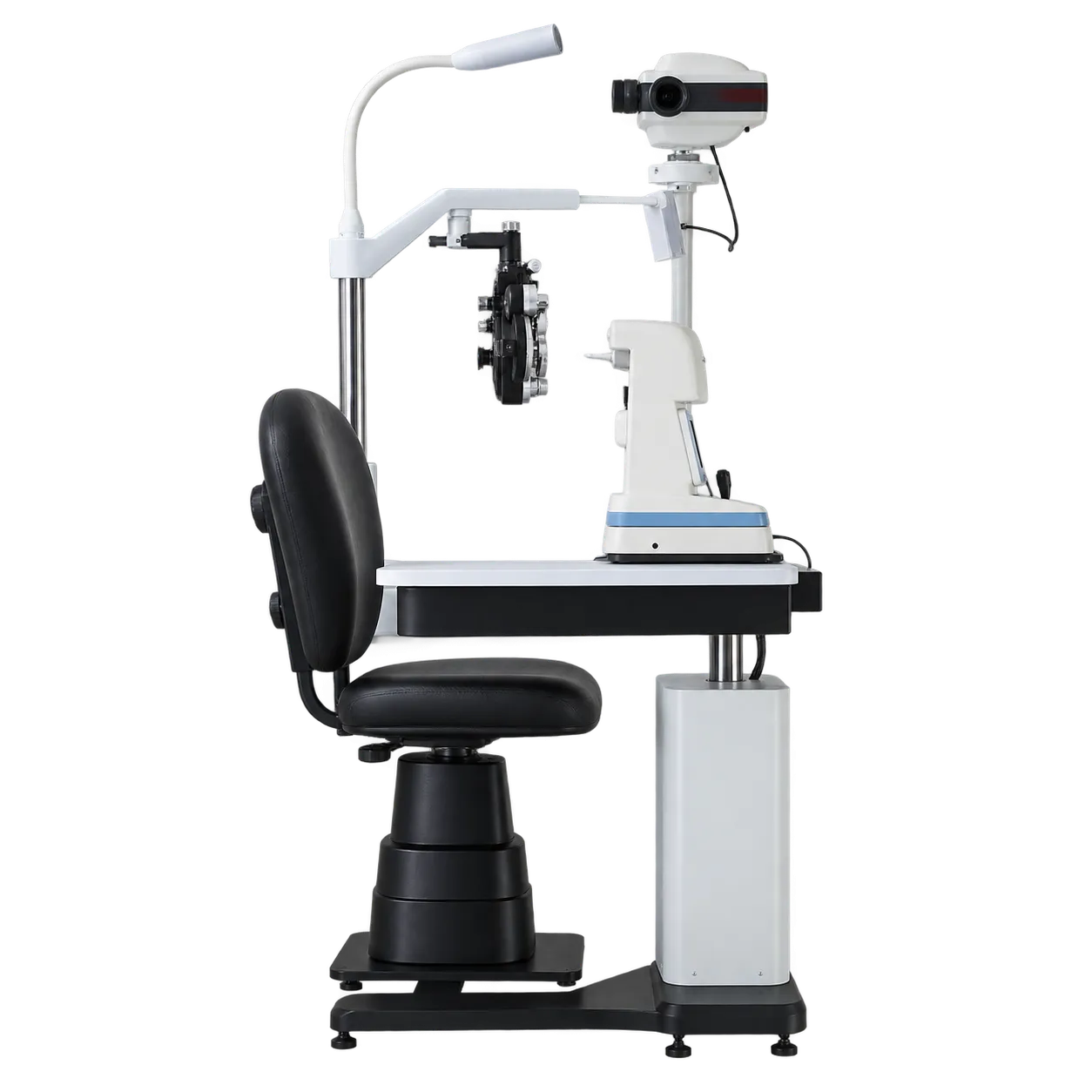
Rooms that need worktop depth but cannot spare swing clearance are the target, and that combination is commoner than it sounds. A practice mounting a slit lamp needs a top deep enough that the base sits squarely rather than overhanging, and 620 mm provides it with margin. But a deep top swung through a wide arc demands a correspondingly large area of clear floor, which is precisely what a room short of space does not have. Pairing the depth with a 45° rotation resolves the conflict: the instrument gets its depth and the room keeps its floor.
Practices whose rotation is used for angling rather than clearing suit this well. In most working patterns the table is turned to present an instrument at a better angle or bring a device round toward the eye, not to open a route. Forty-five degrees covers that comfortably.
Difficult premises benefit from the 100 kg mass, second lightest in this range and considerably easier to deliver than the 150 to 240 kg units here.
Two things belong firmly in the decision. If the table must swing fully clear so a patient can reach the chair or transfer from a wheelchair, 45° will not do it — that requires one of the wider-turning units, and this page would be the wrong recommendation. And the manufacturer's drawing shows a 450 mm chair width against 500 to 510 mm elsewhere in this range, which is a meaningful difference and should be weighed against the patient population the practice actually serves. Chair loading is unpublished, so both figures deserve confirming together.