
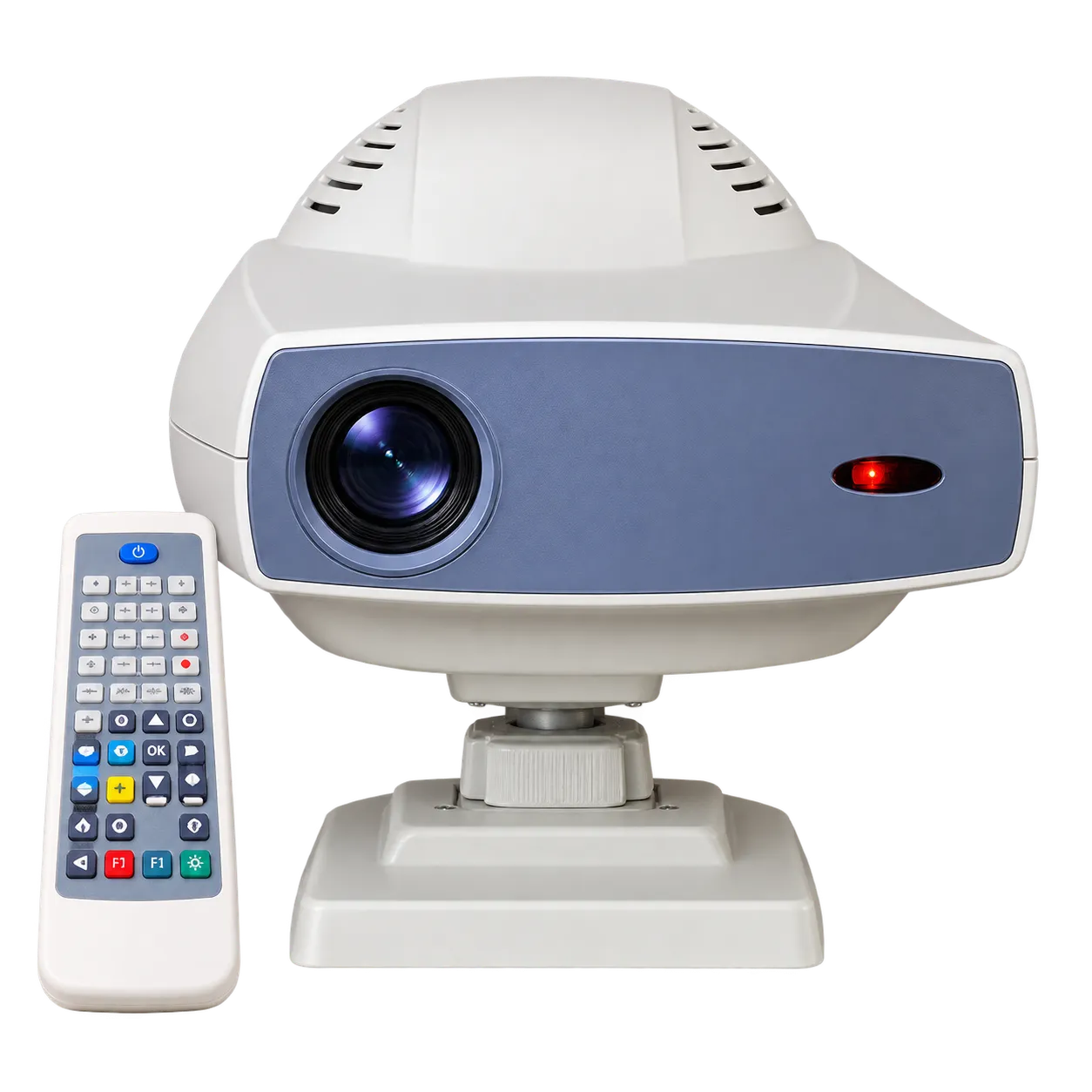
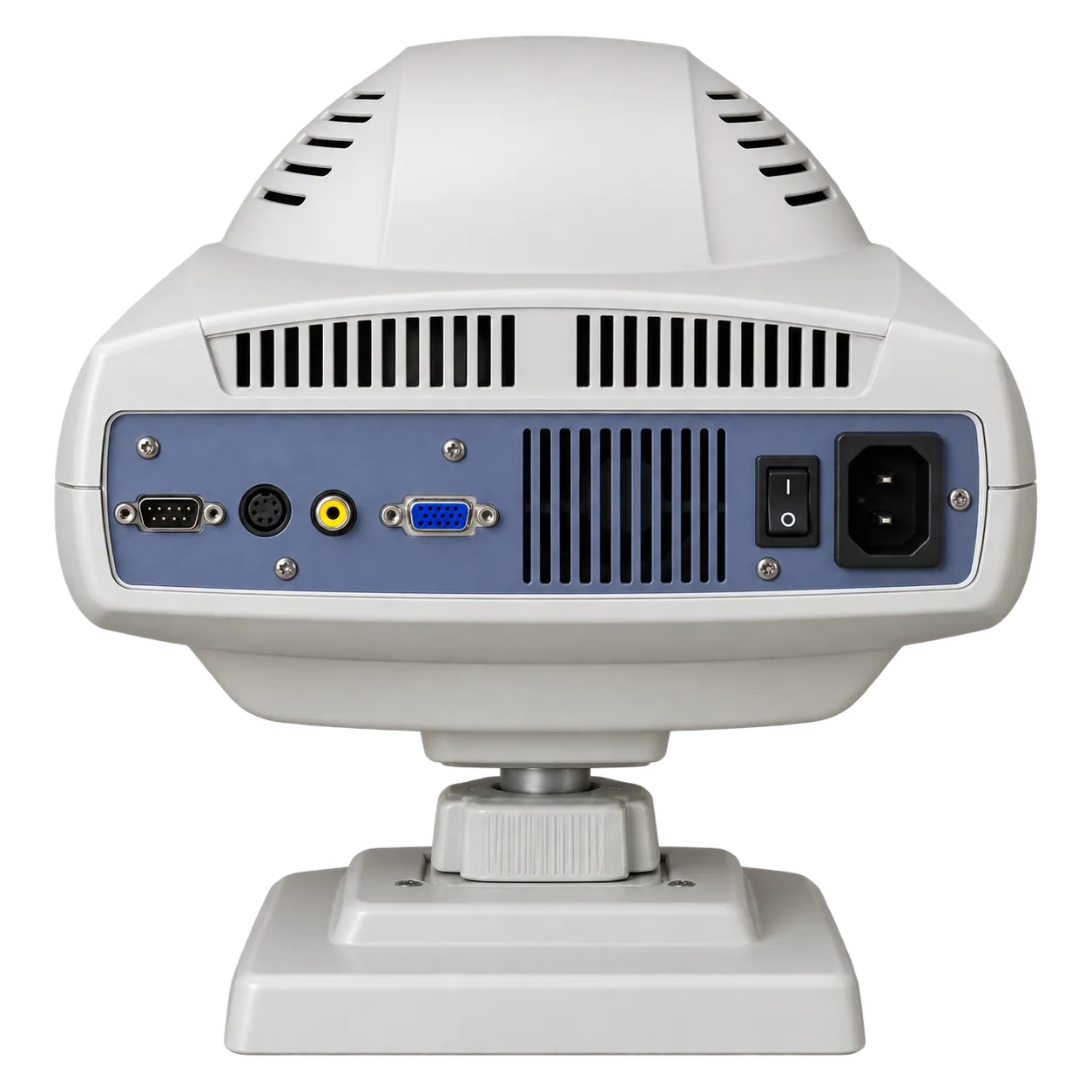
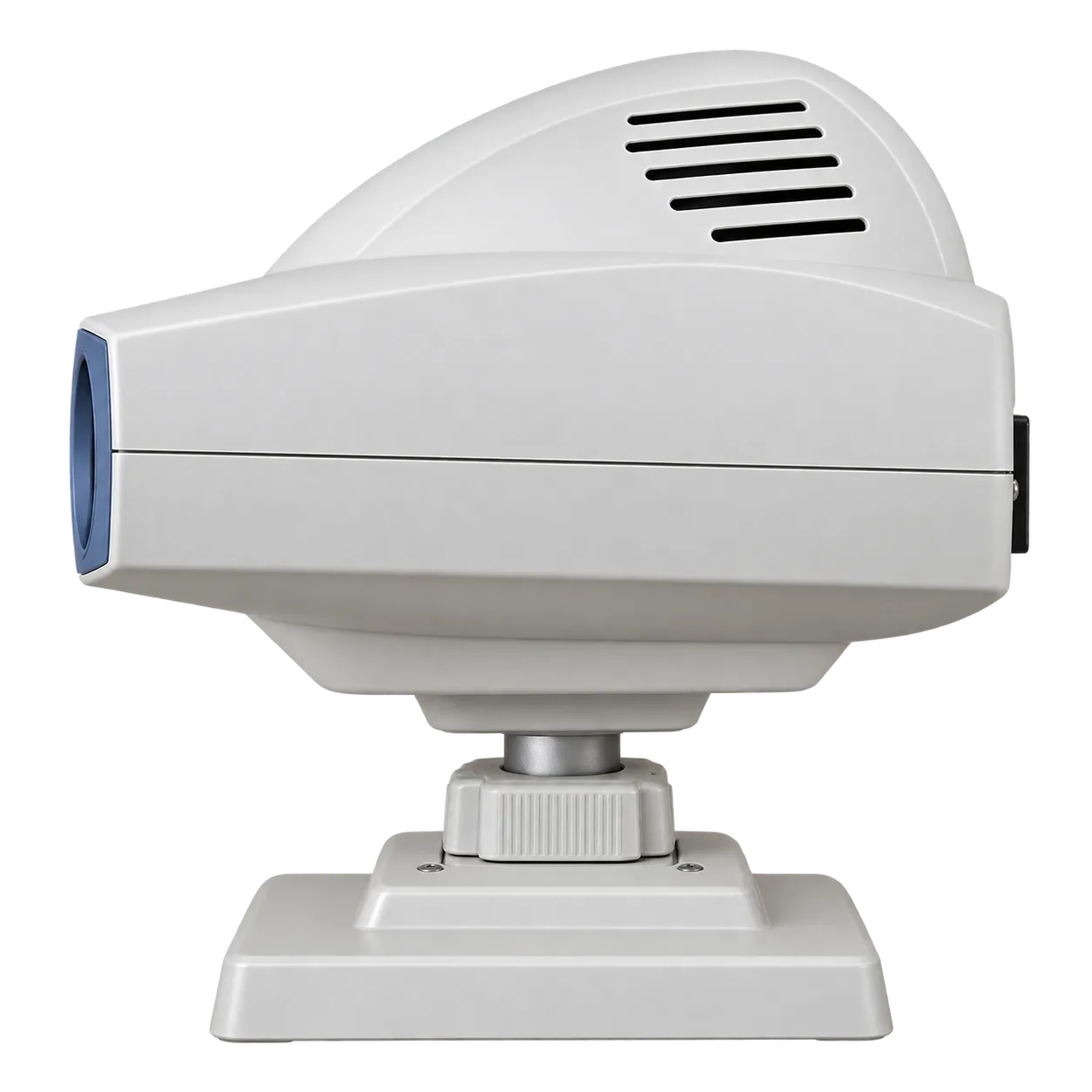
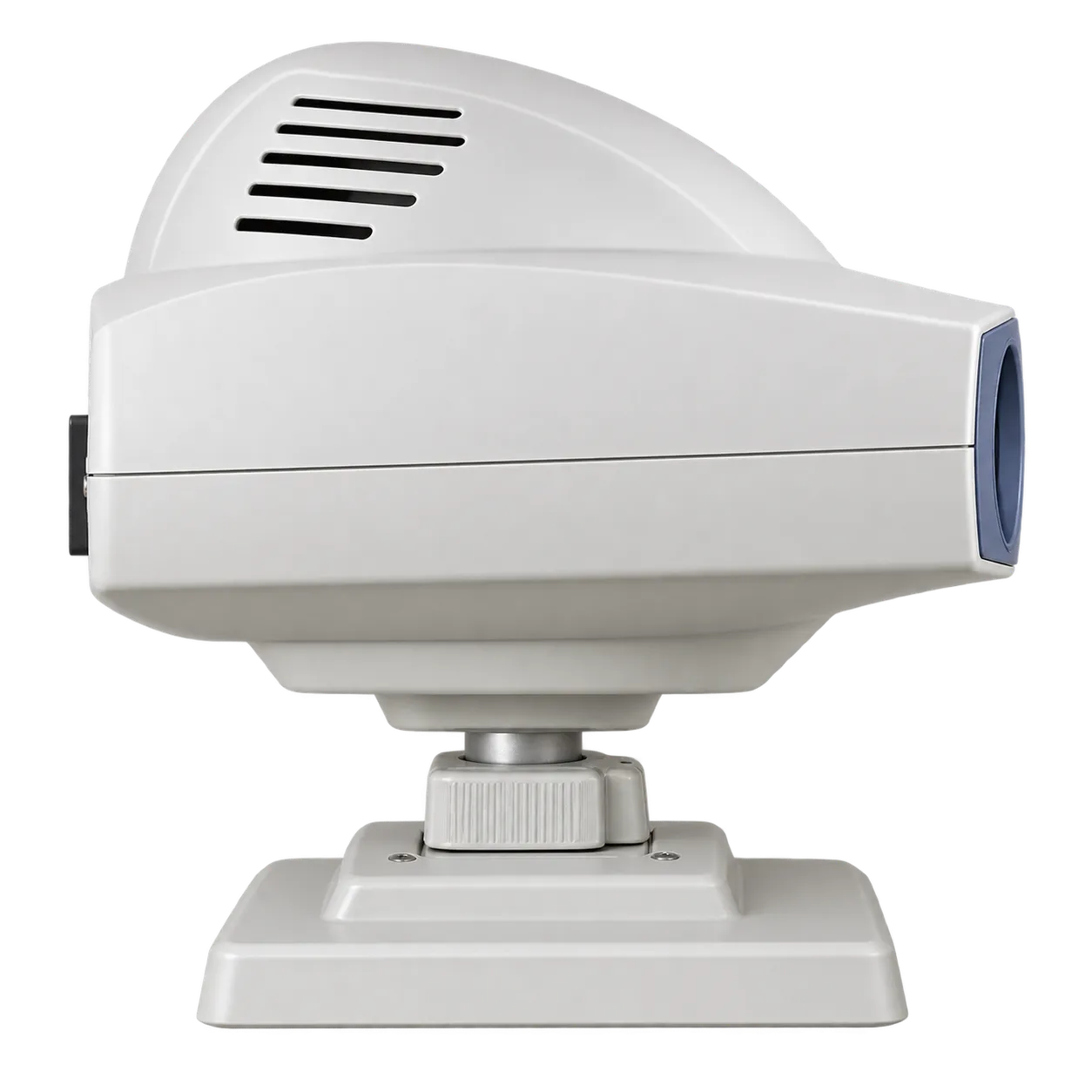
Standardising the sight test across clinicians is the application with the clearest operational value. UK practices routinely run locums alongside permanent staff, and every optometrist arrives with their own habitual test order. Two stored programmes of up to 30 steps let a practice define its sequence once and have it reproduced identically regardless of who is testing, which matters for record consistency, for supervising pre-registration trainees, and for any practice where audit or protocol adherence is a concern.
Amblyopia and paediatric assessment depend on the mask capability. Contour interaction means a letter presented within a line is harder to resolve than the same letter alone, and the difference between crowded and isolated acuity is a recognised diagnostic feature in amblyopia. Twenty-one single-letter masks alongside line masks make that comparison routine rather than improvised, which supports both detection and the monitoring of occlusion or atropine therapy over time.
Binocular vision assessment uses the polarised screen and glasses supplied as standard. Optical dissociation of the two eyes underpins binocular balance, stereopsis and fixation disparity testing, and having the polarised plate included rather than as a chargeable extra means the capability is present from day one. It complements the polarising filters on a phoropter's auxiliary dial directly.
Room geometry drives the practical fit. A projection distance range of 1.5 to 6 metres accommodates the mirrored six-metre lanes standard in UK practice as well as shorter direct rooms where mirroring is impractical. Practices should settle two things before ordering: the chart variant must be confirmed as appropriate for UK acuity notation, since the manufacturer's variants carry different letter sets and character systems, and the halogen or LED light source decision should be made on expected lane volume rather than headline price.