
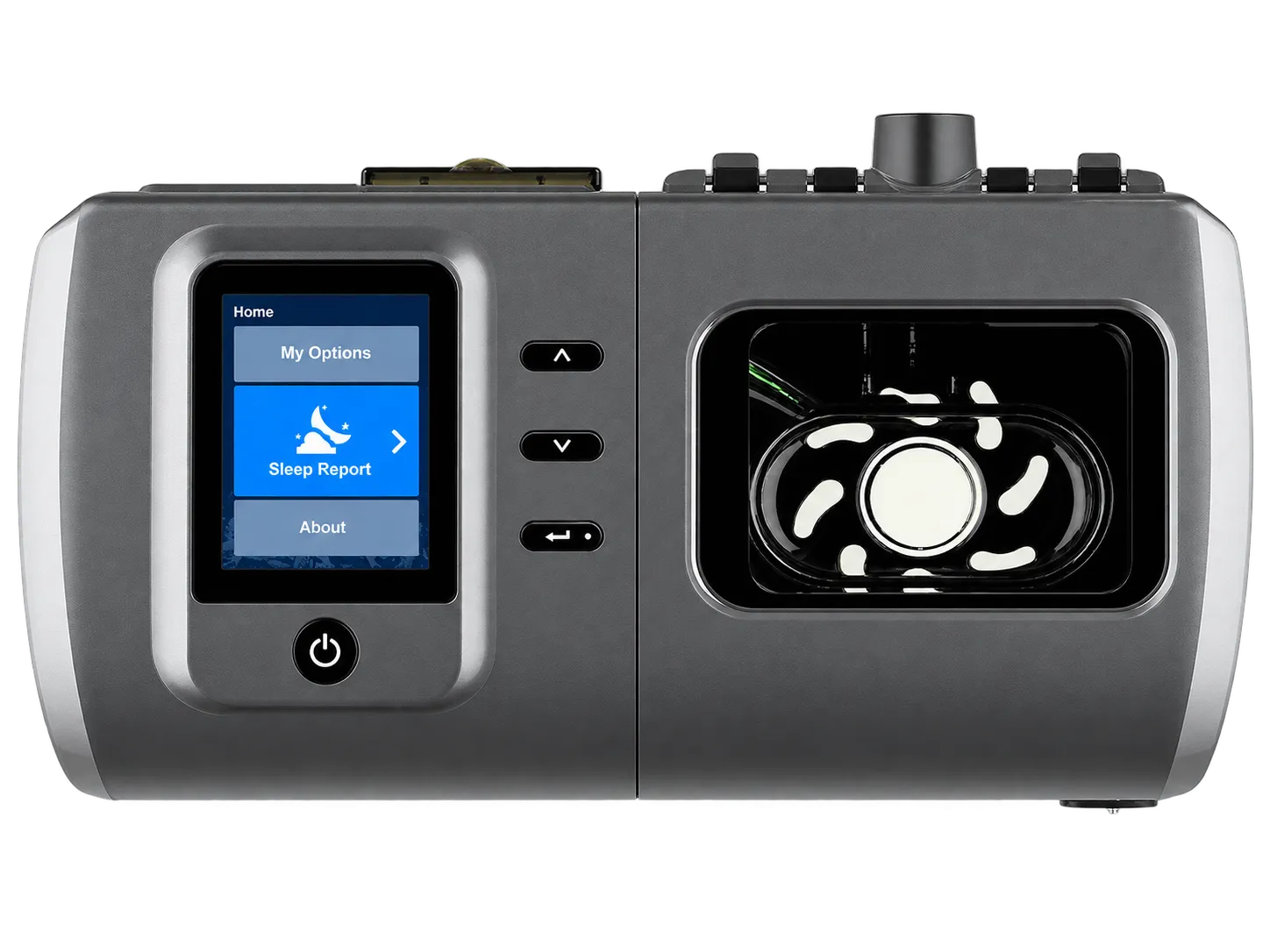
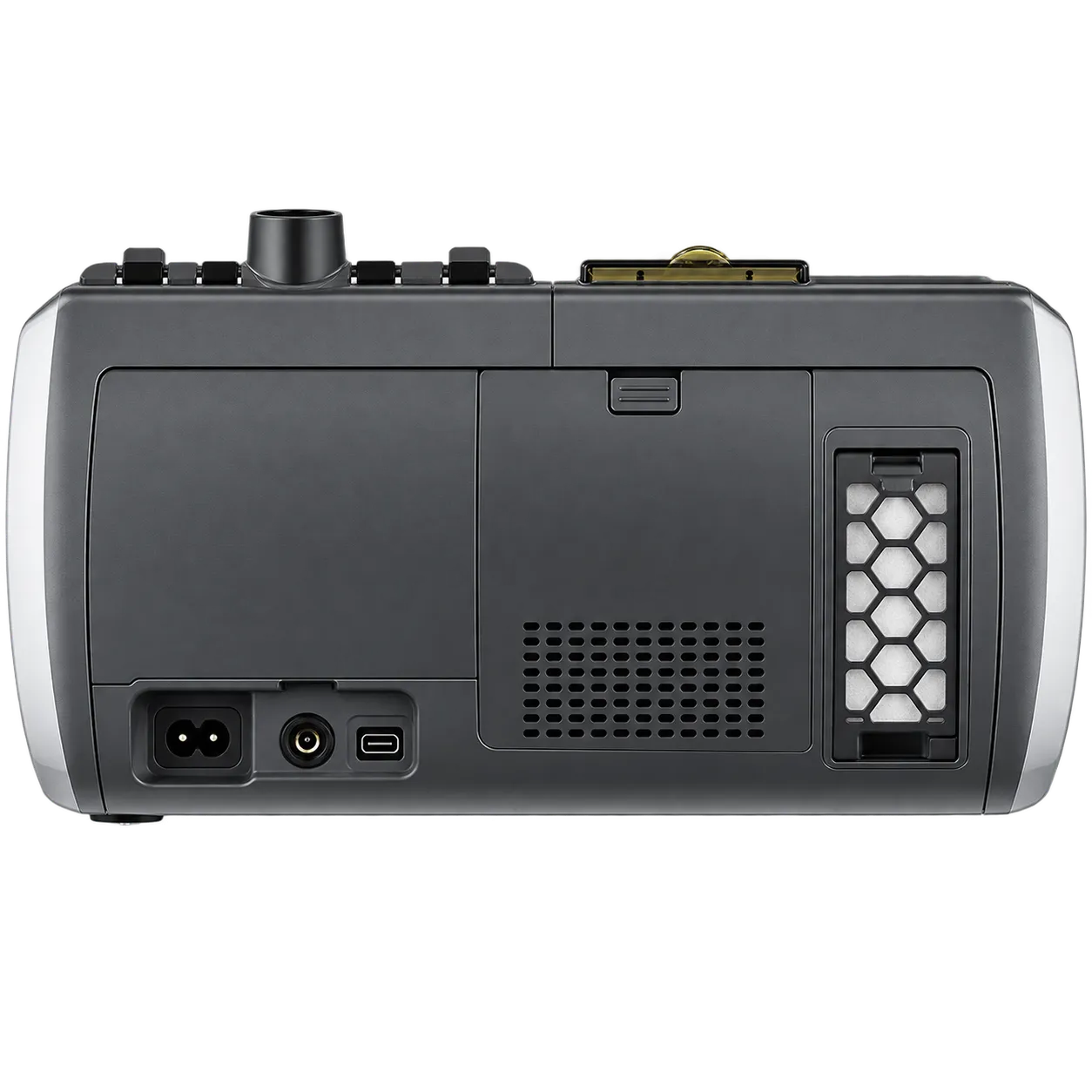
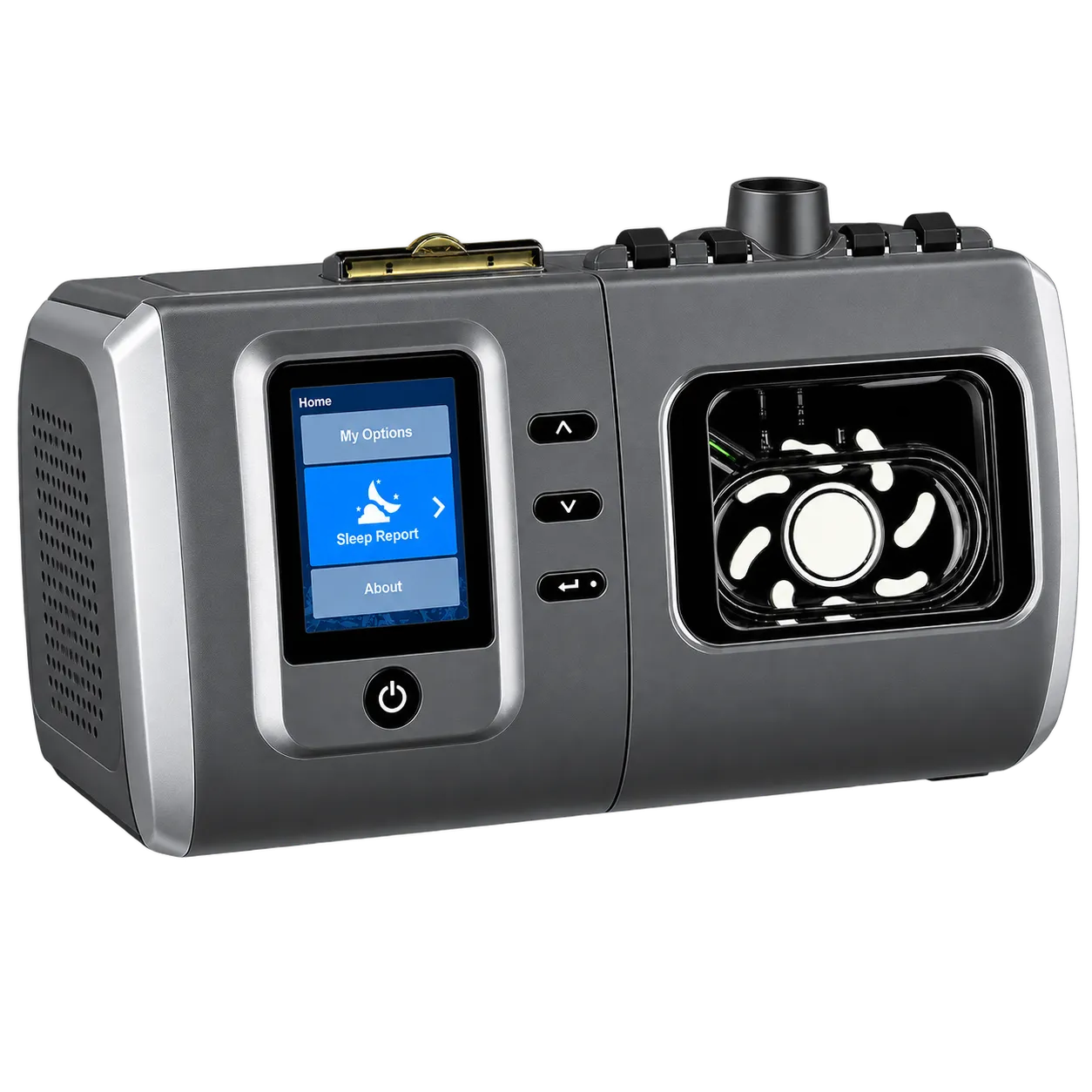
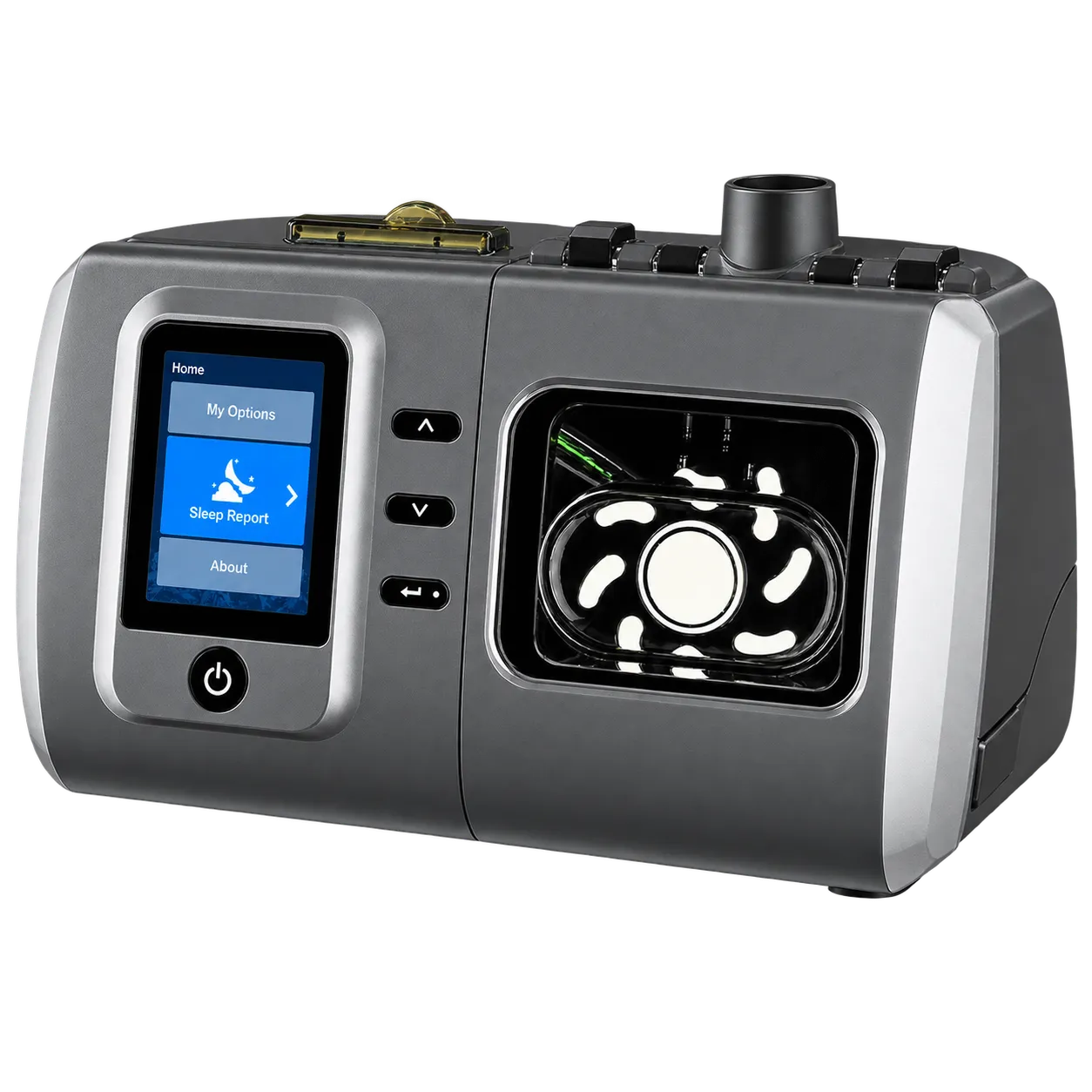
The DS-7 is used where fixed CPAP is not enough to manage a patient's breathing. Bilevel therapy separates the pressure given on inhalation from the pressure held on exhalation. That difference does two things. It makes exhaling against the airflow easier, and it adds active support to each breath in.
Patients who need high therapeutic pressure often cannot tolerate it as a single fixed level. Splitting the pressure improves comfort and adherence for this group. Obstructive sleep apnoea with a high pressure requirement is a common indication. Central and mixed patterns are another, where timed breaths matter because patient effort is unreliable. T and ST modes cover this.
The device delivers a breath at the set backup rate when the patient does not trigger one. Chronic respiratory conditions with hypoventilation form a further group. Here the concern is inadequate ventilation rather than airway collapse alone, and pressure support helps clear carbon dioxide.
Sleep laboratories use the DS-7 for overnight bilevel titration, adjusting IPAP, EPAP, trigger sensitivity, and backup rate against the recorded response. Hospital respiratory wards use it for non-invasive ventilation during short admissions. Home care is the largest setting by volume, supported by the real-time display and Sleep Report summary.
VENTMED states the device is not intended for life support, so it should not be relied on where interrupted therapy would put a patient at immediate risk. All settings must be prescribed and reviewed by a qualified clinician.
Medigear.uk supplies the full instructions for use with every unit so clinical teams can confirm indications and contraindications before deployment.