
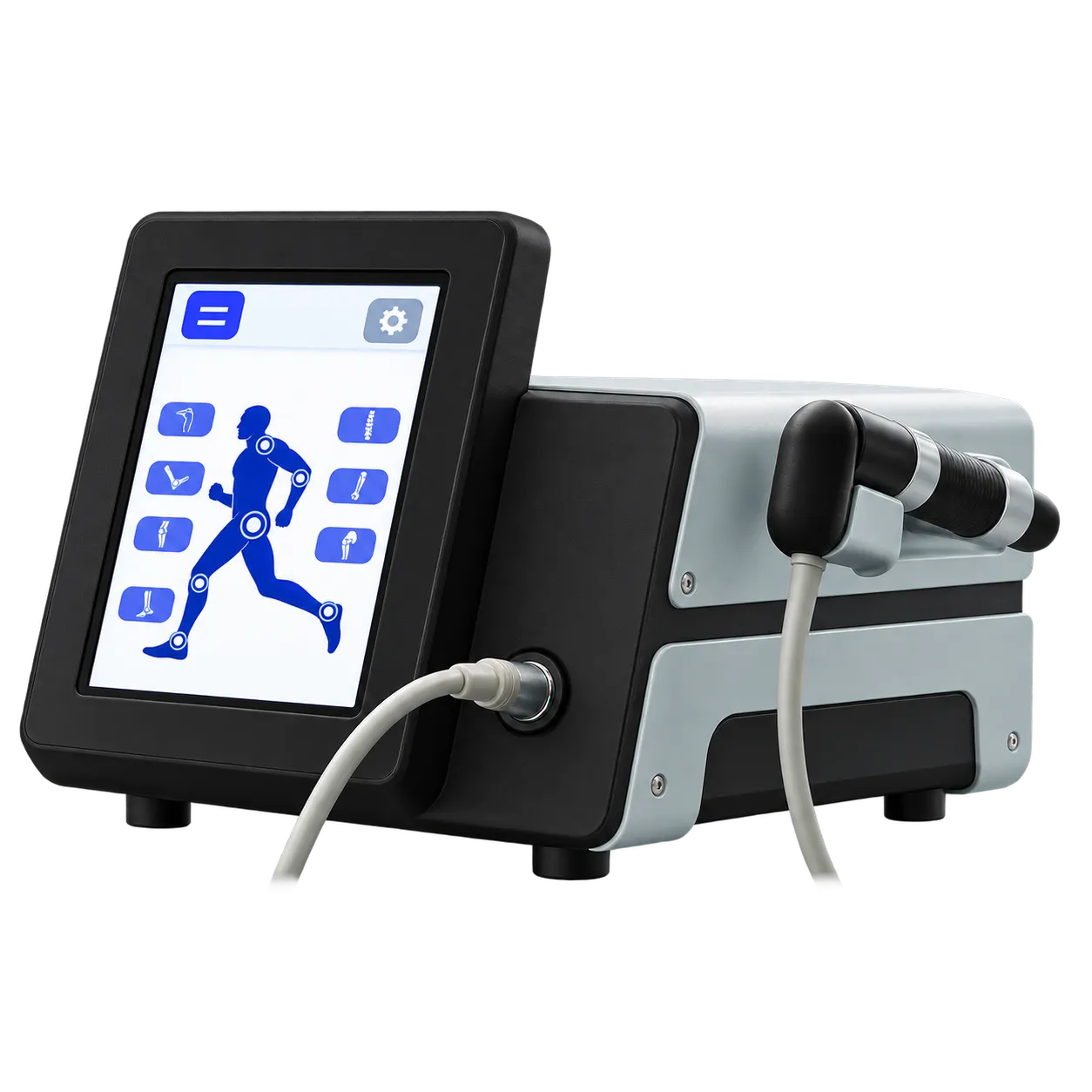
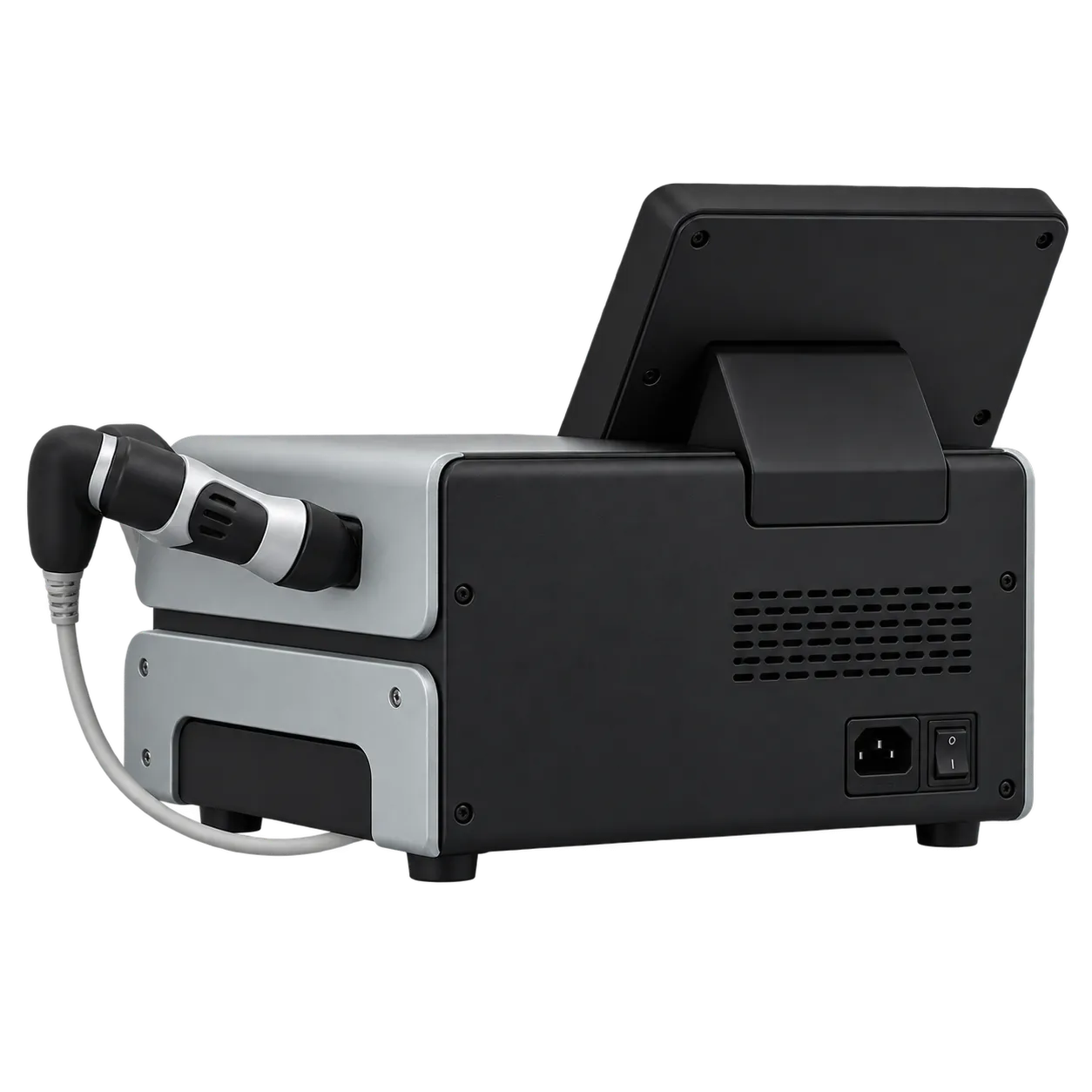
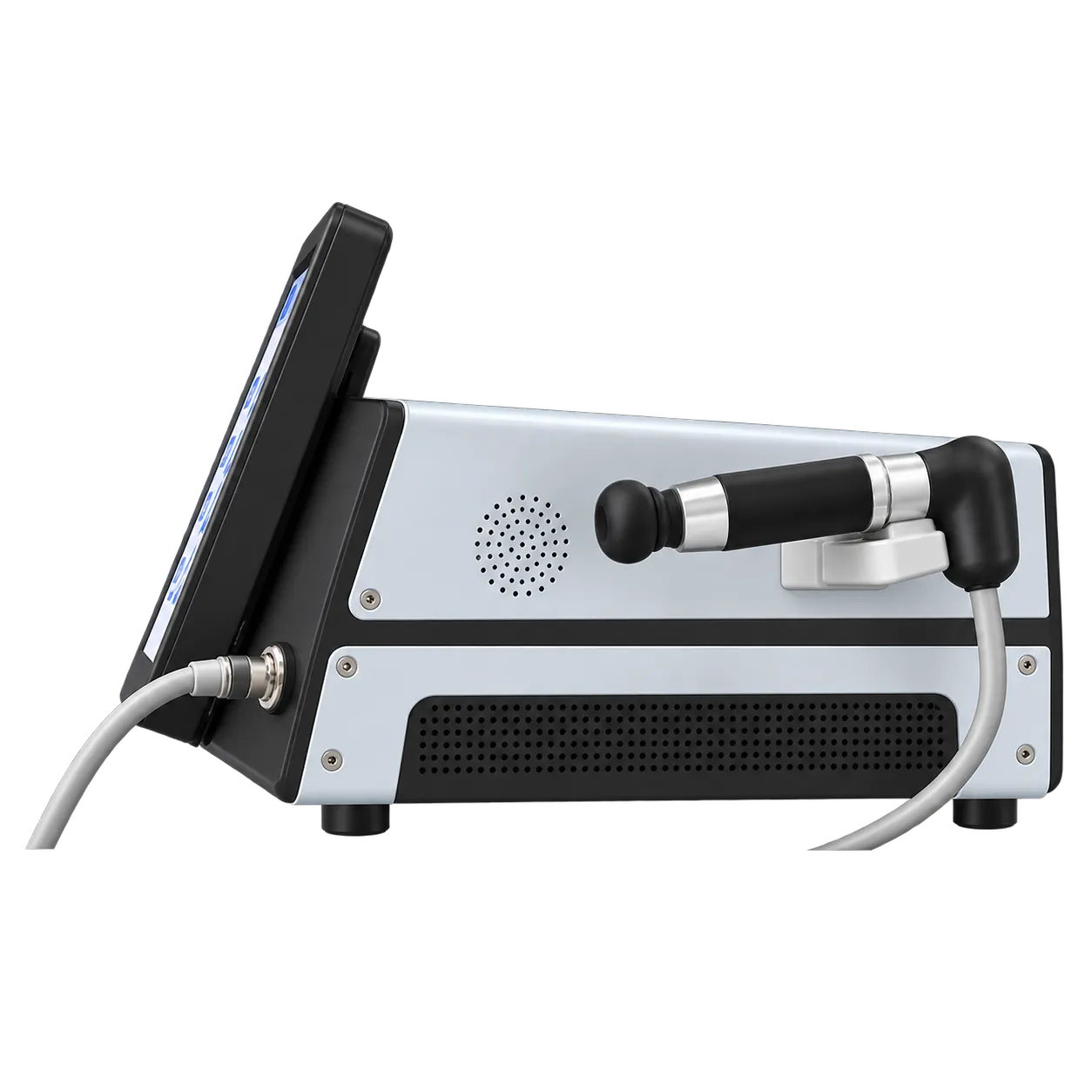
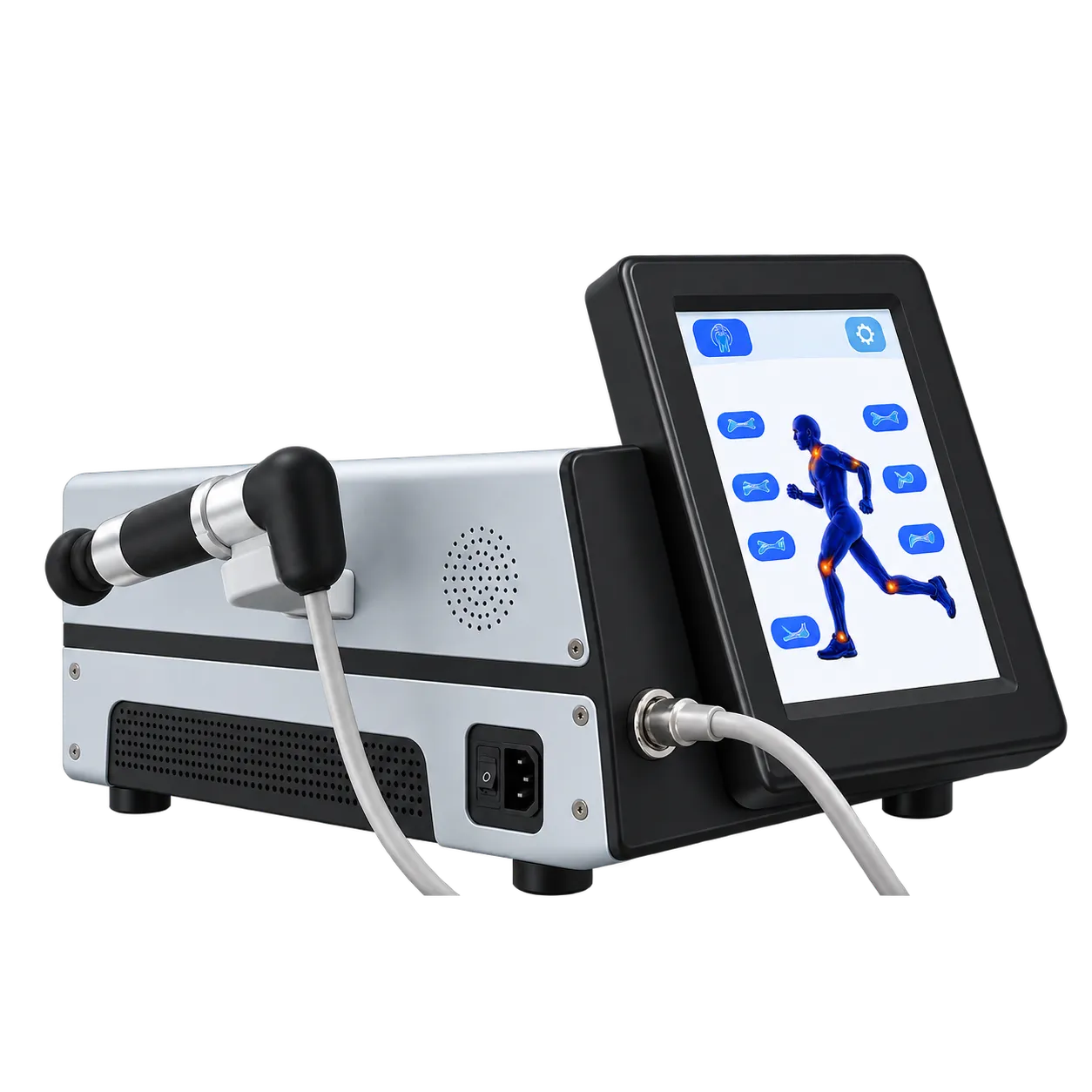
Mobile and multi-site practitioners are the natural buyers. An 18 kg body, a small footprint and a draw under two amps let one machine serve a clinic room, a sports ground and a domiciliary round without a van or a dedicated circuit. Fixed single-room clinics can use it perfectly well, but they are not the buyer it's aimed at.
Caseload-wise, it suits the chronic soft-tissue work that fills musculoskeletal lists: plantar heel pain, tendinopathy at the elbow and in the Achilles and patellar tendons, and lateral hip pain. Sports settings add the acute-on-chronic presentations that come with a training load, where a unit that travels to the athlete beats one that waits for them.
Protocol discipline is the thing to set up first. Agree a house protocol per region, fix the starting pressure and the progression rule, and record the three numbers every time. With roughly forty thousand combinations available, a service that does not standardise will produce results it cannot explain or repeat.
Training and governance sit alongside that. Operators need device training from the supplier, contraindication teaching and a documented consent conversation, and insurers will ask who trained whom. NICE guidance on shockwave therapy expects the usual clinical governance, consent and audit arrangements to be in place, which is easier when the settings are already being written down. Pair the settings record with an outcome measure taken at baseline and at discharge, so the service can show whether its protocol works rather than assuming it does.
Independent practitioners and small groups usually buy directly, while larger providers route purchases through procurement. The manufacturer issues the conformity documentation, and the seller provides it.