
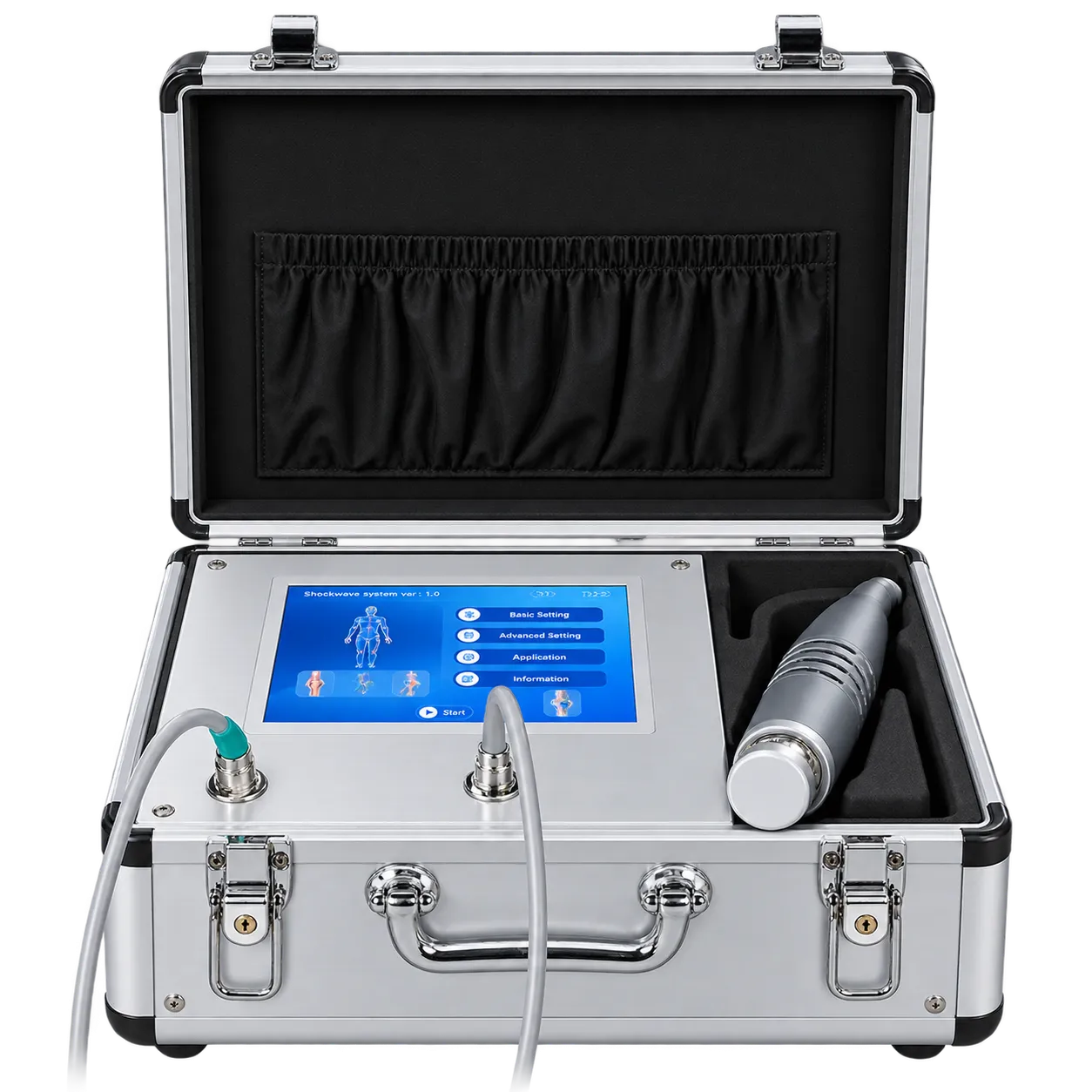
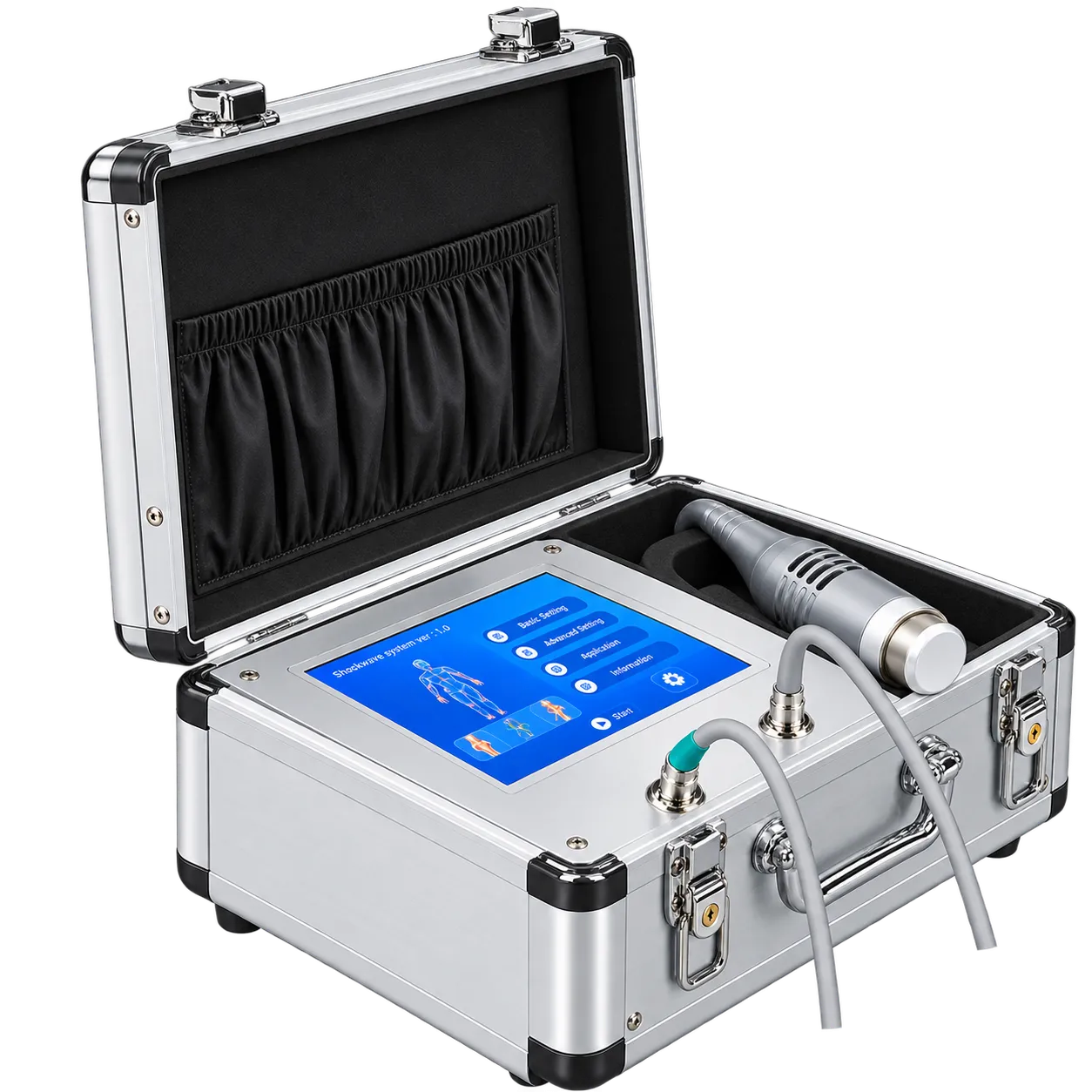
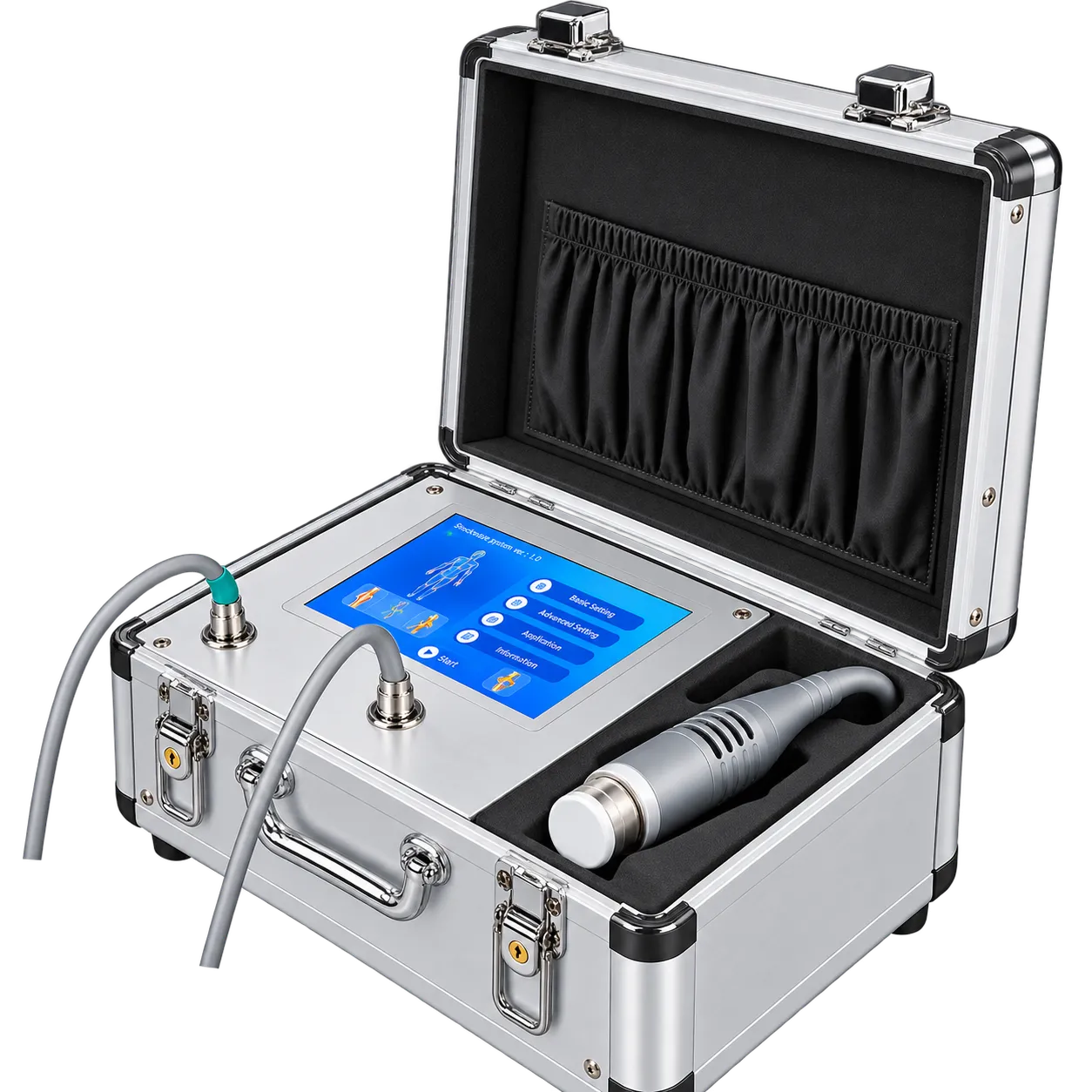
Visiting services are built around a simple constraint: the journey is the expensive part, so what happens once the clinician arrives determines whether the round is worth it. Domiciliary physiotherapy, community musculoskeletal teams, sports clubs treating on the ground, occupational health attending employers' premises, and intermediate care all face it, and all carry equipment in and out again on foot.
A case unit lets the decision and the treatment happen together. A strain assessed at a training ground can be treated before the clinician leaves, a patient seen at home does not need to be brought into a clinic for a second appointment, and an acute presentation gets attention while it is still acute. That last point is the clinically interesting one, because the interval between assessment and first treatment is often the only variable a visiting service can actually control.
Three megahertz sets the limit on what you can offer that way. Superficial tendon and muscle, myofascial trigger points, shallow calcific deposits and scar work are reachable. Structures three to five centimetres in are not, so a service planning to work at depth will need a second frequency from elsewhere.
The indication list still applies wherever the treatment happens. Guidance advises against ultrasound in low back pain and sciatica and in osteoarthritis, with a 2025 rotator cuff guideline agreeing. Procurement runs through community services, private practices, sports organisations and occupational health providers under their own rules. Conformity paperwork comes from the manufacturer via the seller, and adverse incidents are reported to the MHRA via the Yellow Card.