
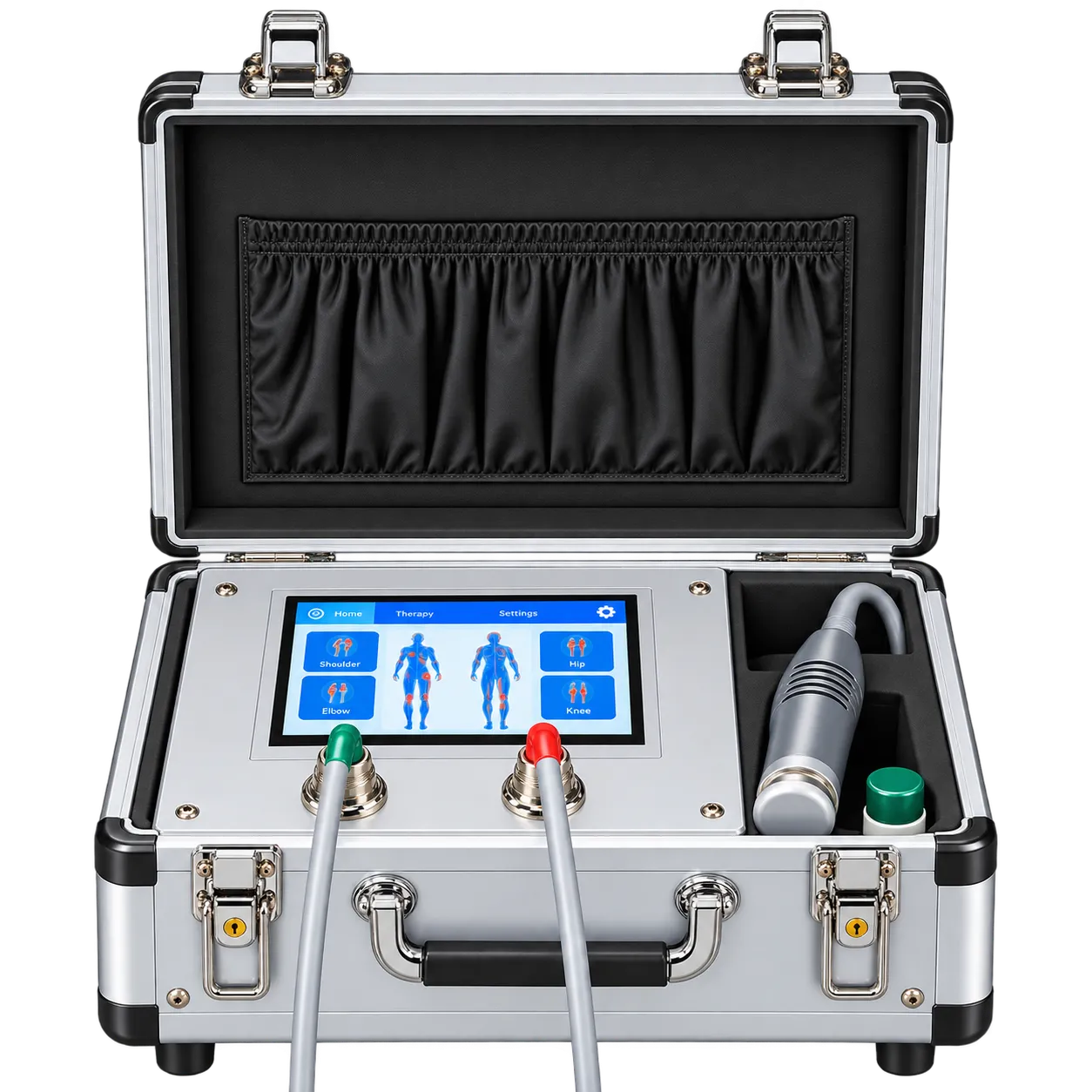
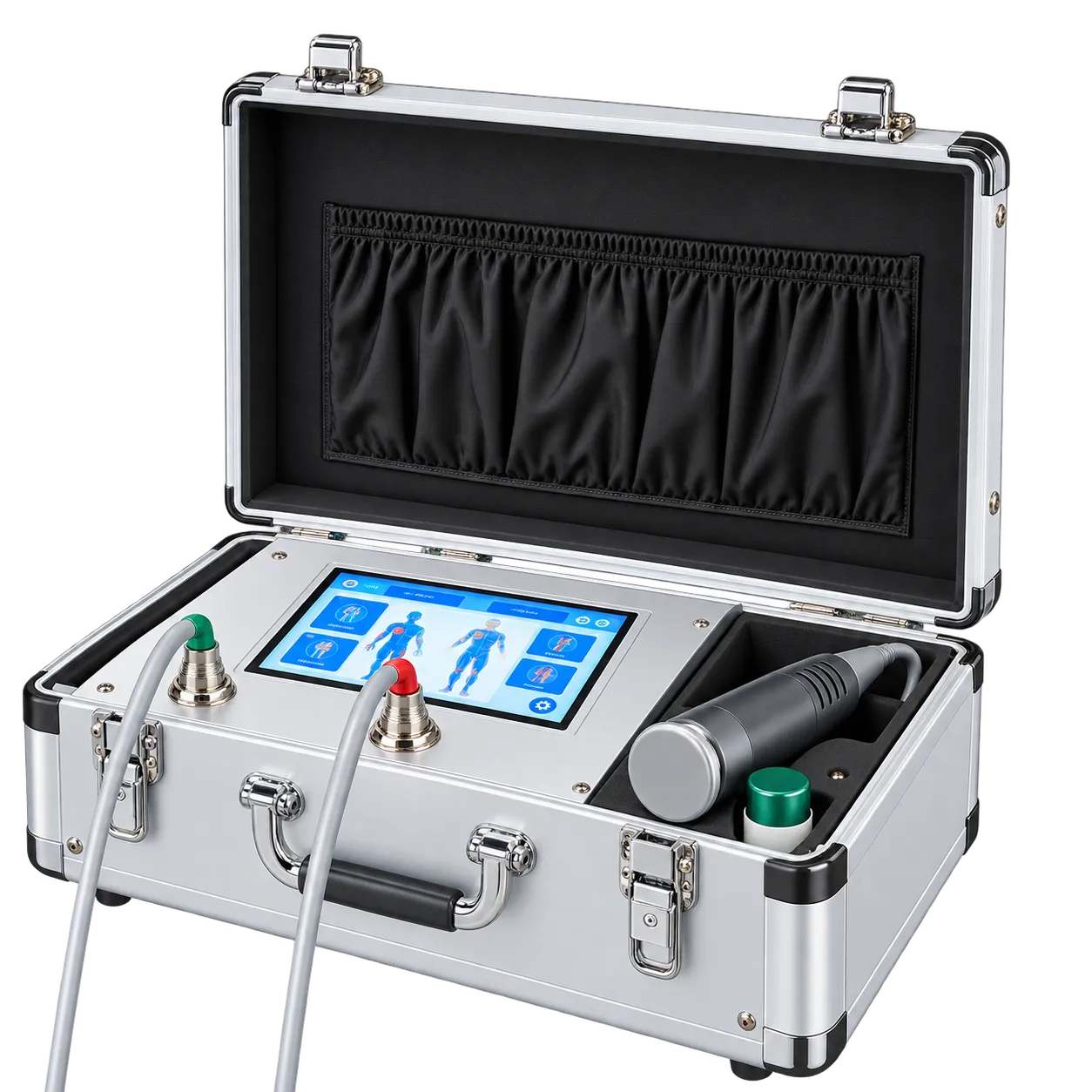
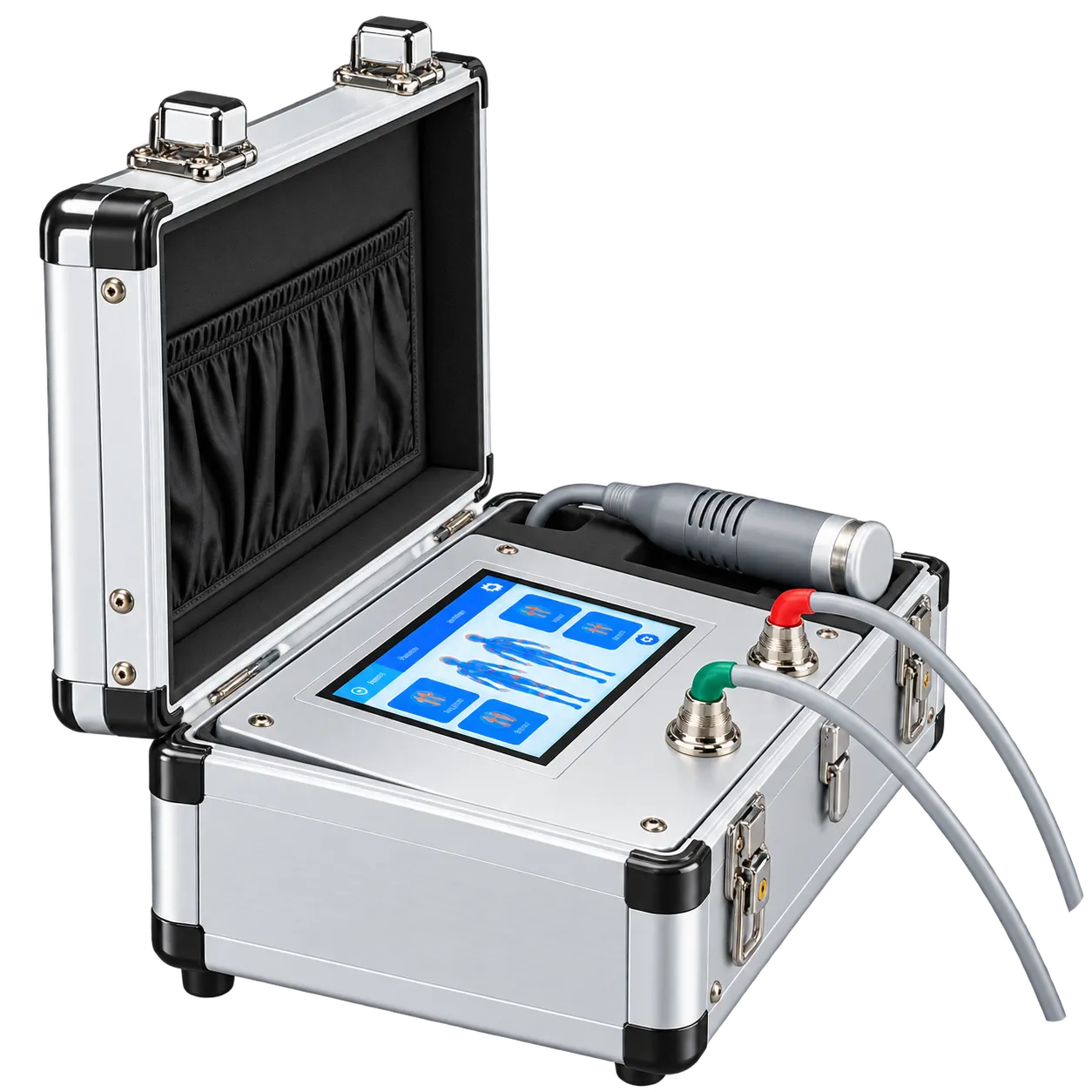
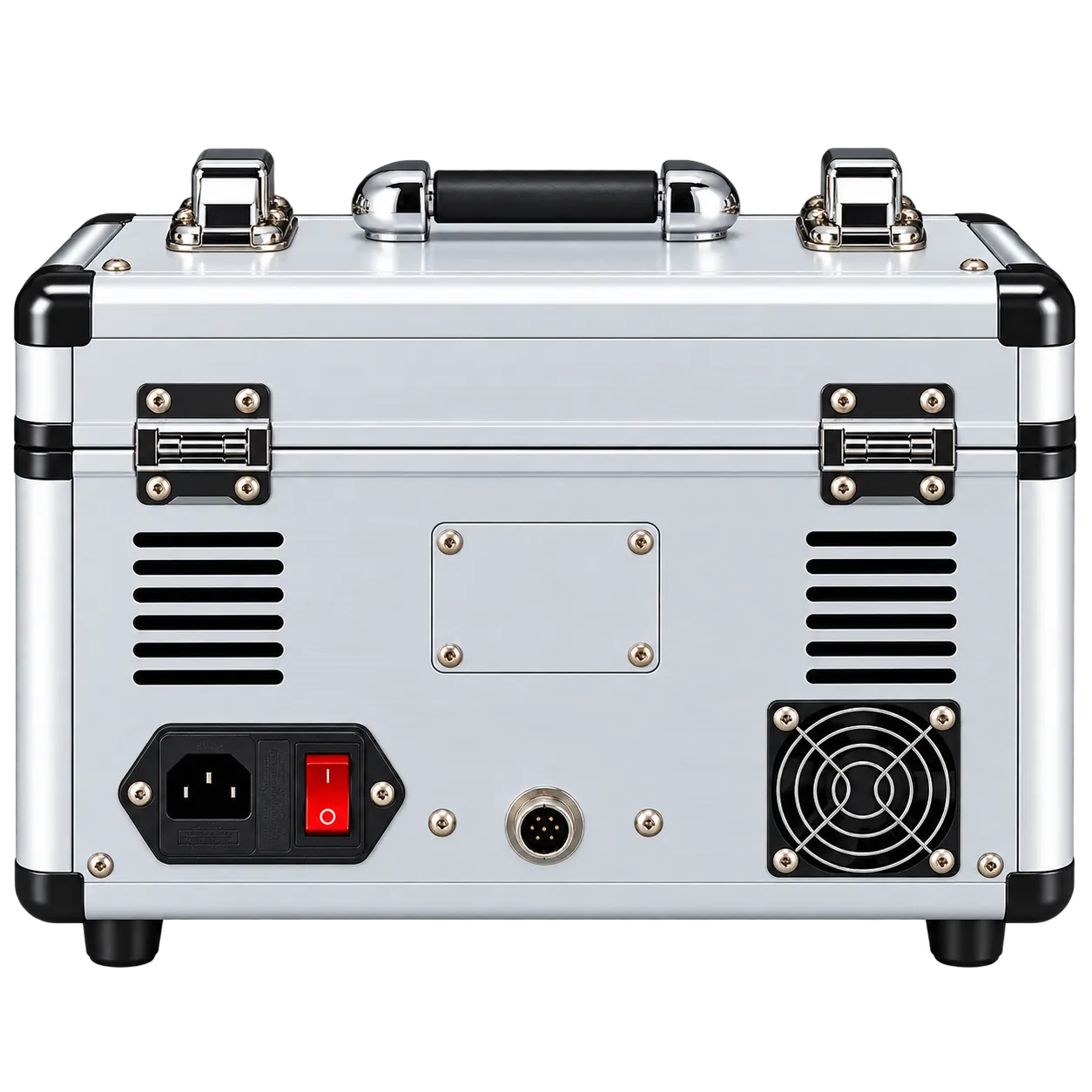
This reaches people who struggle to be reached. Housebound patients, those recently discharged after surgery, anyone whose pain makes a car journey a serious undertaking, care home residents, and inpatients who would otherwise be wheeled to a department and back. Community musculoskeletal teams, domiciliary physiotherapy and ward-based services all work with that population, and for them the constraint has never been clinical judgement but logistics.
Two frequencies keep the visit worthwhile once the clinician is there. Superficial targets take three megahertz, deeper muscle takes one, and on a round where the presentation is often not quite what the referral described, having both prevents a wasted journey. The duty cycle handles the acute and chronic split on the same unit.
Treating at the bedside or in an armchair brings its own considerations. The clinician works at whatever height the furniture offers, which, over several visits, becomes a manual handling issue. Exposing a treatment site in a patient's home, with no colleague nearby, raises chaperoning and consent questions that belong in a written policy rather than in the moment. And the case rests on whatever surface is free.
None of that alters what should be treated. Guidance advises against ultrasound for low back pain, sciatica, and osteoarthritis, so the indication list governs regardless of where the treatment happens. Procurement runs through community services, care providers and private practices under their own rules. Conformity paperwork reaches the buyer from the manufacturer through the seller, and adverse incidents are reported to the MHRA via Yellow Card.