
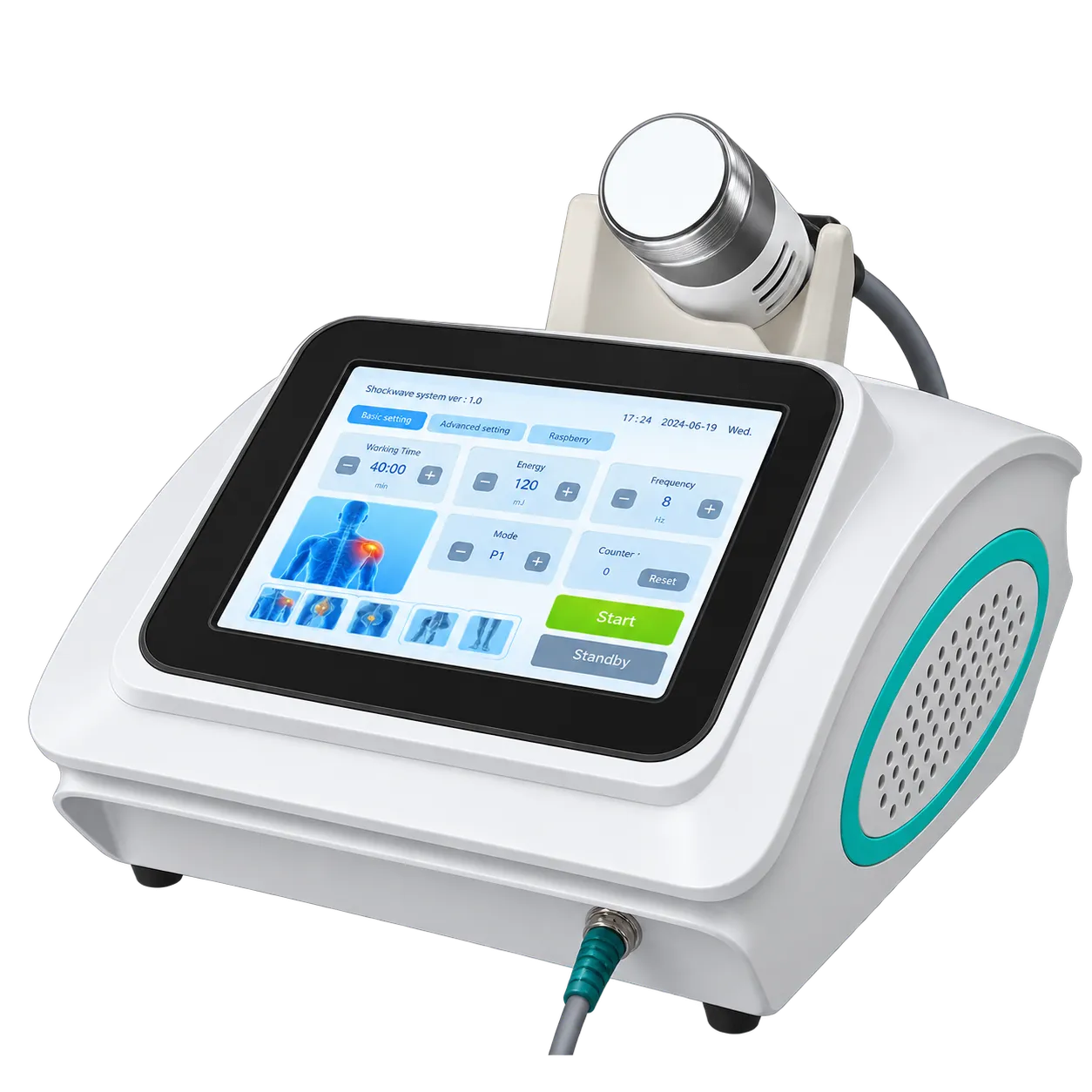
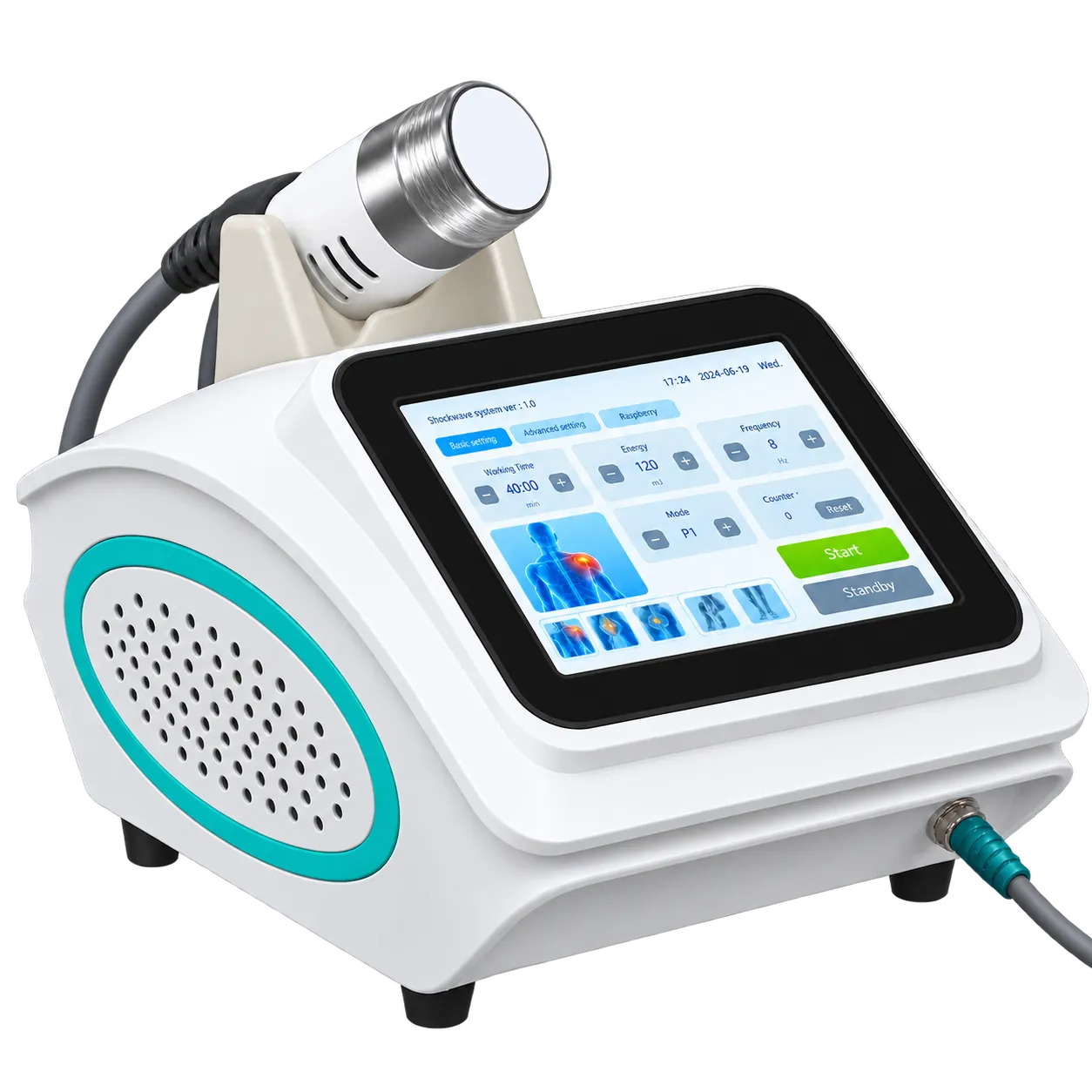
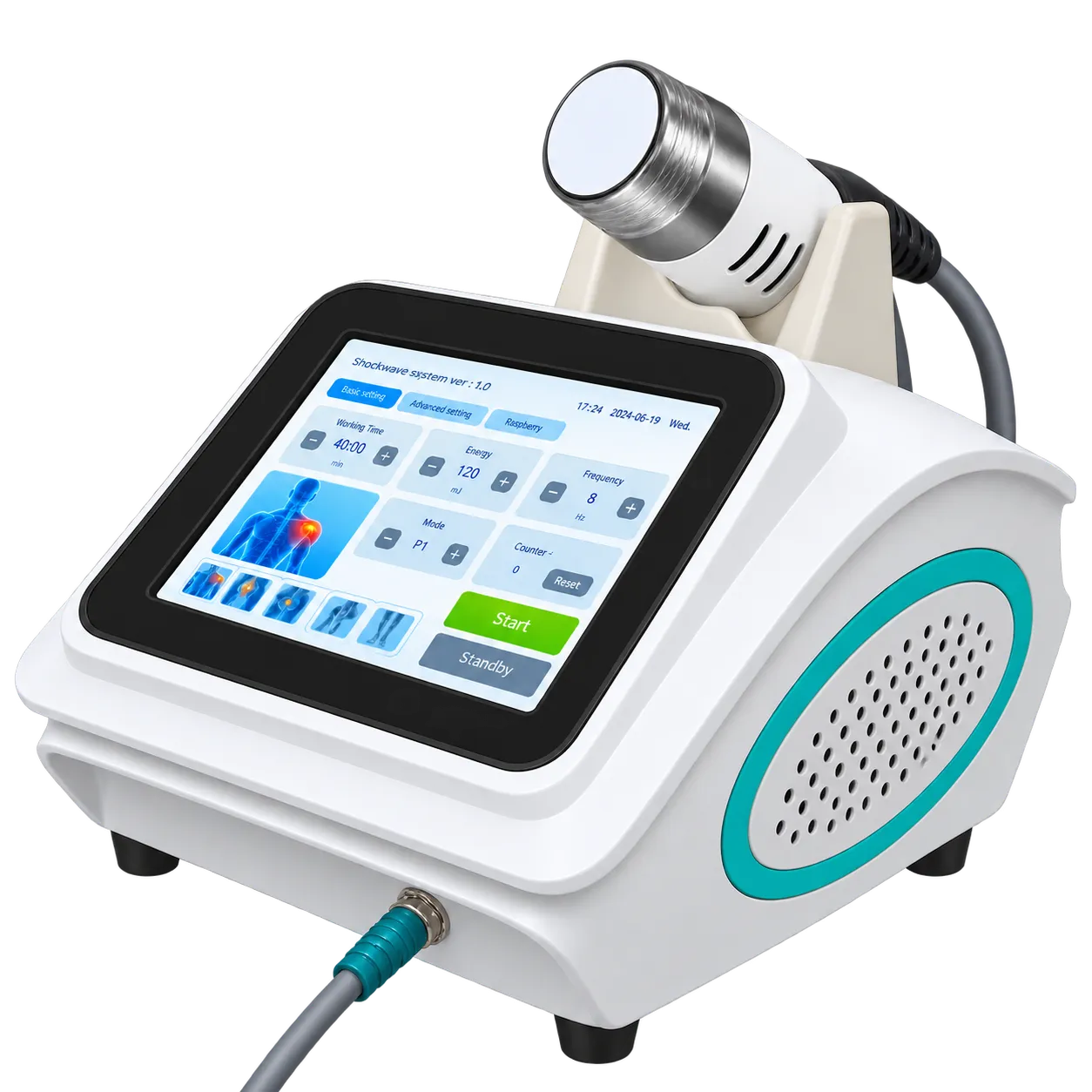
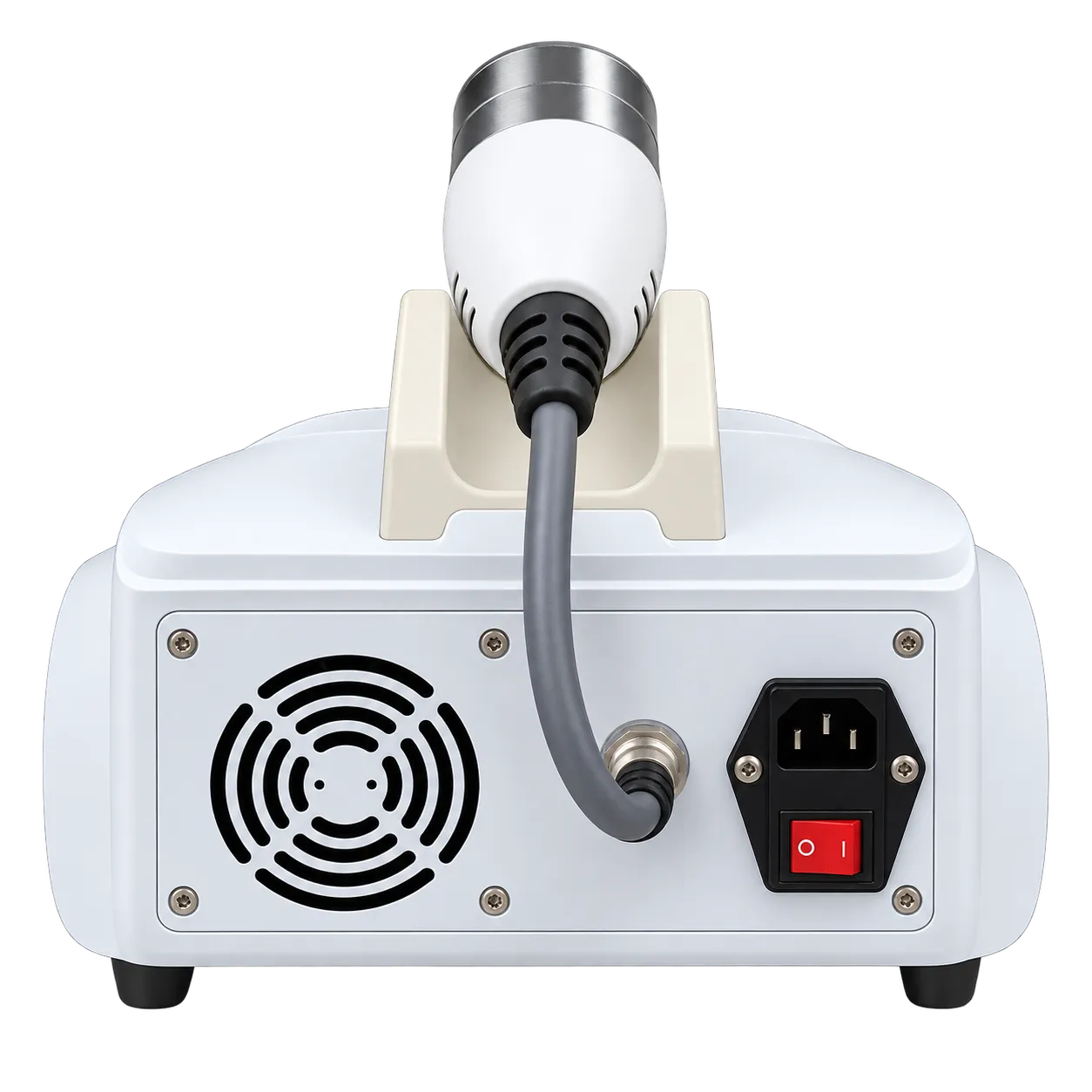
Two frequencies change what a single console covers across a working list. Musculoskeletal services, physiotherapy departments, sports clinics and rehabilitation units see presentations at every depth from a superficial tendon insertion to a substantial muscle belly. Until now, the depth question has usually been answered by which machine was free rather than by what the tissue needed.
At three megahertz the energy is absorbed within the first centimetre or two, which suits trigger points close to the surface, shallow calcific deposits, scar work and superficial tendon. At one megahertz, the same console reaches structures three to five centimetres in, where larger muscle groups and deeper soft tissue sit. Selecting between them is a clinical decision made per patient, and having both available is what makes it a decision at all.
Against that sits the intensity ceiling. A console that reaches three watts per square centimetre is working at the regulatory maximum, and everything above that is prohibited rather than merely inadvisable. Whoever is operating it needs to understand that the top of the dial is also the top of the permitted range, and the service needs a calibration arrangement that confirms the display still matches what the head delivers.
The indication list remains the harder conversation. Guidance advises against ultrasound in low back pain and sciatica and in osteoarthritis, and a 2025 rotator cuff guideline agrees. Procurement runs through trust services, private clinics, podiatry groups, and teaching institutions under their own rules, with a Class IIa or IIb device clearing clinical governance alongside finance, and adverse incidents reported to the MHRA via Yellow Card.