
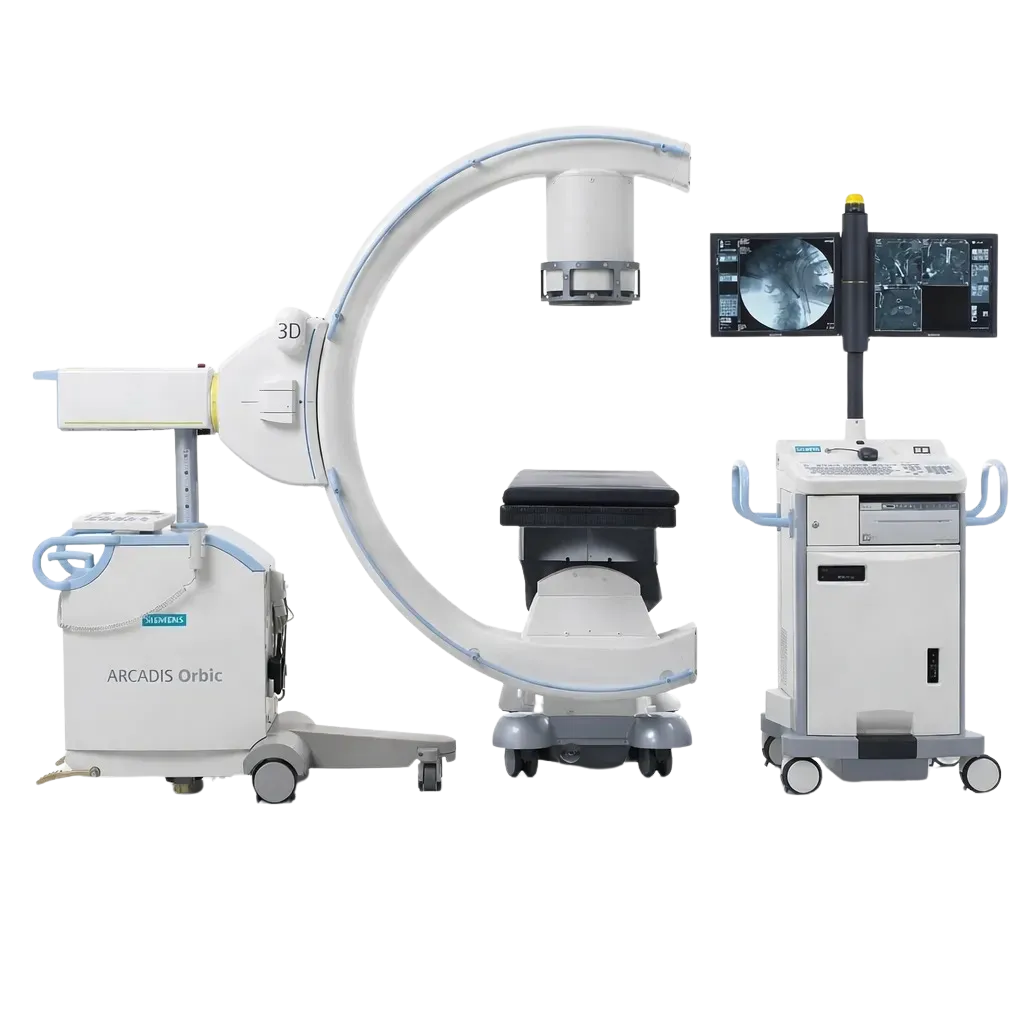
These are the capabilities that define the Arcadis Orbic 3D in the clinic.
Isocentric Orbital Movement
A 190 degree isocentric orbital movement with a 95 degree overscan sits at the heart of the system. Because it needs fewer readjustments during use, it helps reduce both procedure time and radiation dose.
Intraoperative 3D Imaging
Intraoperative 3D with multiplanar imaging lets the team generate 3D views right in the operating room. This is especially helpful for repositioning fractures and for safer, clearer surgical navigation.
Syngo Software
The Arcadis Orbic 3D runs on Syngo software, so different imaging modalities and workstations can be synced under one interface. The team uses the same familiar interface for system operation and image processing.
Modality Integration And DICOM
The system integrates with other modalities such as CT and MRI for well-rounded clinical use. Support for DICOM 3.0 functions also makes patient pre-registration quicker, which is helpful in the operating room.
Fully Digital 1K2 Imaging Chain
A fully digital 1024 by 1024 imaging chain, often called 1K2, covers image acquisition, processing and documentation. This digital pathway supports clear, consistent images from capture through to the record.
Large Flicker-Free TFT Display
A large, flicker-free TFT flat screen presents images with high brightness and contrast, in colour or monochrome. A wide 170 degree viewing angle makes both vertical and horizontal viewing easy across the room.
Ergonomic Handling
The Arcadis Orbic 3D is designed with ergonomics in mind, so handling is easy and convenient. Thoughtful, user-focused design also helps keep the system safe to operate during a busy list.