
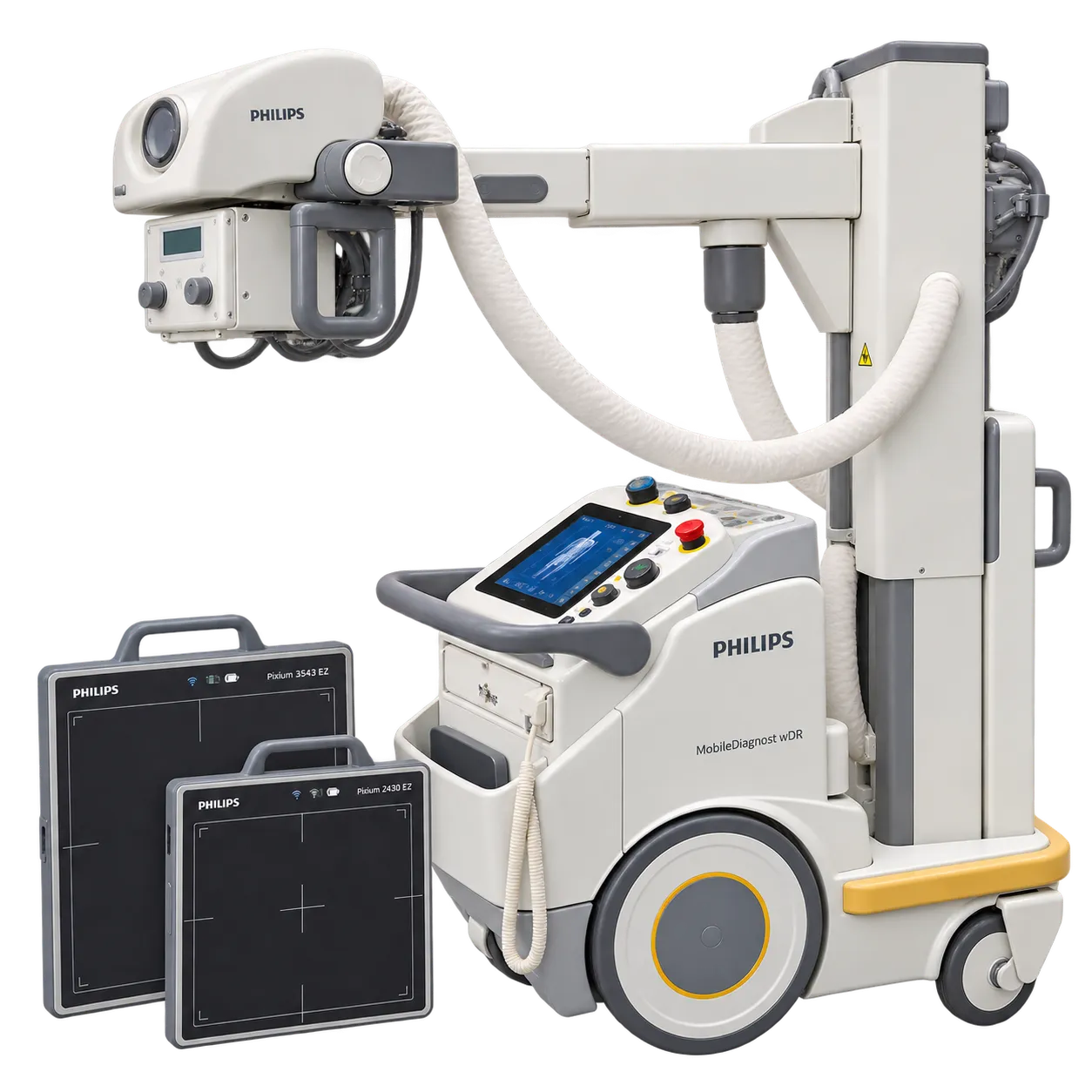
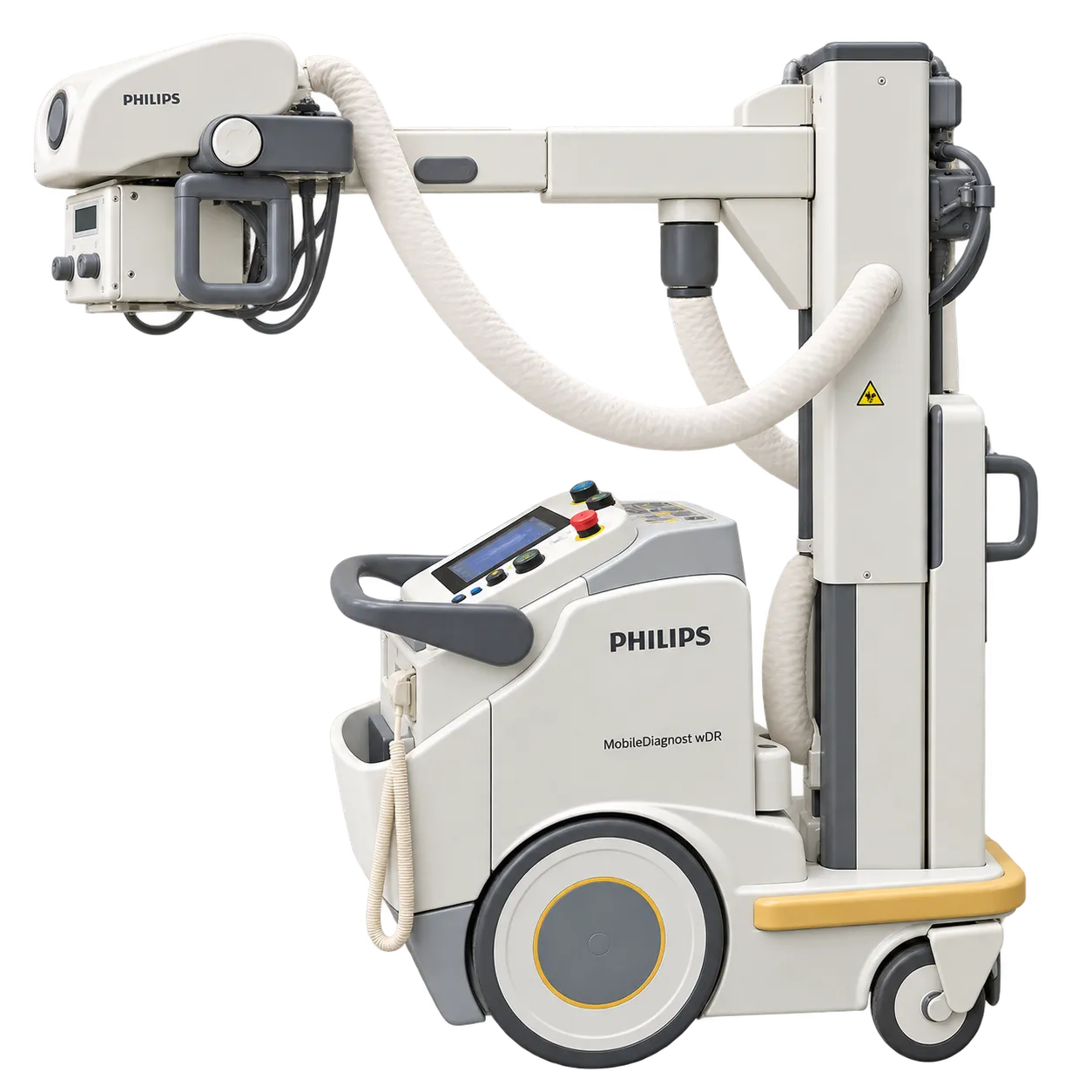
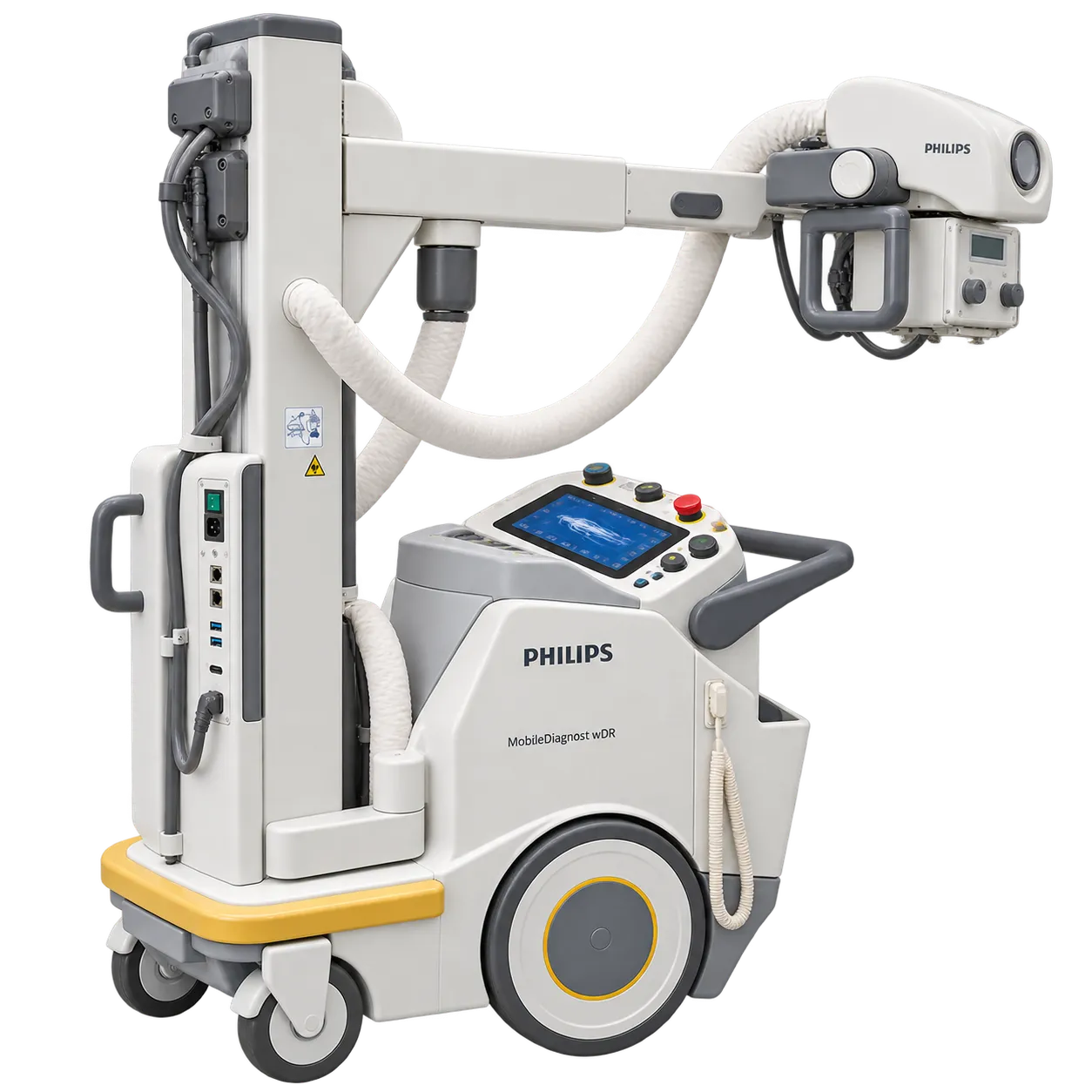
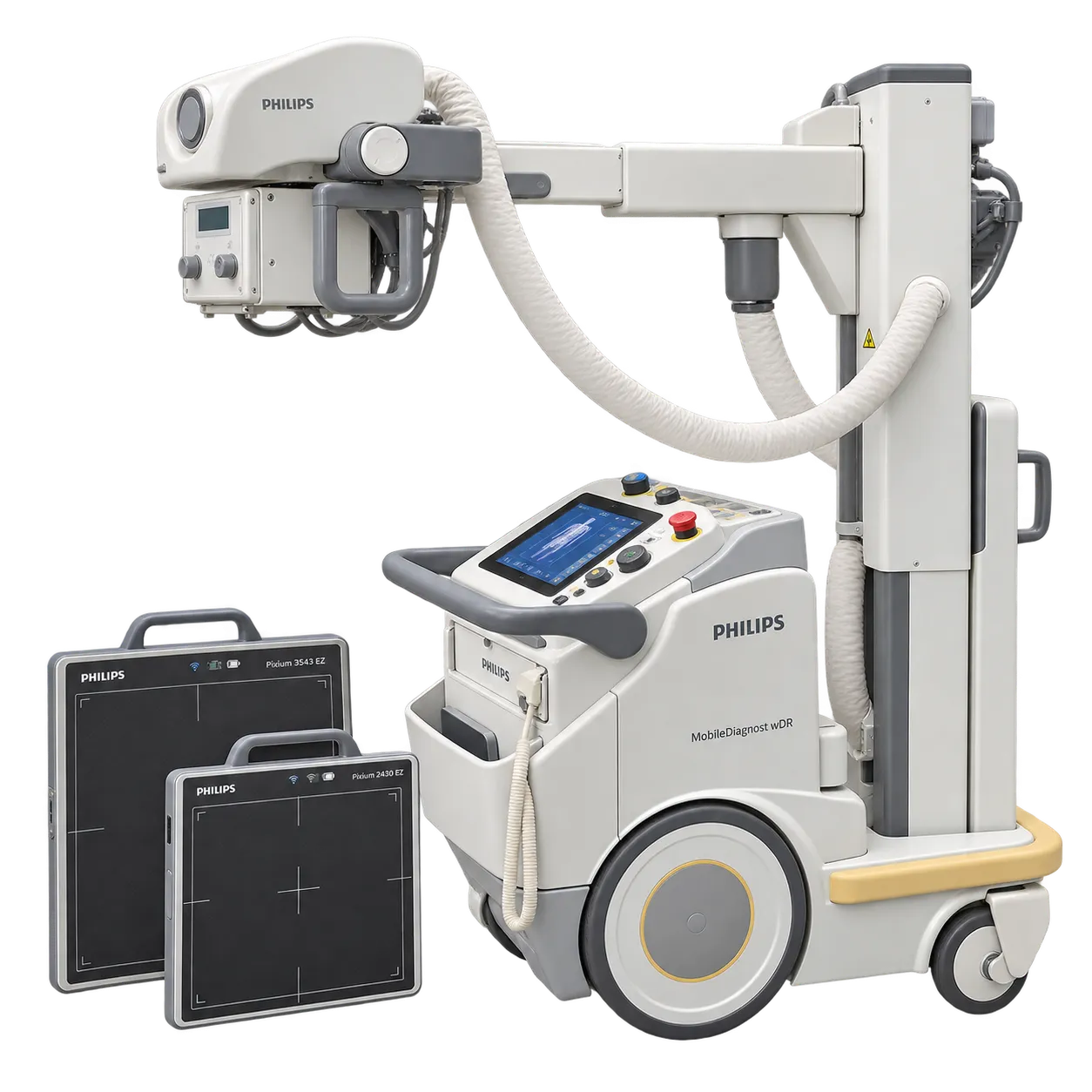
Ward and bedside chest radiography across intensive care, high dependency, general wards and emergency settings is the core of what this system delivers, using the large format panel for the coverage adult chest, abdominal and spinal work requires. All clinical judgement, including whether an examination is justified, remains with the referring and reporting clinicians, and Medigear.uk supplies configuration and condition detail rather than clinical guidance.
Neonatal and paediatric imaging is where the small format panel earns its place. Incubator access is constrained and a large detector is awkward to position within it, while a small panel positions cleanly and matches the field to the anatomy. For a service covering a neonatal unit alongside adult wards, having both panels on one machine removes a genuine practical difficulty rather than merely making it tidier.
Extremity examinations benefit similarly, with easier positioning under limbs and a field appropriate to what is being imaged. Trauma and emergency work often mixes large and small field requirements within the same episode, and a unit carrying both panels handles that without compromise.
Intensive care work benefits from bedside review within seconds, so line and tube position, chest review and post-procedure checks are achievable without disconnecting and transferring a ventilated patient, and positioning problems are corrected while the radiographer is present.
Services planning capacity should note that the dual panel configuration widens the range of departments a single mobile unit can serve, and provides continuity when a panel is charging, being cleaned or away for repair. Medigear.uk supplies the specification, calibration and battery position for each detector so both the capability and the resilience can be assessed on evidence.