
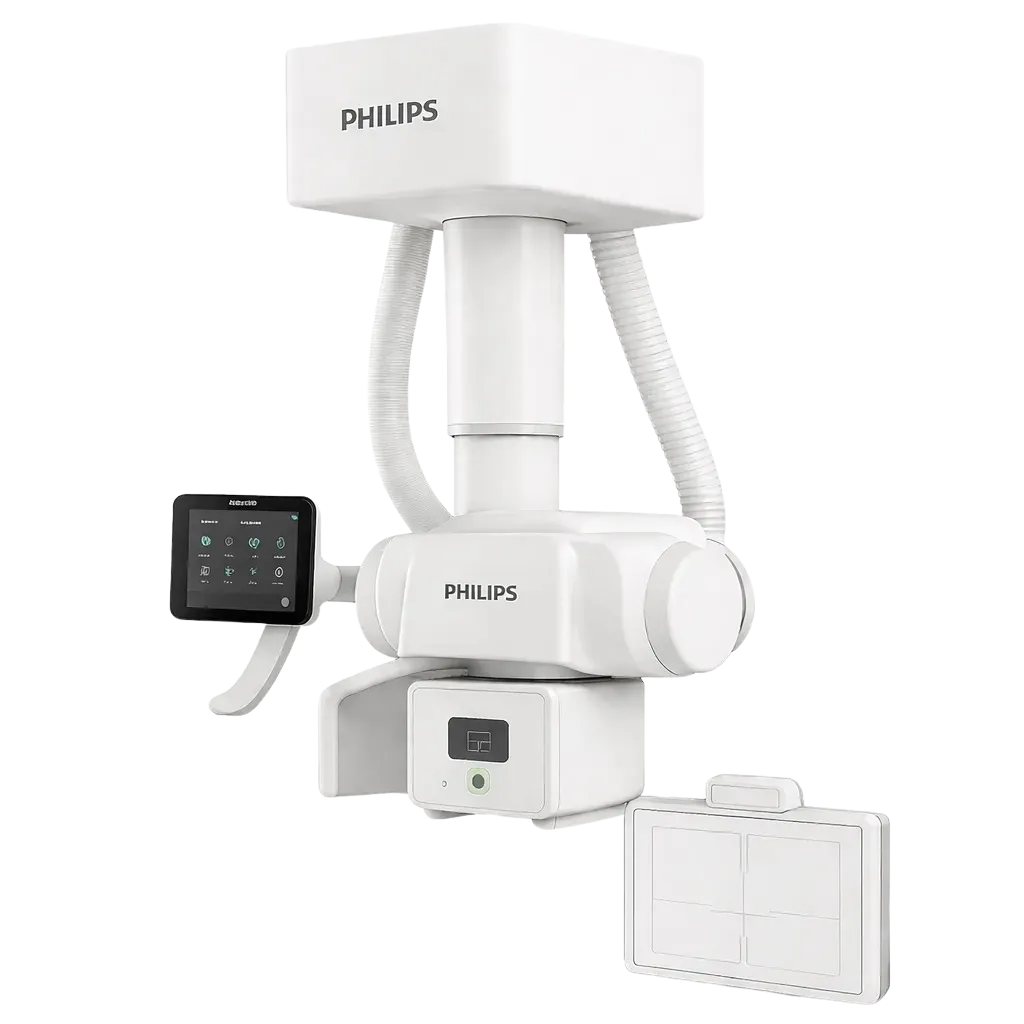
AI Auto Positioning for Efficient Workflow
Philips AI Auto Positioning uses artificial intelligence to detect patient anatomy and automatically align the detector and tube to the correct projection geometry for each examination. This eliminates manual positioning steps, reduces examination time, and supports consistent imaging across varied radiographer experience levels and patient presentations.
AI Exposure Control for Dose Optimisation
Integrated AI Exposure Control automatically selects the optimal exposure parameters for each patient and projection, minimising radiation dose while maintaining the image quality required for confident diagnostic interpretation. This supports compliance with dose optimisation requirements in regulated radiology departments.
High-Resolution CsI Flat-Panel Detector
The caesium iodide flat-panel detector delivers high-resolution digital radiographic images with excellent low-contrast detail and wide dynamic range. CsI detector technology provides superior quantum efficiency compared with conventional flat-panel designs, supporting high-quality imaging at reduced doses.
AI Image Quality Optimisation
AI-powered image processing automatically enhances diagnostic clarity across varied patient presentations and projection types, reducing the frequency of repeat examinations and supporting radiographic consistency across all users of the system.
Ceiling-Suspended Design for Spatial Flexibility
The ceiling-suspended tube and detector arm provide full spatial freedom for multi-projection general, chest, and orthopaedic radiography without floor-based footprint constraints, accommodating the full range of clinical imaging positions.
DICOM Integration for Digital Workflow
Full DICOM connectivity enables direct transfer of images and reports to hospital PACS, RIS, and EMR platforms, supporting structured radiological documentation and multi-disciplinary clinical review workflows.