
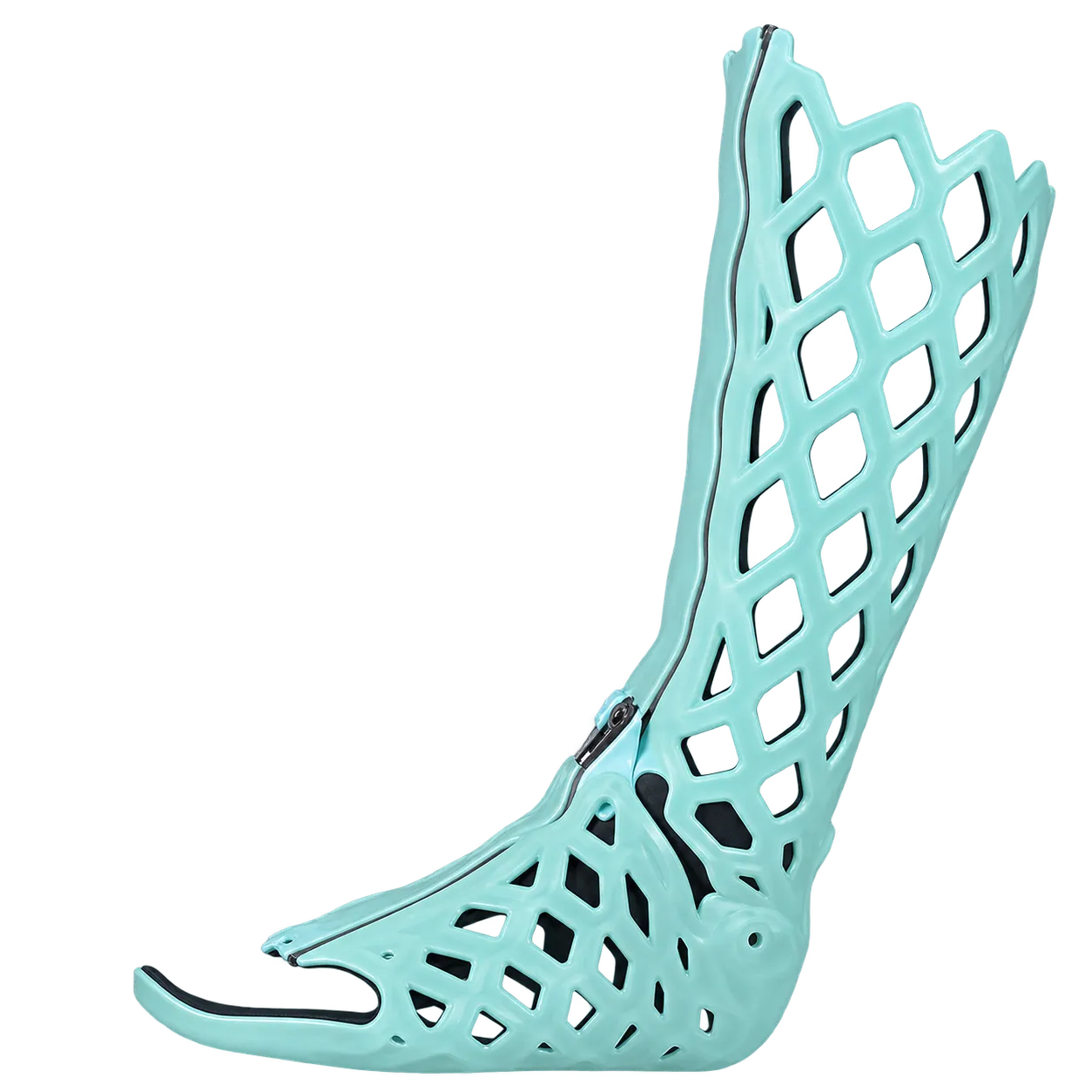
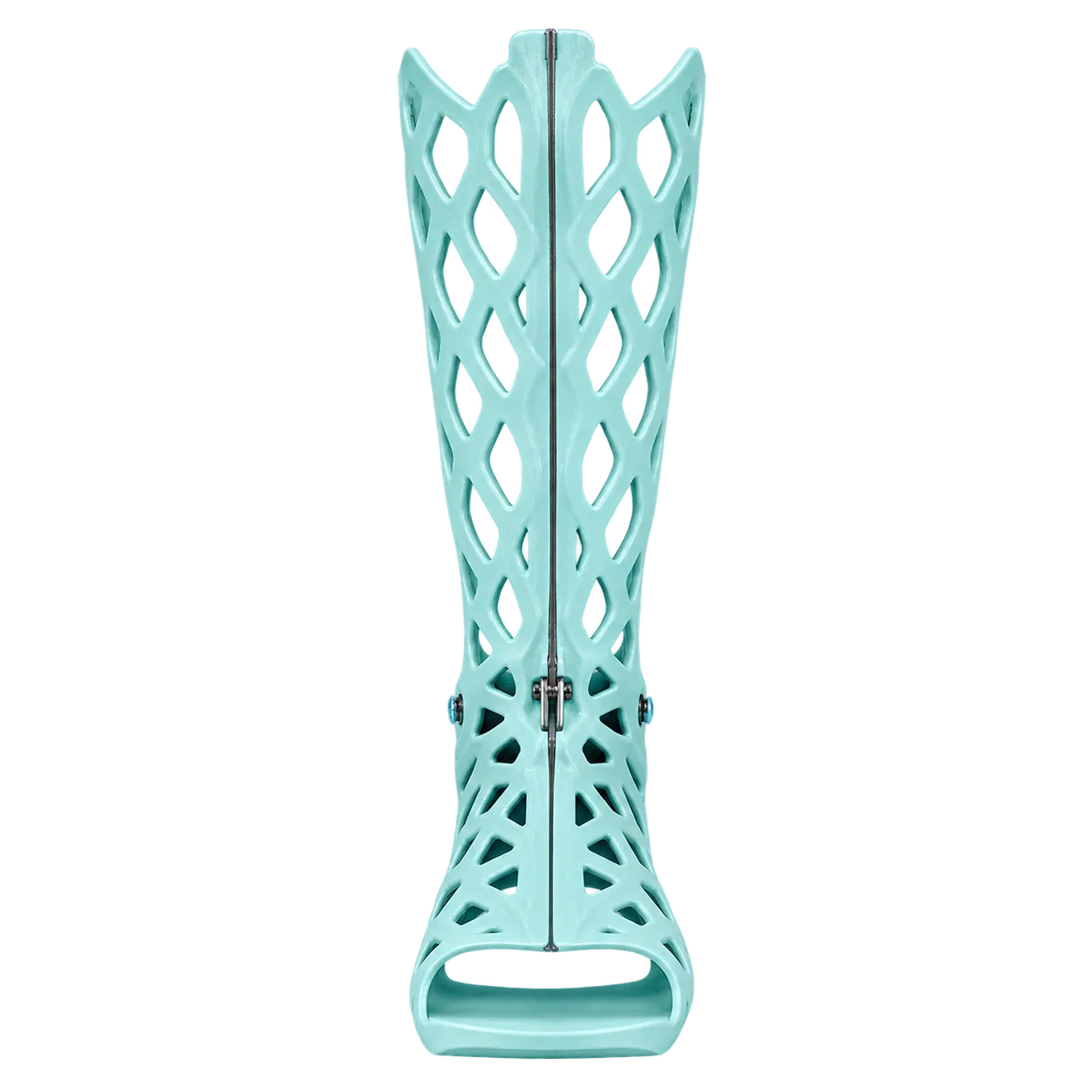
The FlexiOH Short Leg is a below-knee immobiliser that covers the foot, ankle, and lower leg, for emergency departments, fracture clinics, plaster rooms, and orthopaedic outpatient services.
Venous thromboembolism is what separates a leg immobiliser from an arm one, and it should shape the purchase. Temporary cast immobilisation of a leg in adults carries a 2 to 3 per cent risk of deep vein thrombosis; over 70,000 people a year in the UK are treated this way, and NICE guideline NG89 recommends pharmacological thromboprophylaxis where VTE risk outweighs bleeding risk. The Royal College of Emergency Medicine audits three national standards against that: a compliant risk assessment tool, a patient information leaflet on the raised risk and its symptoms, and the first dose given before discharge.
The product meets the obligation on weight-bearing status. Published emergency guidance states that a patient in a removable device, permitted to weight-bear and with no other risk factors, needs no chemical thromboprophylaxis, and expresses a preference for removable devices where the injury allows. The supplied sheet does not state whether this device is weight-bearing, and that single answer may determine whether a cohort of patients requires anticoagulation.
Exposed toes serve the routine surveillance that follows. Colour, capillary refill, swelling and sensation are the standard checks, and leaving the digits outside the shell means nothing has to be removed to perform them, in clinic or at home.
The full-length zip means emergency removal needs no cast saw, which matters where compartment syndrome of the leg is the concern. The conformity documentation and instructions for use are issued by the manufacturer and provided by the seller.