
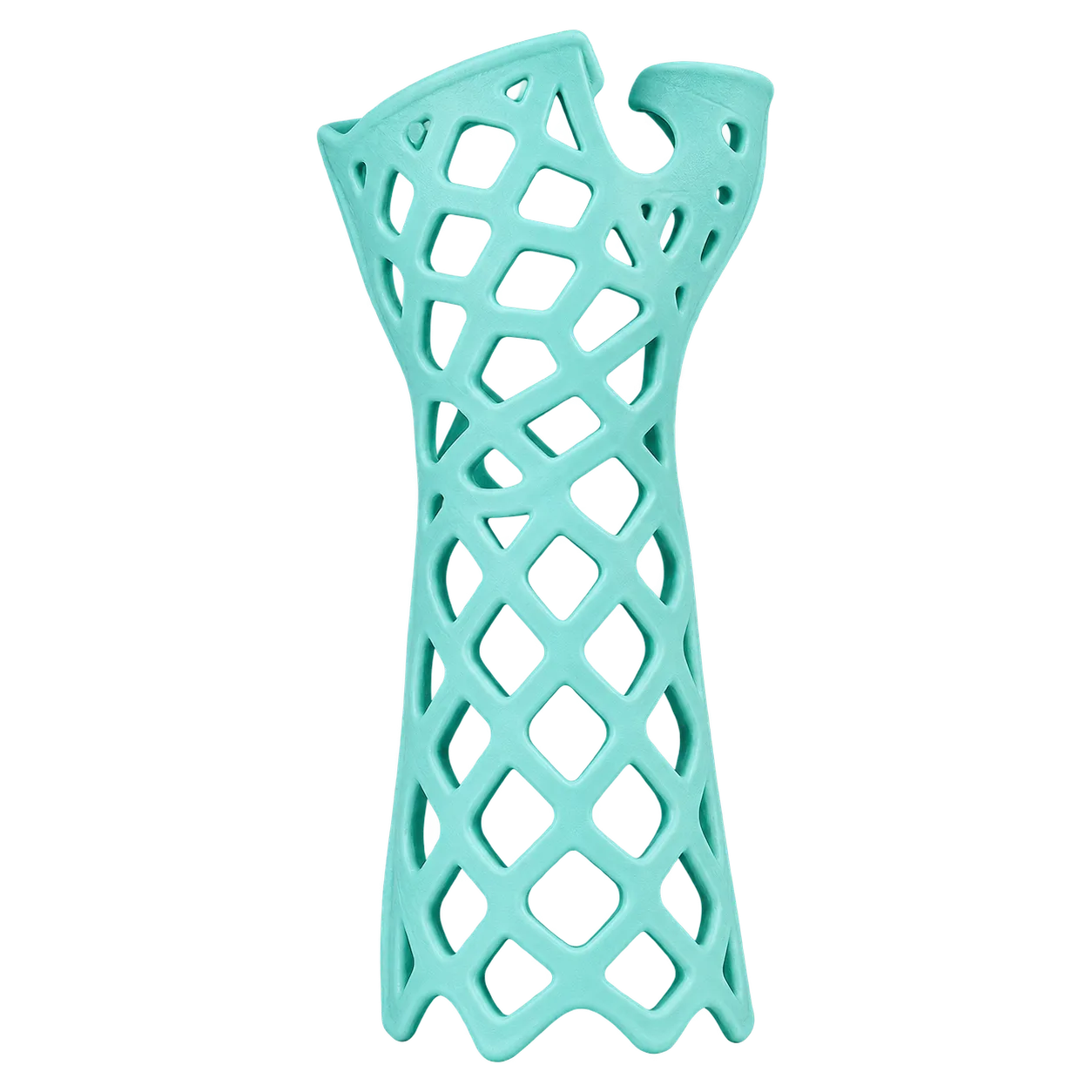
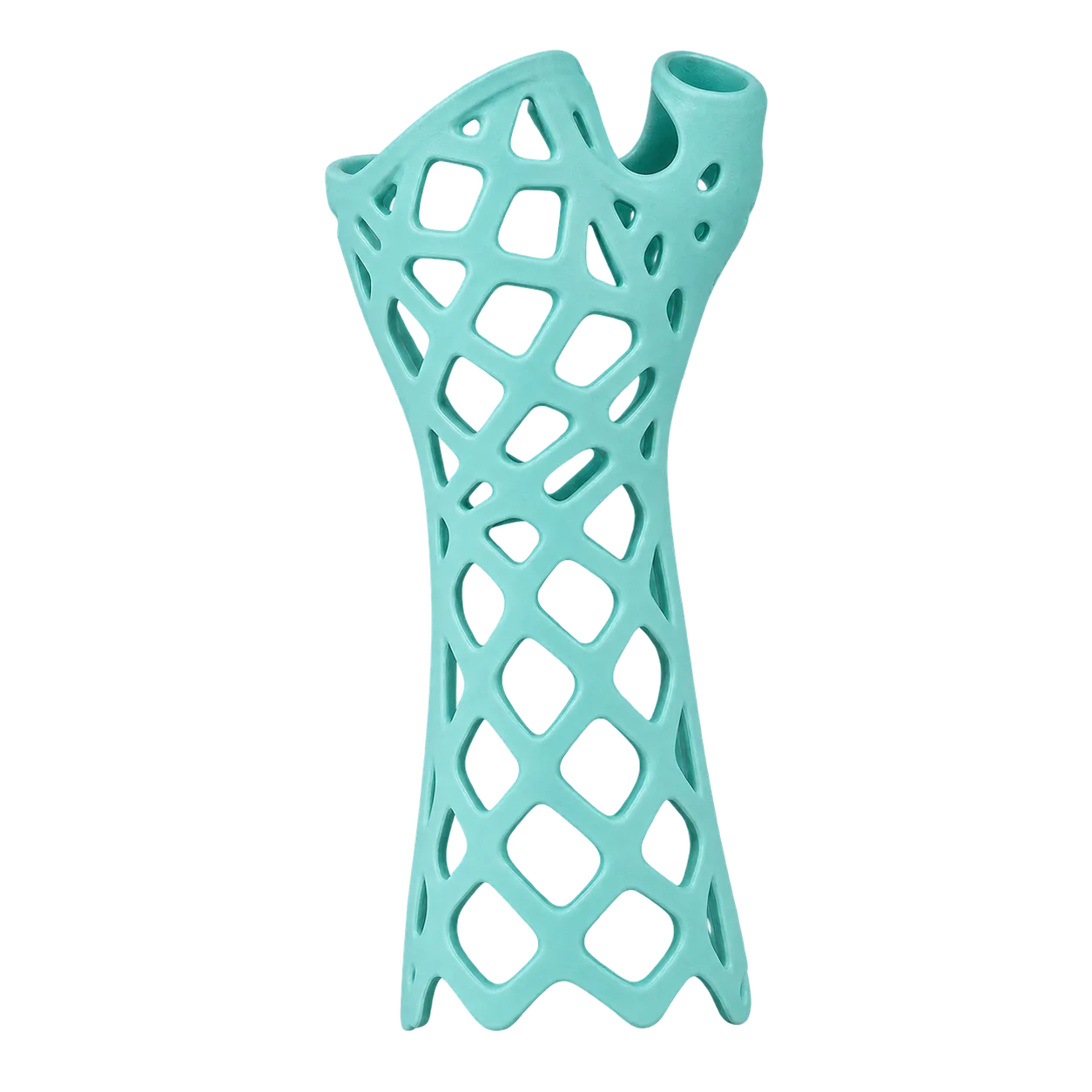
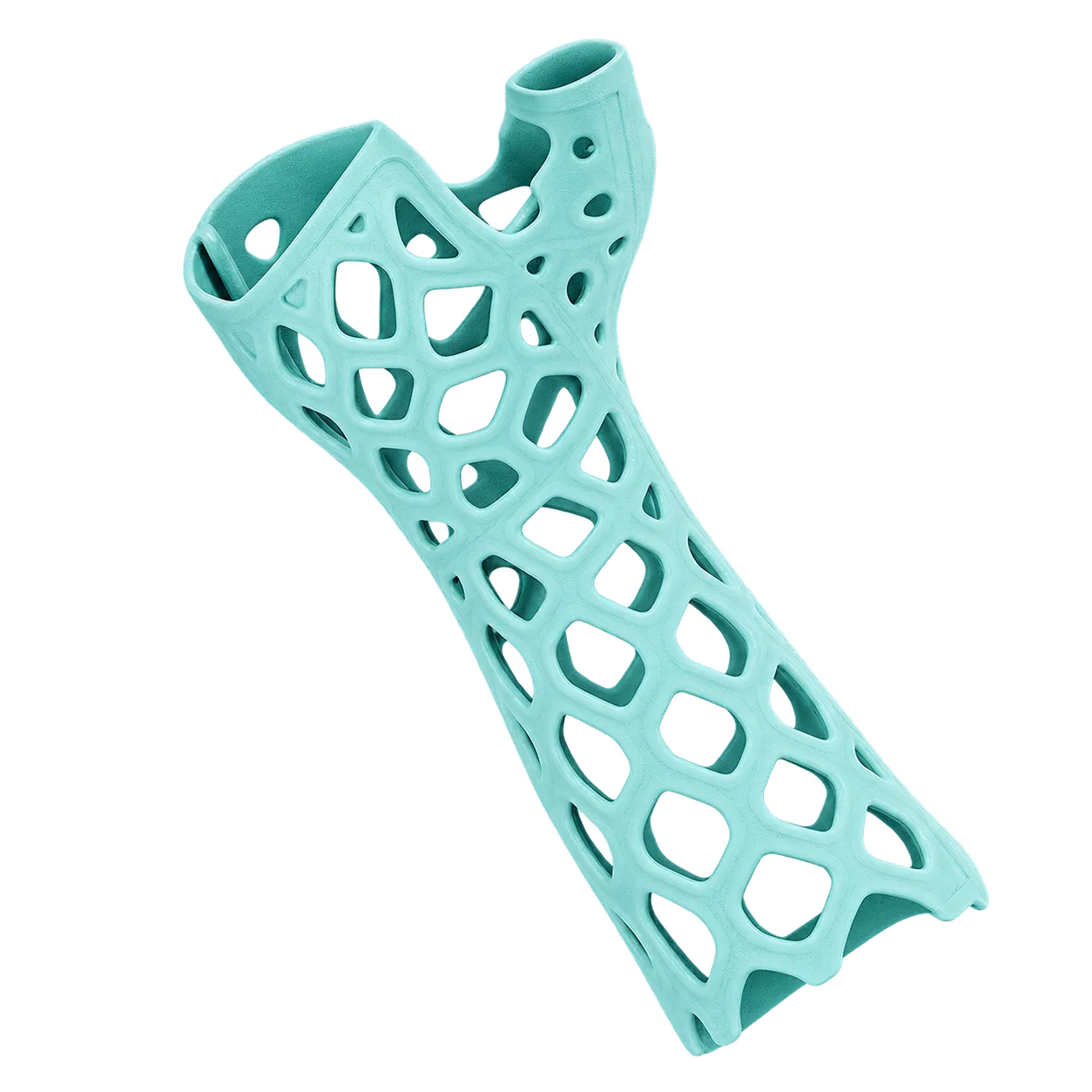
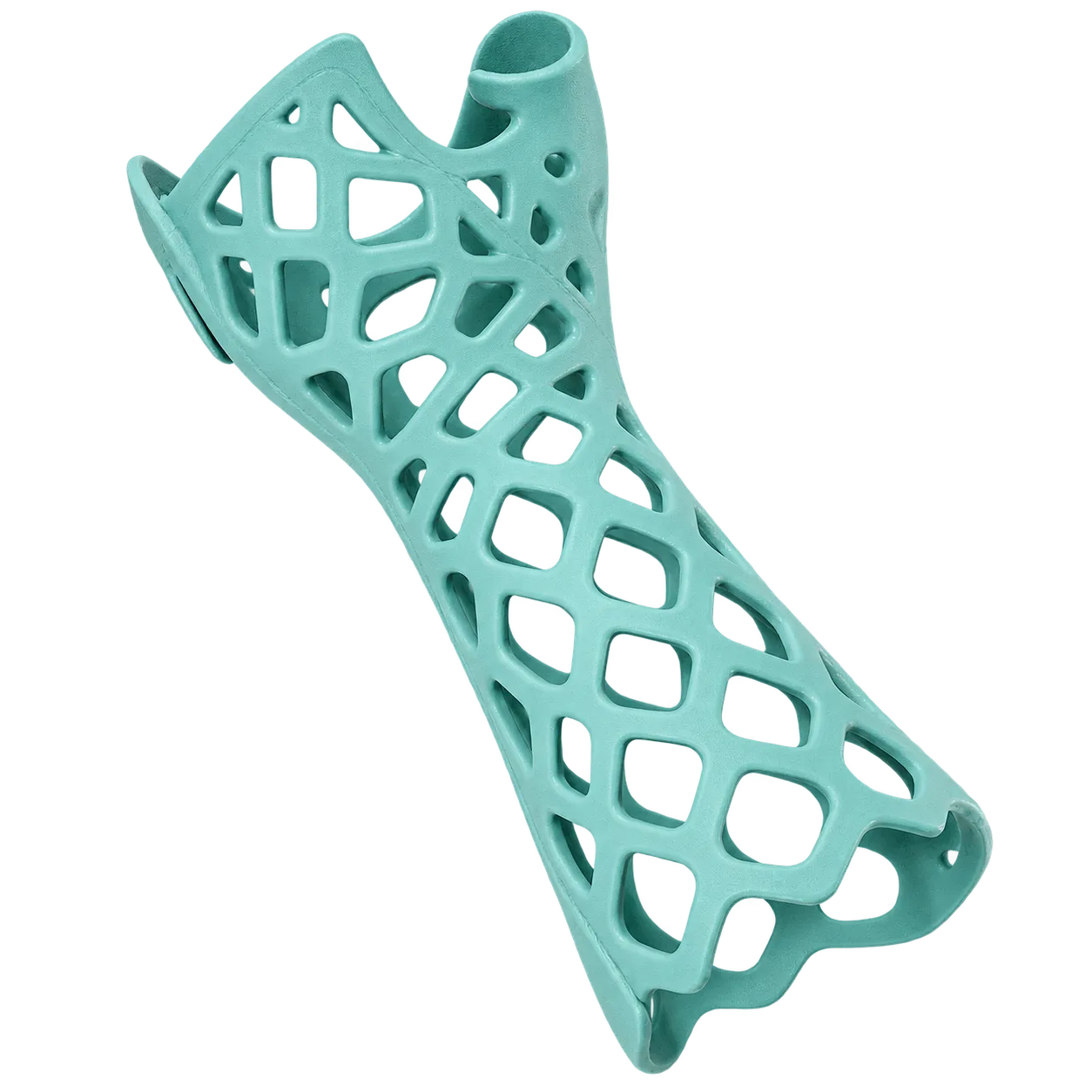
The FlexiOH Long Thumb Spica supports the thumb column, wrist, and most of the forearm for fracture clinics, plaster rooms, hand therapy services, and emergency departments.
Leverage is the clinical argument. An immobilisation resists movement at a joint by anchoring to the segment beyond it, and the further up the forearm the rigid section reaches, the more leverage it has against the wrist and carpus. Because the patient uses the hand constantly, every use applies force at the joint being protected, so the length of the anchoring section determines how much of that force the device absorbs. It is the geometry in which a scaphoid or carpal injury is conventionally immobilised.
The boundary is the elbow, which this device does not cross. Pronation and supination are driven by muscles originating above that joint, so forearm rotation is not controlled here. Where a protocol specifies rotation control, a different geometry is required, and the product names in this category do not always make that distinction obvious.
On thumb inclusion for confirmed scaphoid fractures, randomised evidence found union at ten weeks significantly better where the thumb was left free, and UK practice already tends that way. The thumb column should therefore be a deliberate part of the reasoning rather than a default.
The open lattice keeps skin reachable and inspectable across a long enclosure, and the zip means emergency removal needs no cast saw. The conformity documentation, instructions for use and stated indications are issued by the manufacturer and provided by the seller.