
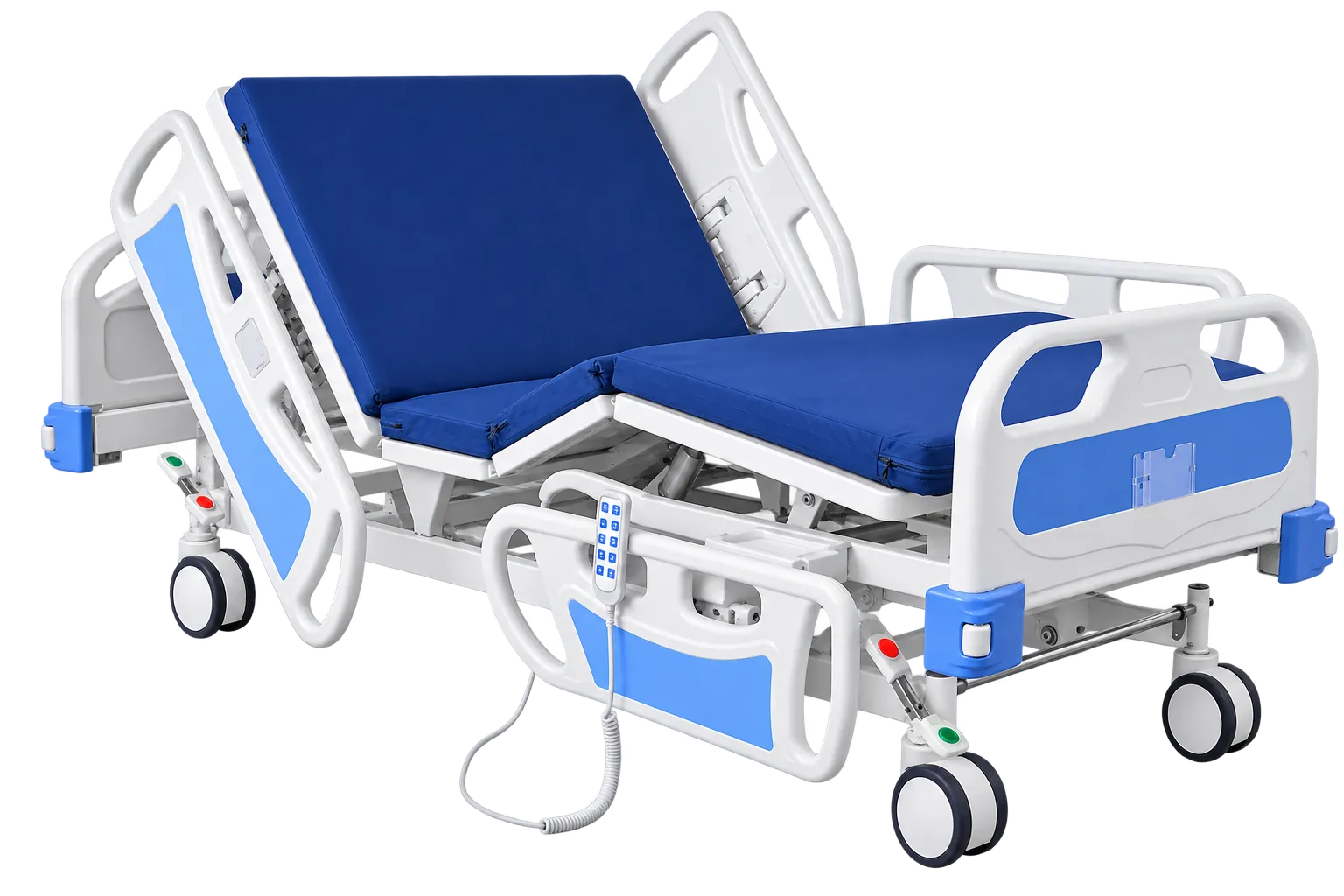
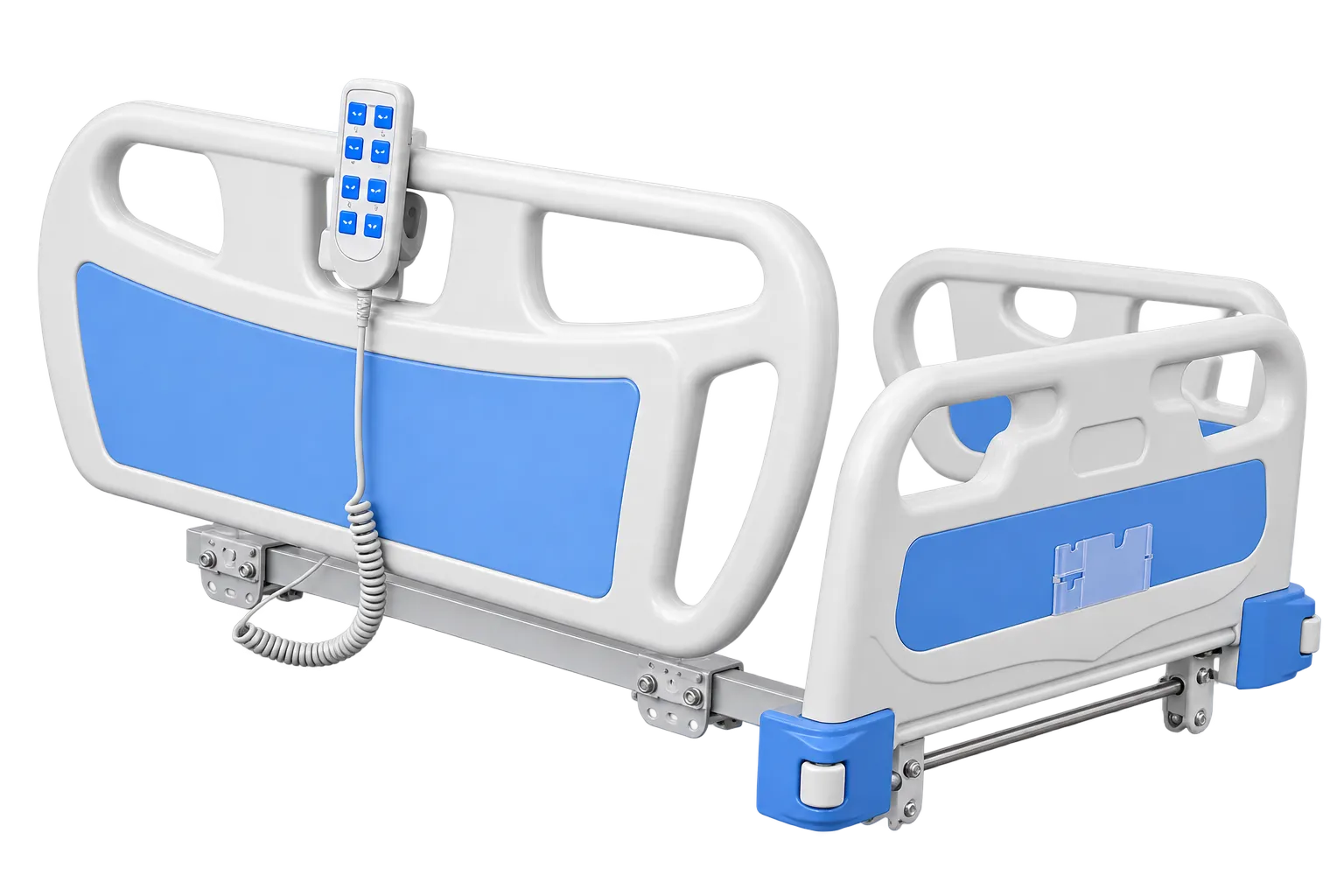
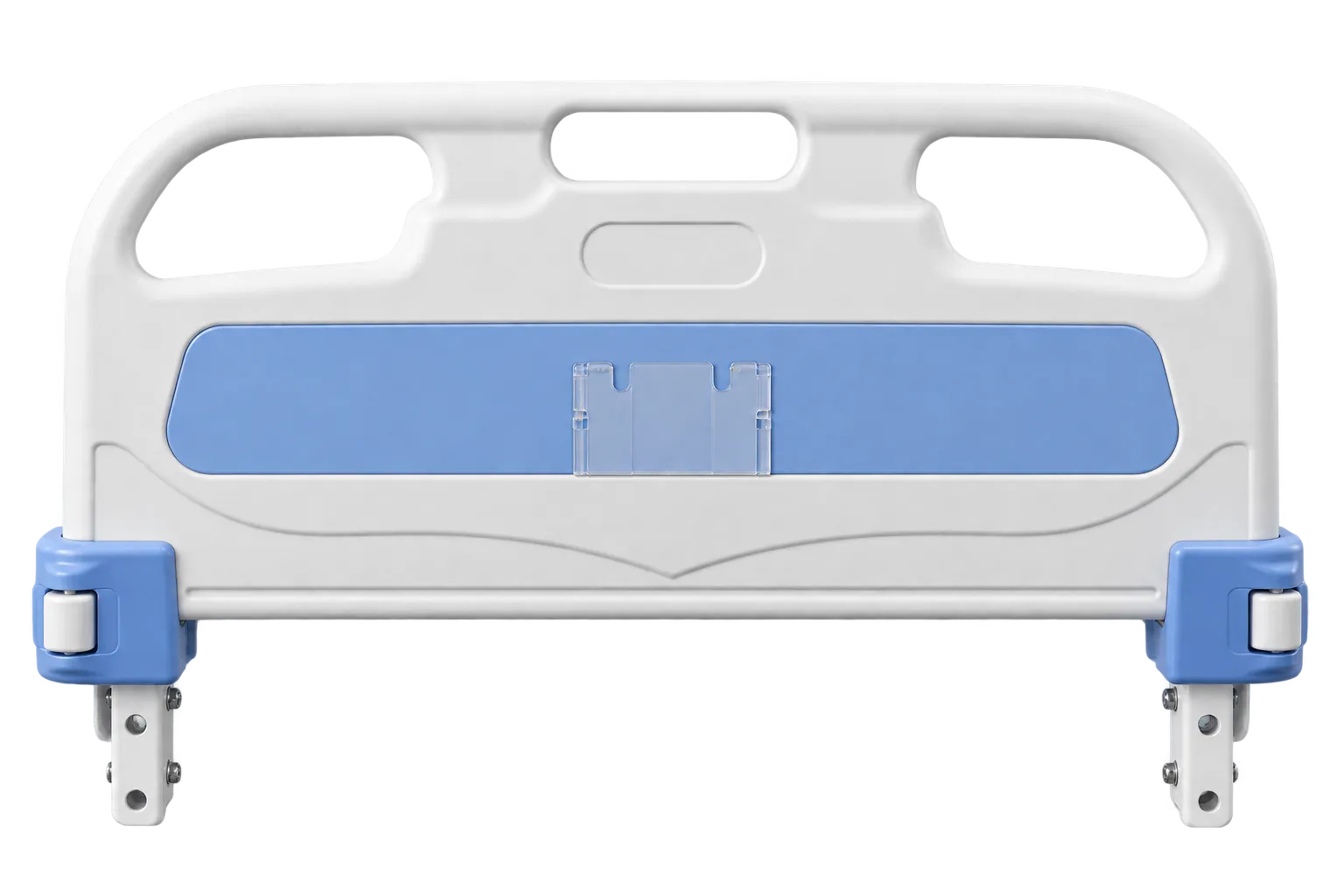
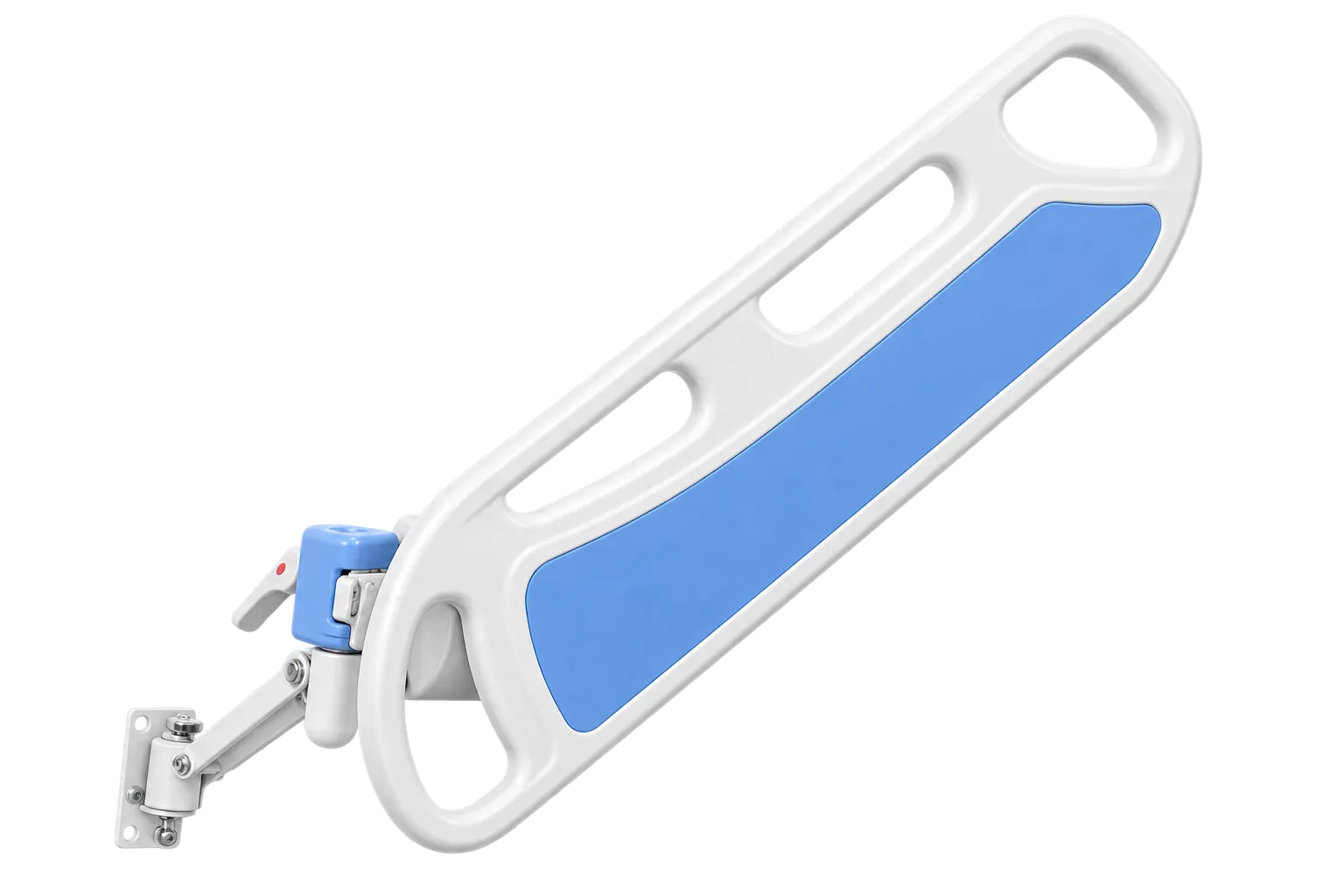
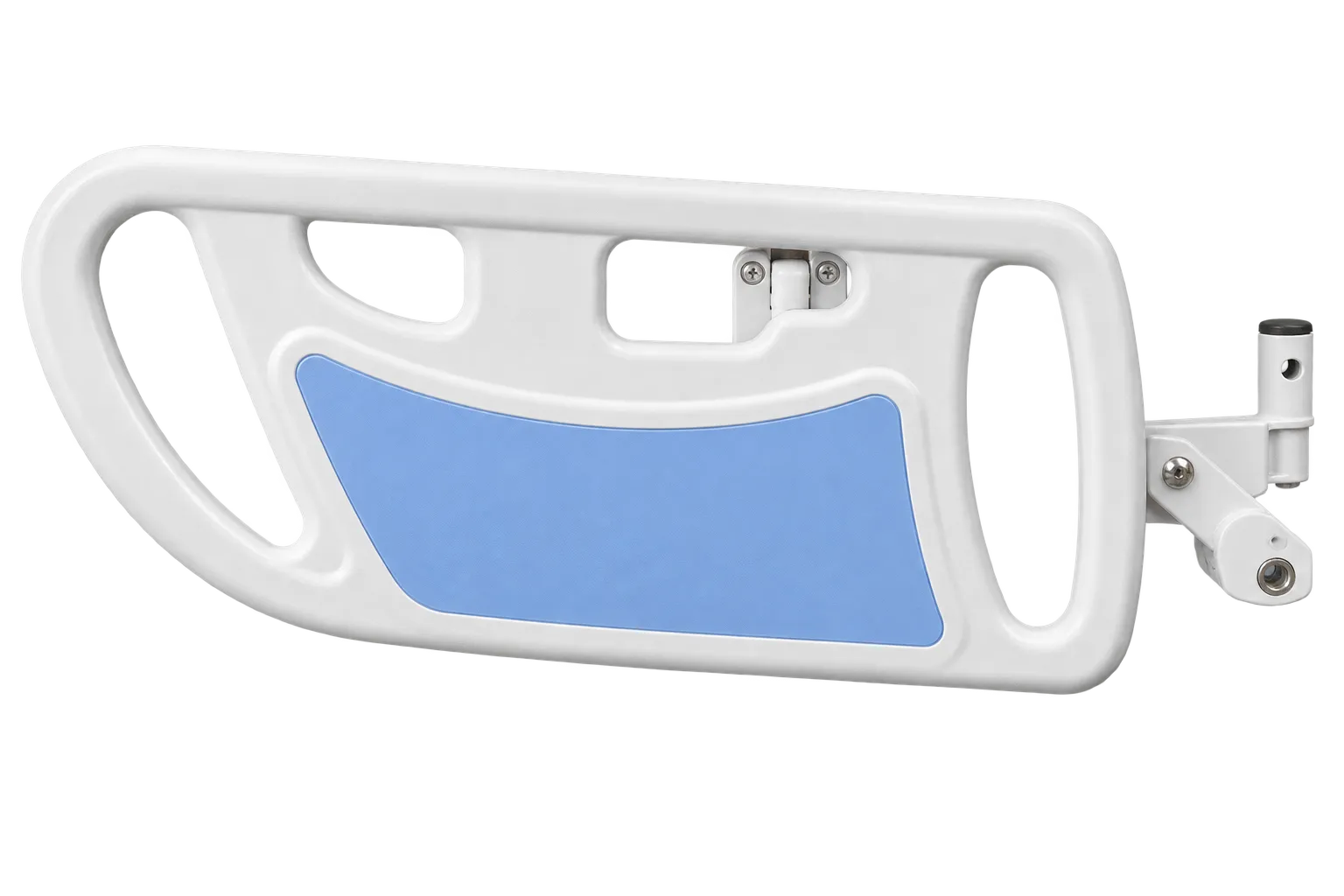
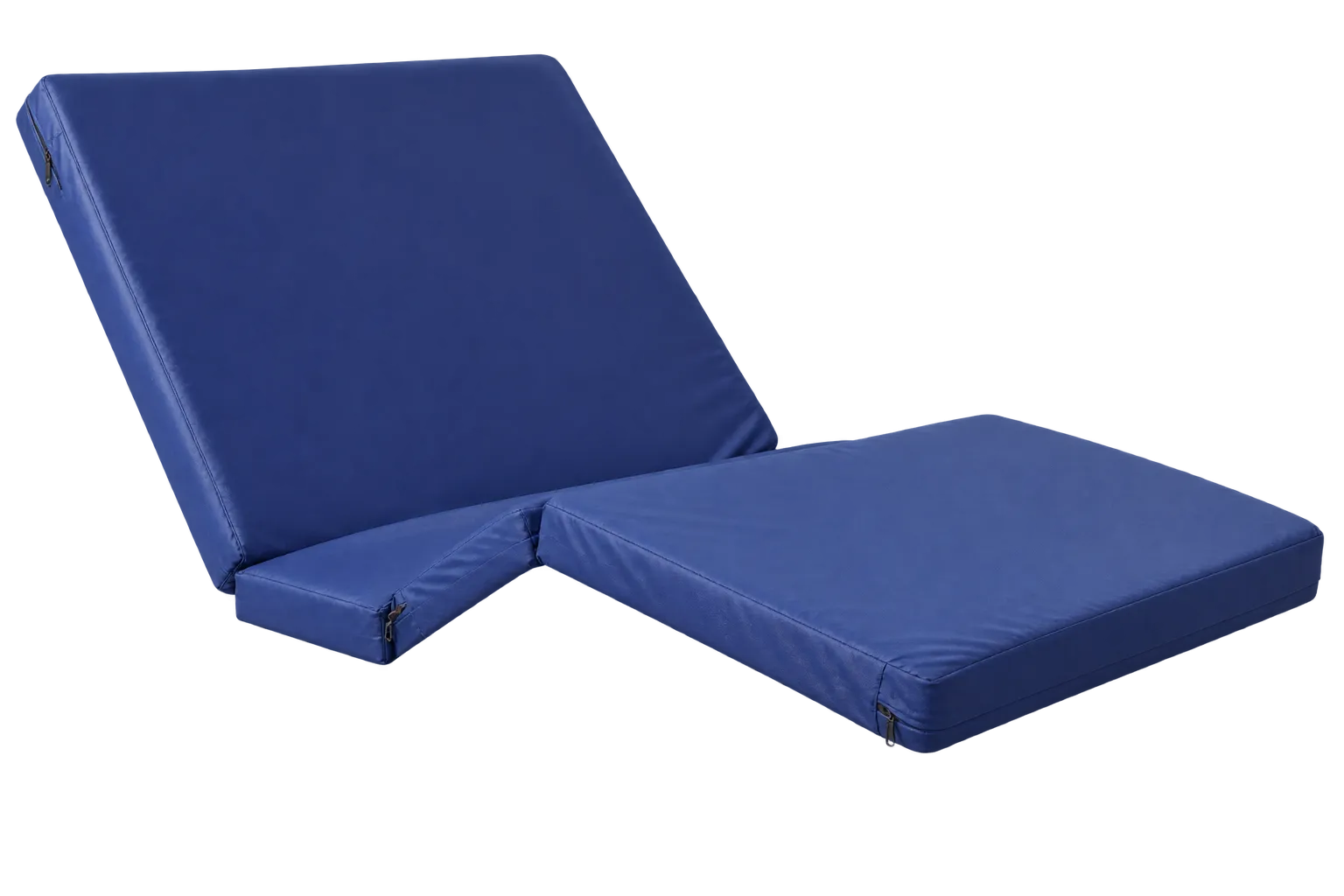
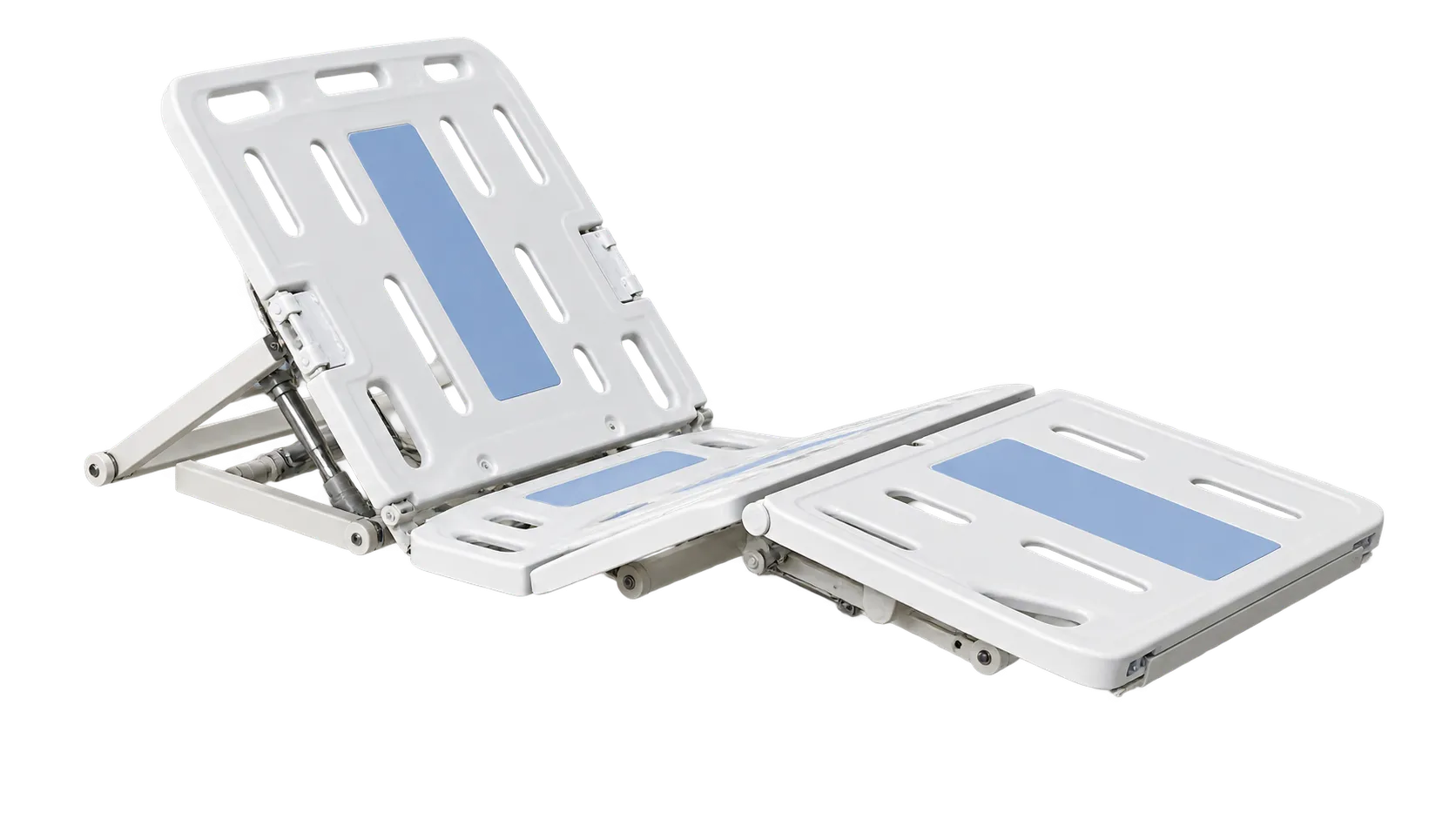
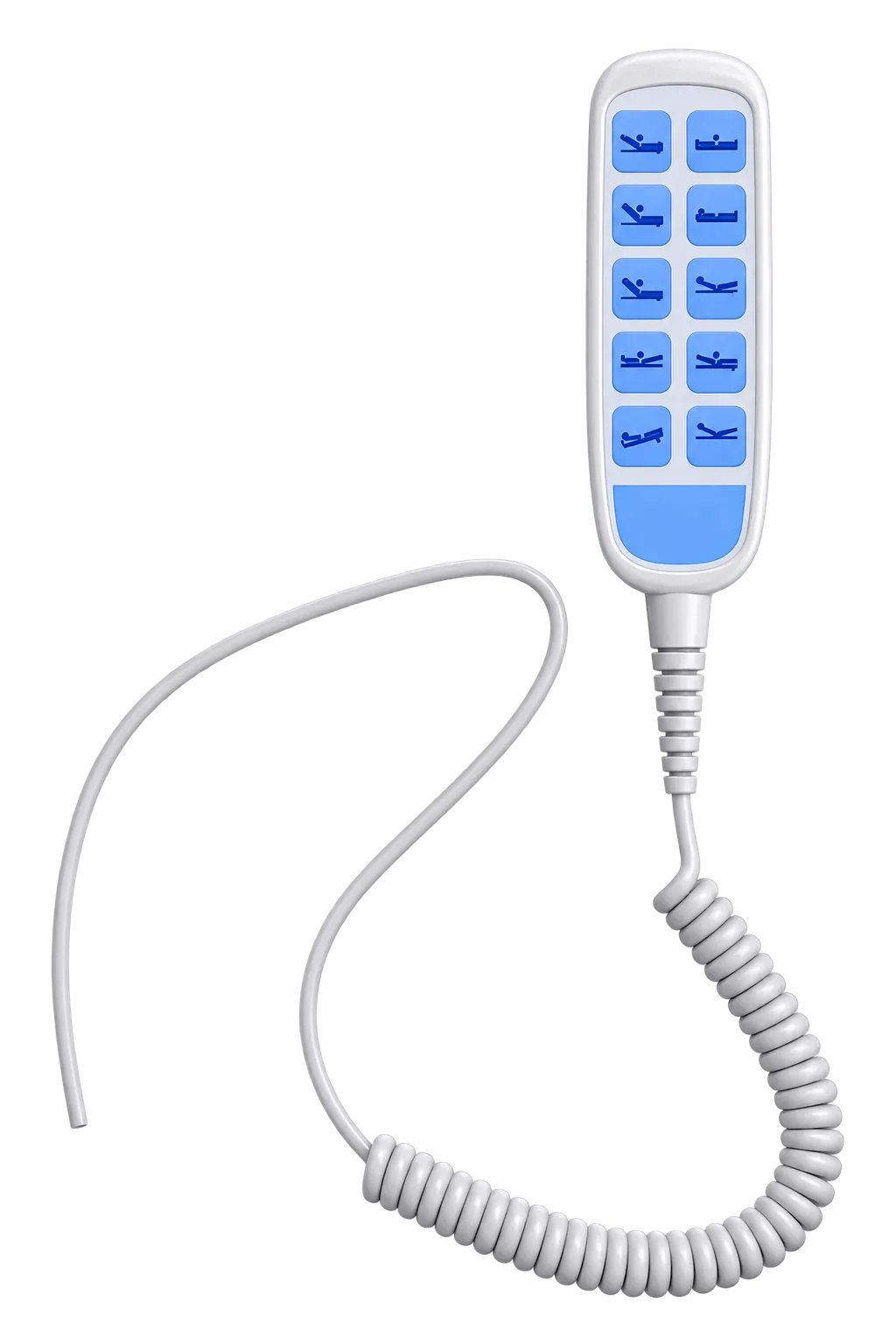
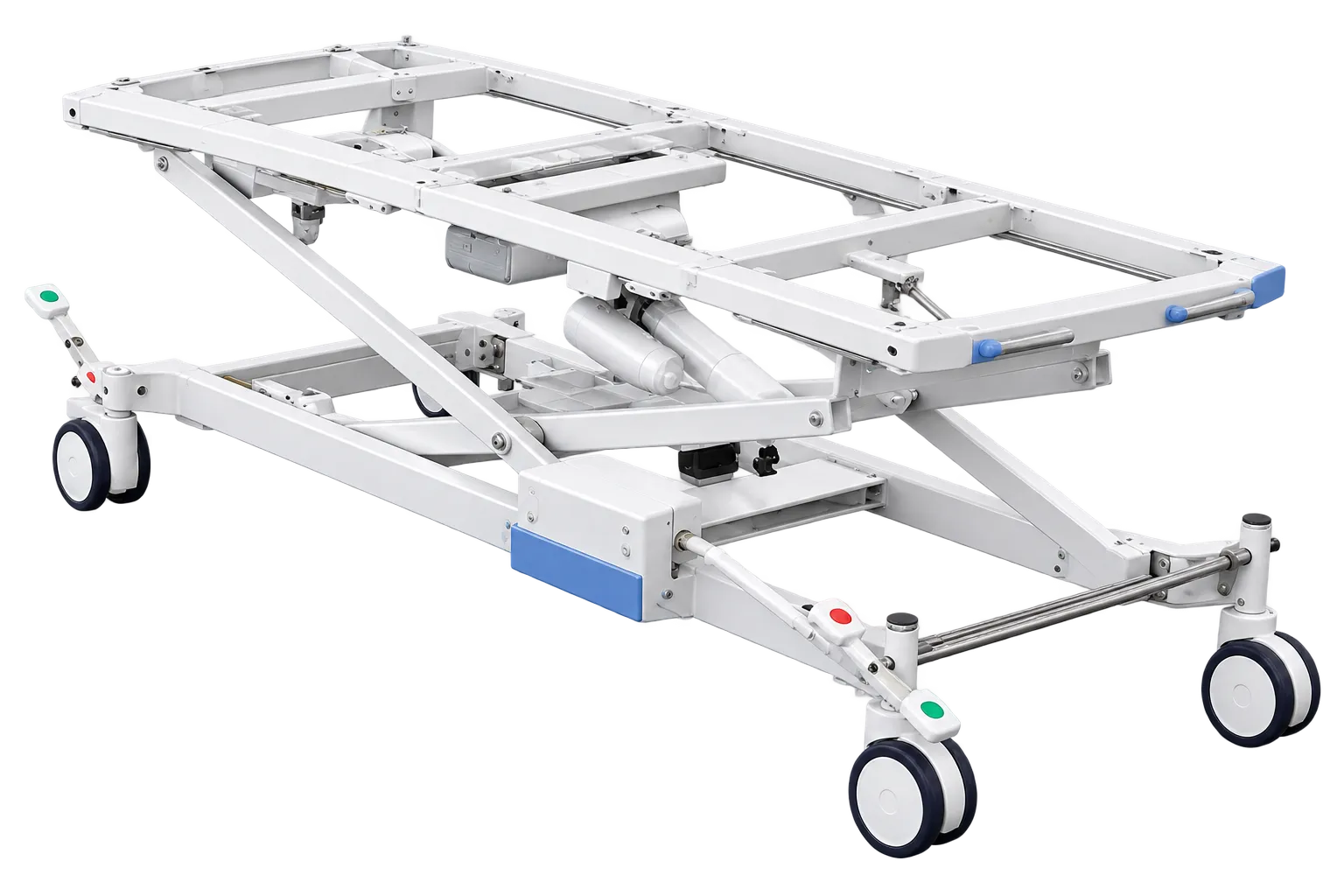
The JD-YLC5-08 suits general inpatient wards and any service where beds move — between bays, to imaging, to theatre reception, between departments during escalation, and through the bed-flow pressures that dominate winter.
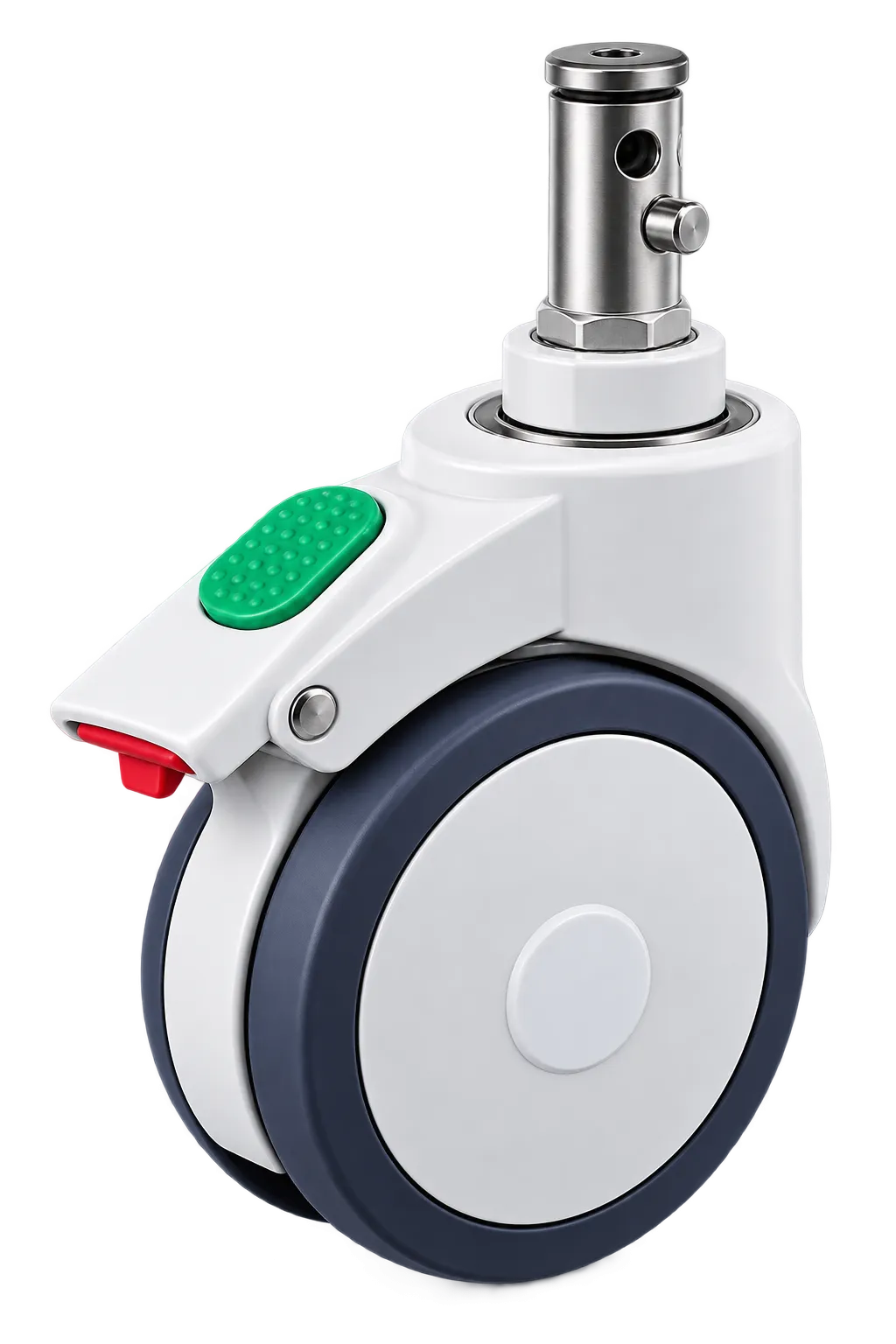
Mobility is the specification detail that earns its keep. On a four-castor frame without directional control, a long corridor push turns into a two-person job because the bed crabs and needs steering at the head end. Where a central control wheel provides a fixed running direction, one porter can manage the same move. Multiplied across the daily transfers a busy department generates, that is a measurable portering saving that never appears in a tender comparison. Corner protection carries the second half of the argument: estates budgets absorb continuous repair to corridor walls, door frames and skirting, most of it from bed and trolley movement.
Clinically, the positioning range covers routine inpatient work. Backrest travel to 75° brings a patient upright for meals, medication, respiratory comfort and conversation. Leg articulation to 40° supports knee-break positioning and limb elevation for oedema management. Both tilt directions are available, so reverse Trendelenburg for respiratory support and enteral feeding sits alongside the head-down position used in circulatory management.
Powered height carries the manual-handling case. Raised, it removes the stooping behind a large share of nursing musculoskeletal injury during washing, dressing and wound care. Lowered, it supports supervised transfers and falls prevention through safe egress.
Care of the elderly, rehabilitation, community hospitals, hospices, private hospitals and CQC-regulated providers use the same specification for routine inpatient care. Medigear.uk supplies the conformity documentation required by trust, ICB and NHS Supply Chain procurement route.