
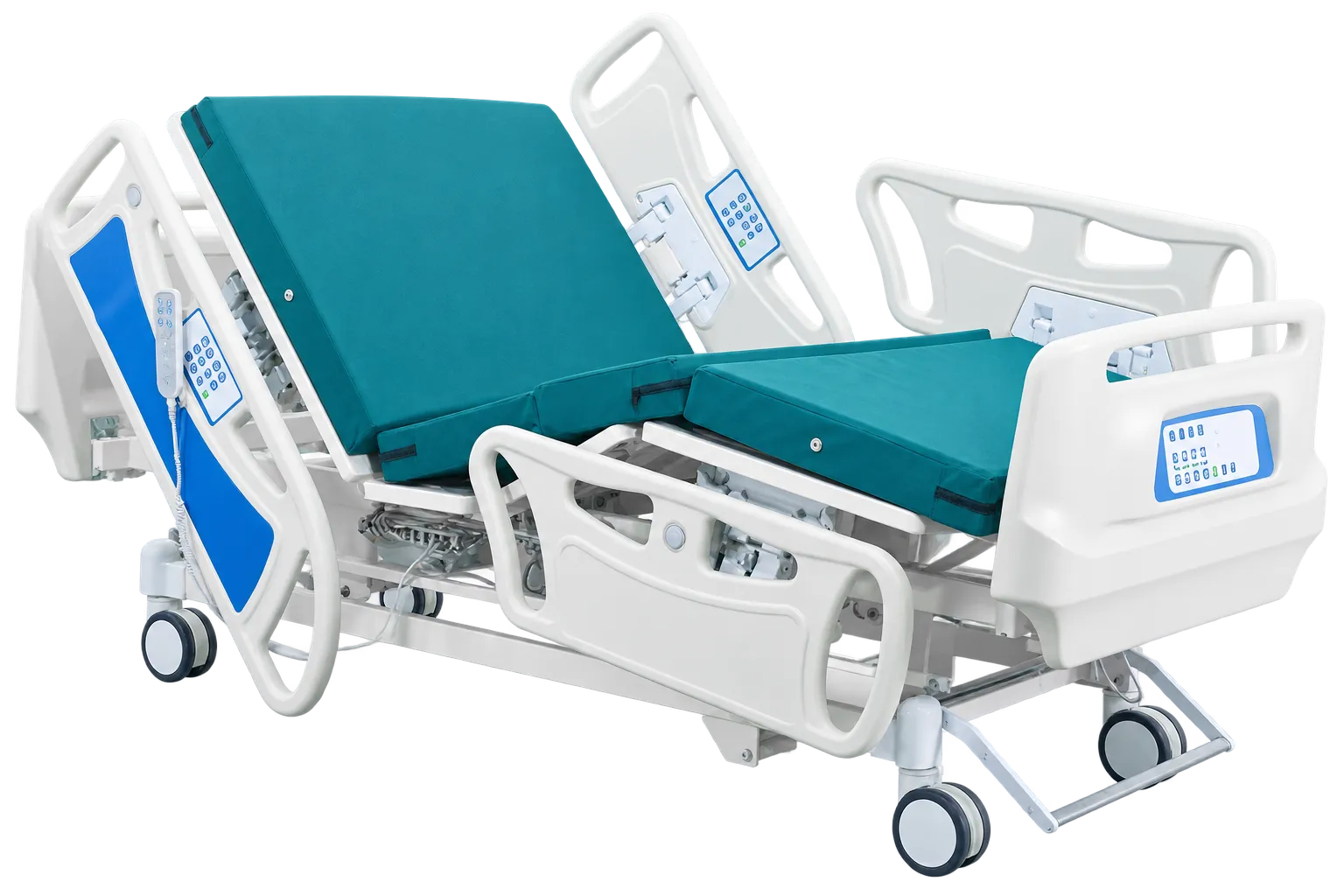
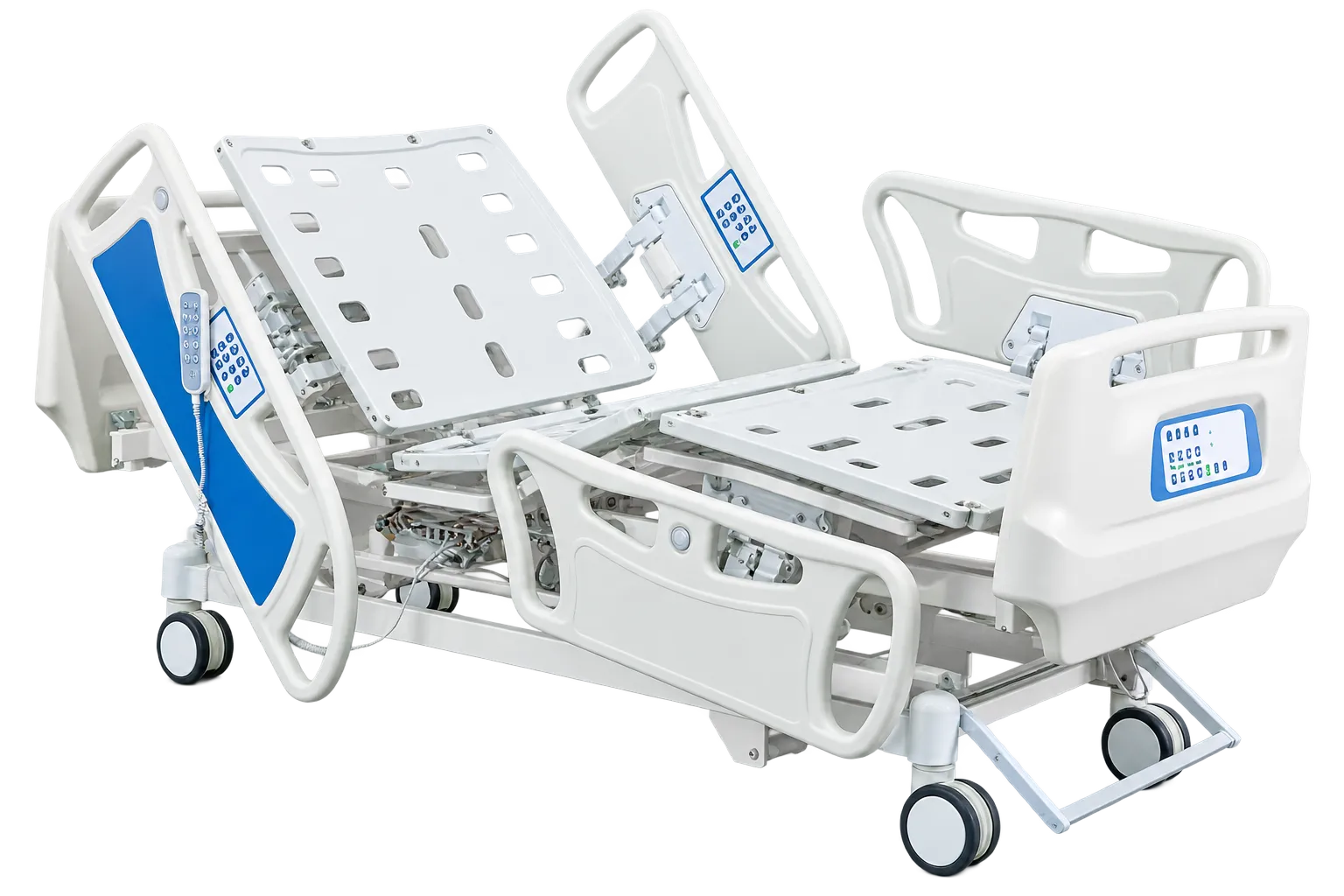
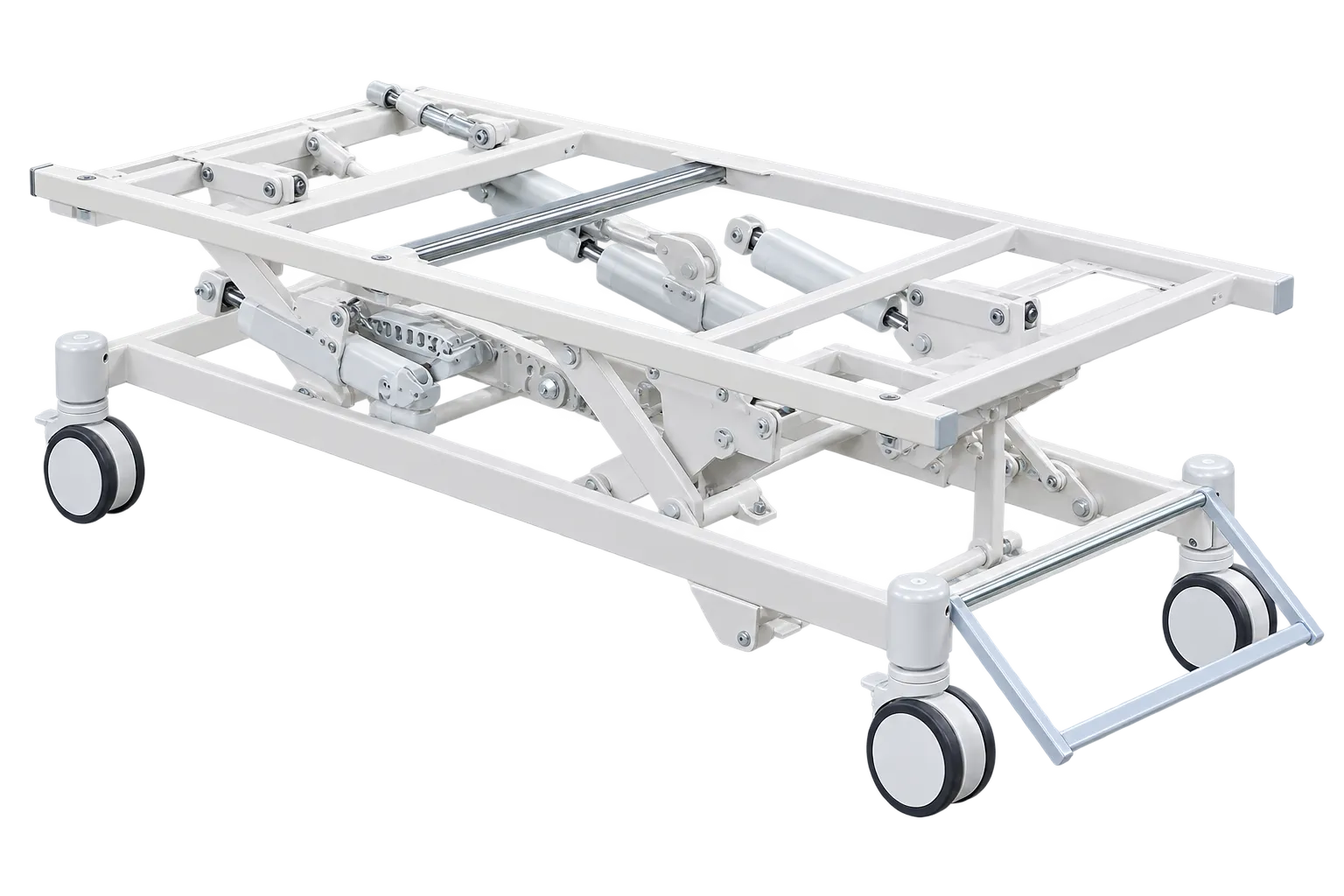
The JD-YLC5-06 is specified for acute, high-dependency, and general inpatient wards where positioning is frequent, staffing is stretched, and the bed is used from both sides throughout the day.
The full tilt pair is what widens its clinical range. Forward whole-frame tilt provides Trendelenburg for circulatory management and procedural positioning; backward tilt provides reverse Trendelenburg, which is used for respiratory support, reflux management,t and safer enteral feeding. Having both directions available on the frame means the ward is not improvising with pillows and wedges when a head-up position is indicated, and it is the reason this specification suits step-up and high-dependency areas rather than only general wards.
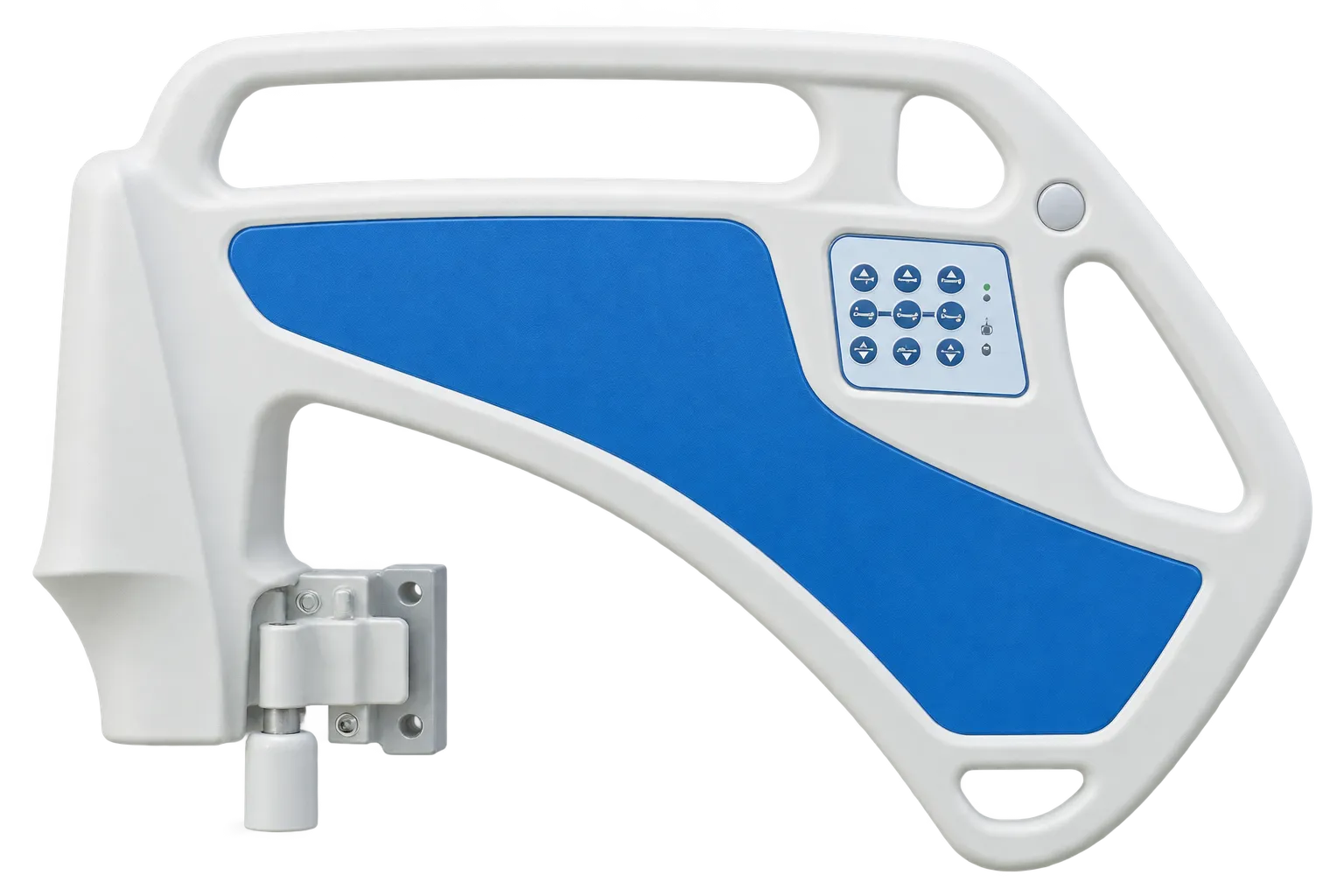
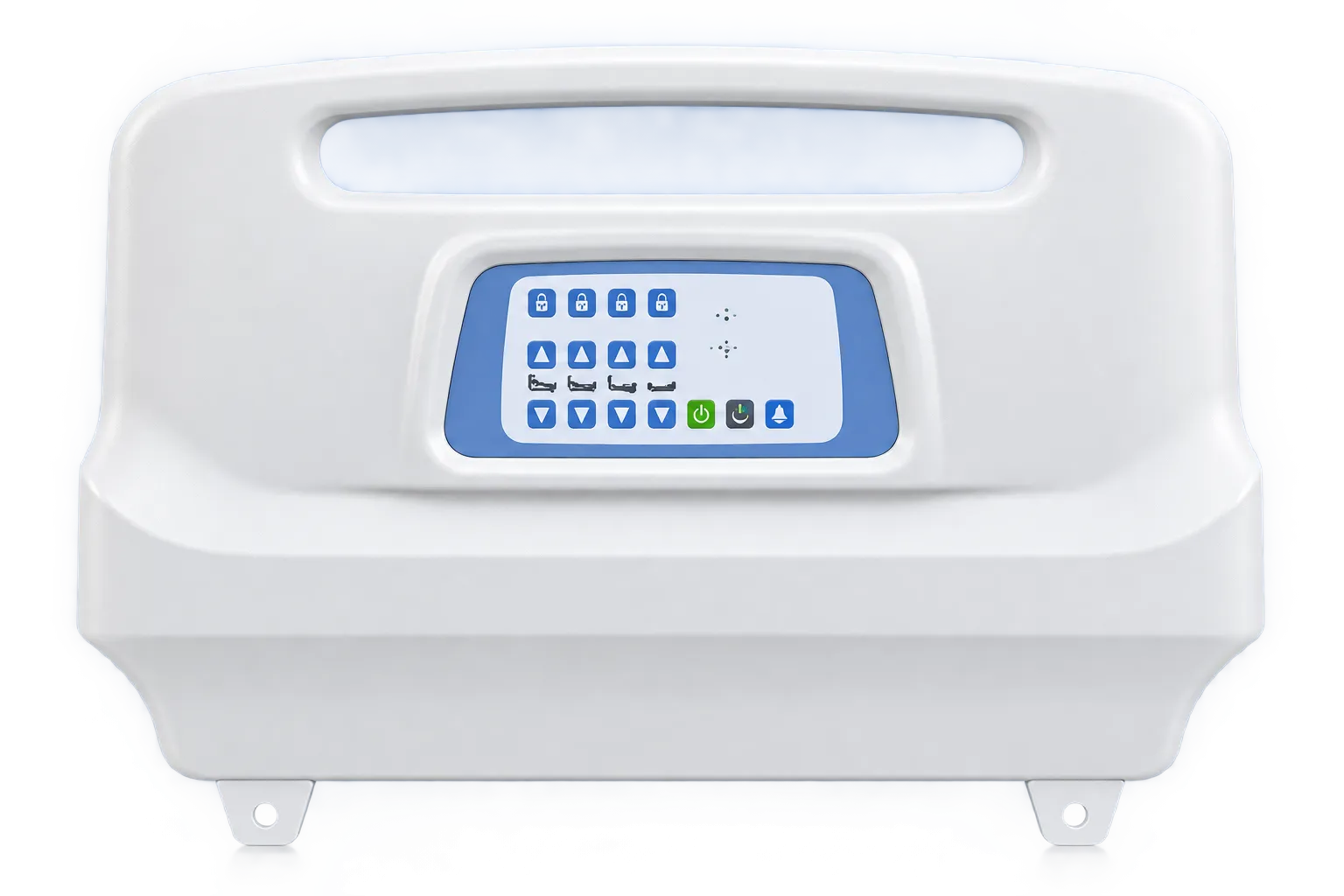
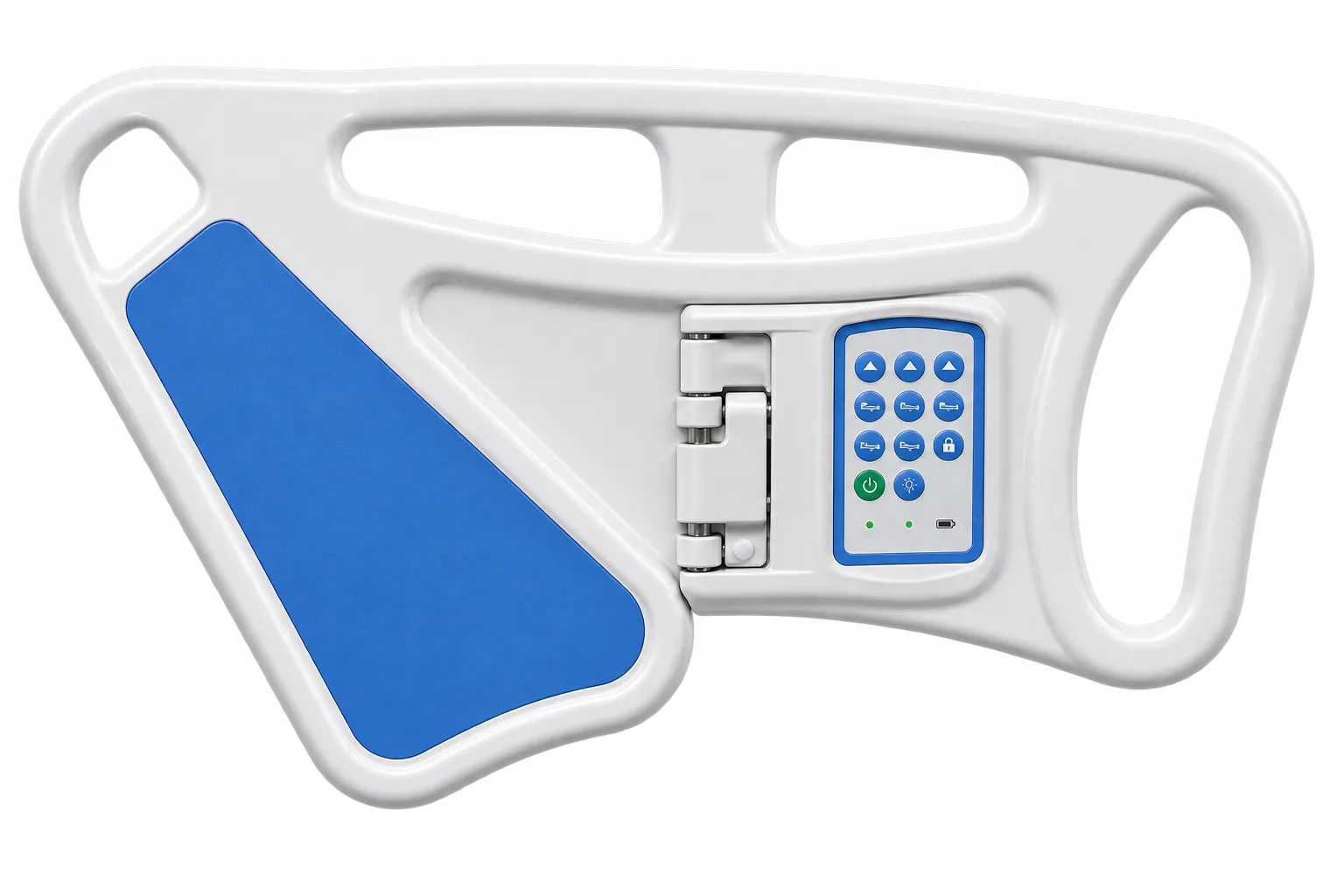
Control placement carries the practical workload. On an acute ward,, the same bed is approached from the left, the righ,t and the foot end dozens of times a shift, and a control point at each removes the walkaroundd the frame. During a deteriorating-patient epi,sode the valueeven sharpertill: the head end fills with the airway team, the monitor and the drug trolley, and the foot-end panel remains reachable by whoever is managing bed position.
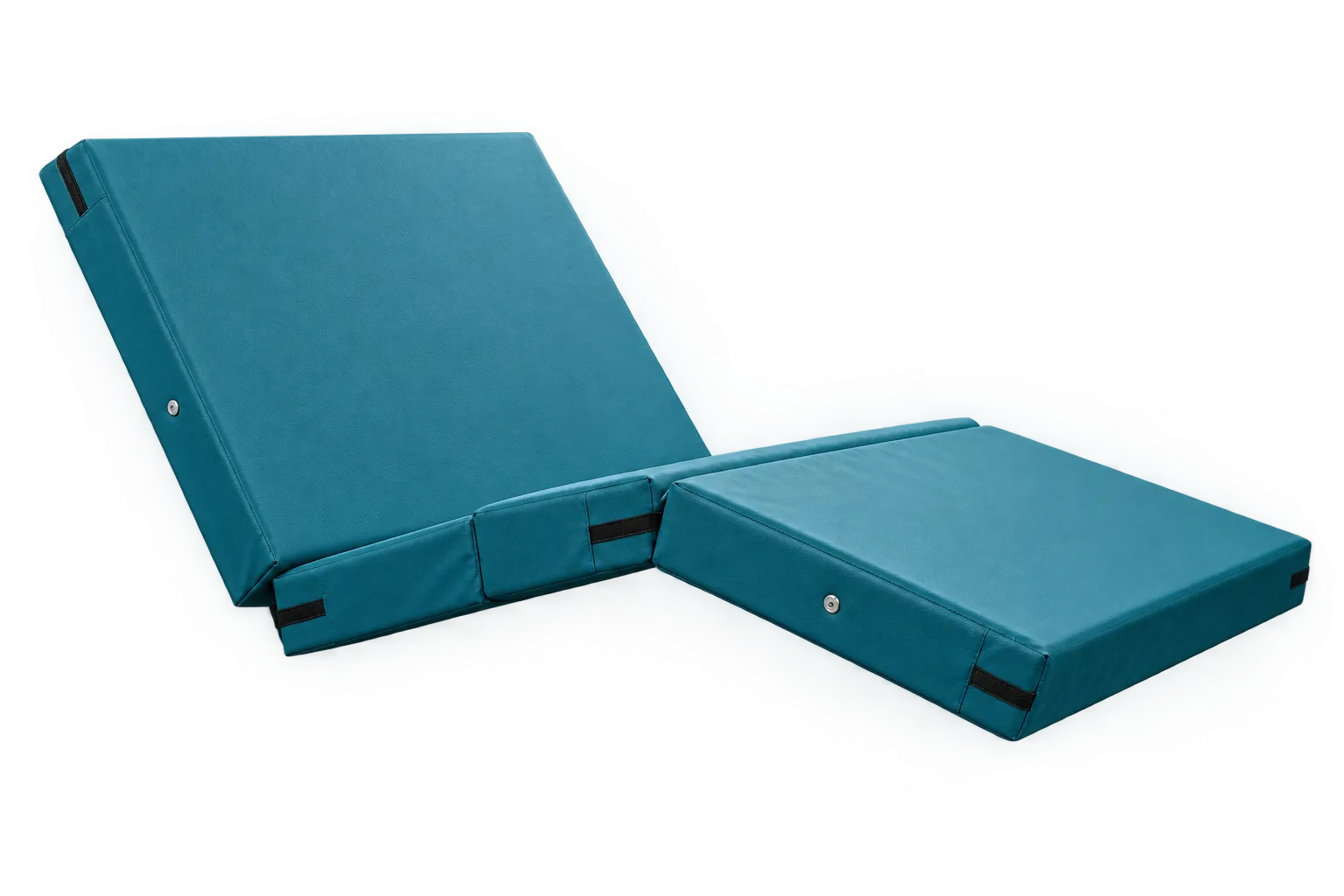
Backrest travel to 75° supports upright positioning for meals, medication and respiratory com. In comparison,hile leg articulation to 40° covers knee-break positioning and limb elevation for oedema management after orthopaedic and vascular procedures. Powered height protection protects staff from the cumulative back loading behind a large share of nursing musculoskeletal injury, and drops the deck for supervised transfer.
Care of the elderly, rehabilitation, hospices, private hospitals and CQC-regulated providers use the same specification for general inpatient care. Medigear.uk supplies the conformity documentation required by trust, ICB, and NHS Supply Chain procurement routes.