
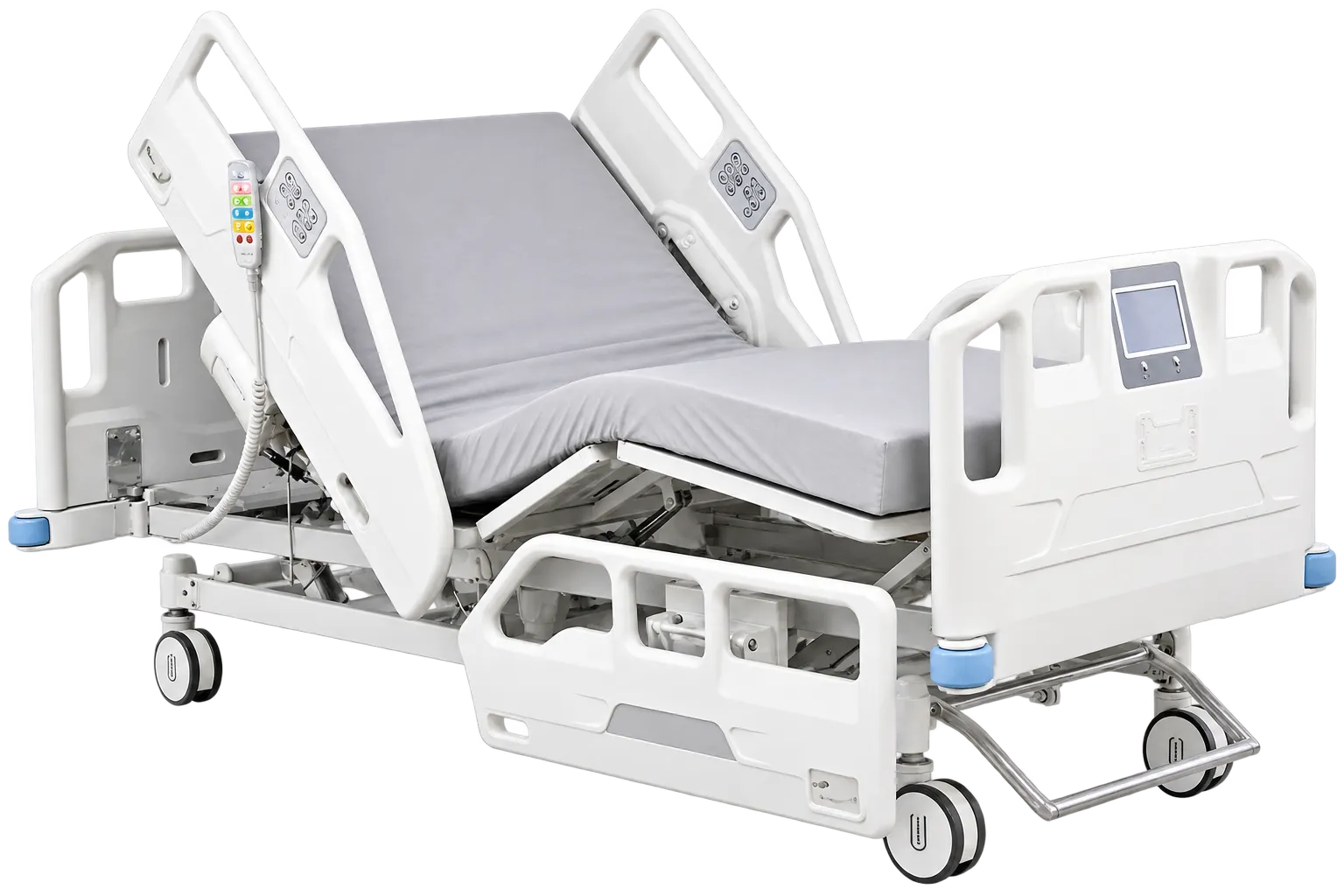
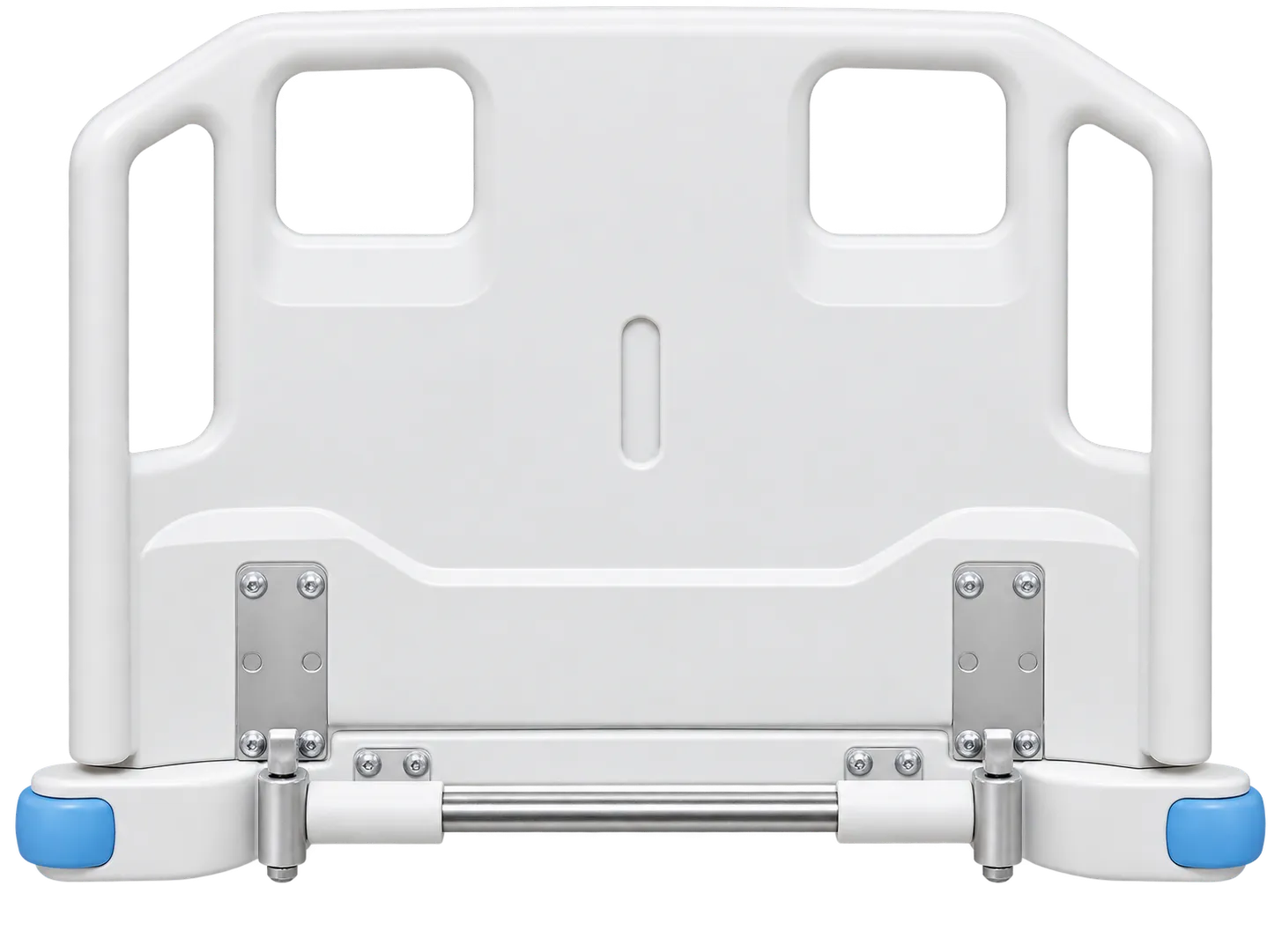
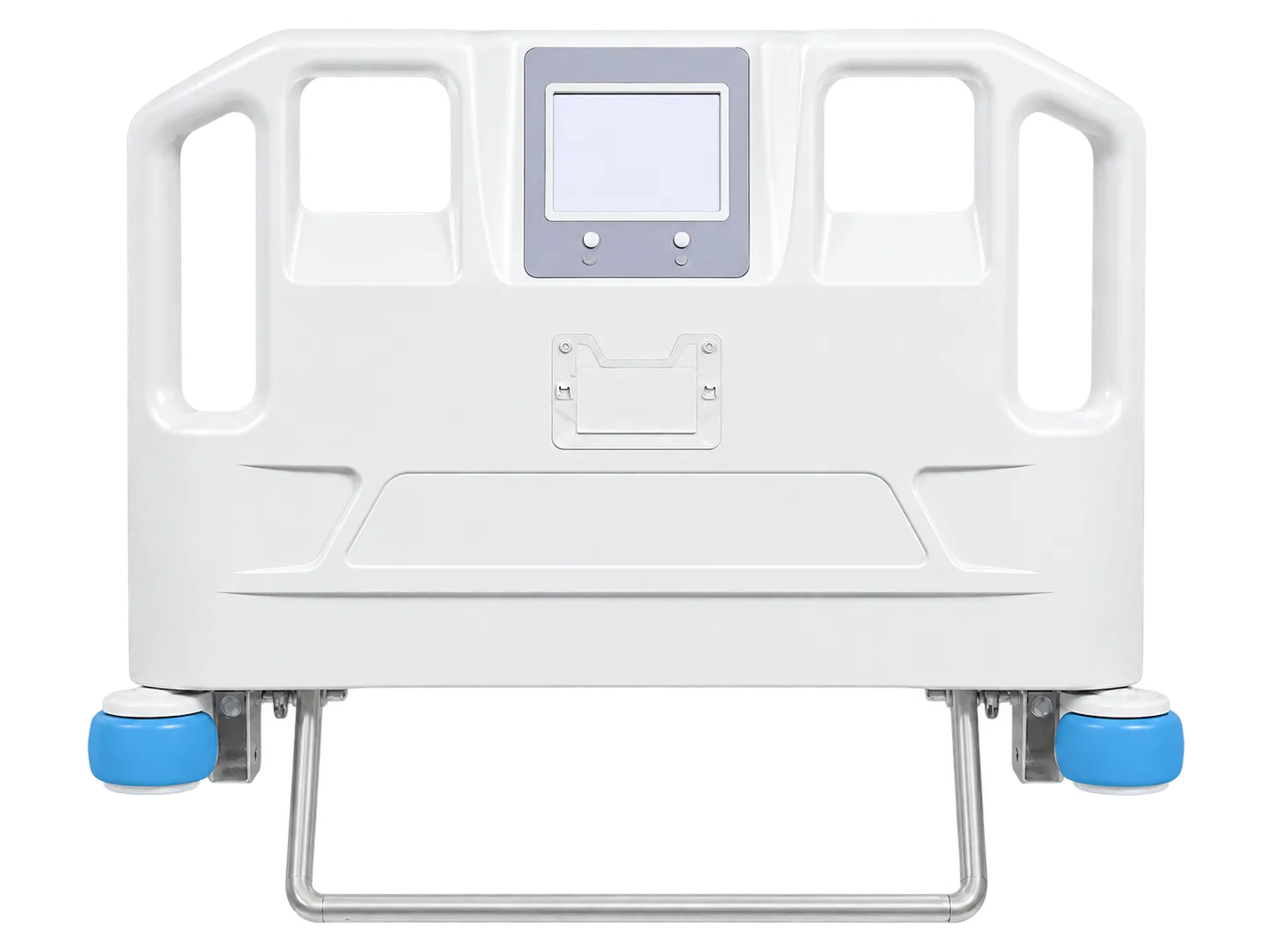
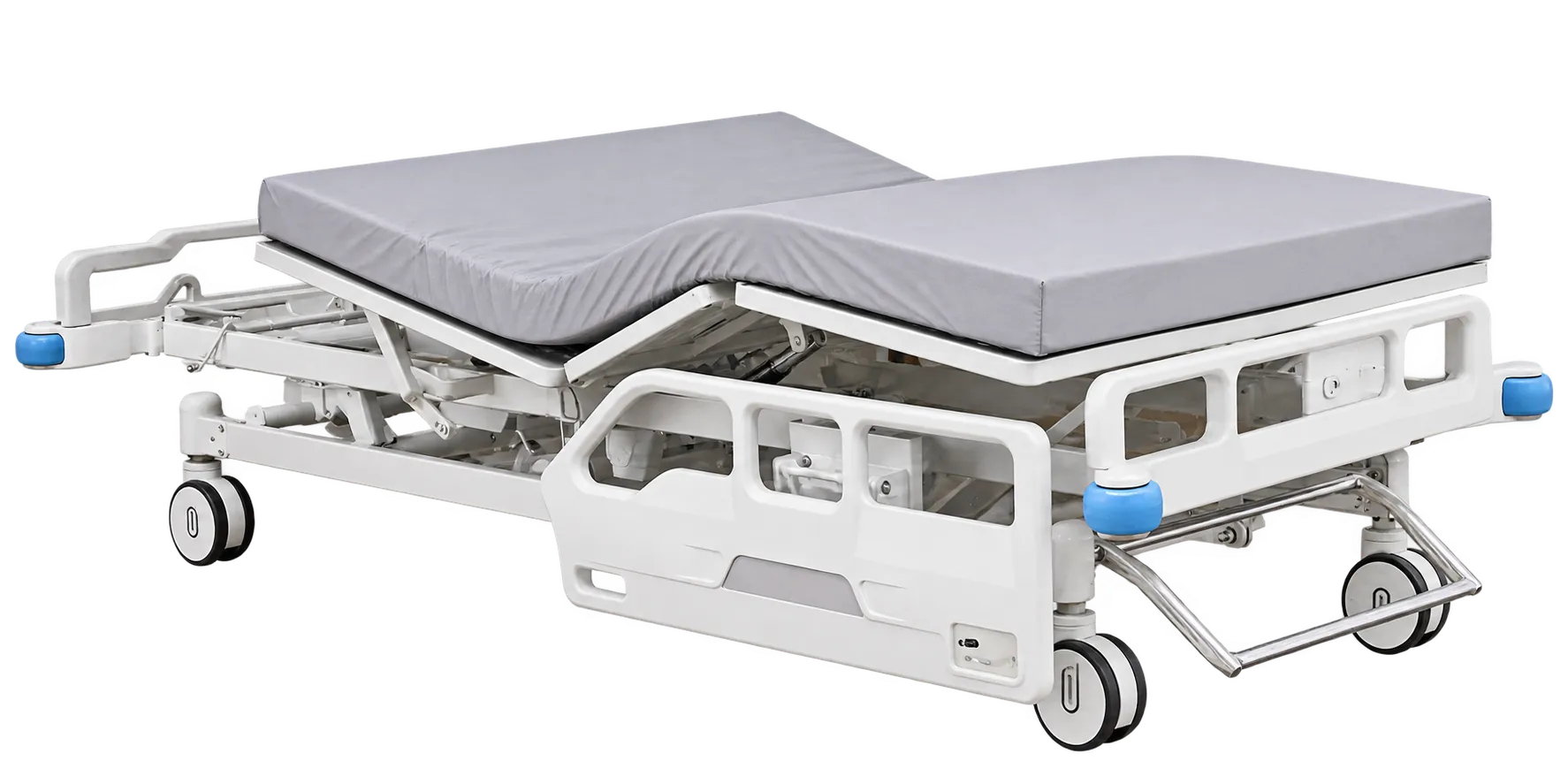
The JD-YLC5-01 is specified for the general workload of UK acute and surgical wards rather than for a single specialist function. Across NHS England's roughly 117,500 adult acute medical and surgical beds, daily positioning demand is consistent: sitting patients up for meals, observations, and respiratory comfort; elevating limbs post-operatively; and setting a working height that protects the staff providing care.
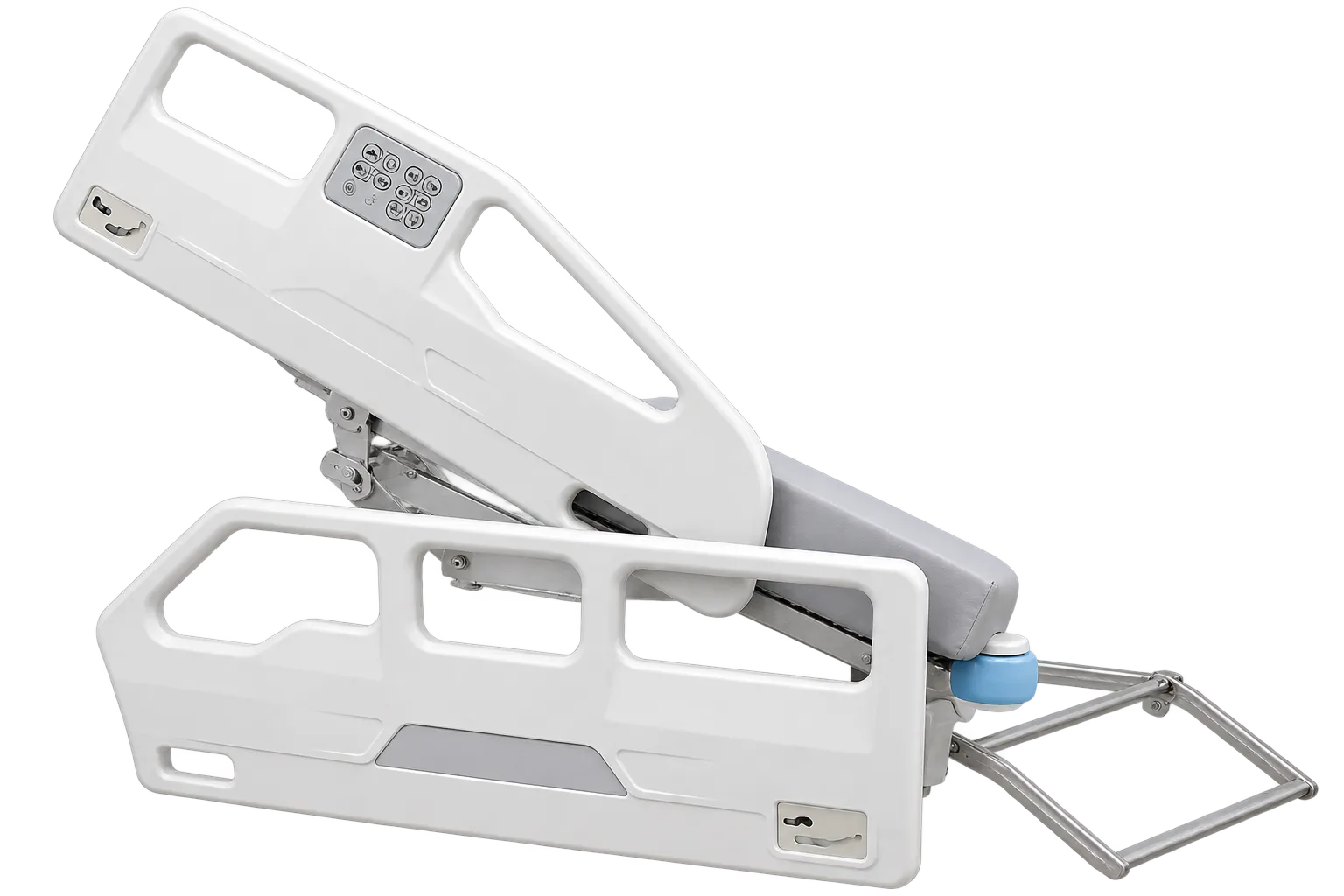
In surgical recovery and step-down units, the tilt pair earns its place. Forward and backward whole-frame tilt provide Trendelenburg and reverse Trendelenburg for circulatory management, aspiration risk reduction and procedural positioning. At the same time, the backrest range supports the graduated sitting that follows most abdominal and orthopaedic procedures.
Powered height is the function that changes staff outcomes most measurably. Cumulative back loading from stooping over a fixed-height bed is a recognised driver of musculoskeletal injury across nursing and healthcare assistant roles, and a bed that rises to the carer and drops for the patient removes that exposure from every care episode. The low setting also supports supervised sit-to-stand and lateral transfer, which underpins falls prevention strategies that rely on safe egress rather than on rails.
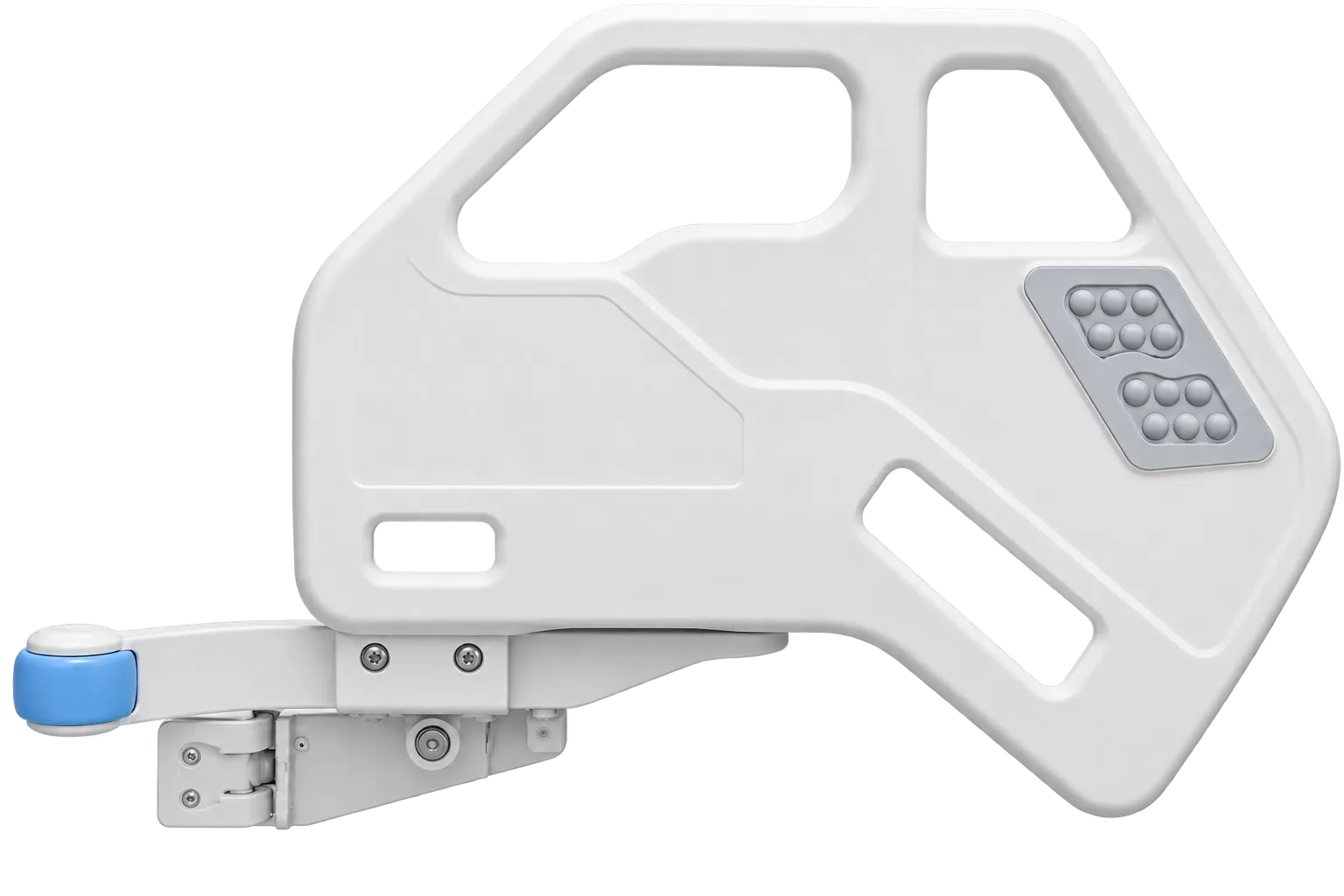
Rehabilitation, care of the elderly and long-stay wards use the short-length guardrails and height range for progressive mobilisation with physiotherapy colleagues, since the open mid-bed section allows supervised egress practice without dismantling anything.
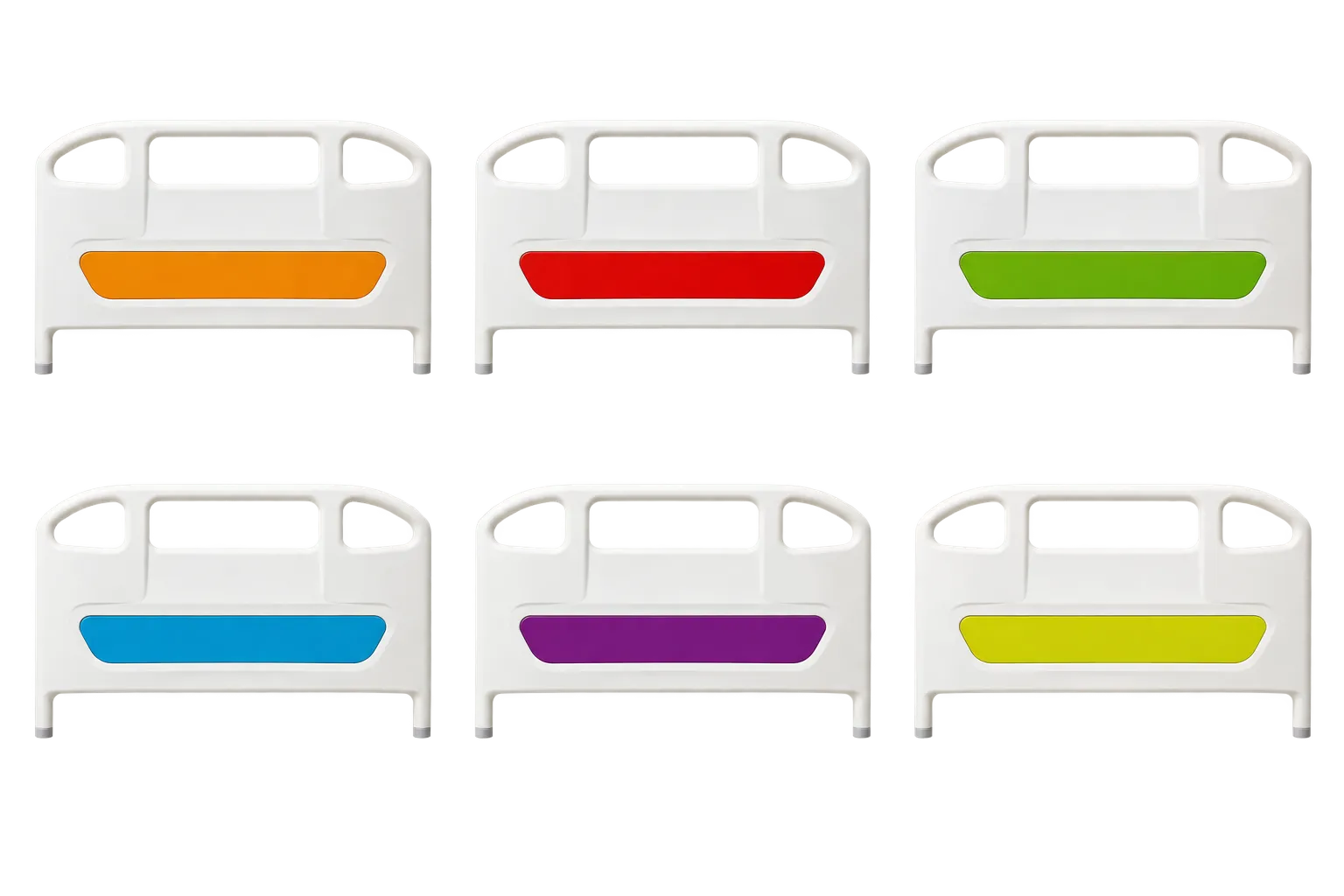
Private hospitals, hospices and CQC-regulated providers use the same bed for general inpatient care, with the six colour finishes supporting bay, zone or dependency coding across a department. Procurement teams working through NHS Supply Chain frameworks or trust and ICB routes should note NICE's late-stage assessment guidance on bed frames for adult acute wards; Medigear.uk supplies the conformity documentation those exercises require.