
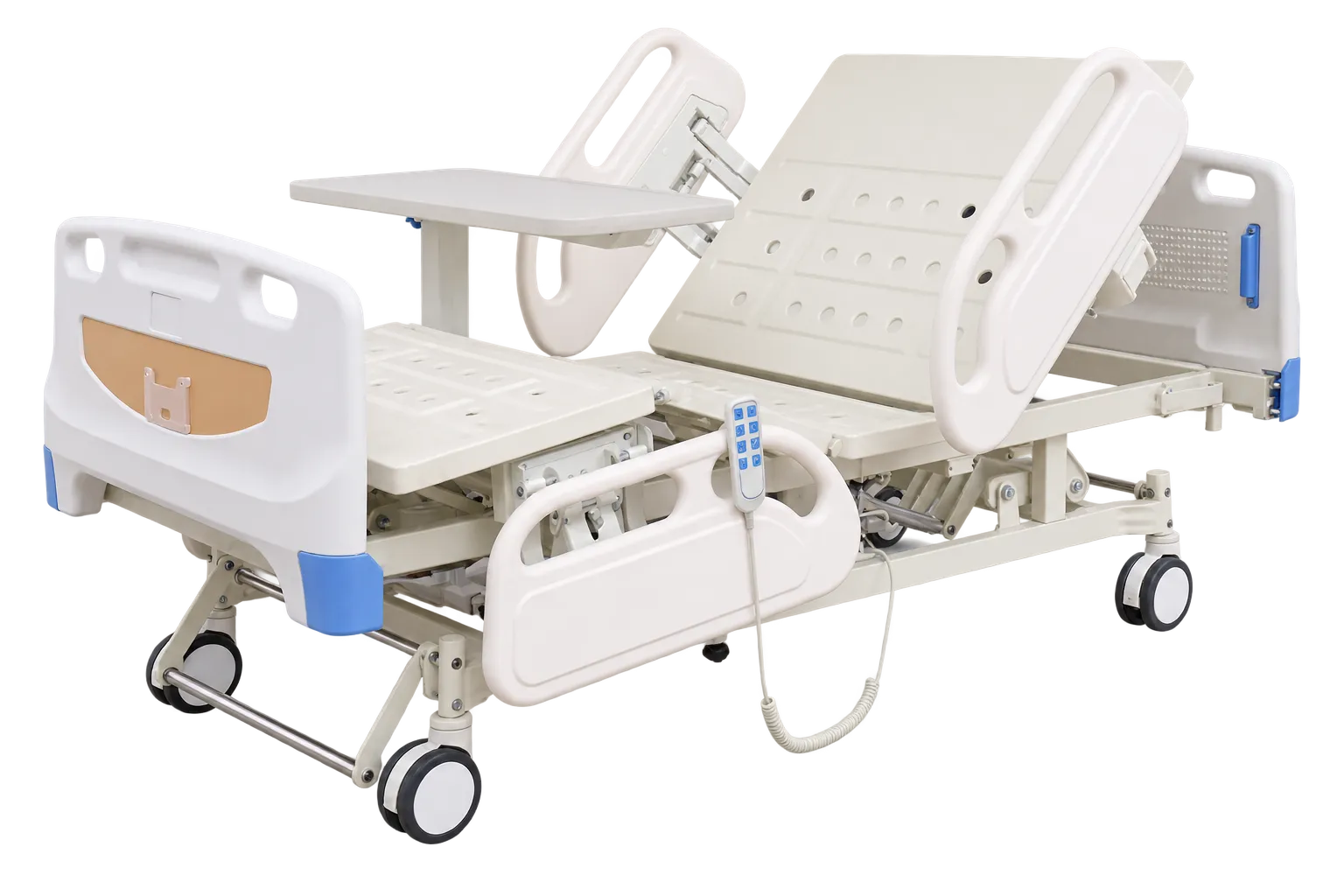
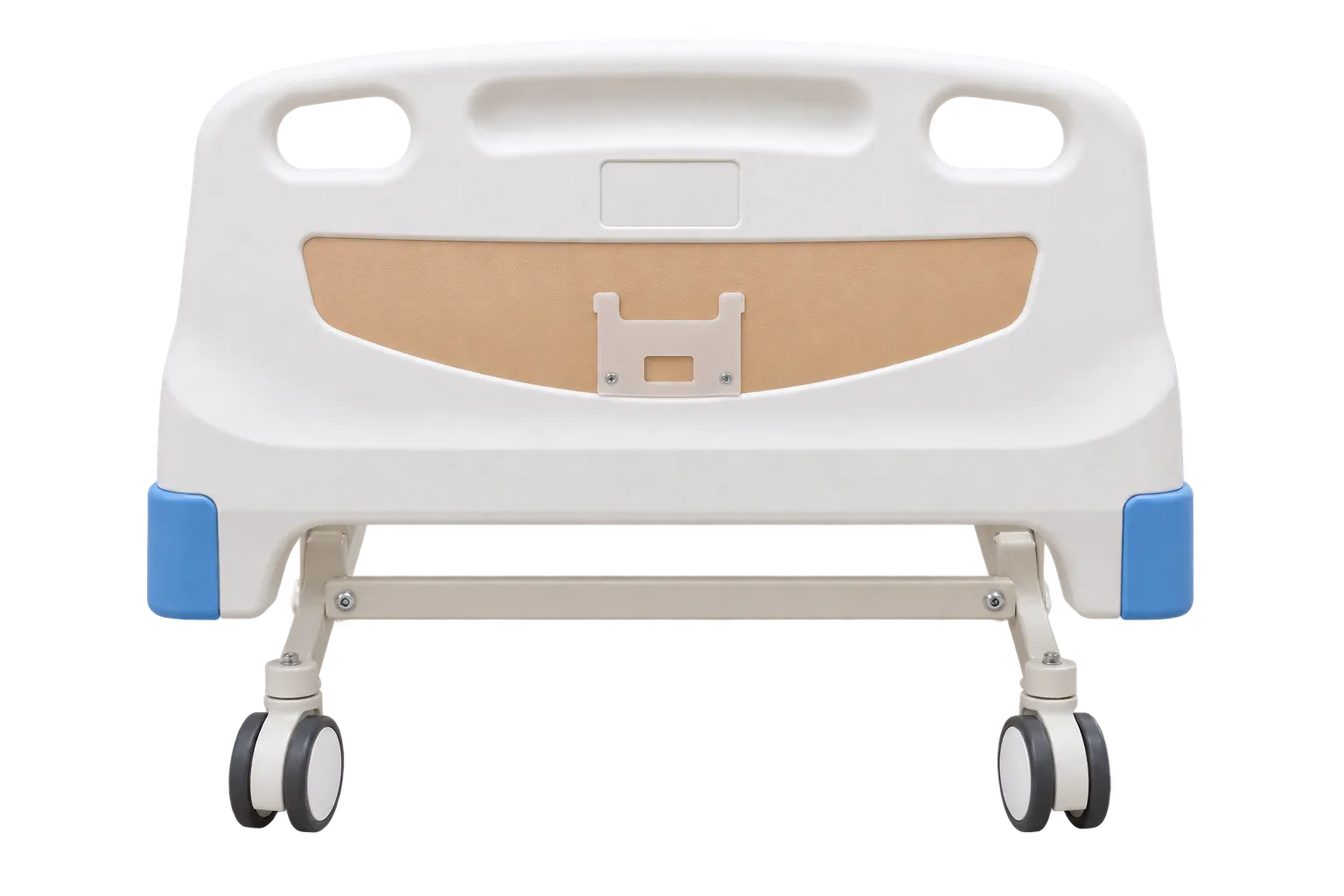
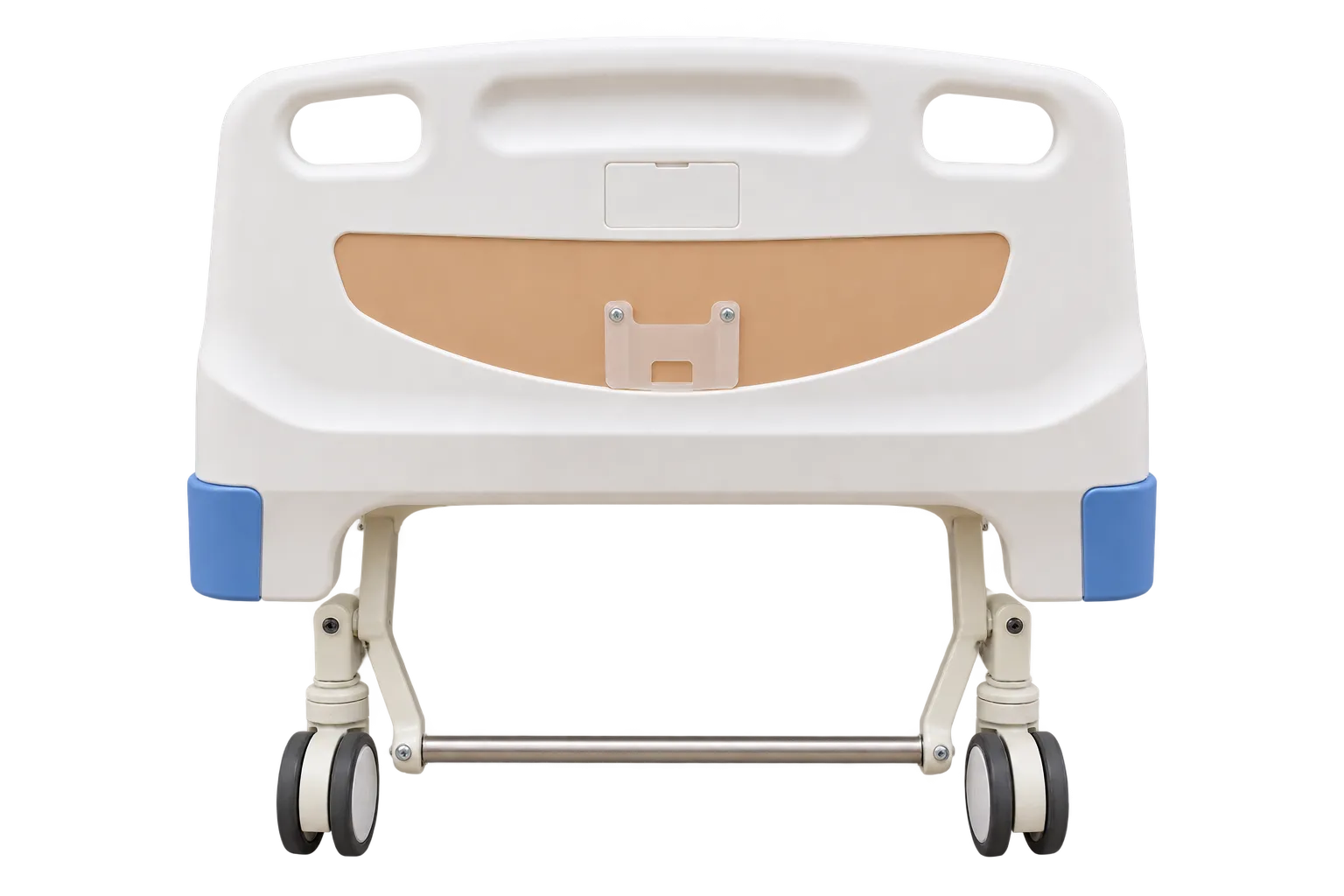
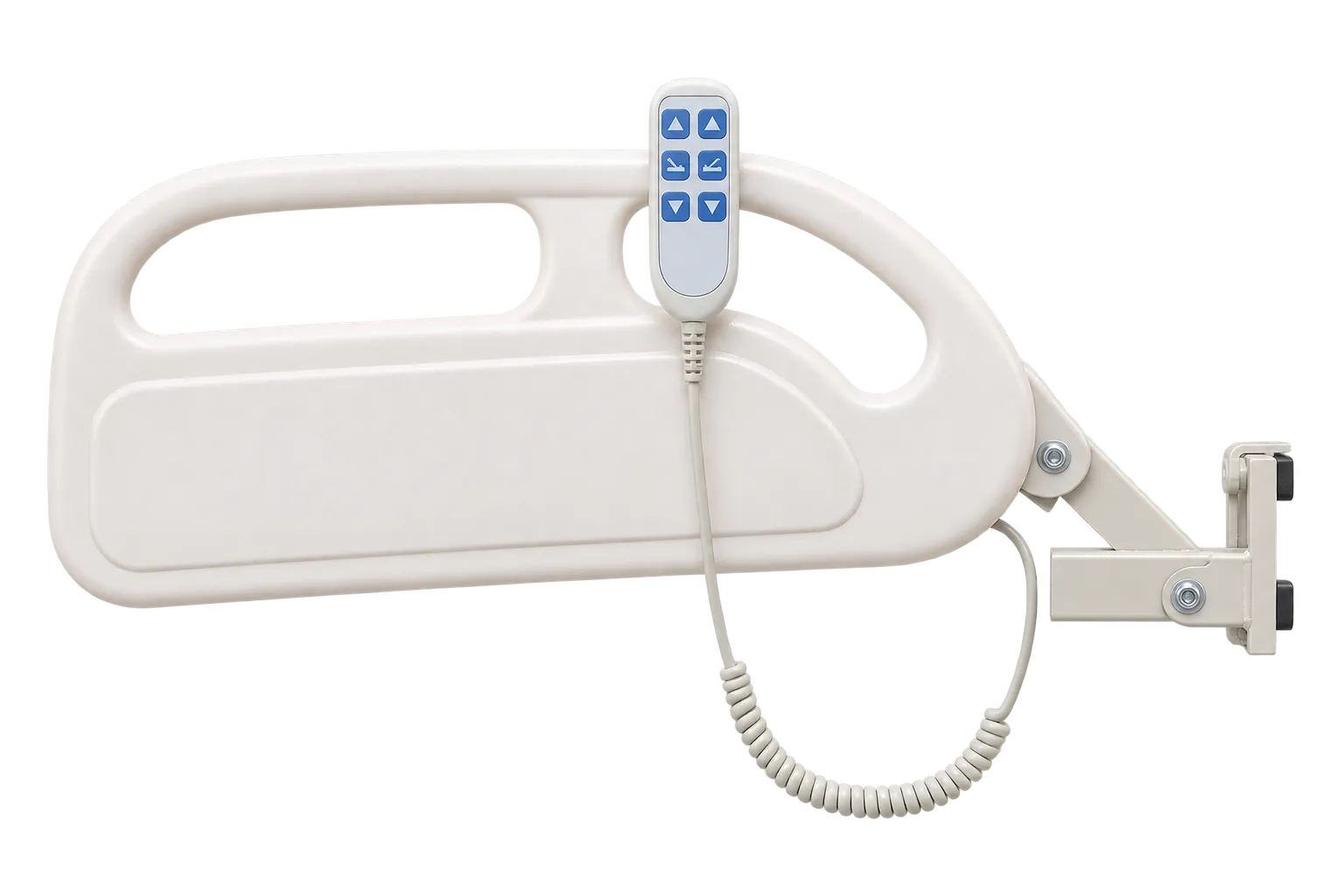
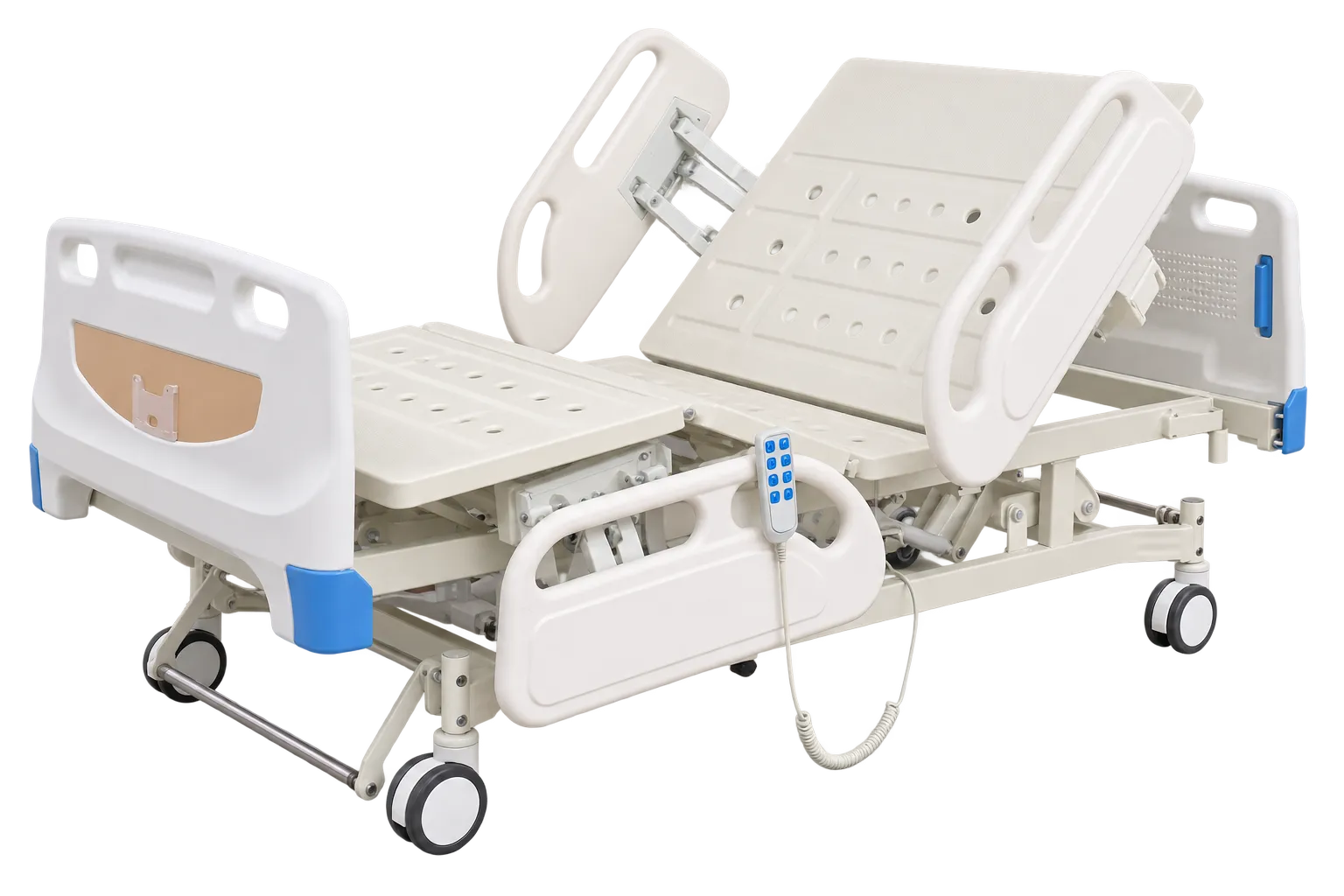
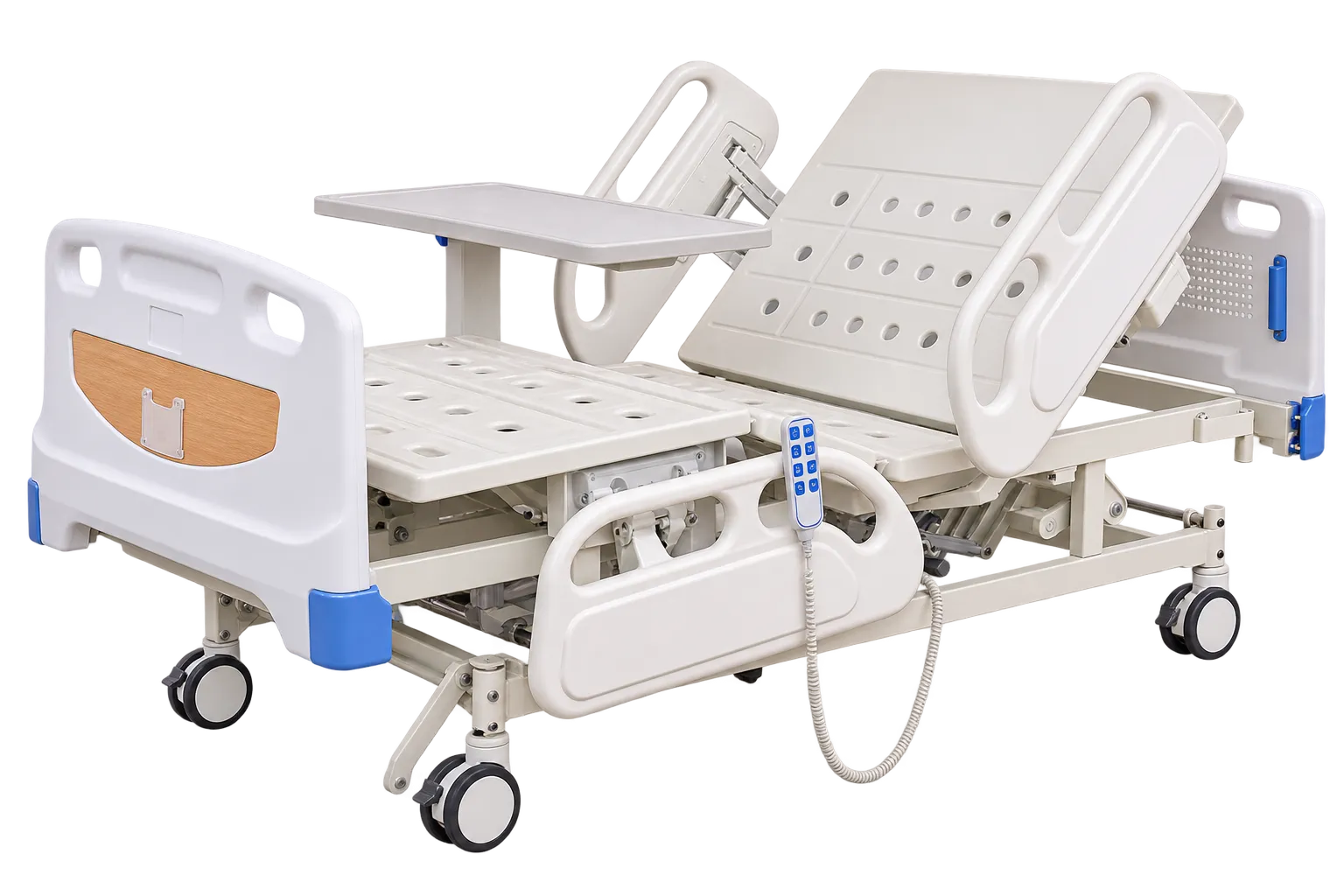
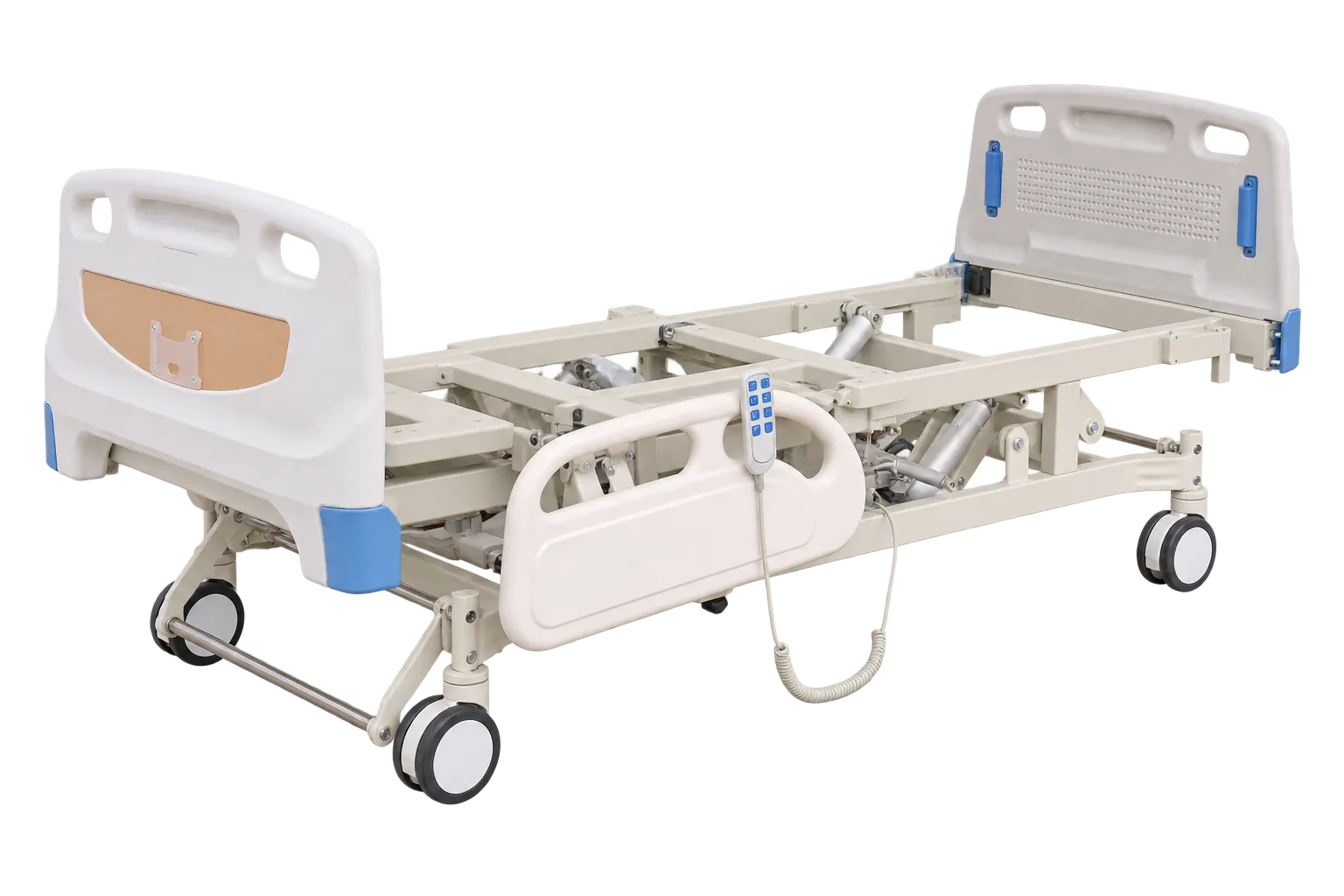
The JD-YLC3-04 is specified for general inpatient wards, rehabilitation units, stroke services, care of the elderly, and long-term care—settings where patients are in bed for weeks and the clinical goal is to get them out of bed as much as possible.
Deconditioning is the organising problem. Loss of muscle strength, balance and confidence follows bed rest quickly in older patients, and it feeds directly into longer stays, higher falls risk and poorer discharge outcomes. The two bed functions that work against it are both present: a backrest reaching a genuine 75° for proper upright sitting, and a deck low enough for the feet to reach the floor for supervised standing. Neither is exotic, but a bed that does them well earns its place on a rehabilitation ward more reliably than one with tilt functions the ward rarely uses.
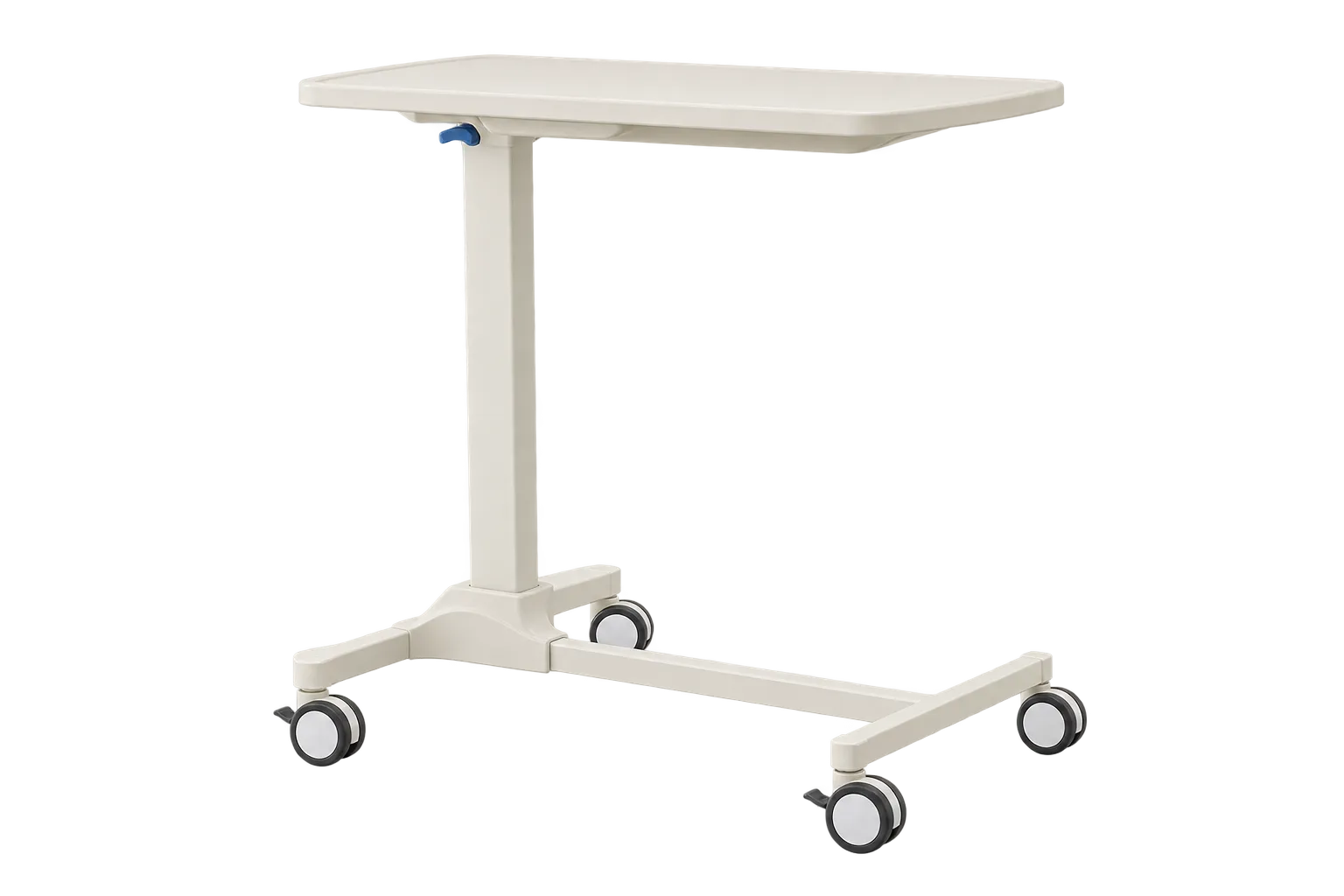
Upright sitting carries its own cluster of benefits. Patients who sit properly eat and drink more, swallow more safely, breathe with less effort, take medication more easily and engage more with visitors and therapy. Pair the backrest with a bedside or overbed table — both optional — so there is a stable surface to work from.
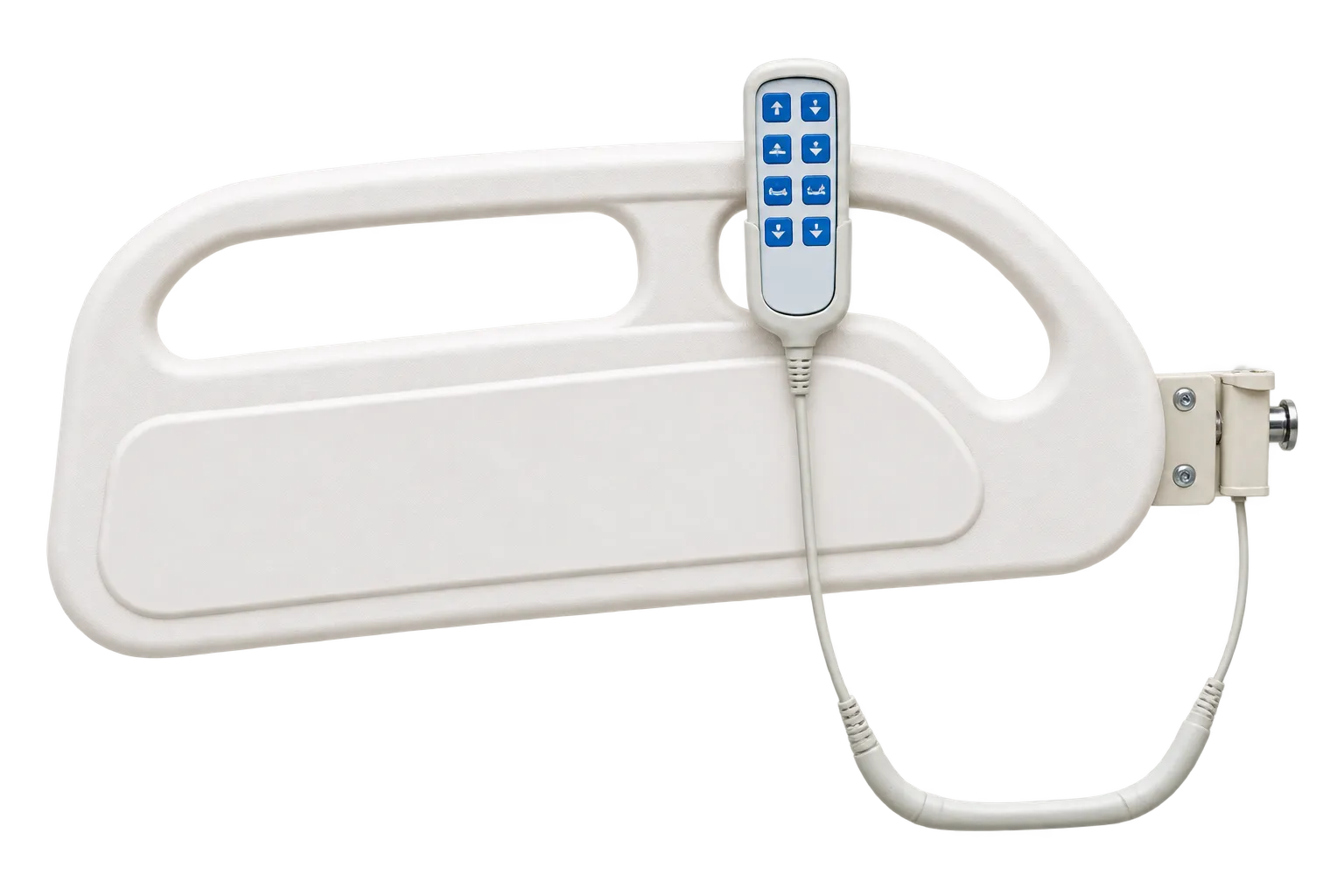
Stroke services use the same combination for swallowing assessment, therapy positioning and transfer practice, with the short rails leaving a working side clear for a therapist. In dementia care,t he moulded grab openings give a predictable, unchanging hand position that reduces hesitation.
The absence of whole-frame tilt rules out acute medicine, high dependency and critical care. Medigear.uk supplies the conformity documentation that trust, ICB, NHS Supply Chain and CQC-regulated procurement routes require.