
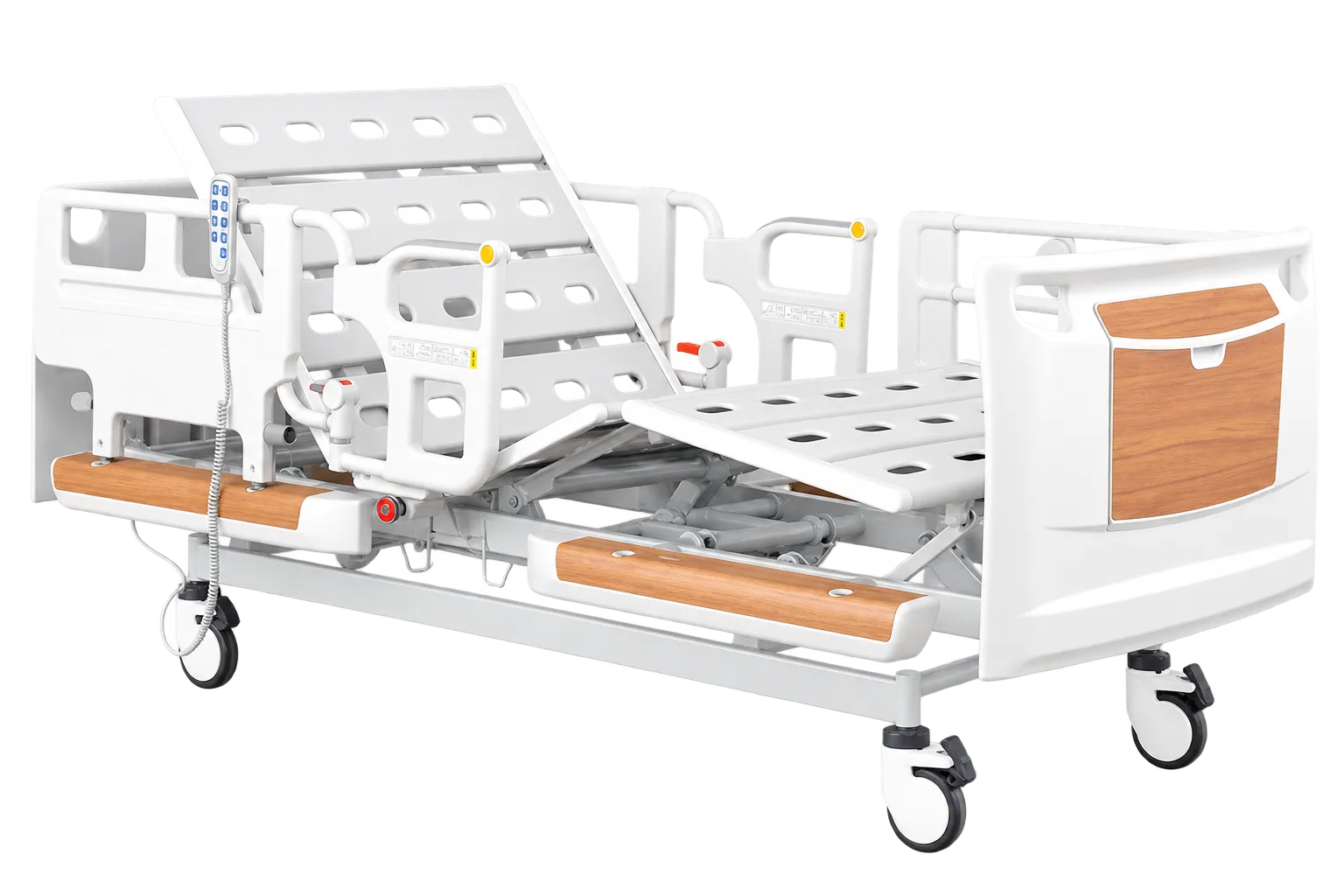
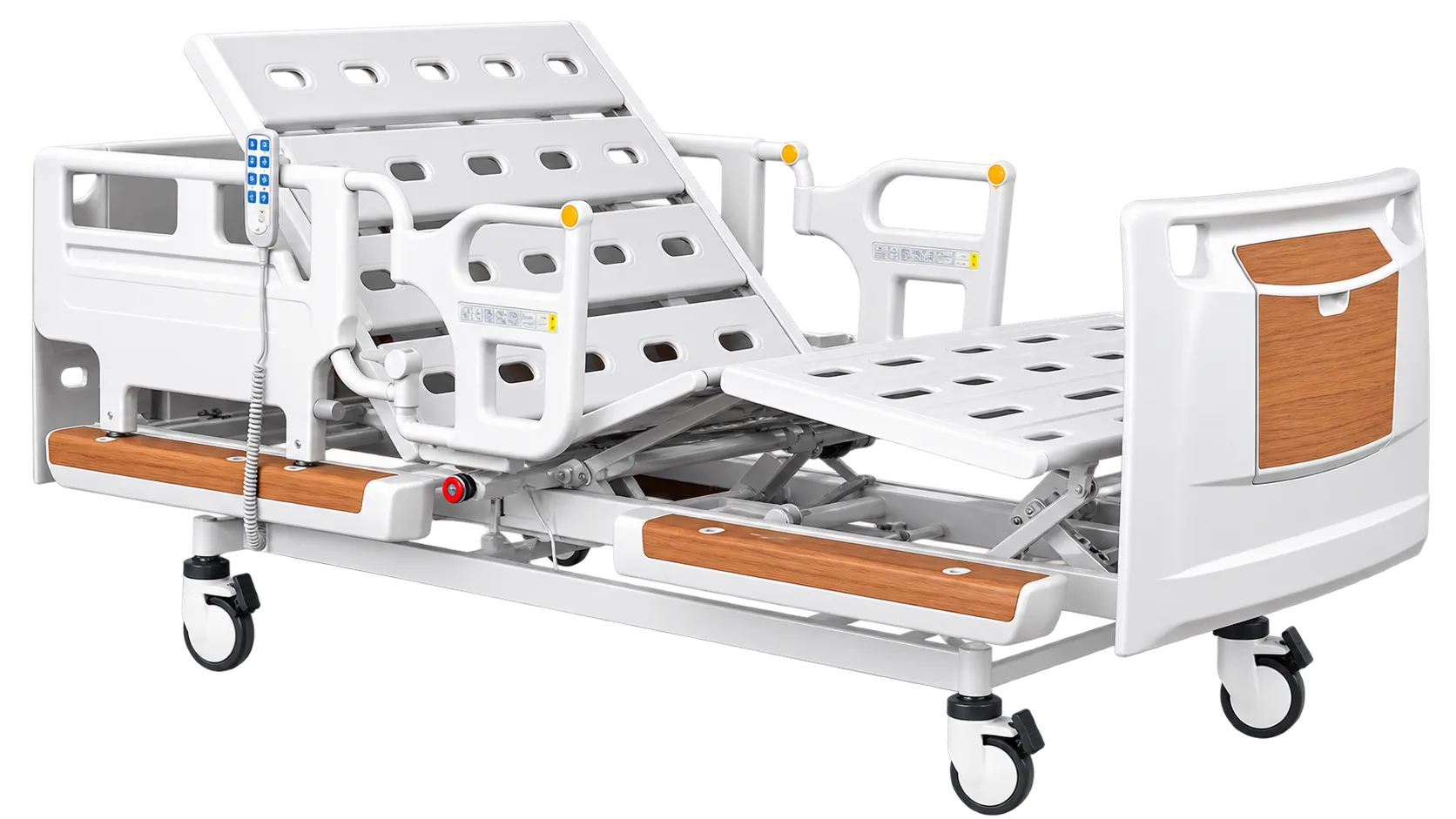
The JD-YLC3-01 is specified for settings where a patient occupies the same bed for weeks, and the room is somewhere they live rather than pass through — side rooms, private wards, care homes, community hospital beds and longer-stay rehabilitation.
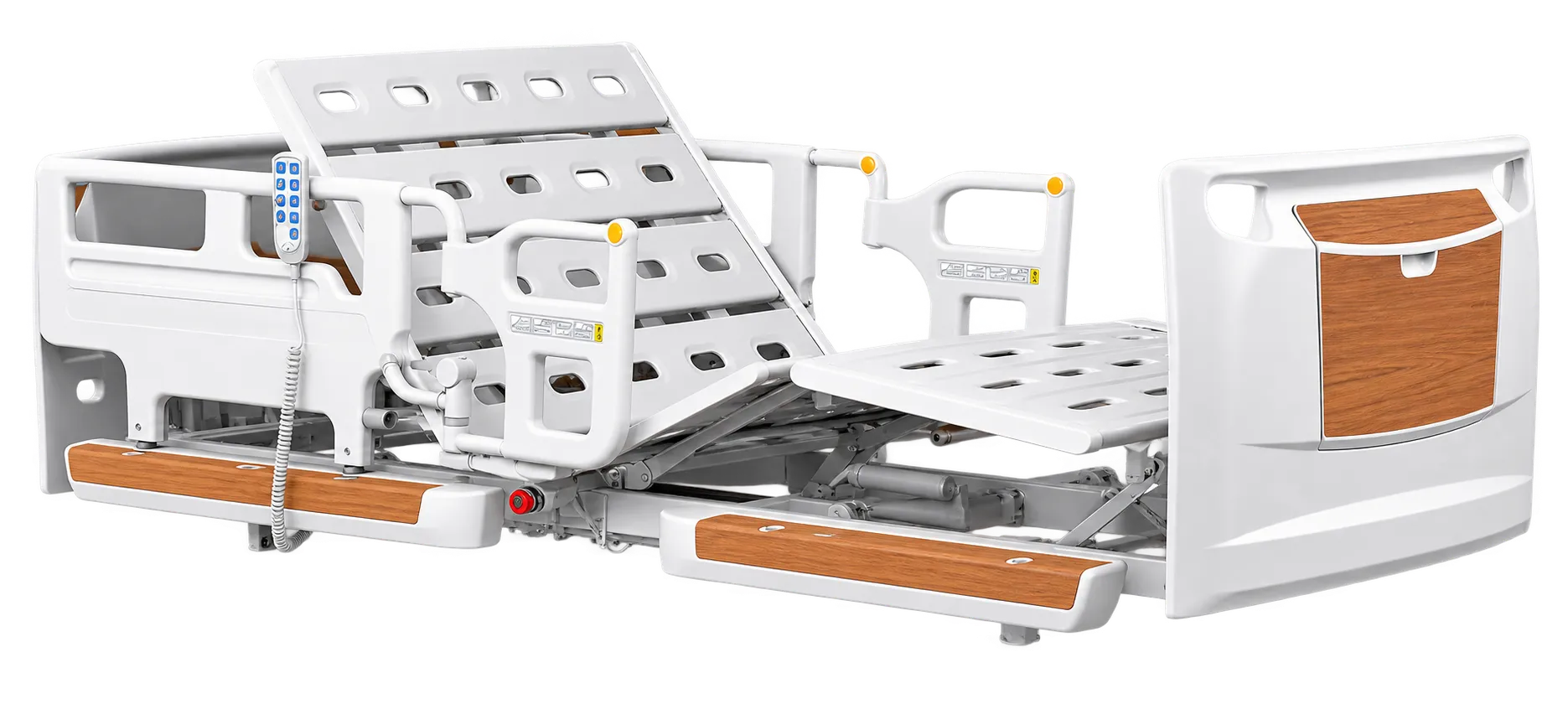
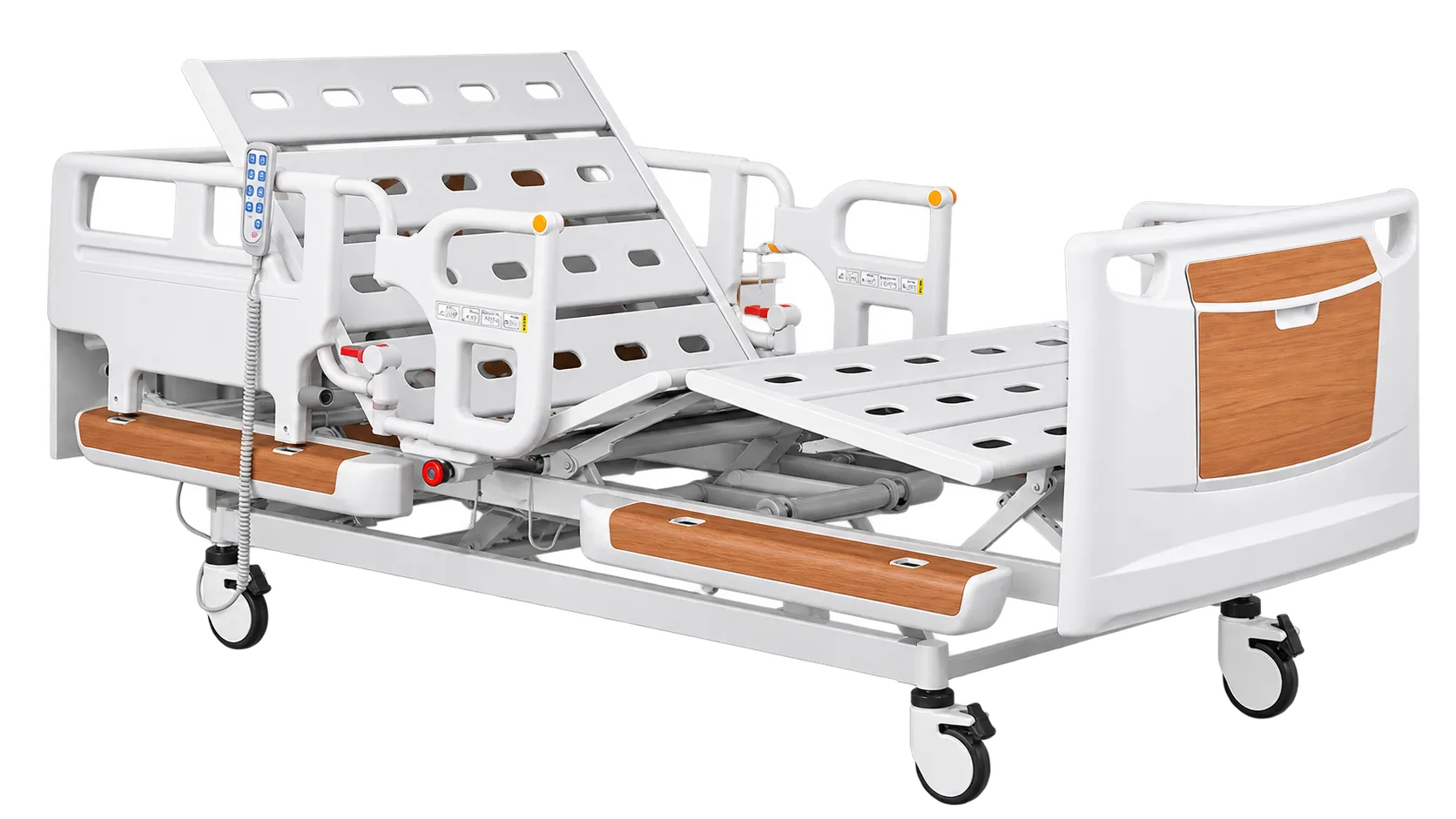
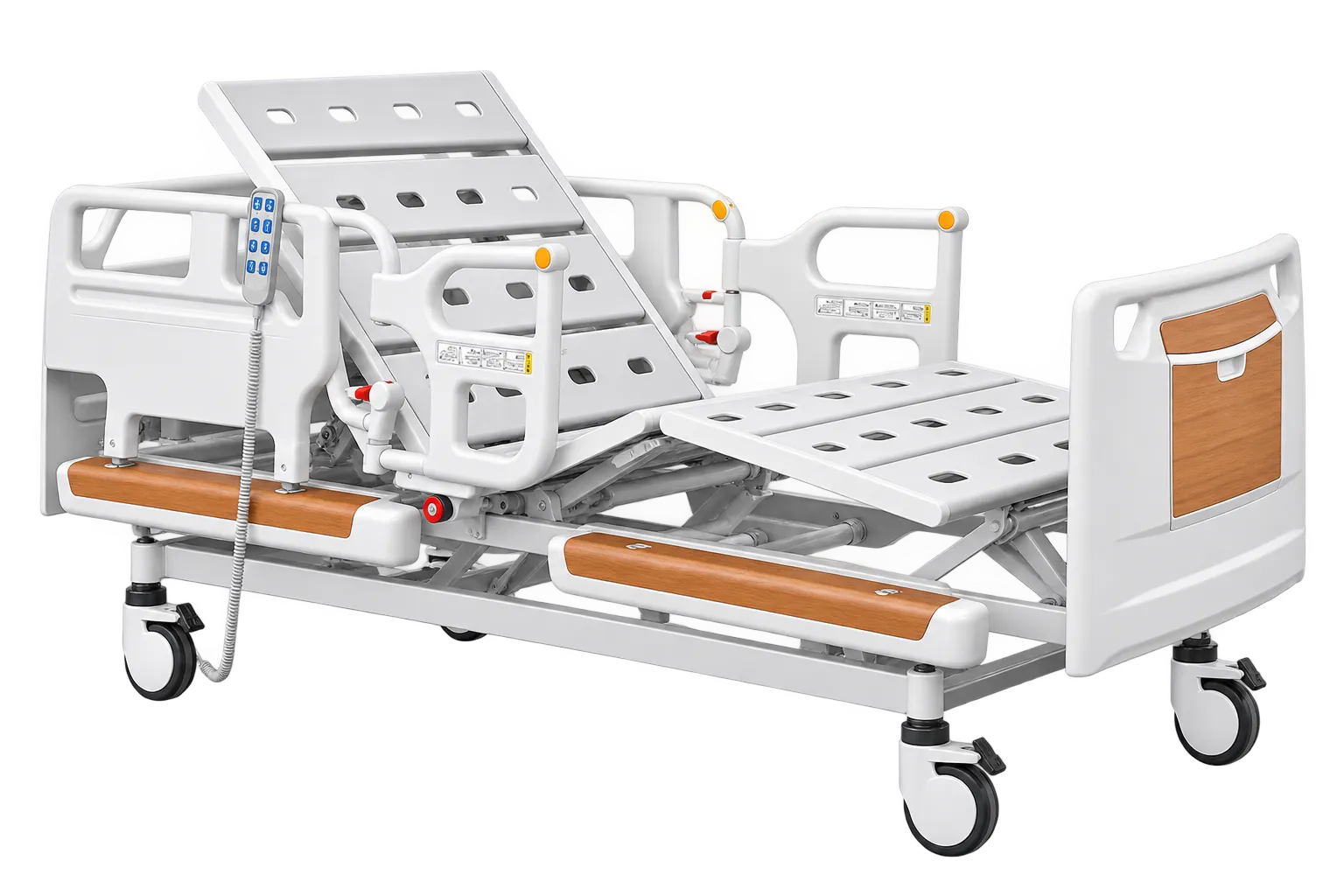
The functional case is narrower than a five-function frame and should be stated as such. Backrest elevation to 75° covers sitting for meals, medication, visitors and respiratory comfort. Leg-section elevation to 40° covers knee-break positioning and limb elevation for oedema management. Powered height sets a carer working level that protects against the cumulative back loading behind a large share of nursing musculoskeletal injur. It dropss the deck for supervised transfer and falls risk reduction. Those three cover the daily positioning demand of most general inpatient, rehabilitation and long-term care.
What they do not cover is whole-frame tilt. Neither Trendelenburg nor reverse Trendelenburg is available, so wards whose escalation protocols assume head-down positioning for circulatory management, or head-up positioning for respiratory and feeding support, need a five-function frame instead. This is not a bed for acute medicine, high dependency or critical care.
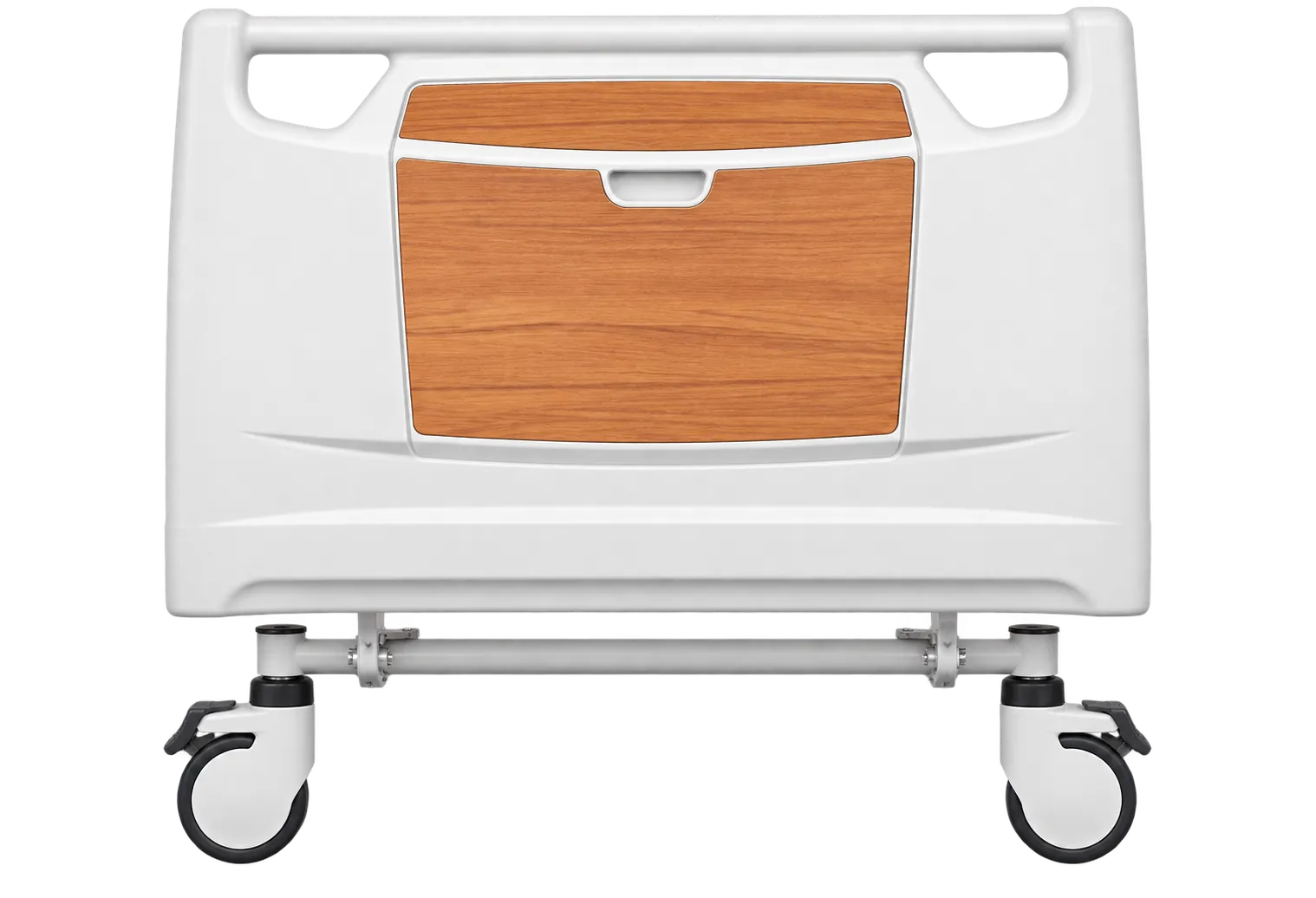
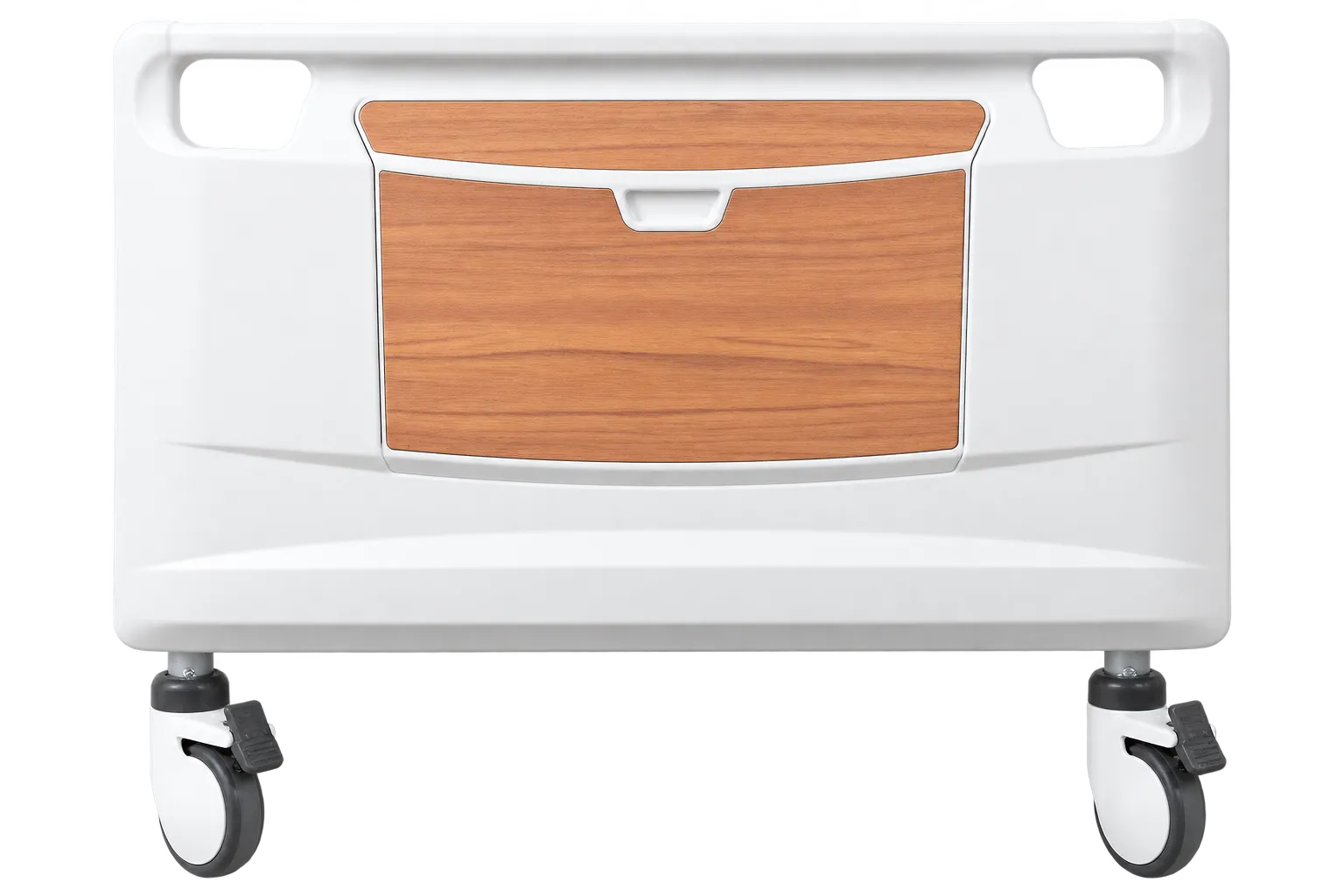
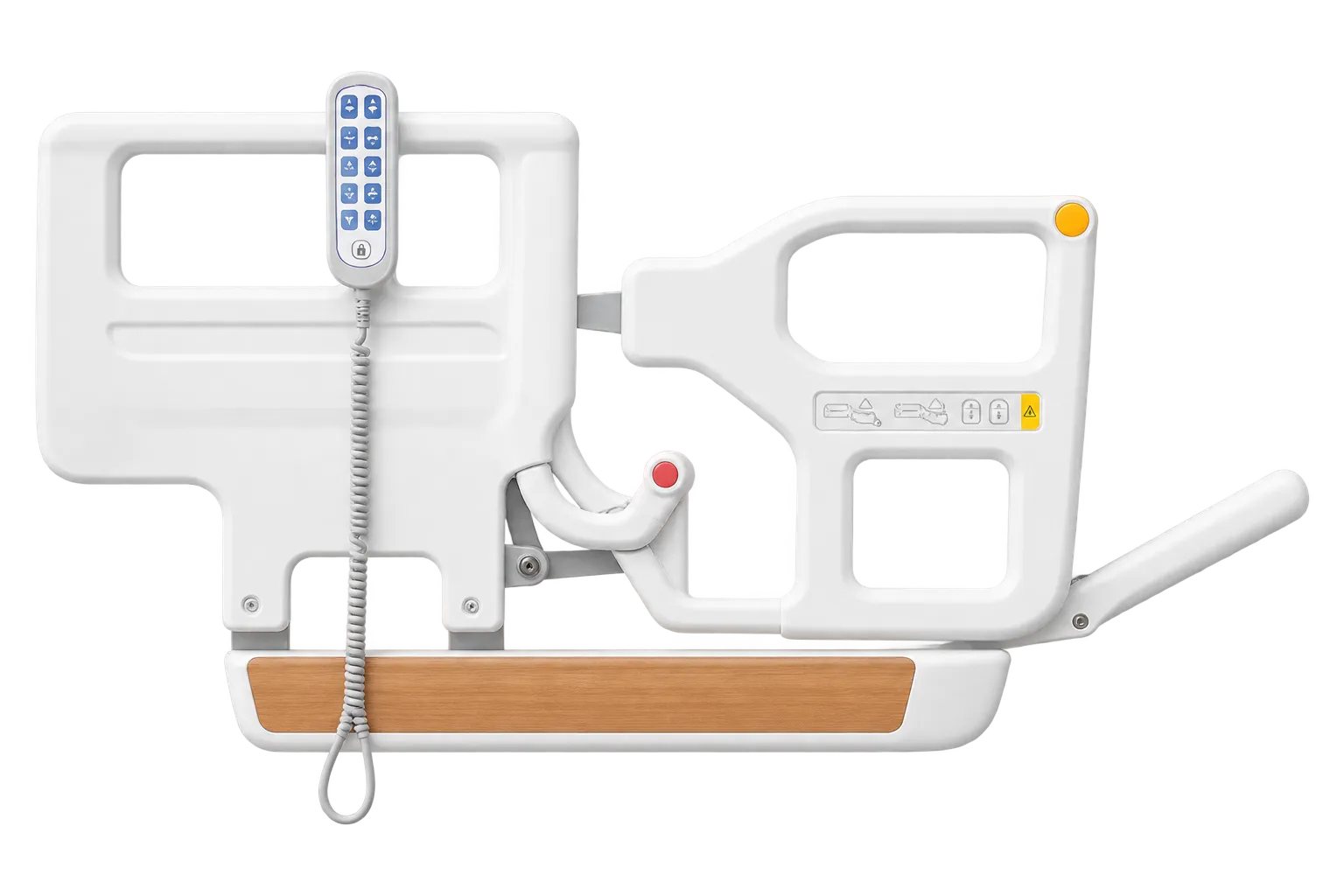
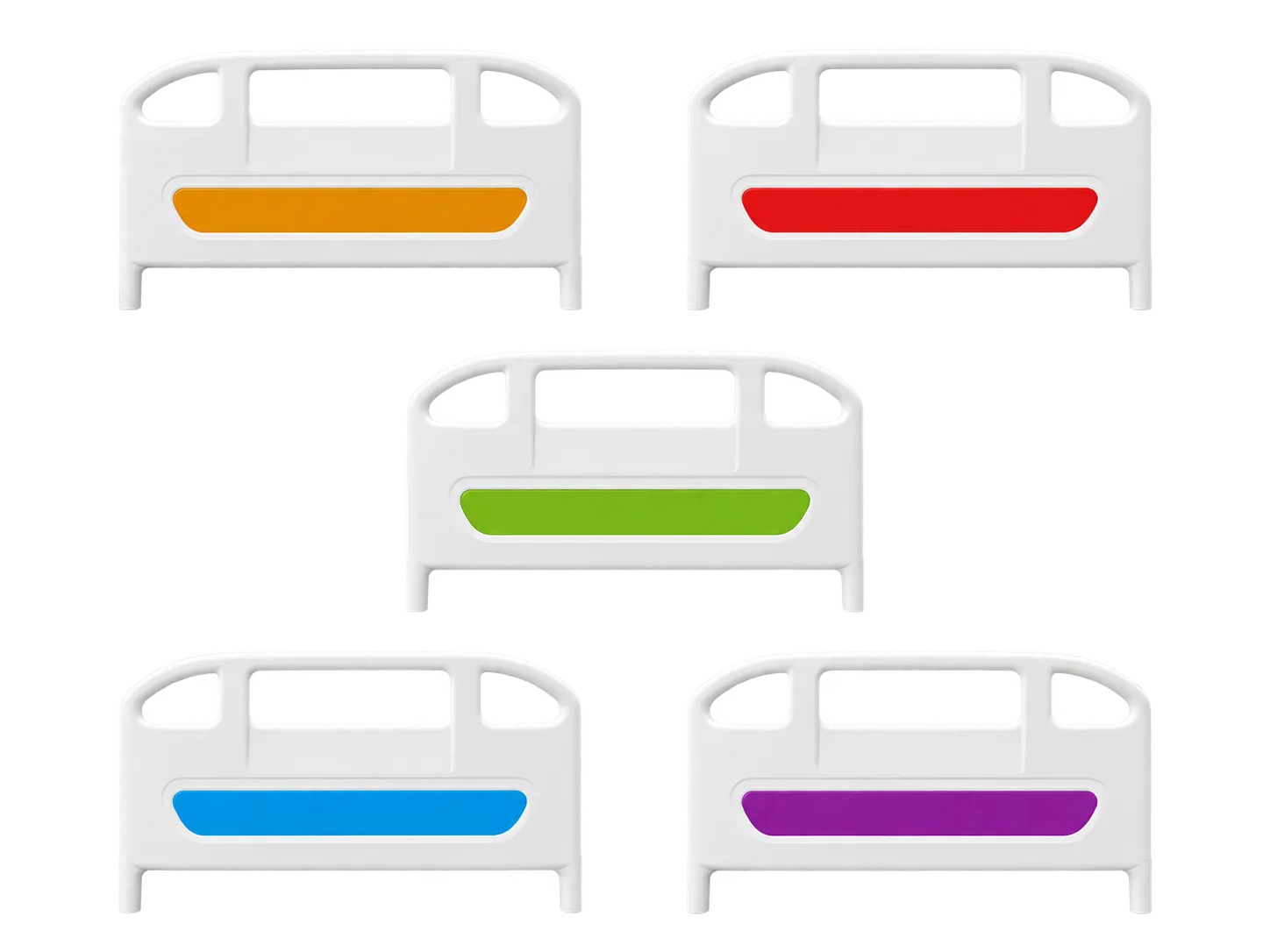
The finish serves the same settings the function set does. Wood-effect trim and five colour options make a bed read less like equipment in a room occupied for weeks, which matters to patients and families in hospice, palliative and long-stay care in ways a specification sheet struggles to capture. The surfaces remain moulded ABS, so infection prevention is not traded for appearance.
CQC-regulated care providers, private hospitals, hospices and community services use this specification where positioning needs are straightforward, and the room's character is part of the care. Medigear.uk supplies the conformity documentationthat required by those procurement routes.