
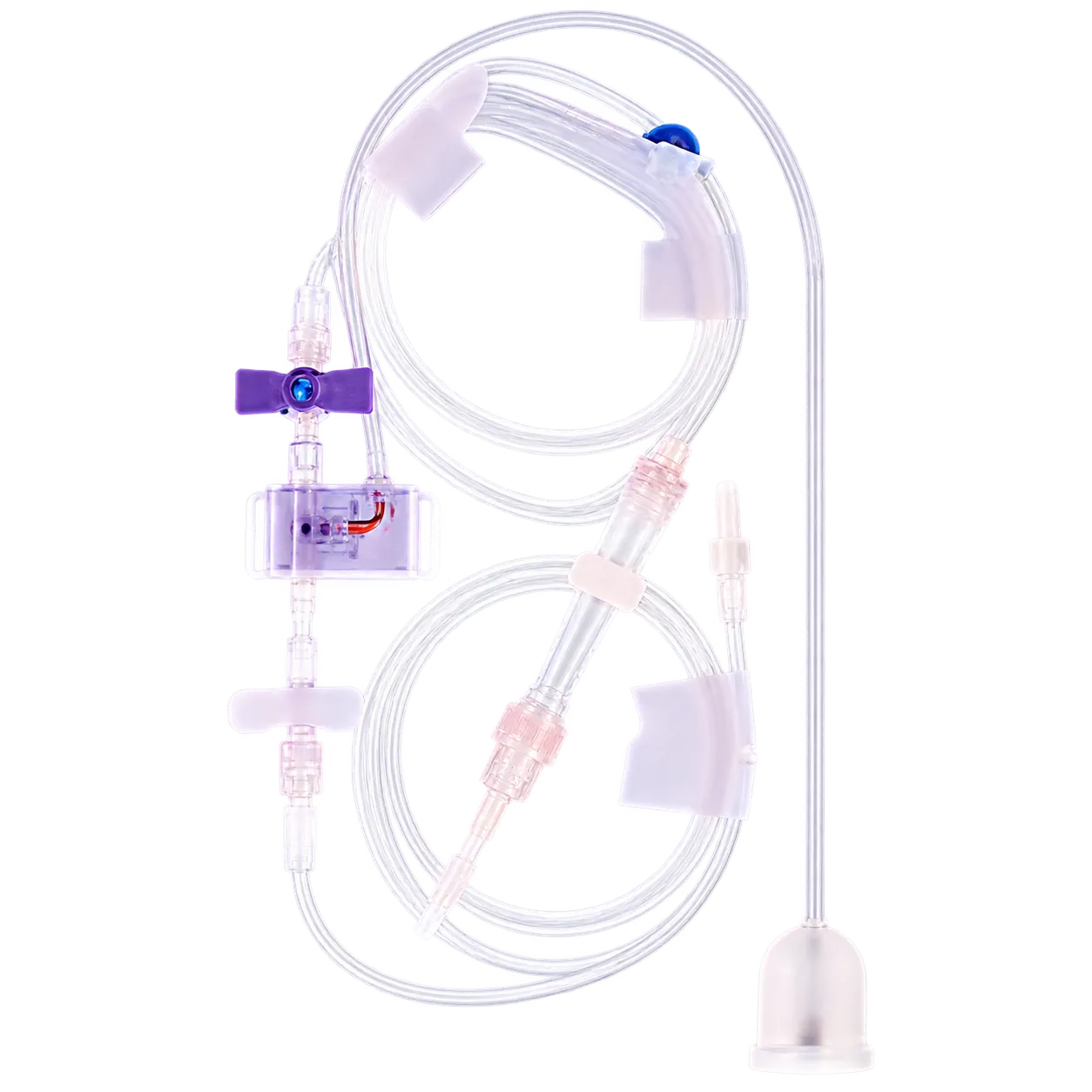
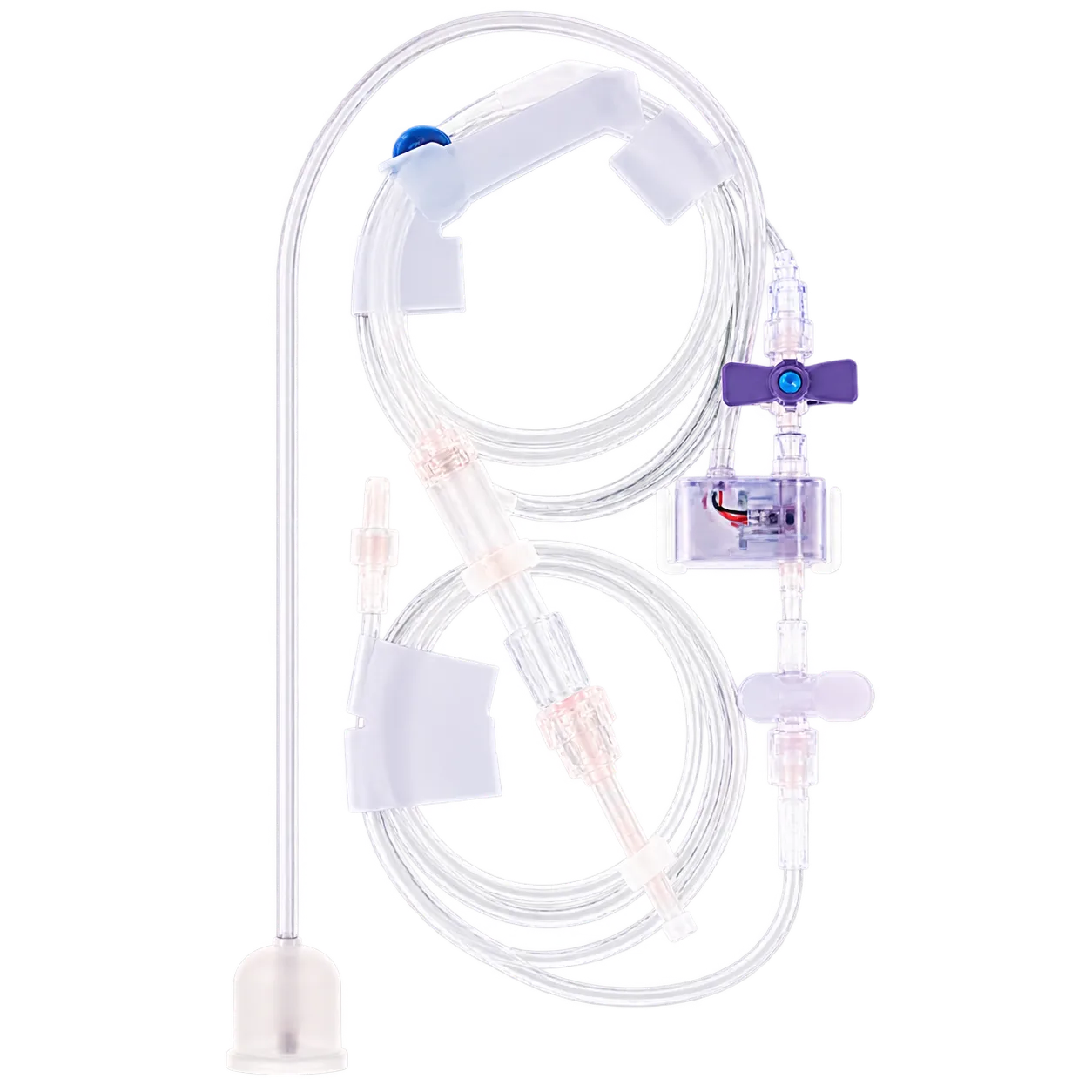
Invasive pressure monitoring is used where a cuff is not enough. An arterial line gives a pressure reading every beat rather than every few minutes. It also produces a waveform, which carries information a number cannot. Patients on vasoactive drugs, undergoing major surgery, or unstable in intensive care are the usual candidates. An arterial line also allows repeated blood sampling without further punctures, which matters for anyone needing frequent blood gases. The same equipment reads central venous pressure. A pulmonary artery catheter reads pressures on the right side of the heart.
The transducer sits between the patient and the monitor. Everything on the patient side is a column of fluid, and everything on the monitor side is electrical. That crossing point is where accuracy is won or lost. Two setup steps govern it. The transducer has to be levelled to the phlebostatic axis, roughly the level of the right atrium. One sitting above or below that point reads systematically low or high. It then has to be zeroed to atmosphere so the monitor knows where zero is.
Air in the line is the other common problem. Bubbles are compressible where fluid is not. Trapped air therefore damps the waveform and flattens the peaks. The readings look plausible but understate systolic pressure. That is why priming matters and why a built-in flush device is worth having. Continuous slow flushing keeps the catheter from clotting between measurements.
Manual flush clears the line after blood sampling through the stopcock. Medigear.uk supplies the instructions for use with every order.