
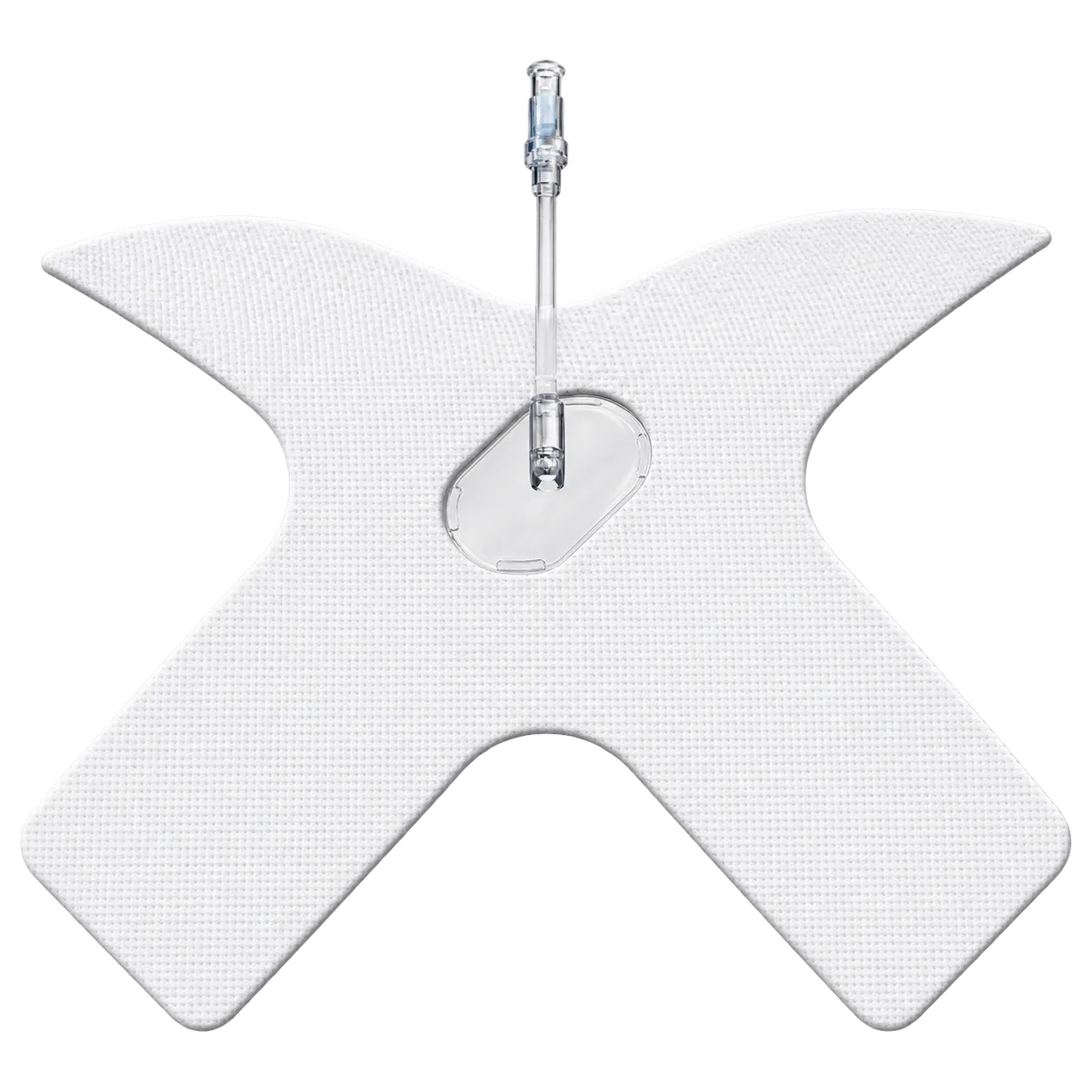
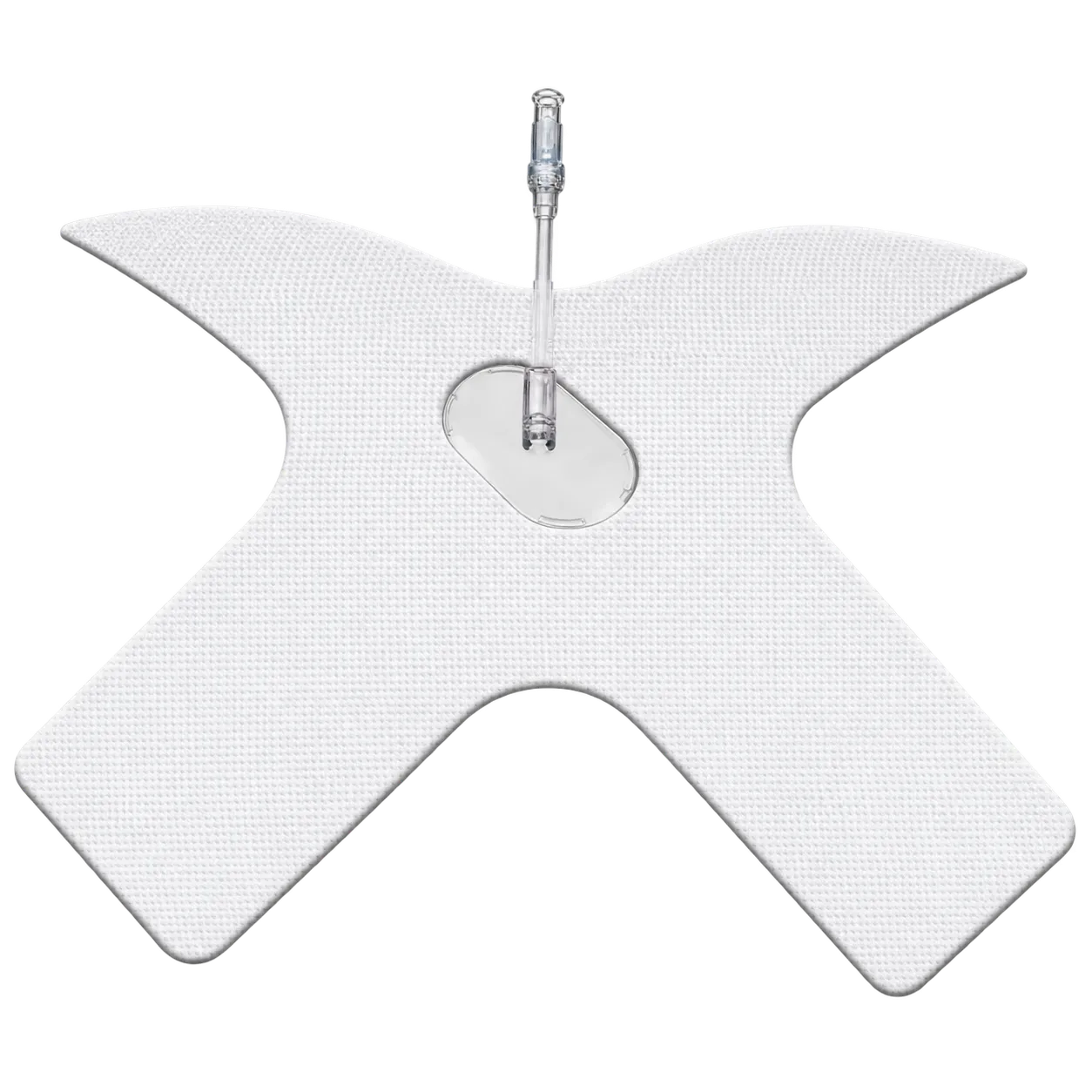
Femoral access leaves a hole in an artery that carries the full arterial pressure. Once the sheath is removed, that hole has to close. Manual compression is the traditional method, and it works, but it occupies a member of staff for a sustained period, and the quality varies with who is doing it. A compression dressing takes over that job.
The risks on either side of correct compression are the reason this matters. Too little pressure and the site oozes, which produces a groin haematoma or, less often but more seriously, retroperitoneal bleeding that can go unnoticed because it tracks internally. Too much pressure and distal flow is compromised, so the foot pulses are checked after application and periodically afterwards. Venous return can also be obstructed. The clinical target sits between those failures, which is why comparable systems specify a pressure to inflate to.
The transparent bladder addresses the monitoring side of that balance. A groin under an opaque dressing gives little away until a haematoma is large enough to see or feel through it, whereas a visible puncture site shows oozing early. The cross-shaped body addresses the other practical problem, which is that groin dressings migrate. Compression usually continues on the ward after the patient leaves the laboratory, so the dressing has to stay put through transfer and repositioning.
Patients are often on antiplatelet or anticoagulant therapy after coronary intervention, which lengthens the time to haemostasis and makes reliable, stable compression more important rather than less. Medigear.uk supplies the instructions for use with every order.