
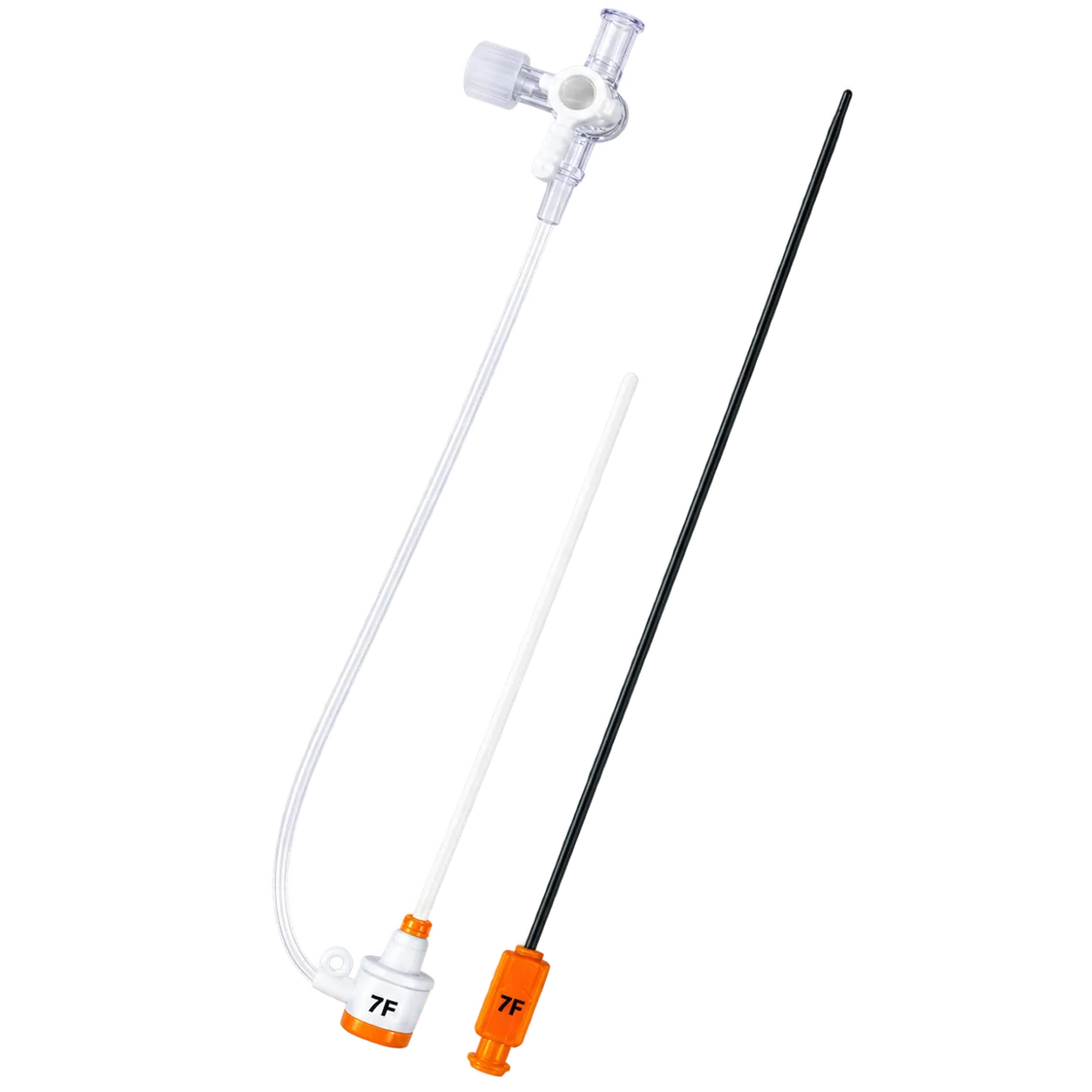
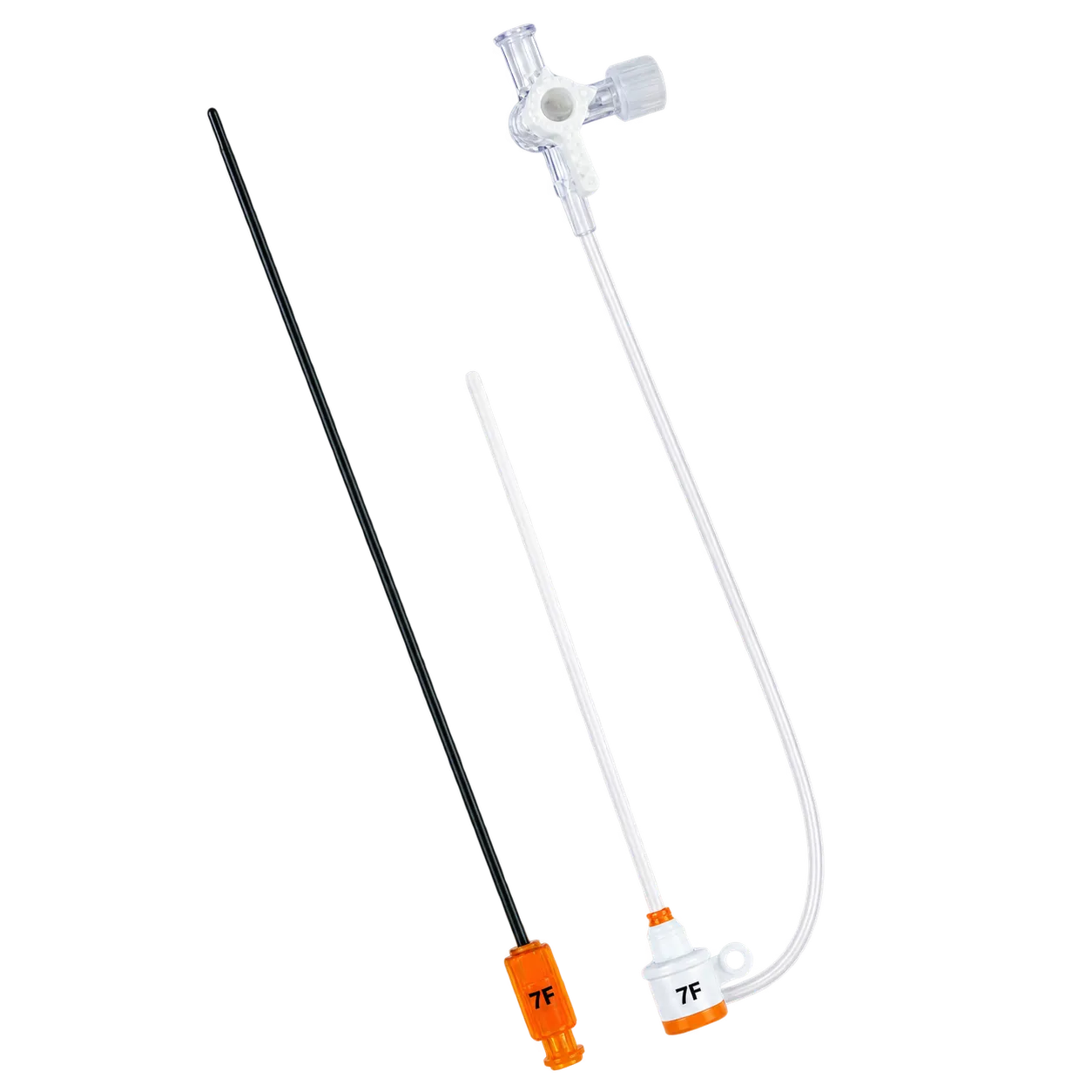
Radial access has become the default route for coronary work, but femoral access has not gone away. It persists because of size. The radial artery measures around 2.9 mm and will not comfortably take a 7F or 8F sheath, whereas the common femoral artery is several times wider. Any procedure needing a large sheath therefore returns to the groin.
Several categories fall into that group. Structural heart work, mechanical circulatory support, large-bore peripheral intervention, and some complex coronary cases all exceed what radial access allows. Femoral access is also the fallback when radial access fails, when the radial artery is occluded from previous procedures, or when both radial arteries are needed for other purposes.
The trade-off is bleeding. The femoral artery sits deep, cannot be compressed against bone in the way the radial can, and retroperitoneal haemorrhage is the serious complication. That places weight on two things this set addresses. A reliable haemostasis valve keeps the circuit closed during catheter exchanges, and INT rates its valve at 80 kPa. A smooth transition from guidewire to dilator to sheath limits trauma at the arteriotomy, which in turn affects how the puncture behaves at the end of the case. Sheath size is chosen as the smallest that will take the intended equipment, because arteriotomy size drives haemostasis time. Coated sheaths reduce insertion and removal friction.
At the end of the case,e the sheath is withdrawn,wn and pressure is held over the puncture, or a closure device is deployed. Medigear.uk supplies the instructions for use with every order.