
The FCR XG5000 Digital Radiography System is widely used for:
- General radiography
- Chest X-rays
- Orthopedic and skeletal imaging
- Trauma and emergency imaging
- Pediatric radiography
- Routine inpatient and outpatient examinations
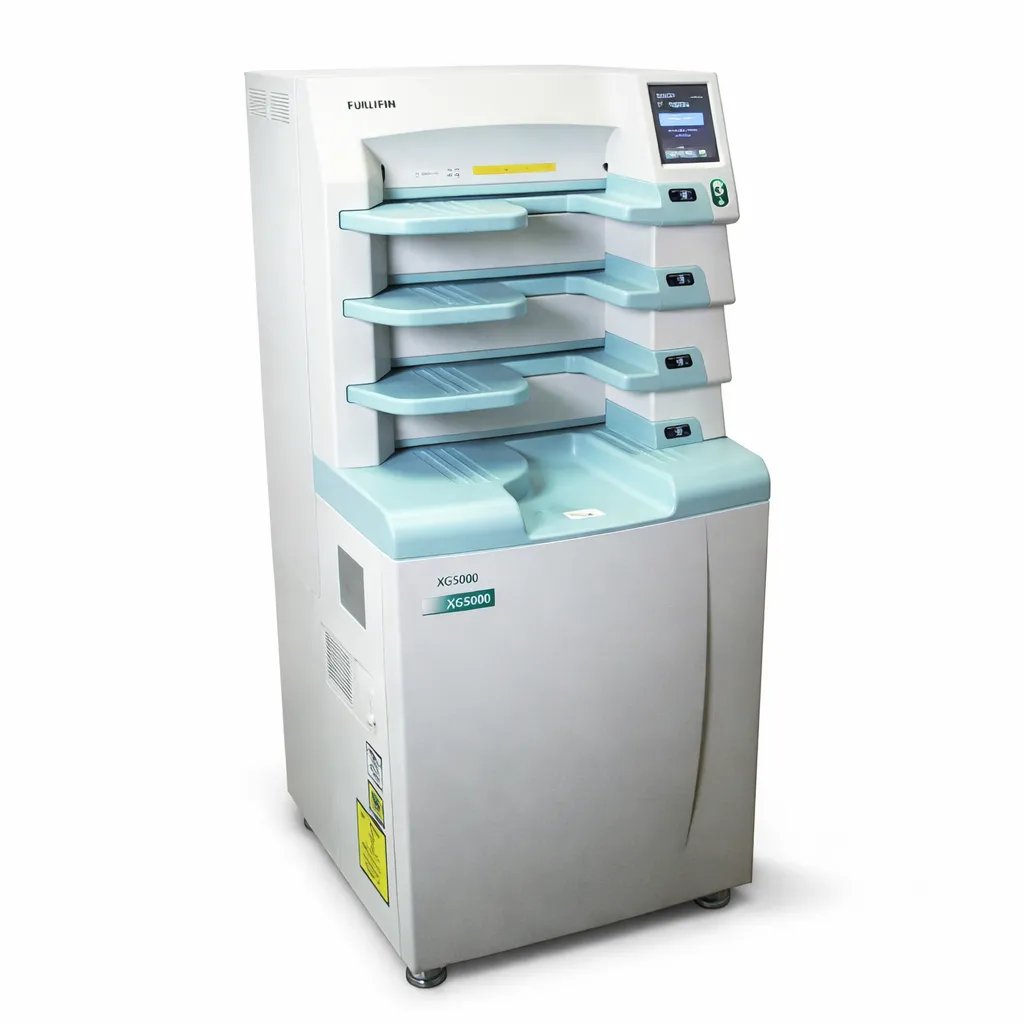
High-speed CR imaging for demanding radiology workflows.
The FCR XG5000 Digital Radiography System is a high-capacity computed radiography (CR) reader designed for fast image processing and consistent diagnostic quality. It is ideal for hospitals and imaging centers with medium to high patient volumes.
A few quick details and you are done. Our projects team replies within one business day with availability, lead time and a quotation.
Fujifilm FCR XG5000 Digital Radiography System
Product code: MDIE-MIEQ-169
The FCR XG5000 is a robust computed radiography system developed to meet the demands of busy radiology departments. It efficiently converts X-ray images from imaging plates into high-quality digital images, supporting accurate diagnosis and smooth clinical workflow.
This system is optimized for speed and reliability. It can handle a large number of examinations per day while maintaining stable image quality across different clinical applications. The FCR XG5000 supports multiple cassette sizes, making it suitable for general radiography, trauma imaging, and specialized examinations.
With its compact footprint and network-ready design, the system integrates easily with PACS and hospital information systems. It is often chosen by facilities transitioning from film-based radiography or upgrading older CR systems.
Key Features
The FCR XG5000 Digital Radiography System is widely used for:
1. What is the FCR XG5000 used for?
It is used to convert X-ray images from CR plates into digital images for diagnosis.
2. Is the FCR XG5000 suitable for hospitals?
Yes, it is designed for medium to large hospitals and busy imaging centers.
3. How is it different from smaller CR readers?
It offers higher throughput and faster processing, making it suitable for heavy workloads.
4. Does it support standard CR cassettes?
Yes, it supports commonly used CR cassette sizes.
5. Can it integrate with PACS systems?
Yes, it is fully DICOM-compatible and integrates with PACS and HIS systems.
6. Is the image quality suitable for diagnosis?
Yes, it delivers consistent and reliable diagnostic-quality images.
7. Does it reduce operating costs?
Yes, it eliminates film processing and reduces consumable costs.
8. Is it suitable for continuous daily use?
Yes, it is built for stable performance in high-demand clinical environments.