
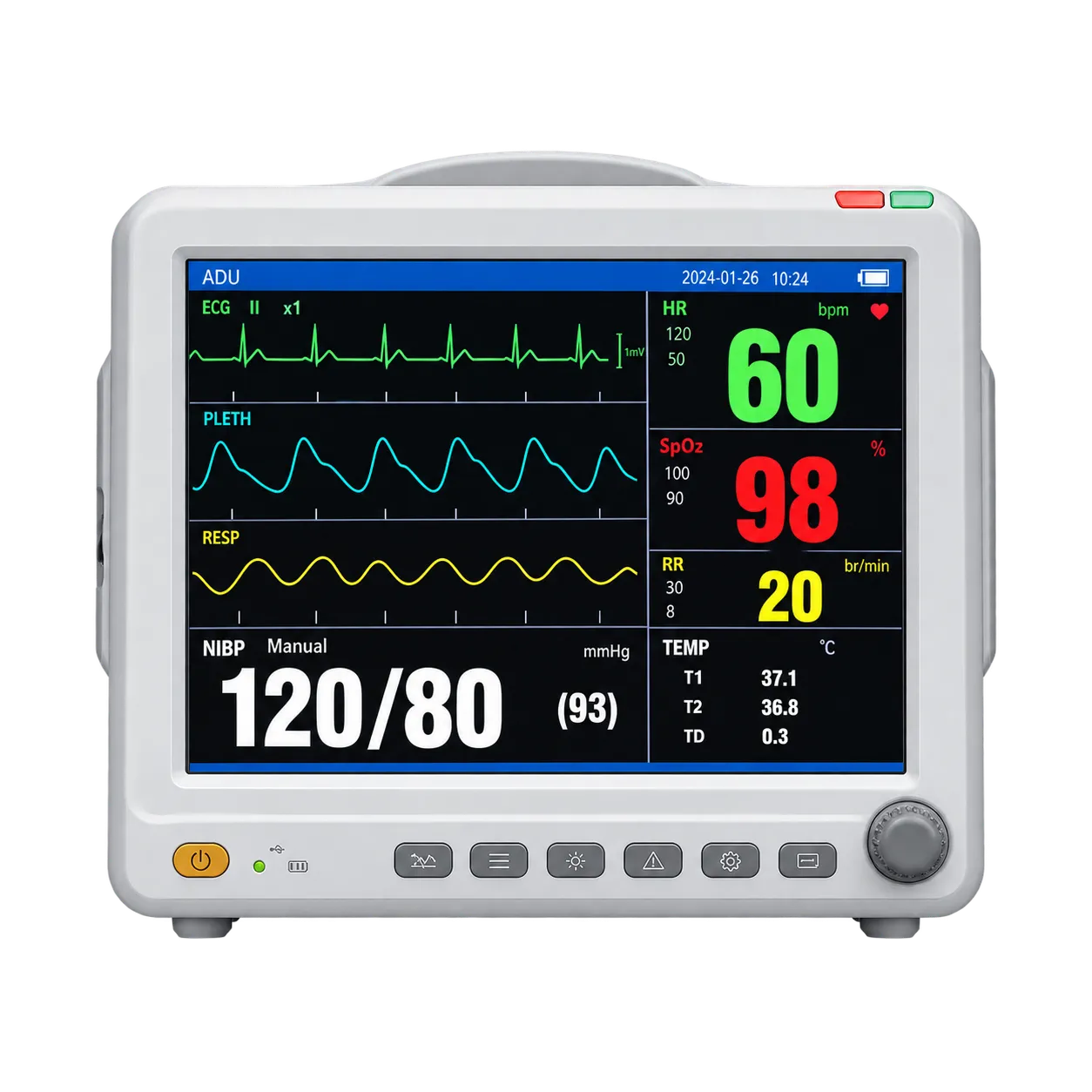
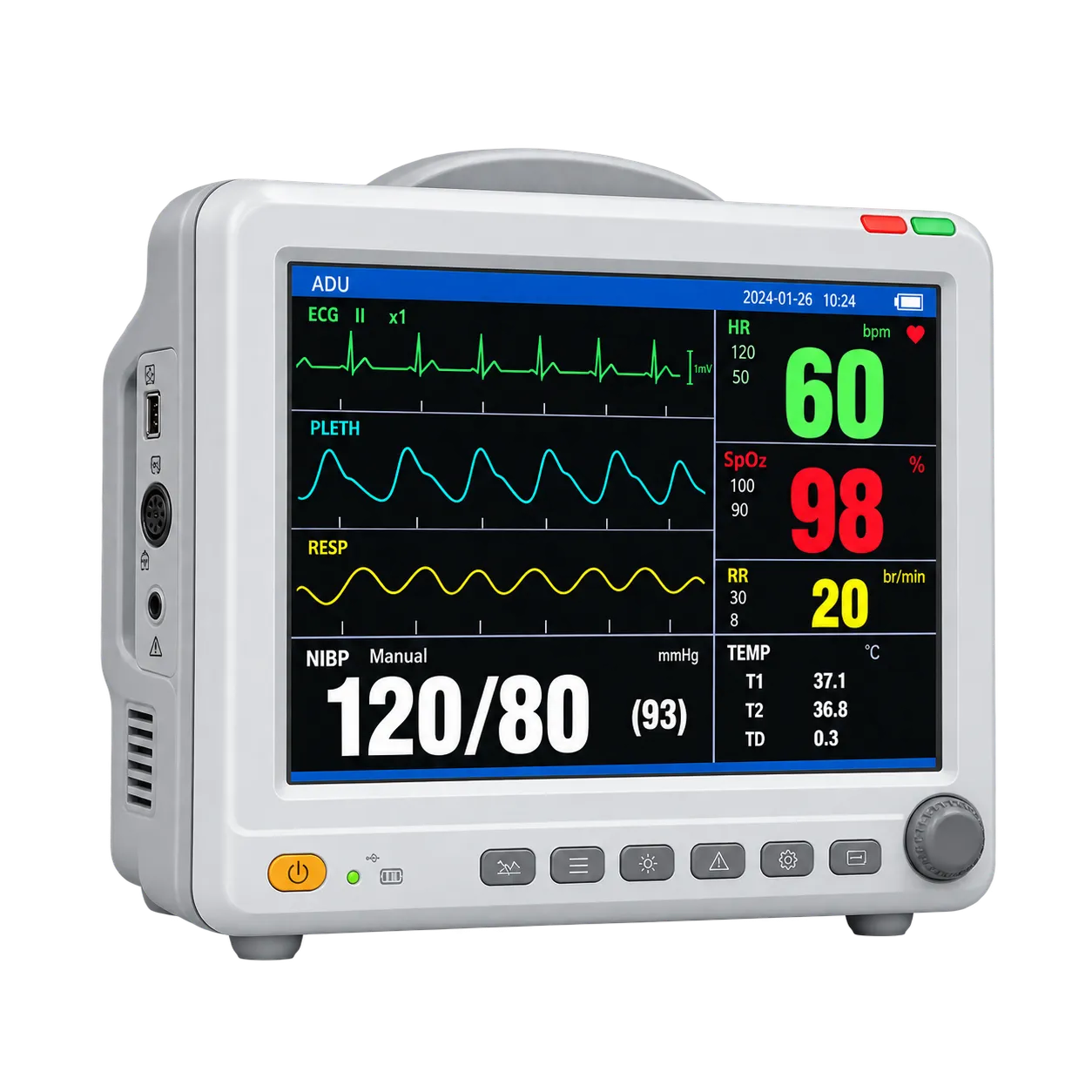
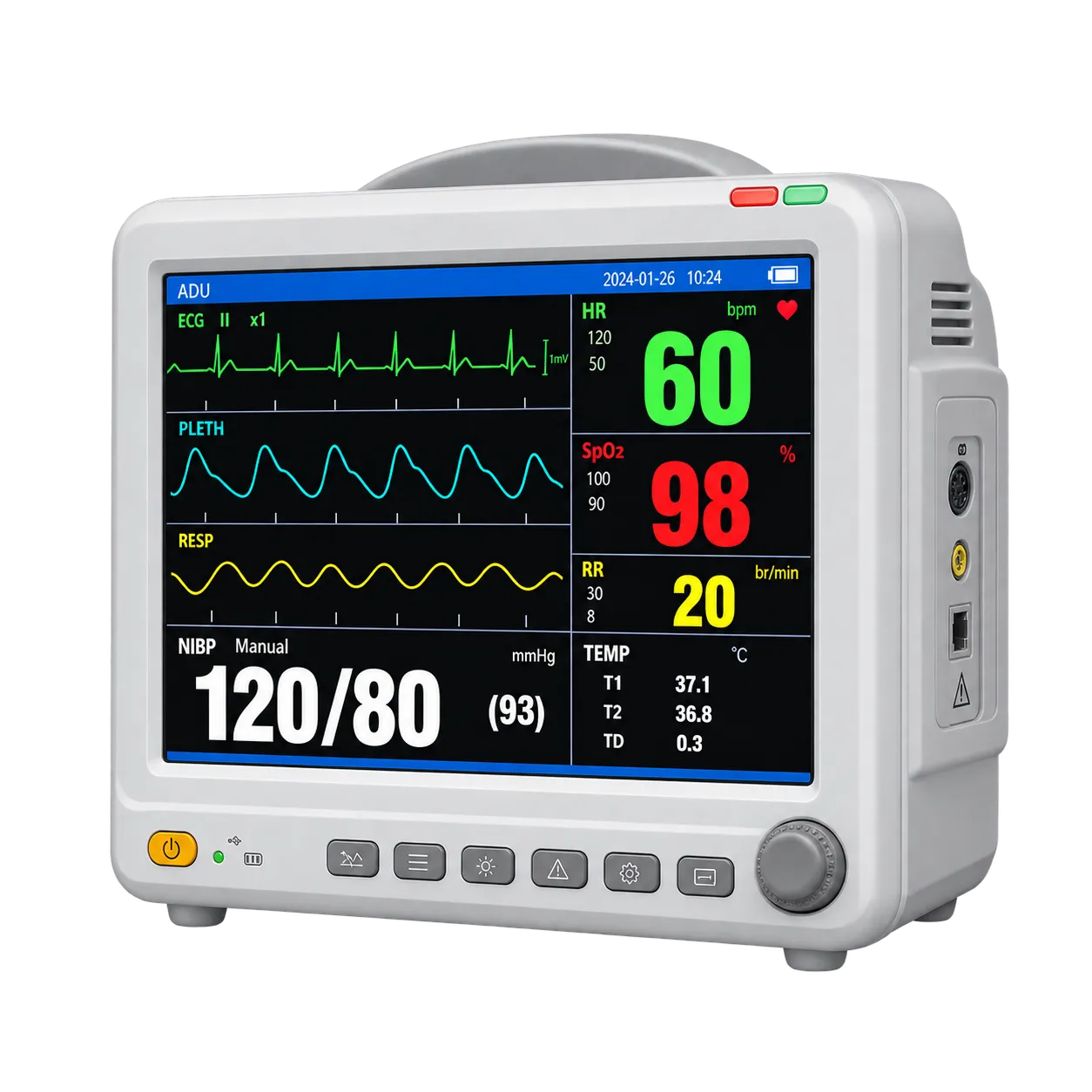
A twelve-inch screen is the right size for a ward patient monitor at the bedside. Traces are read from the foot of a bed or from a doorway as often as from beside the patient, and a display that shows six parameters legibly at that distance does something a seven-inch panel cannot. This monitor is meant to stay where it is put, and the screen size reflects that intention.
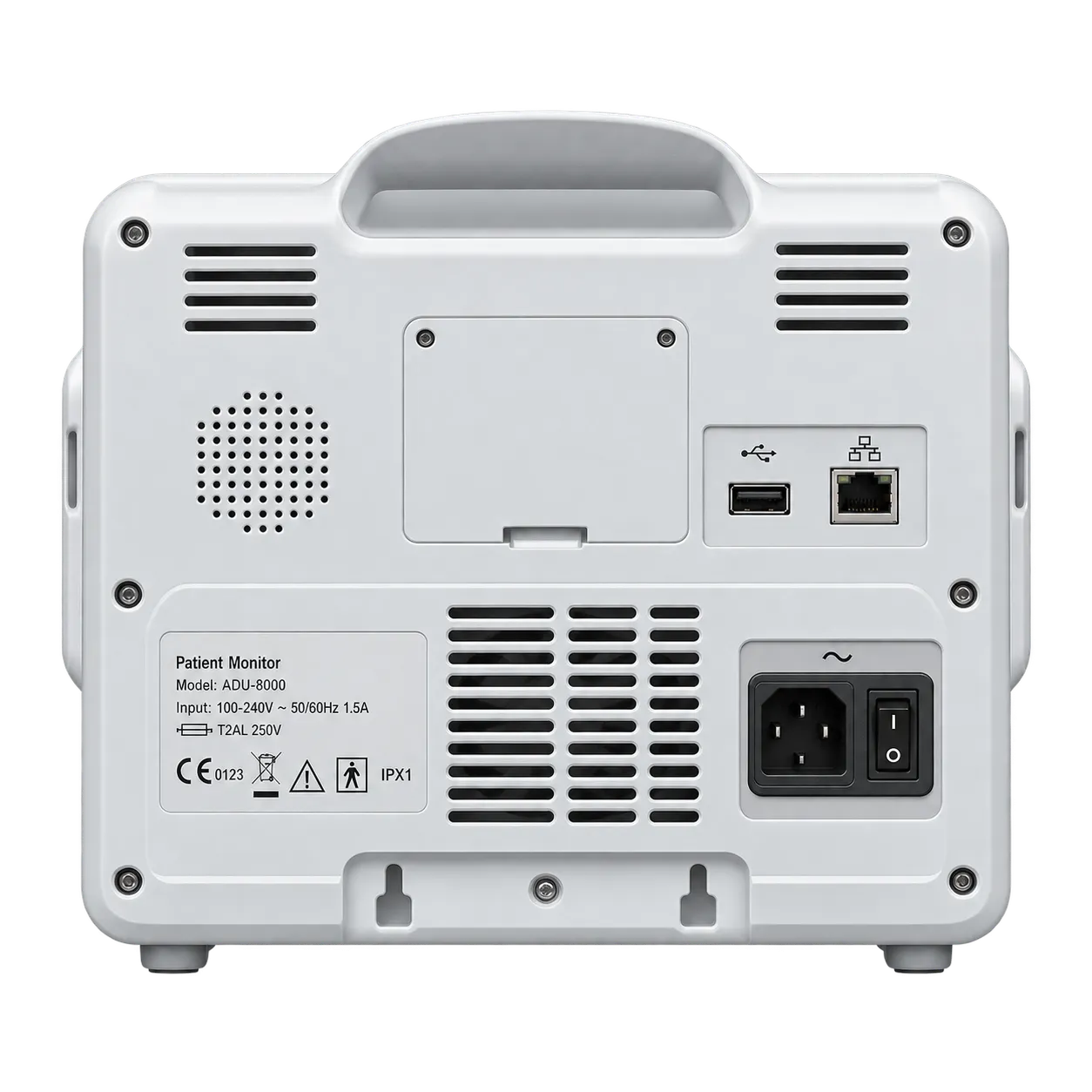
Central monitoring is the feature a ward actually buys. Feeding several beds into a single station alters how observation is staffed, and a wireless link lets a monitor sit where the bed sits rather than where a socket happens to be. Left out are the band, the protocol and the reach. Hospital spectrum is allocated rather than free, so those figures are wanted while an installation is being planned, not once it has begun.
The protection question is the one to settle first. A ward monitor is attached to patients who may be defibrillated. A shock can damage a monitor without defibrillation protection it was never built to withstand. Diathermy protection matters wherever a procedure is done at the bedside. Pacemaker handling matters because a monitor counting pacing spikes as beats will display a heart rate the patient does not actually have. The HS-300H states all three. This sheet states none of them.
Medigear.uk establishes them, with the neonatal provision and the battery duration, before this ward patient monitor reaches a bed space.