
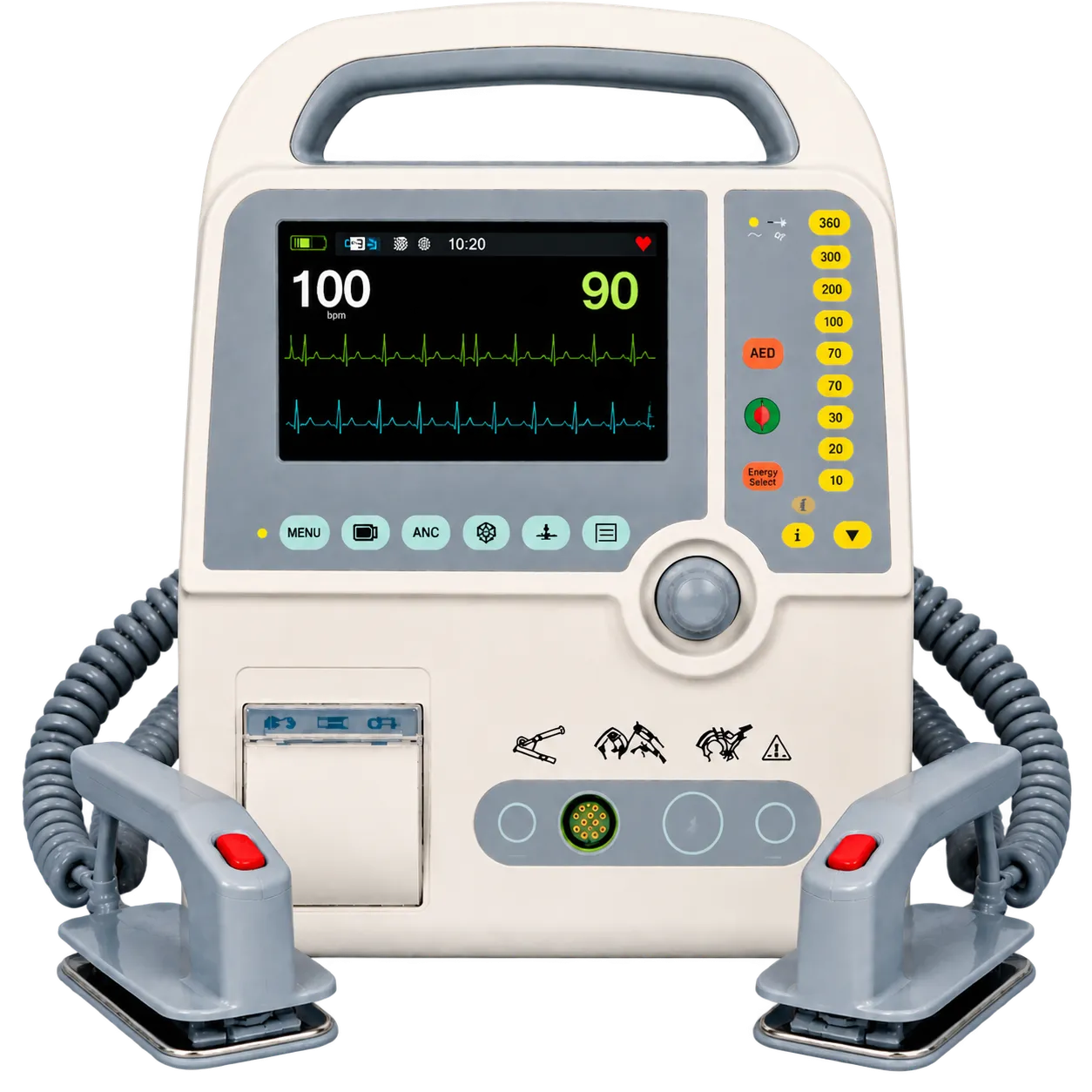
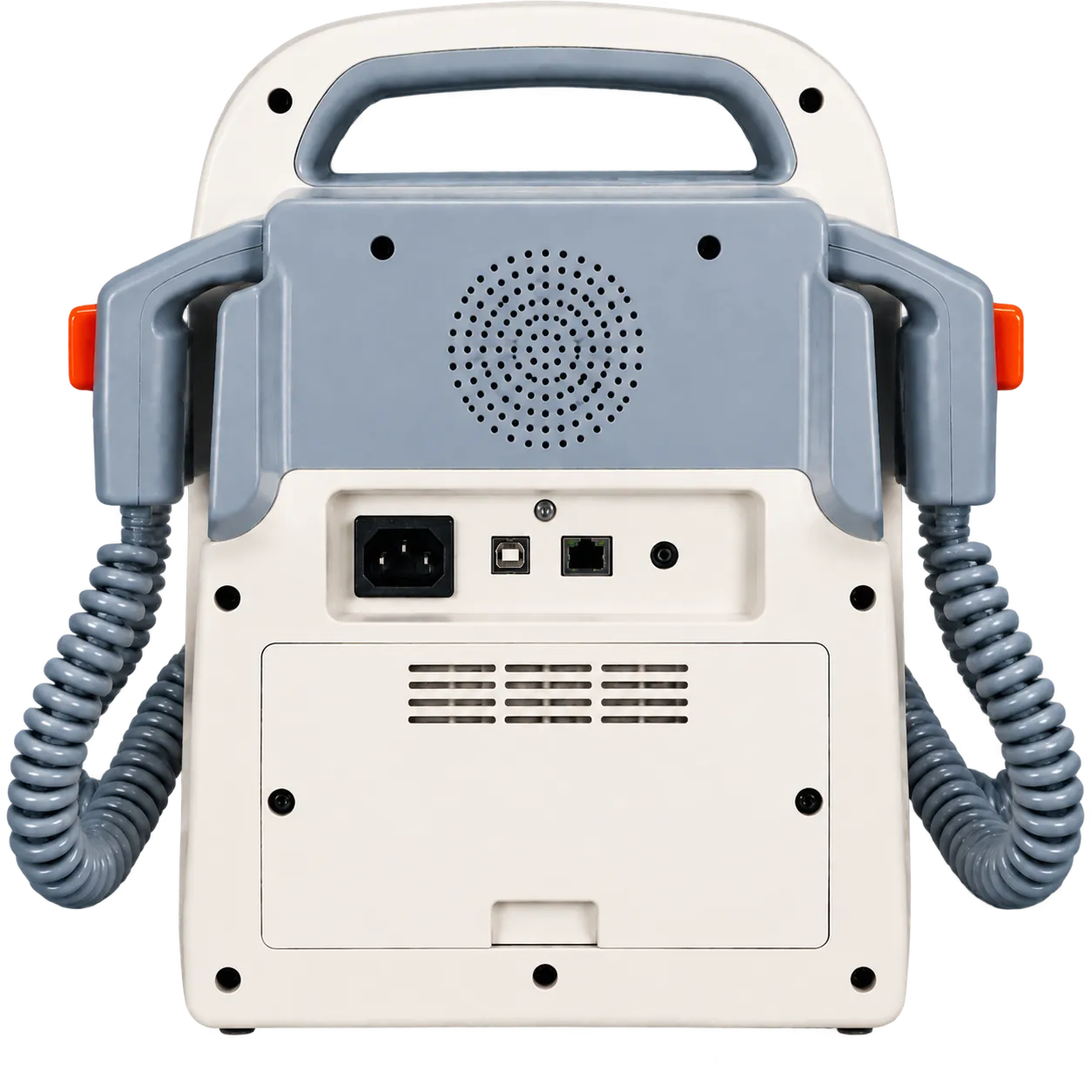
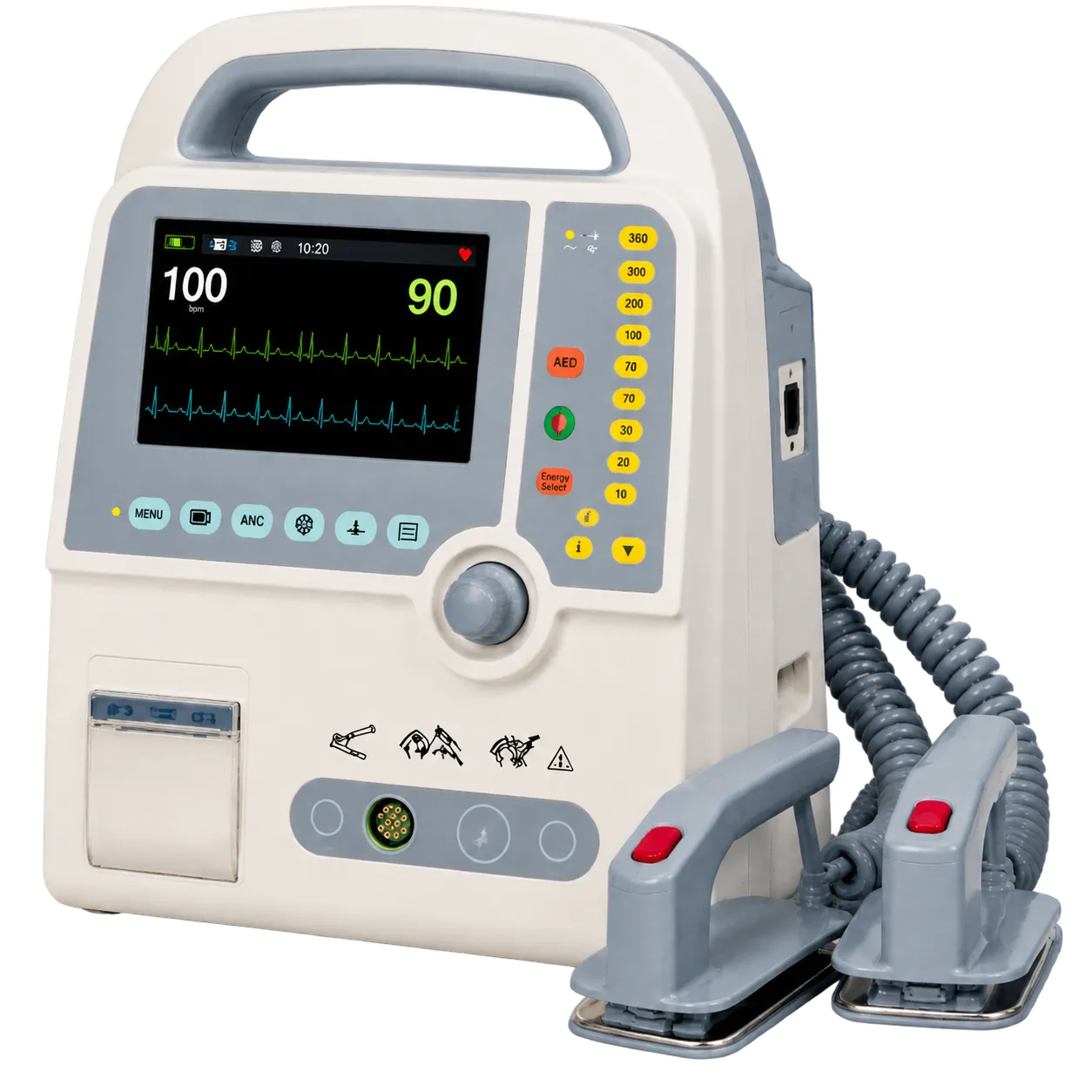
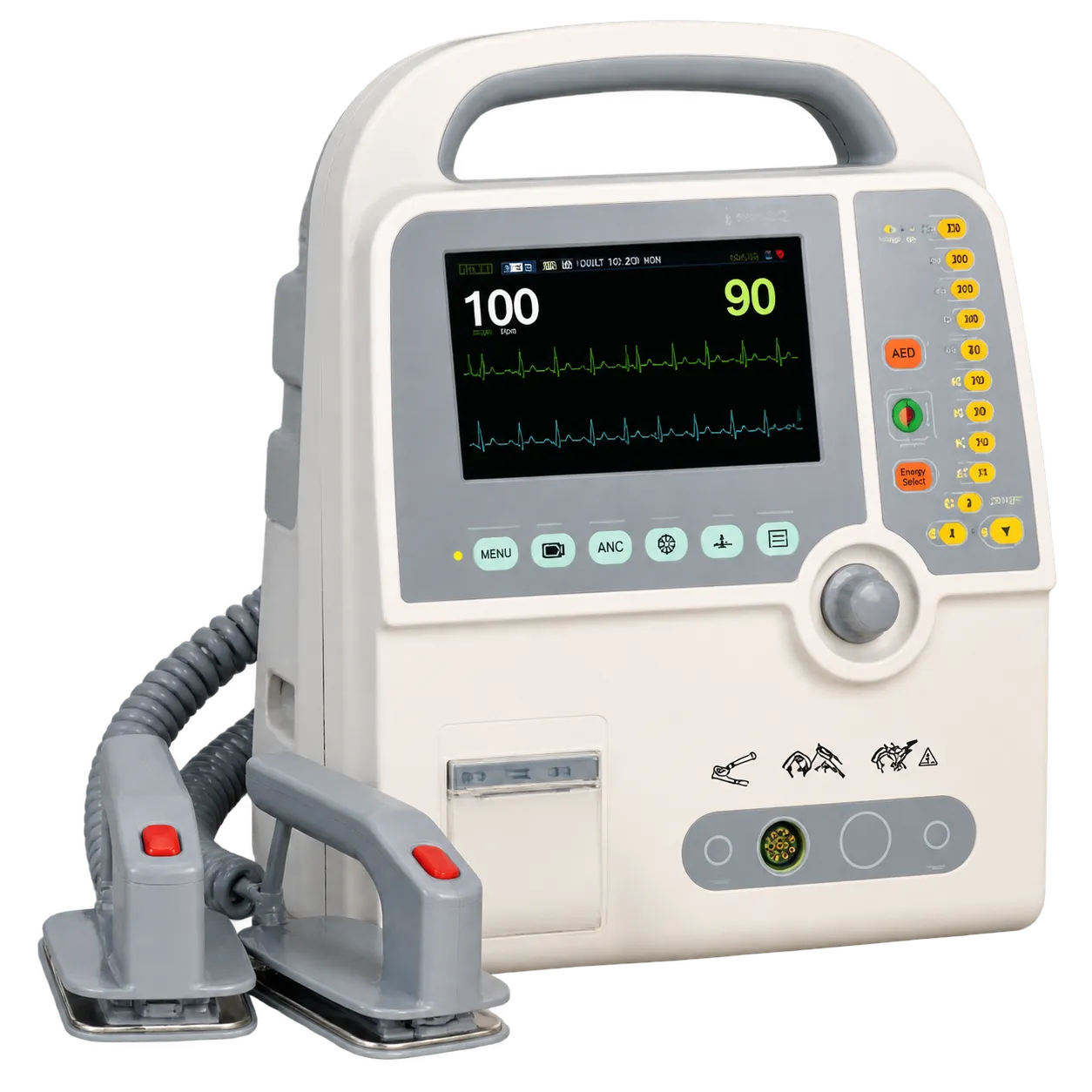
The paediatric paddle arrangement on this biphasic defibrillator deserves explaining, because it is quietly clever. Sliding the adult plate away exposes a smaller electrode underneath, so the paediatric set is part of the paddle rather than a separate pair kept somewhere. It cannot be mislaid. It cannot be left behind in another department. Converting takes a moment rather than a search. On a machine that gets used on a child rarely, and urgently when it is used at all, that arrangement is worth rather more than it sounds.
Delivered energy display belongs in the same category of features that only matter when they matter. A shock selected at 200 joules does not put 200 joules through the heart, because impedance intervenes, and a second shock after poor contact may deliver considerably less than the first. Seeing the delivered figure tells a clinician whether an unsuccessful shock failed because the rhythm was refractory, or because the energy never arrived. Those two call for quite different responses.
What remains outstanding is shorter than on the other three sheets but not trivial. No battery endurance, so how long the lithium cell runs and how many shocks it supports is unknown. No self-test, which is how an idle machine is known to be working. No energy accuracy figure. Two model codes, with no stated difference between the pair of them. And no conformity marking on a device that delivers 360 joules into a chest.
Medigear.uk obtains each of them before this biphasic defibrillator reaches any clinical area.