
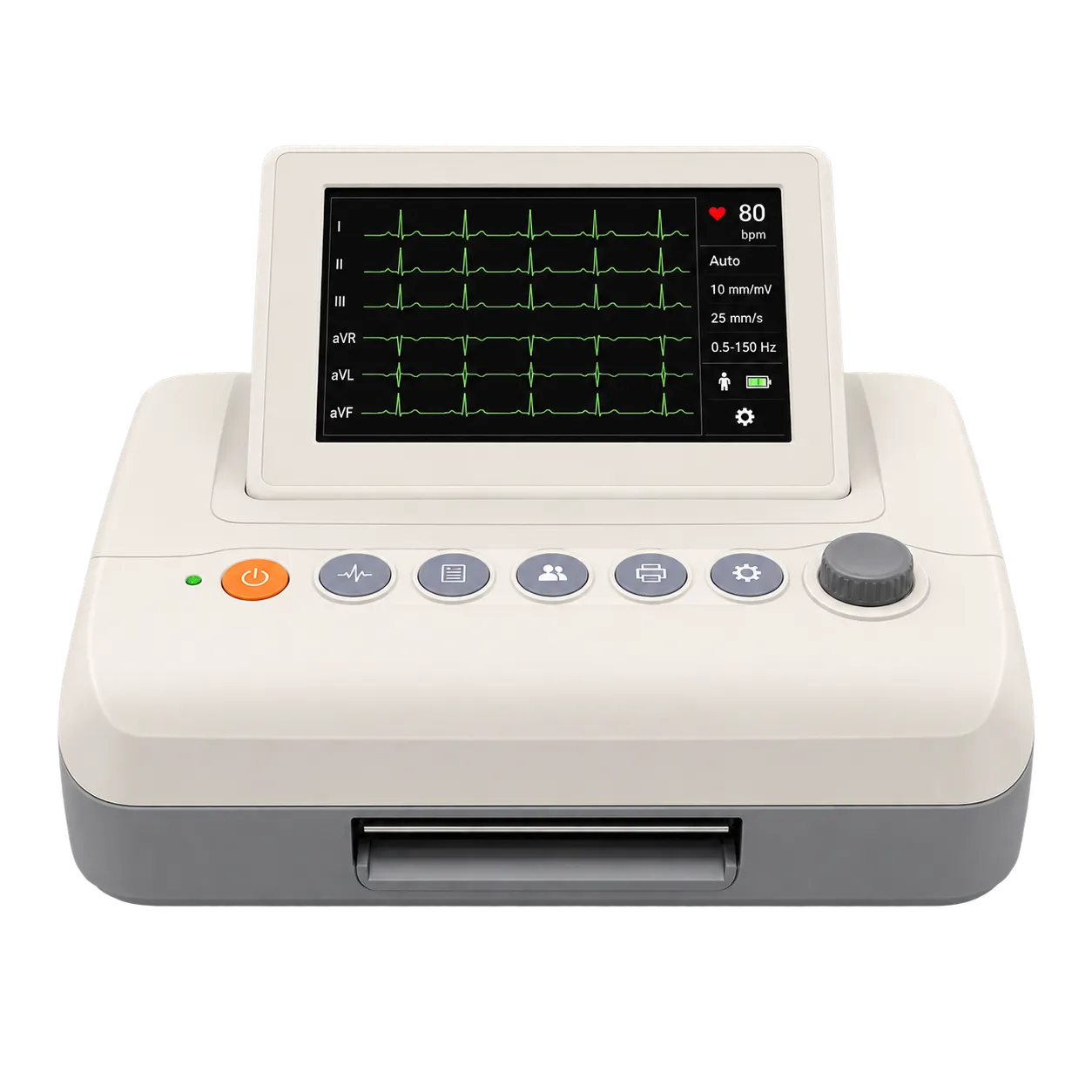
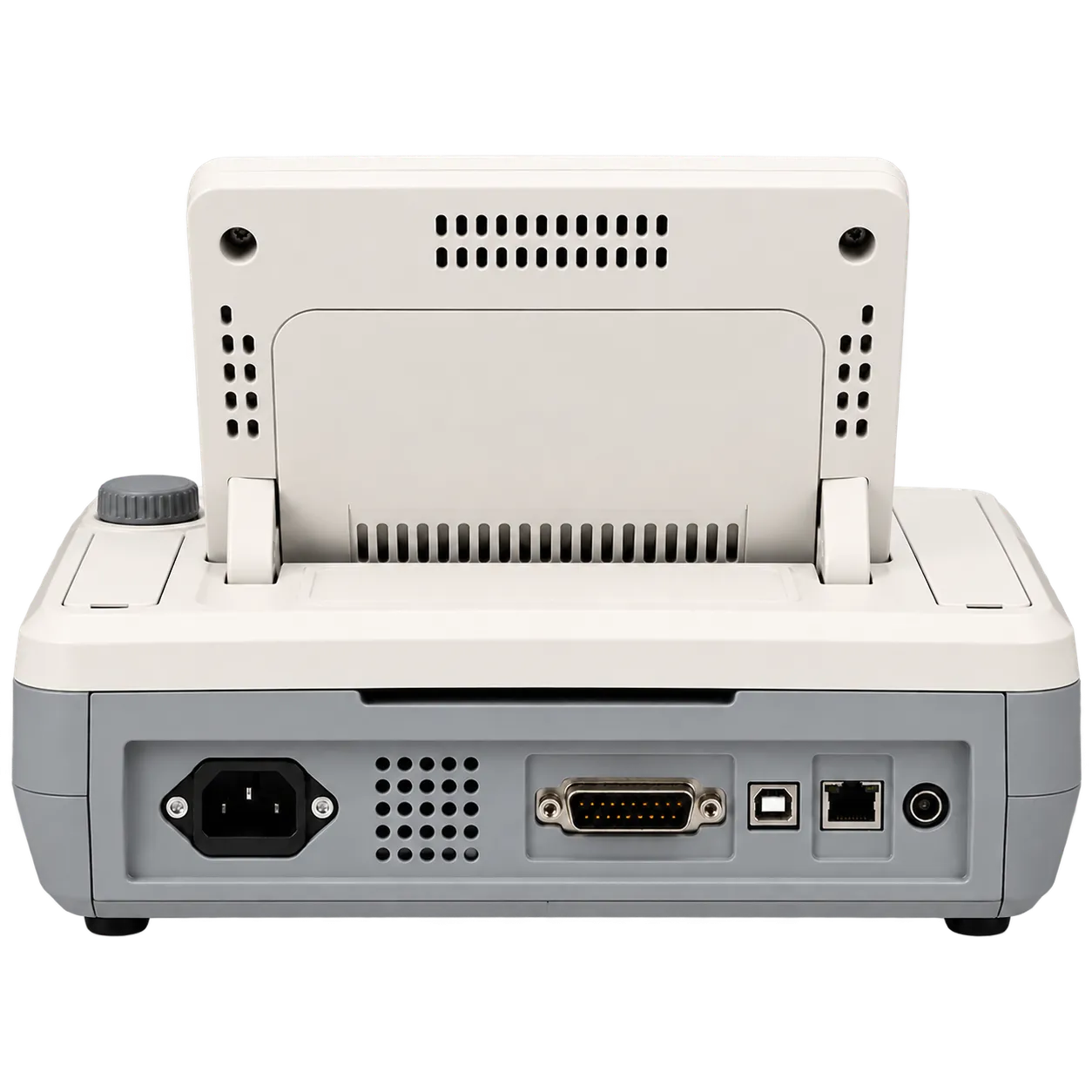
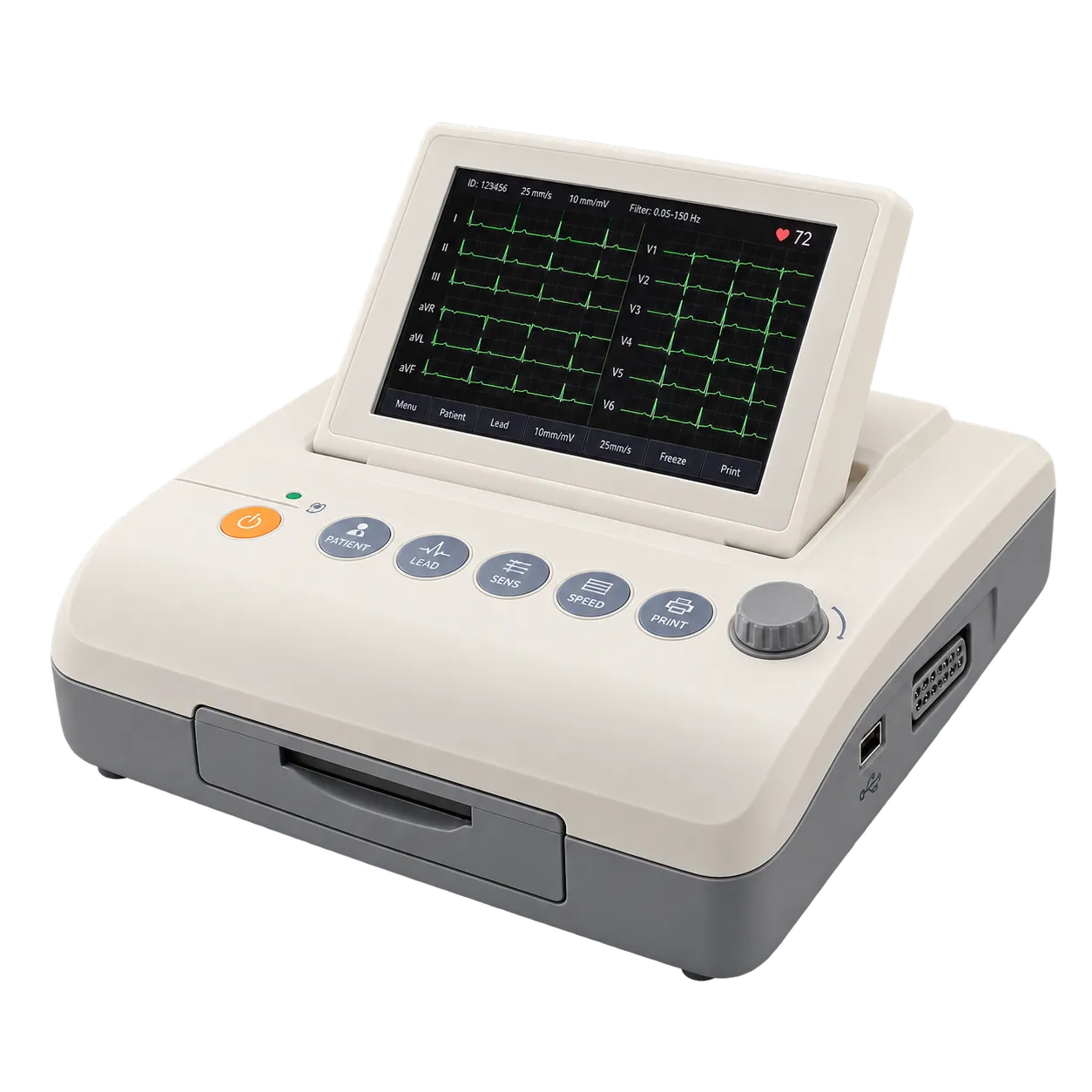
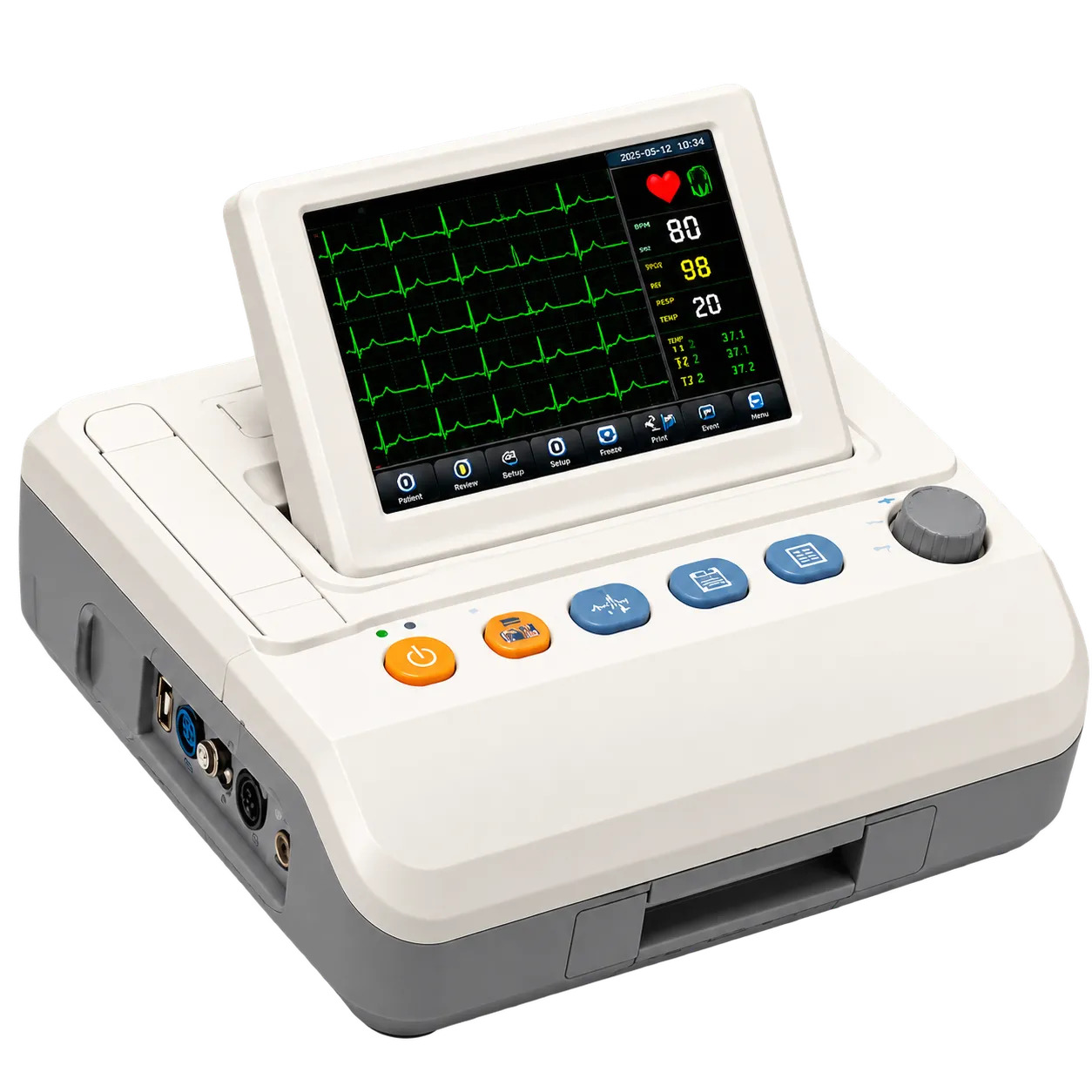
A maternal fetal monitor asks one narrow question repeatedly. Is this baby coping? Heart rate, its variability, its response to contractions, and the mother's own perception of movement answer that question. This monitor records all four. Forty hours of storage with playback means a trace can be reviewed after the event rather than only as it happens, which matters whenever a decision needs to be examined later.
The acoustic stimulator earns its place in exactly that context. A flat trace with reduced variability prompts concern, and concern prompts intervention. Yet a fetus in quiet sleep produces exactly that pattern and needs nothing done at all. Rousing it and watching the trace change distinguishes the two within a minute or two. Without a stimulator, the alternative is waiting, and waiting is precisely what nobody wants to do while a trace looks wrong on the screen.
Two gaps matter for an obstetric unit. Blood pressure is absent, and pre-eclampsia is monitored by pressure above all else, so a unit admitting hypertensive patients would be buying a monitor that watches the baby closely and the mother only in part. And only one fetal heart rate channel is described, where a twin pregnancy needs two. Keeping the two traces apart is the whole difficulty in monitoring twins at all.
Medigear.uk establishes the blood pressure position, whether a second channel exists, which grading system applies,s and what the stimulator outputs before this monitor reaches a delivery suite.