
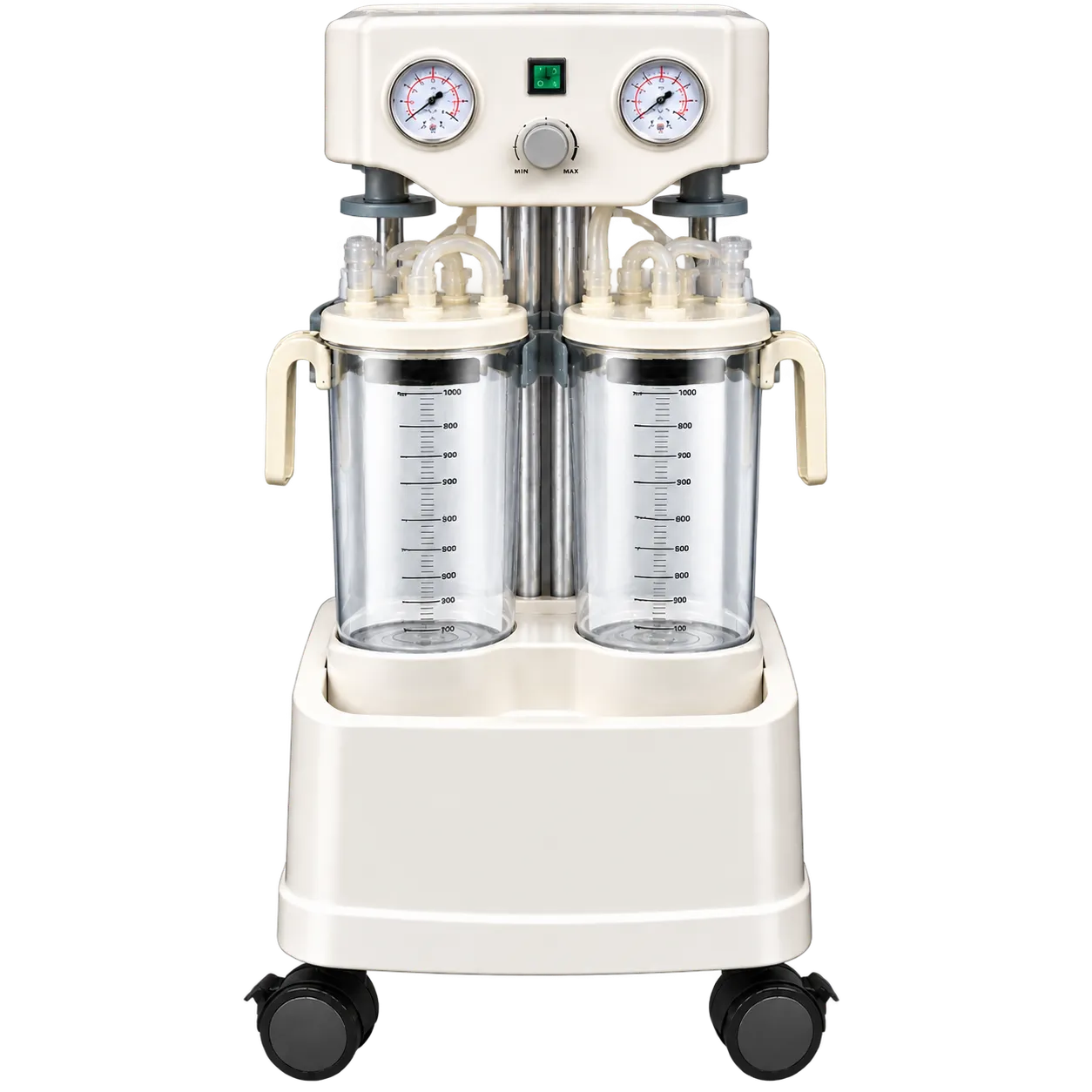
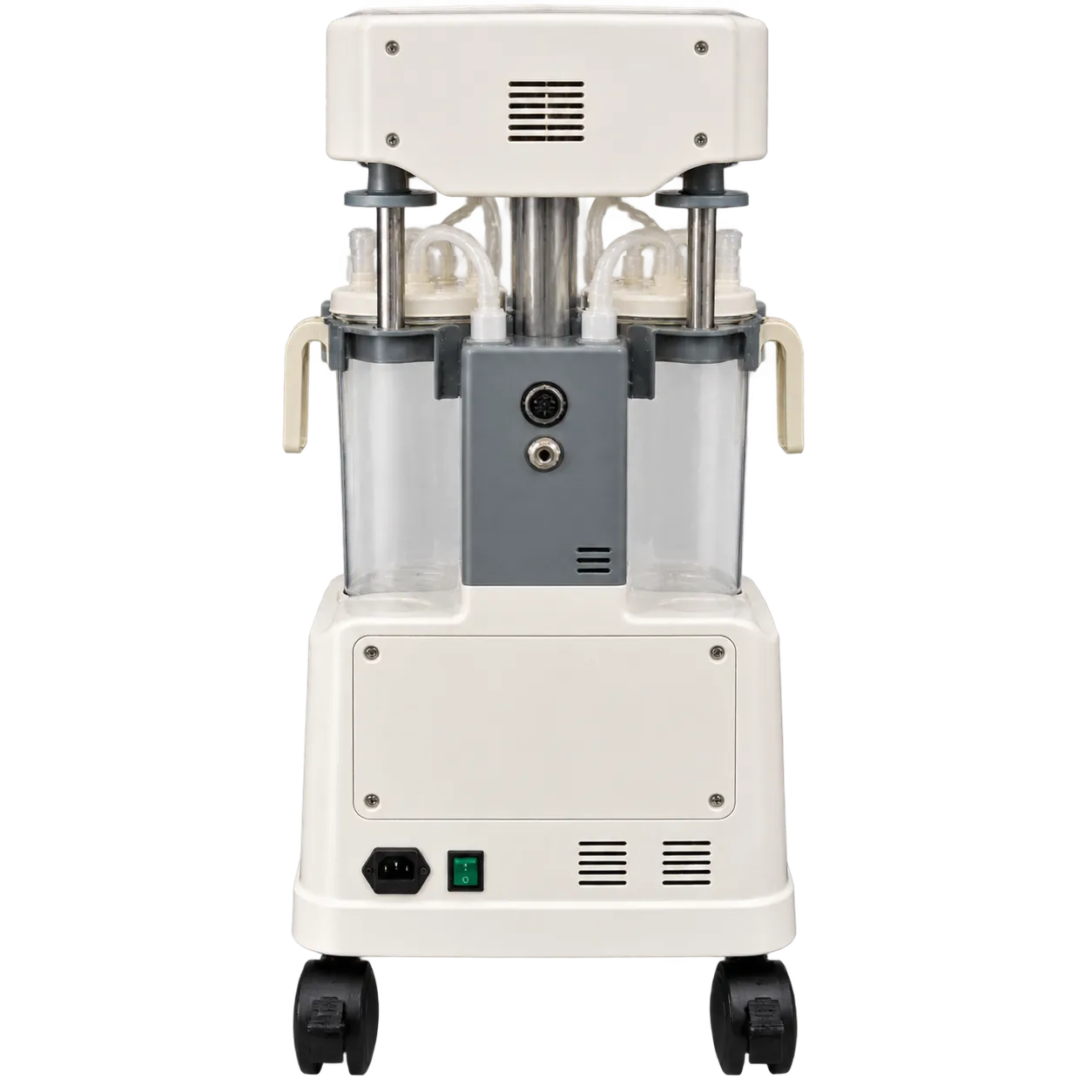
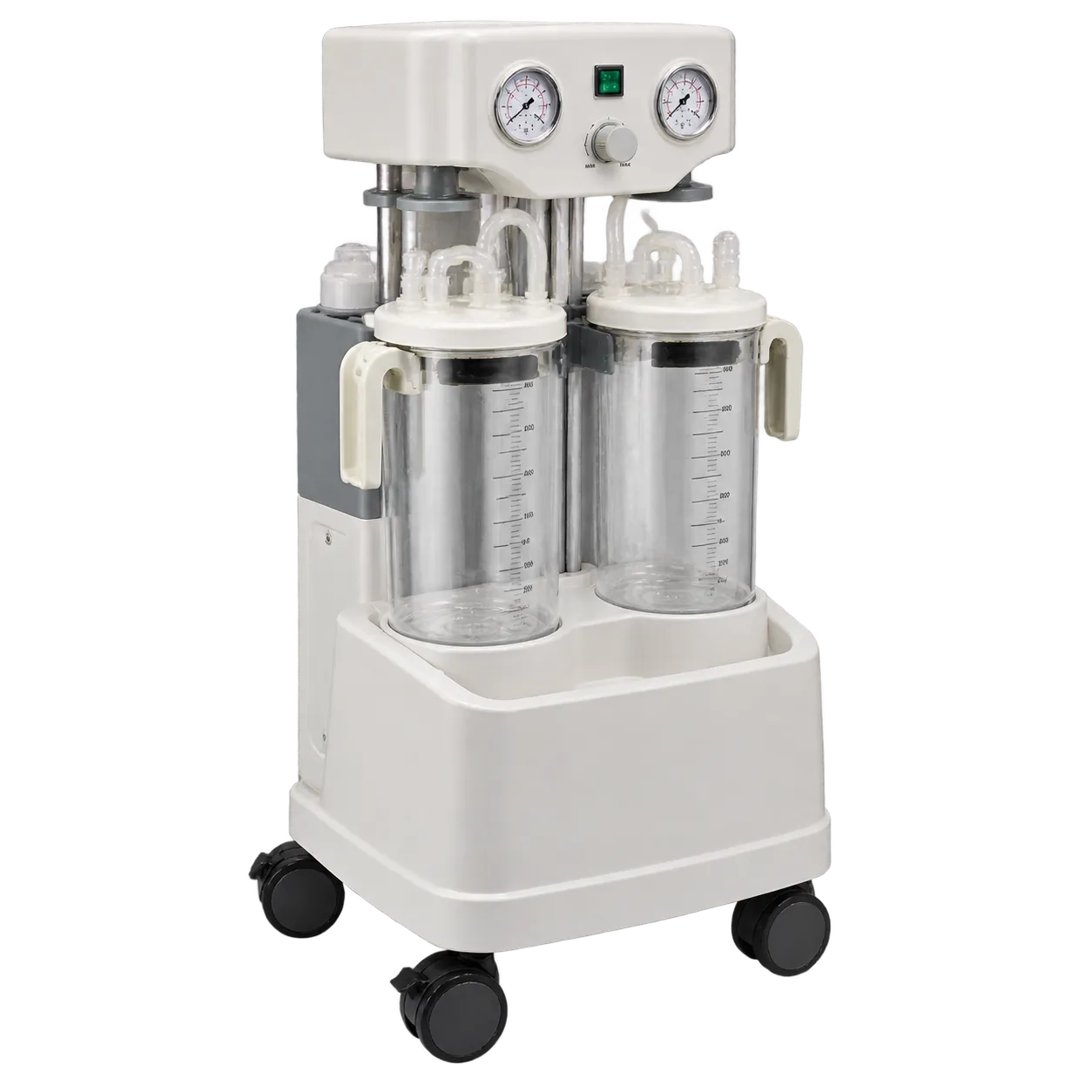
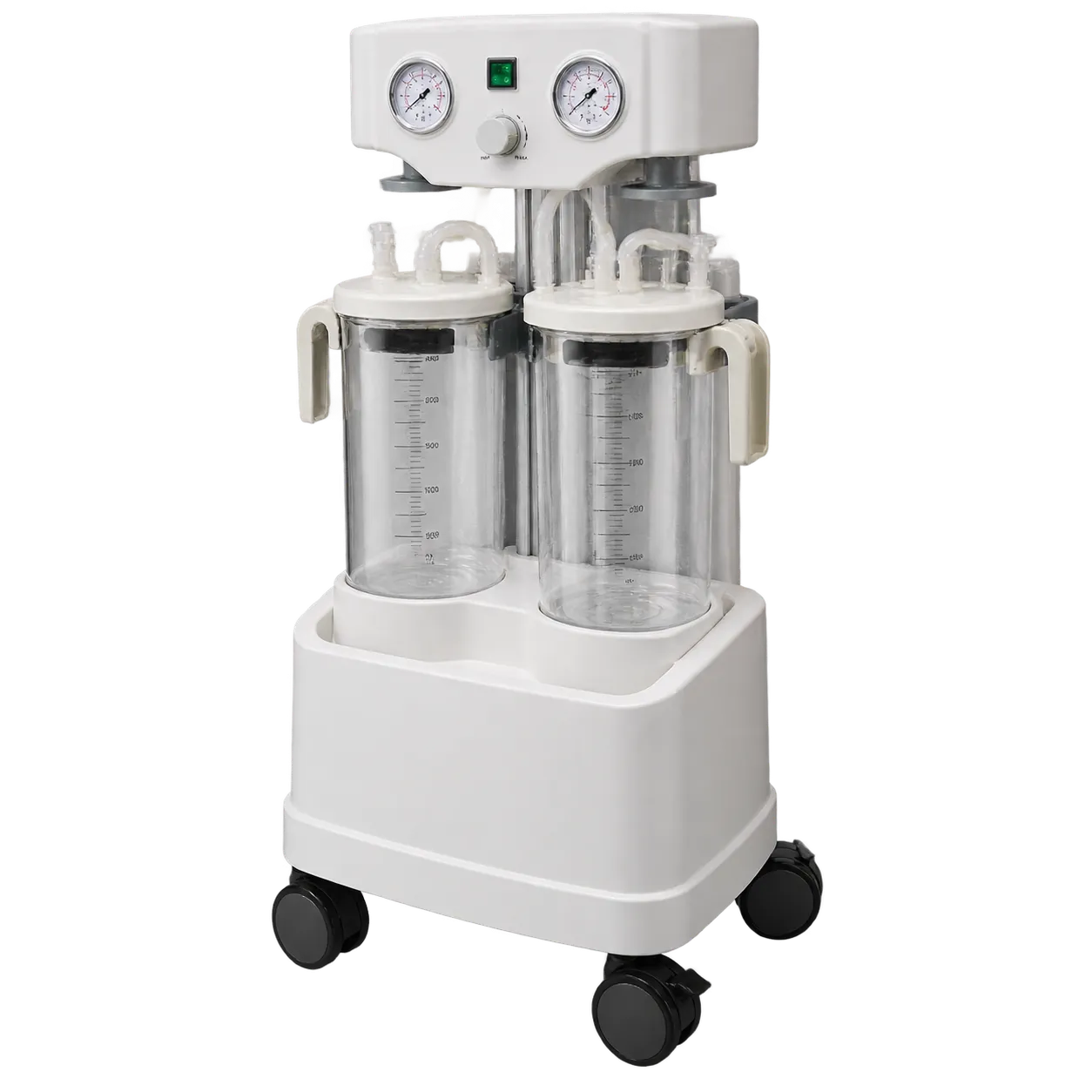
The pressure floor decides where this machine can be used, and it sits higher than a ward would want. Suction into an airway must raise secretions while leaving the lining beneath undisturbed. The pressures that achieve this start around 150 mmHg for adults and descend from there through children to newborns. A unit unable to go below roughly 150 mmHg has no adjustment remaining for any of that, whatever the label on the dial suggests. Blackstone's own HS-S20 Plus suction unit reaches below 19 mmHg, and that is the machine for such work.
Where this apparatus does belong is a theatre, and its numbers say as much plainly enough. Eighty litres every minute empties a wound at a working pace. Twelve litres over four vessels carries a long procedure without interruption. Six hundred and seventy-five millimetres of mercury at the ceiling lifts whatever an operation produces. Judged against that purpose, it is properly specified for what a theatre list would ask of it over several hours.
Overflow is the practical exposure. Four jars holding twelve litres means fewer changes, and fewer changes, in turn, means fewer occasions when the levels get looked at. Any apparatus depending solely on a person spotting a brimming vessel will eventually draw liquid through to its pump, wrecking the mechanism and carrying contamination along the way.
Before this high-flow suction apparatus reaches a theatre, Medigear.uk confirms how overflow is handled, how the exhaust is filtered, and what the vessels can tolerate in an autoclave.