
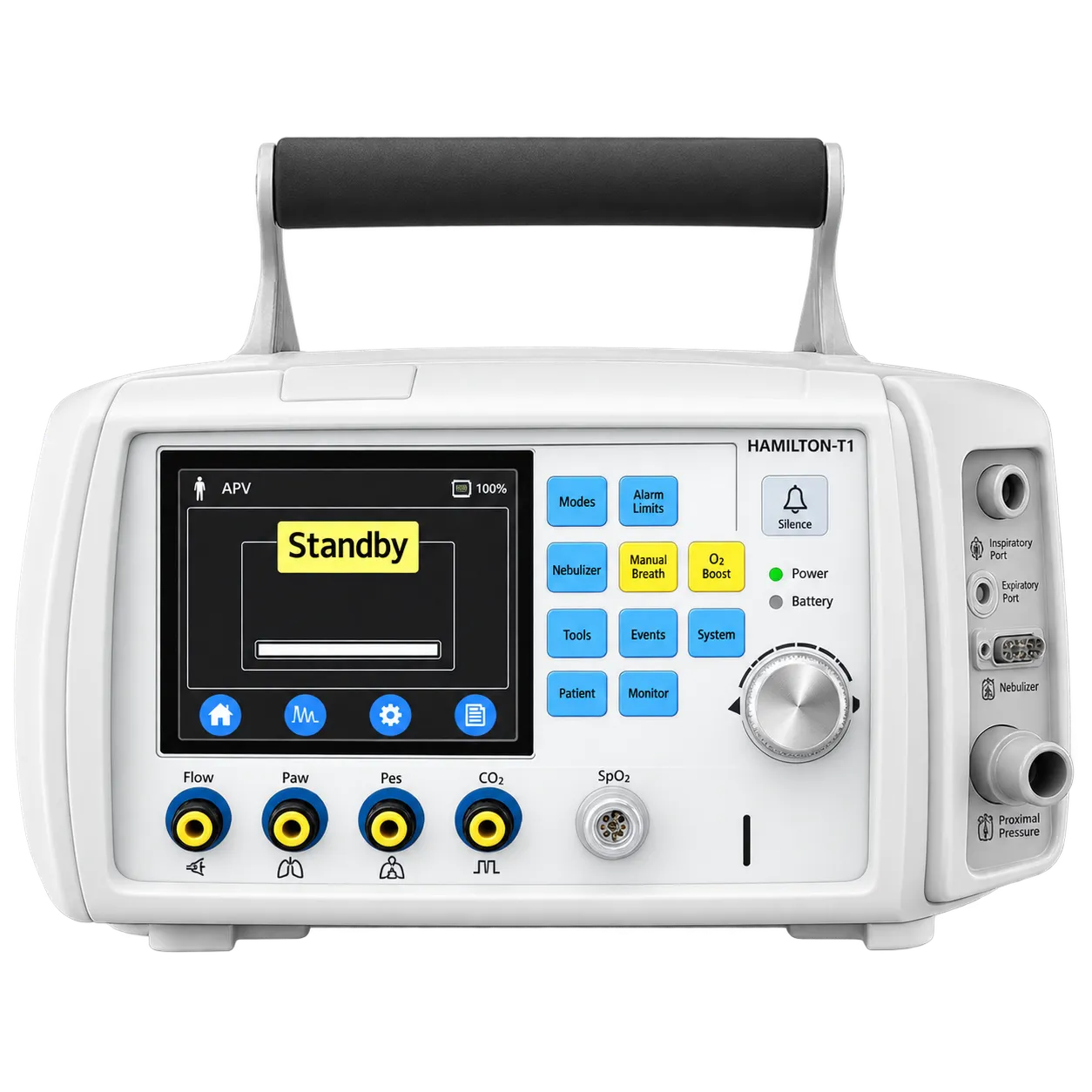
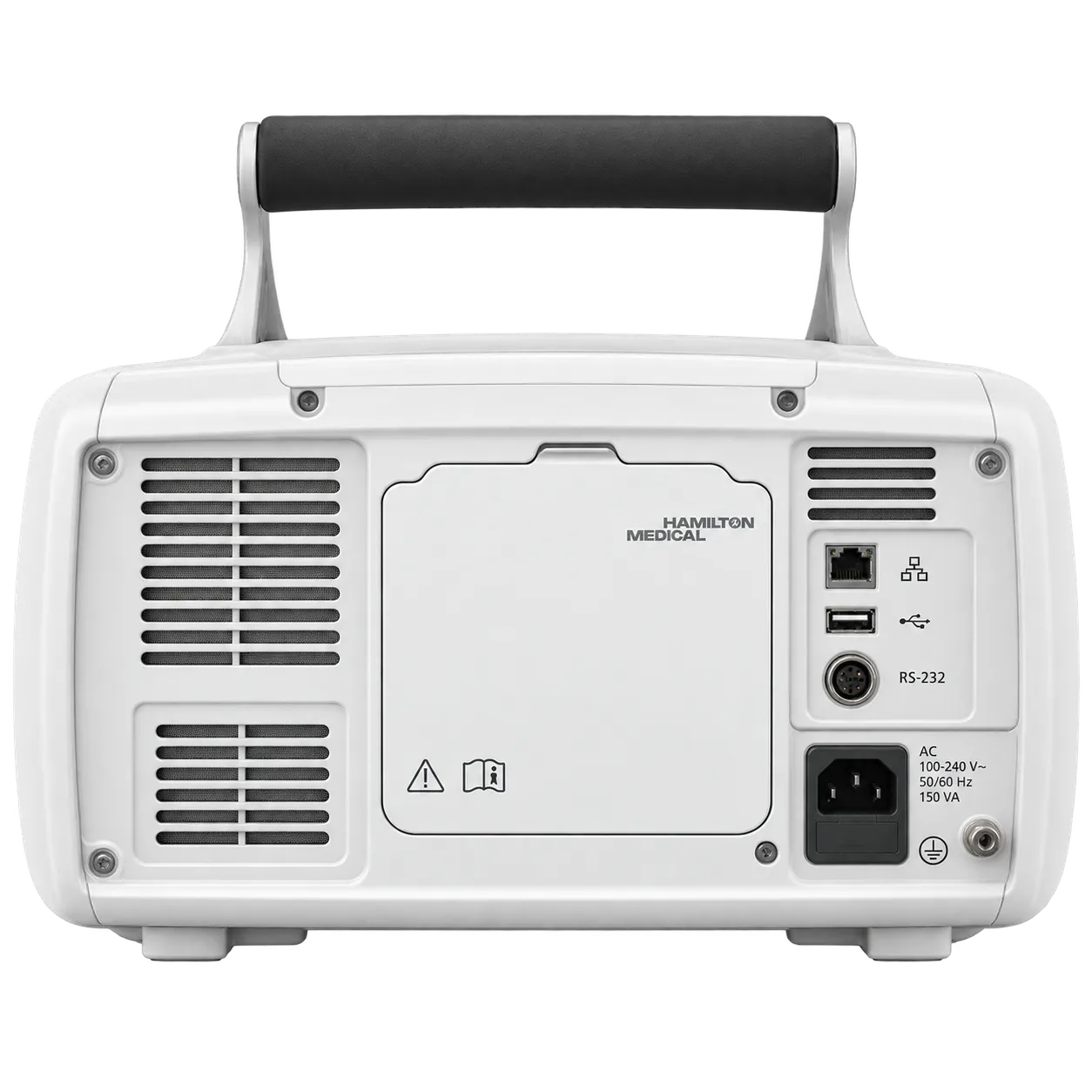
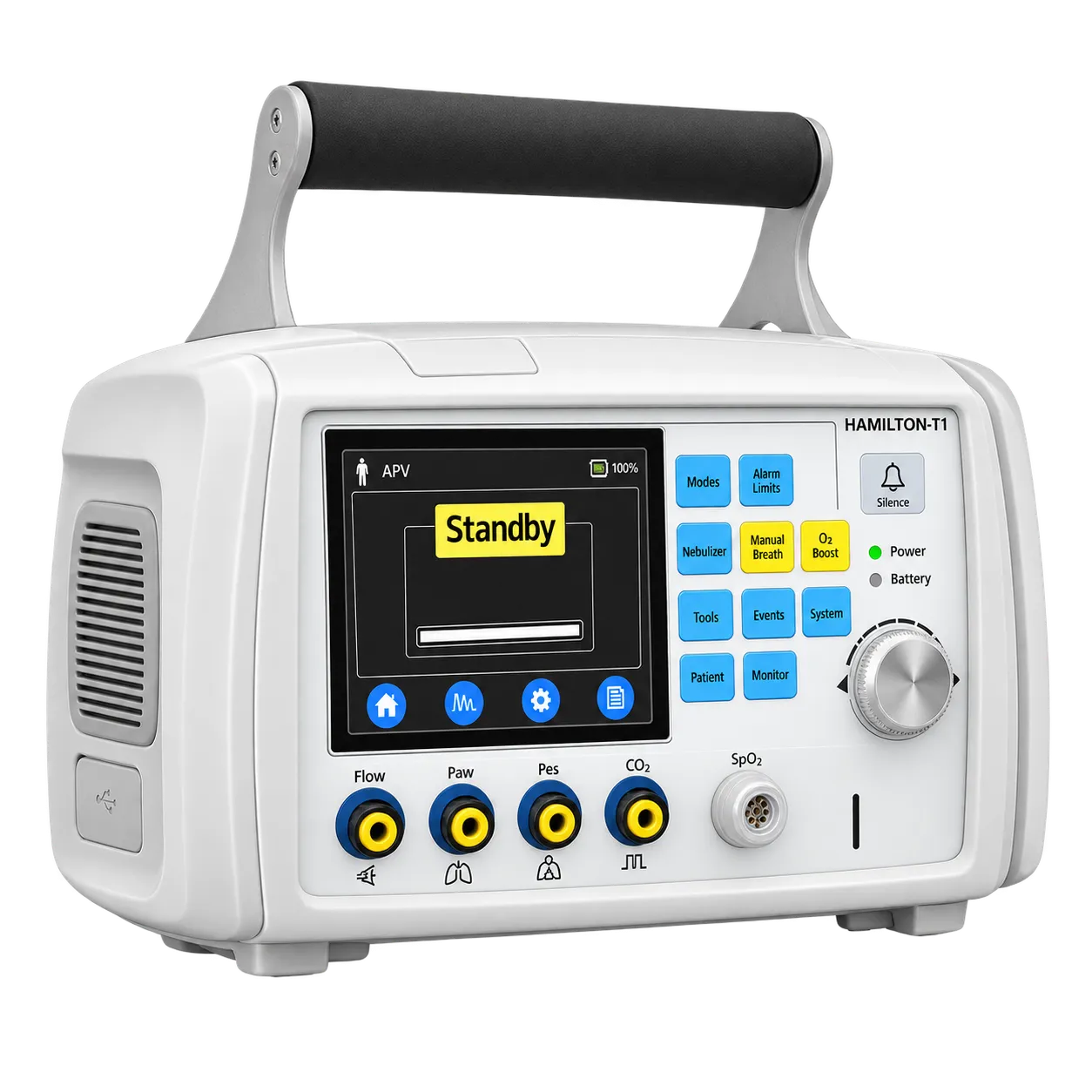
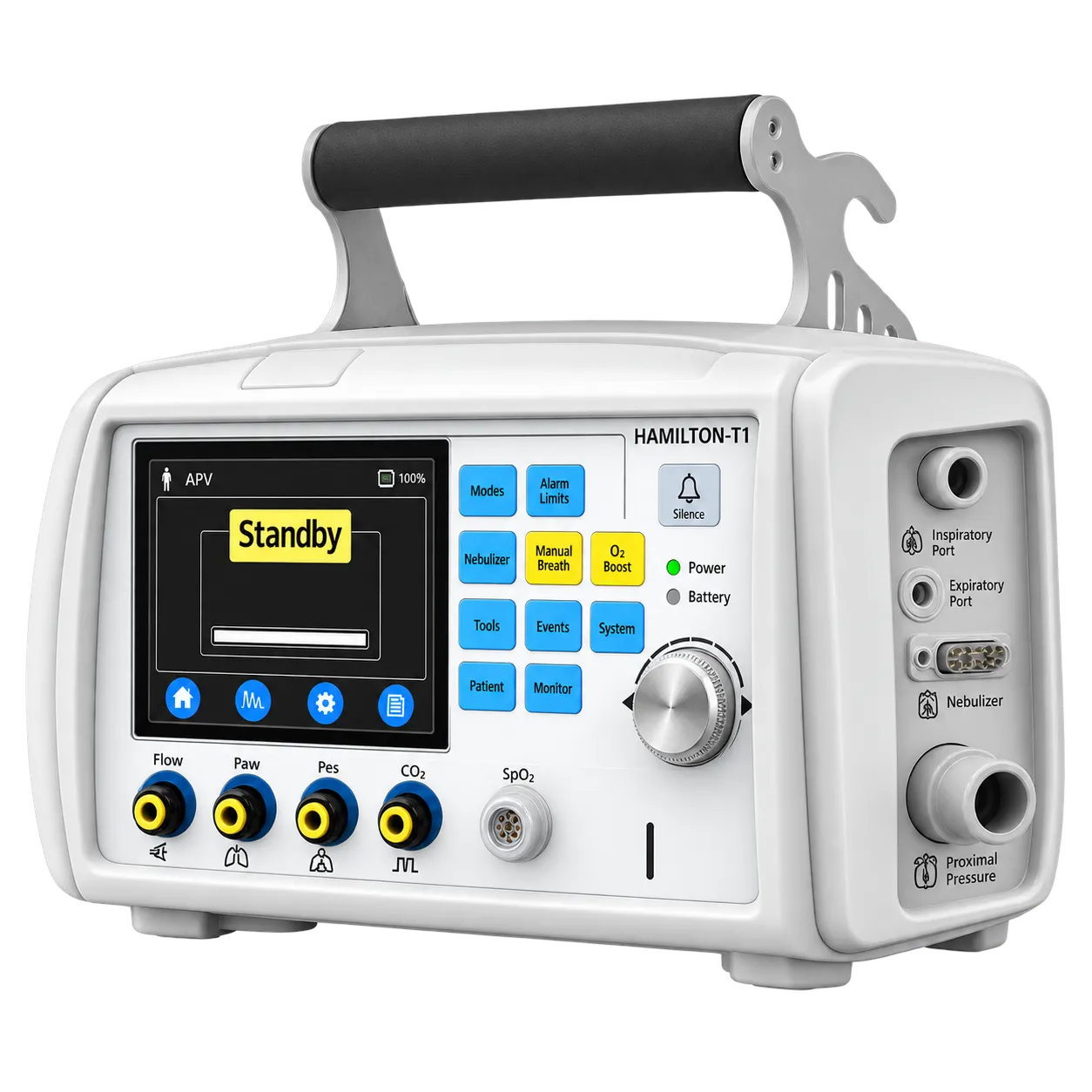
Transport is where a portable transport ventilator is least forgiving of the unknown. A machine on a ward can be plugged in and connected to piped gas, and a shortfall is noticed and corrected. A machine in a lift, a corridor, or an ambulance has whatever battery and whatever cylinder it left with, and running out of either is a situation that gets corrected mid-transfer. That is why battery duration and cylinder consumption are the questions asked first about any transport machine.
The gas source question deserves working through, because it is not obvious. A gas-driven ventilator uses pressurised oxygen both to deliver the breath and to power the mechanism that delivers it. A turbine-driven one generates its own flow and draws oxygen only for what reaches the patient. For a given cylinder, the difference in endurance between the two is substantial, and a department planning a transfer needs to know which it has before it calculates how many cylinders to load.
What the machine offers clinically is reasonable for the role. Non-invasive CPAP included as standard means a deteriorating patient can be supported without intubation during a move, which the HS-300 charges extra for. Assist Control and SIMV, in both volume and pressure, cover a patient who is sedated and one who is making effort. Delivery from 20 ml reaches a small child, though not an infant or a newborn.
Medigear.uk establishes the battery life, mass, what drives the breath, and the alarm settings before this portable transport ventilator carries anyone.