
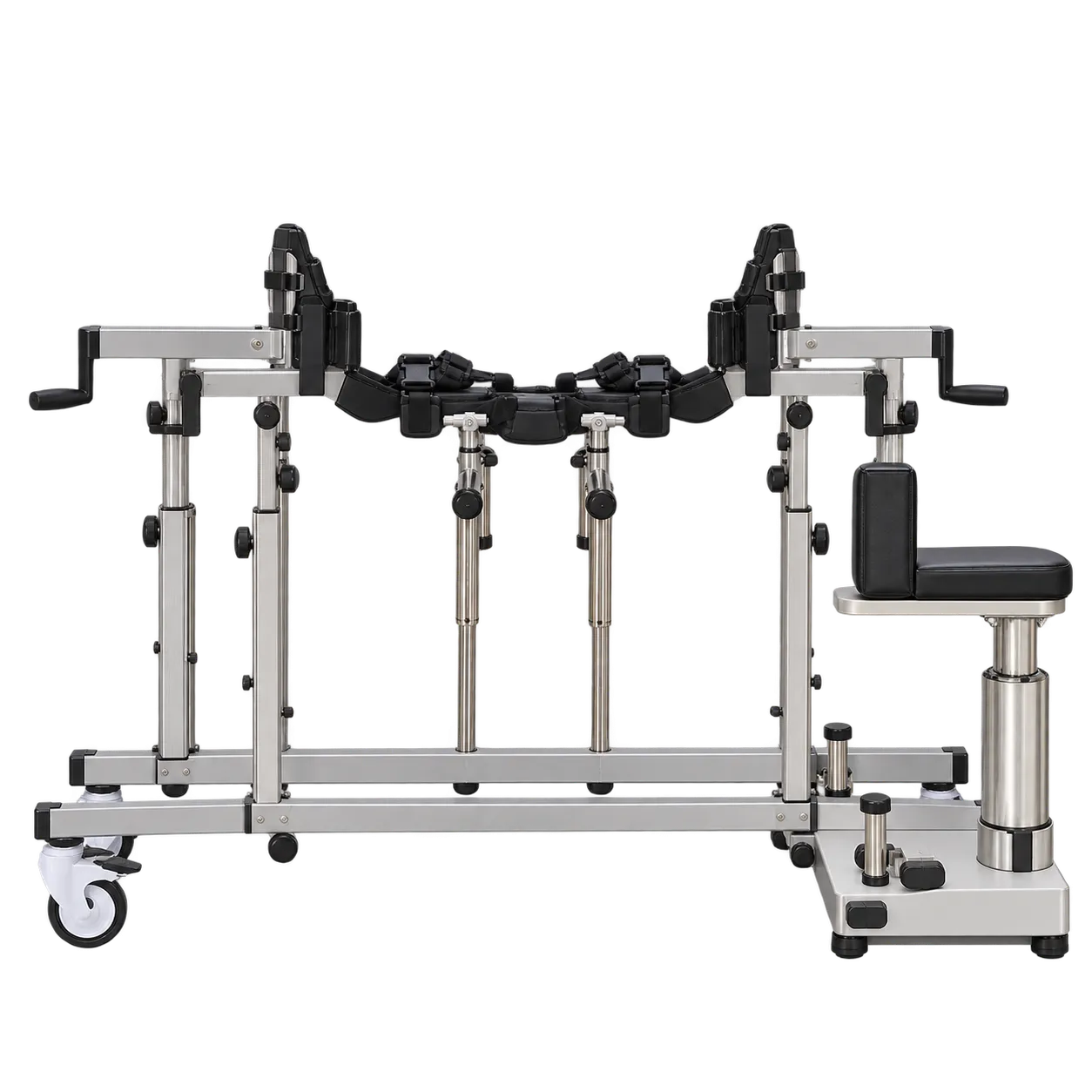
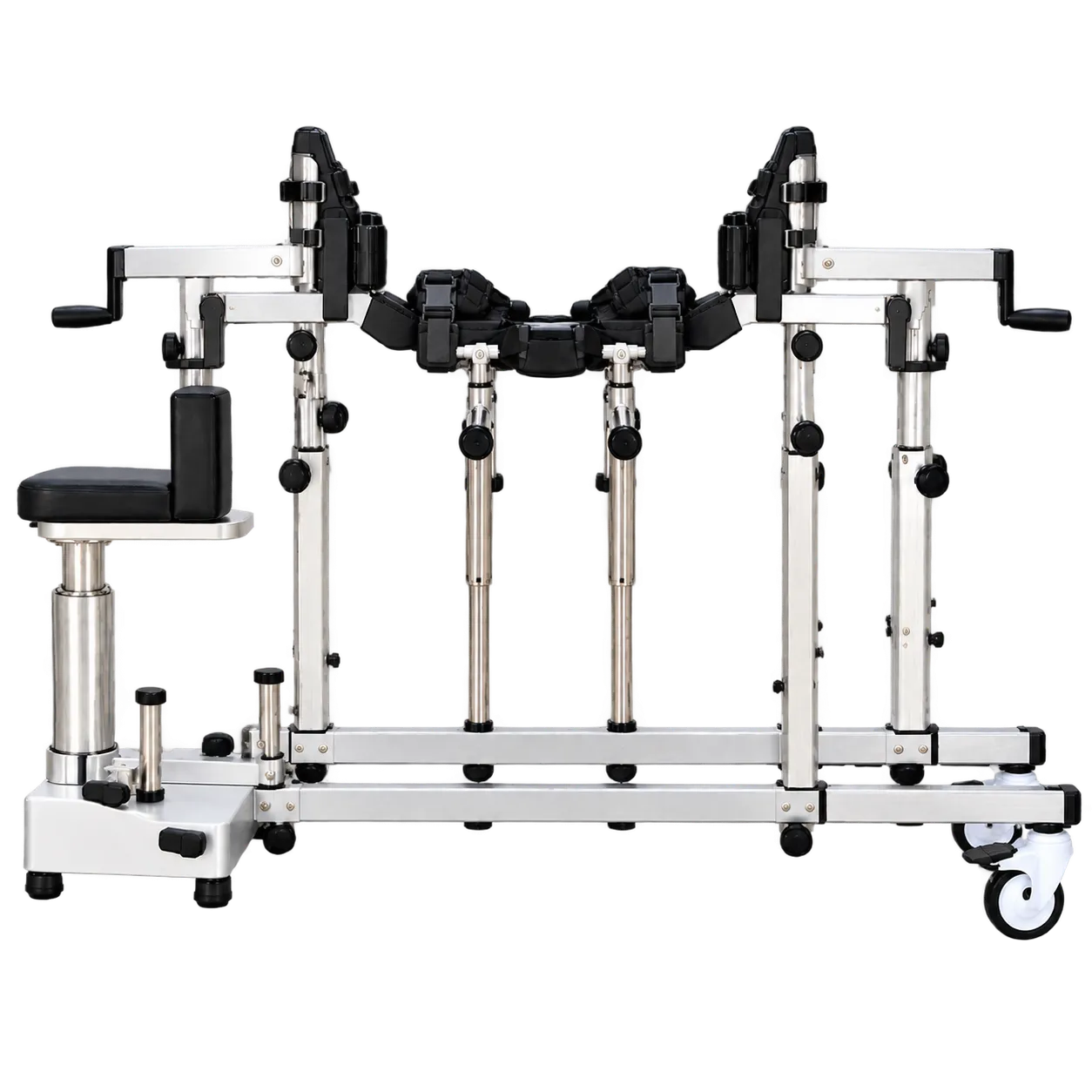
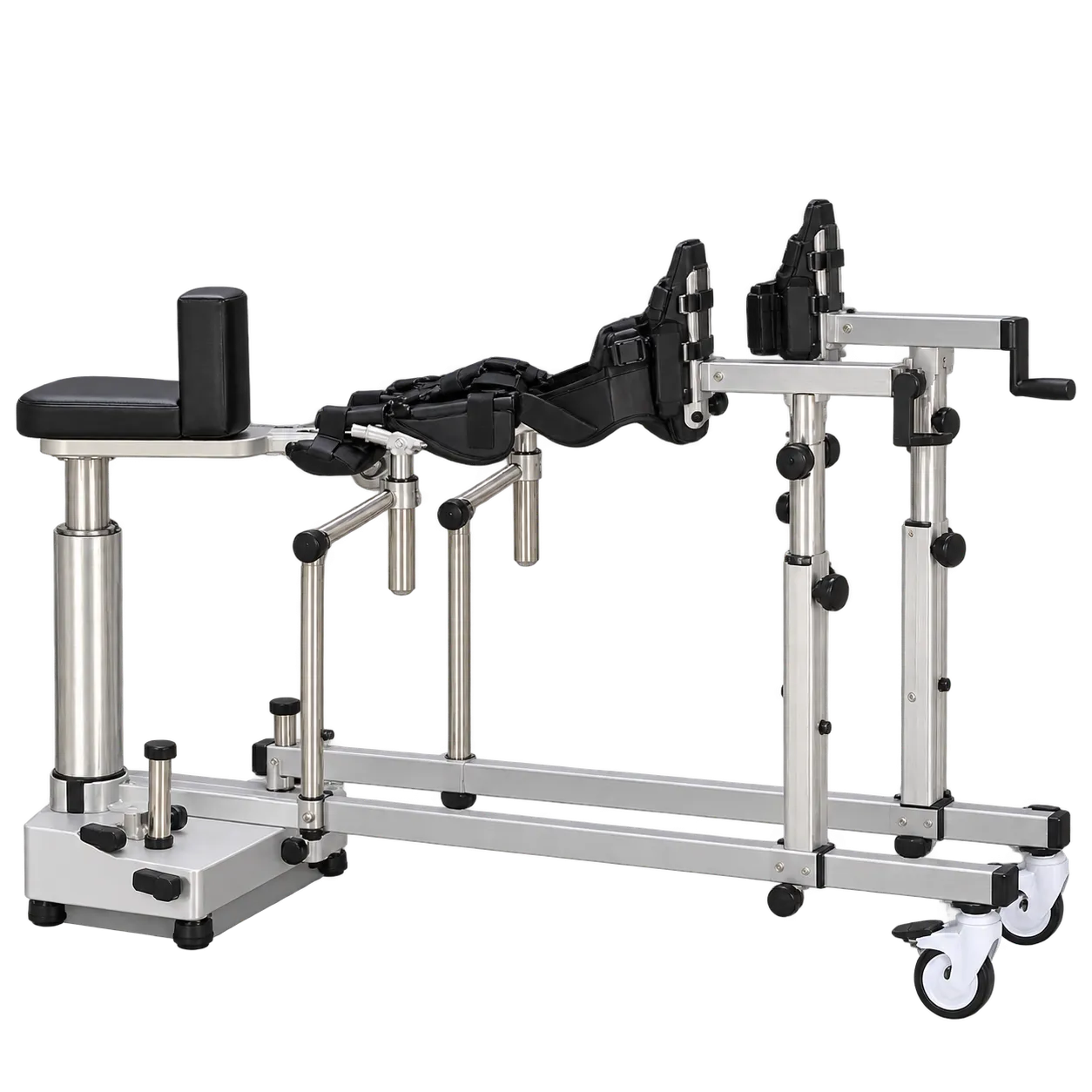
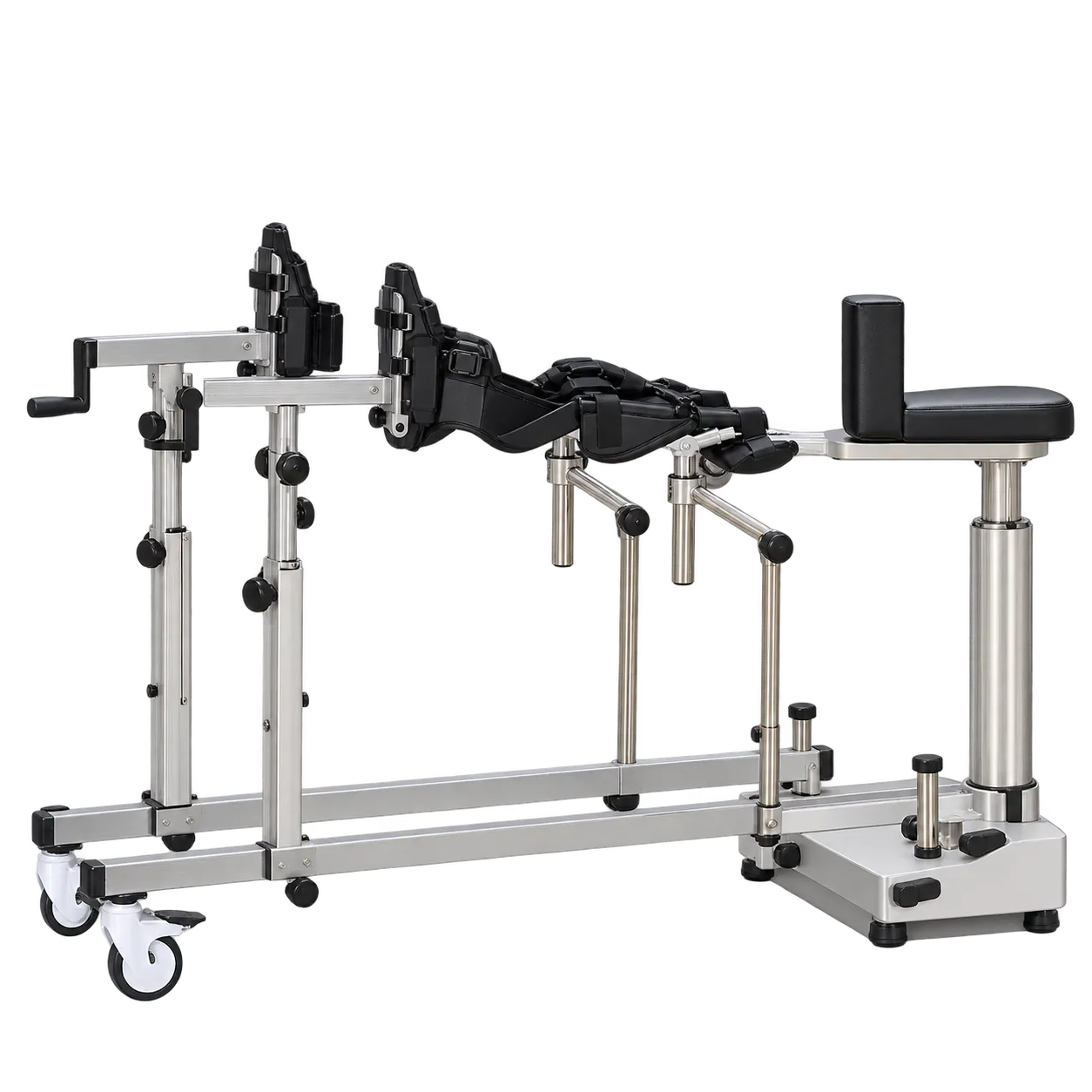
A traction frame exists for fractures that must be pulled into line and held there while they are fixed. Hip fractures treated with a dynamic hip screw or intramedullary nail are the most common example in UK trauma theatres, followed by femoral shaft fractures. The foot boot grips the injured leg, the crank applies controlled traction, and the counter-traction post prevents pelvic movement. The surgeon then fixes the fracture under C-arm guidance while the frame holds the reduction.
Imaging access shapes how the frame is set up. The uninjured leg is usually moved out of the way, supported on a rest or in a boot so that the C-arm can swing between the legs for a lateral hip view. That only works if the post and pelvic support do not block the X-ray beam, which is why their material matters. Blackstone does not state it, and Medigear.uk asks before the frame is recommended for hip work.
Safety points need confirming too. The perineal post takes significant pressure during traction, and a poorly padded post is a recognised cause of pudendal nerve injury, so the padding specification matters. Staff also need to know the maximum traction force and patient weight the frame is designed for, and how it locks to the table.
Medigear.uk collects those details, along with cleaning instructions for the boots and pads, and shares them with orthopaedic and theatre leads before supplying this orthopaedic traction frame. A short training session at delivery would help teams set the frame up the same way every time.