
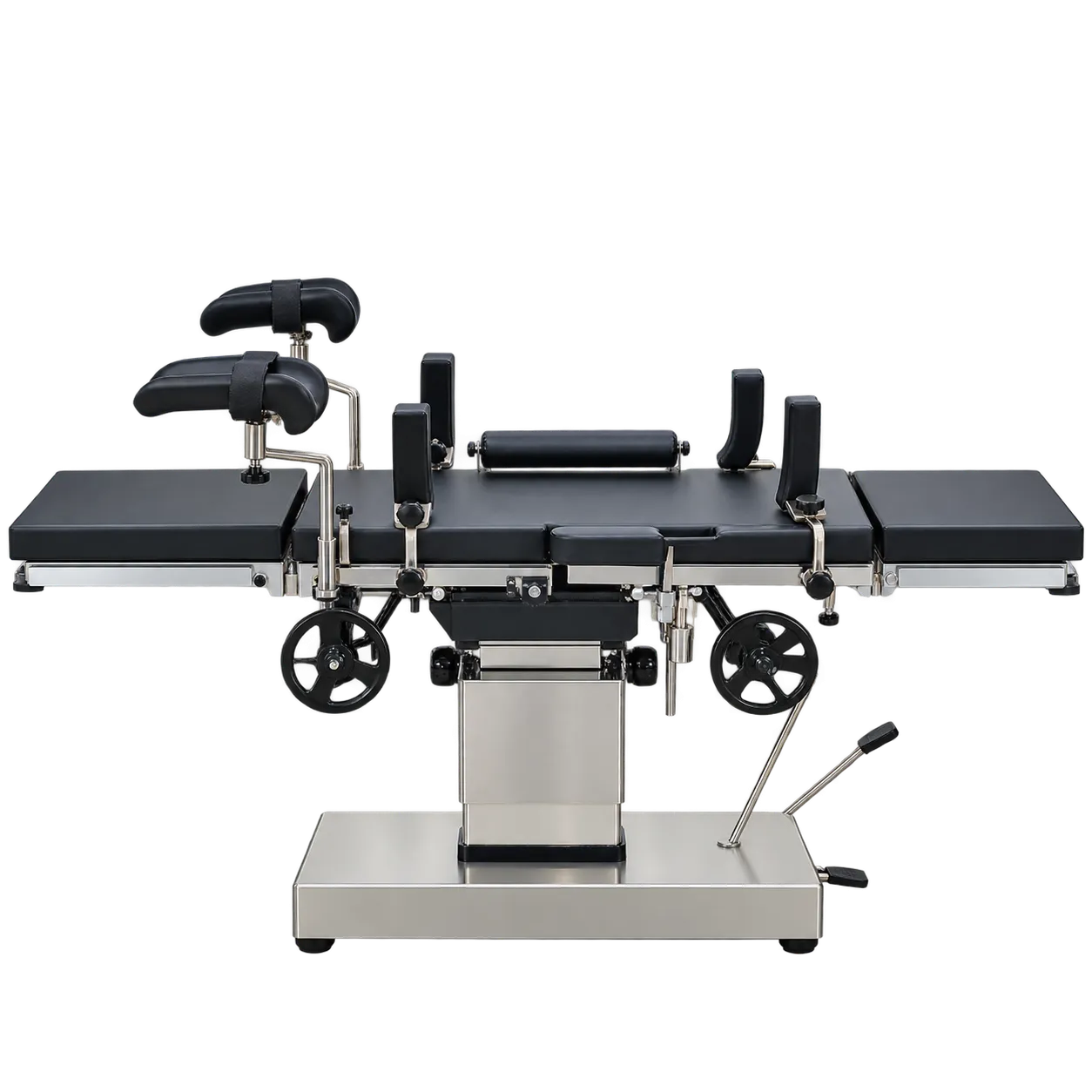
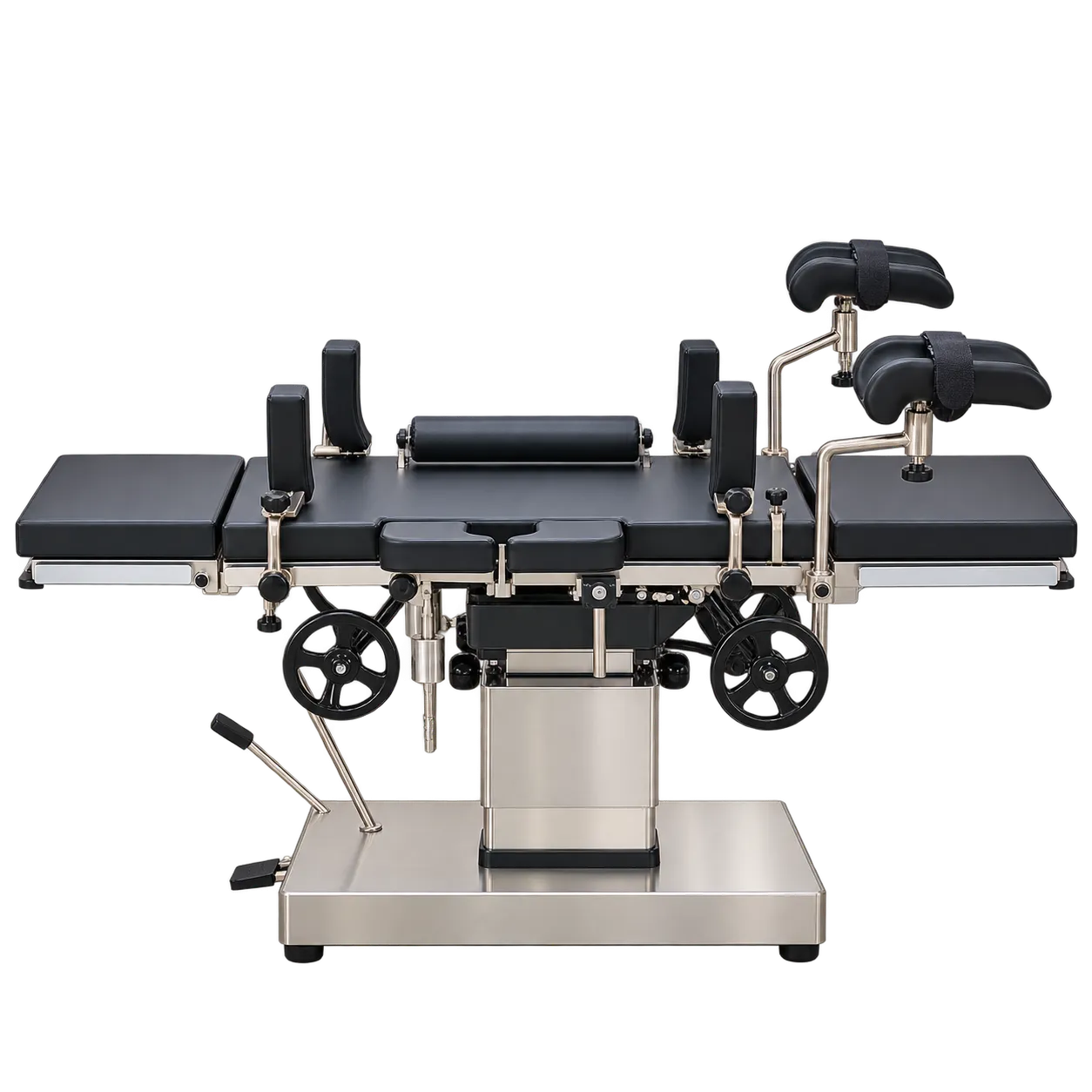
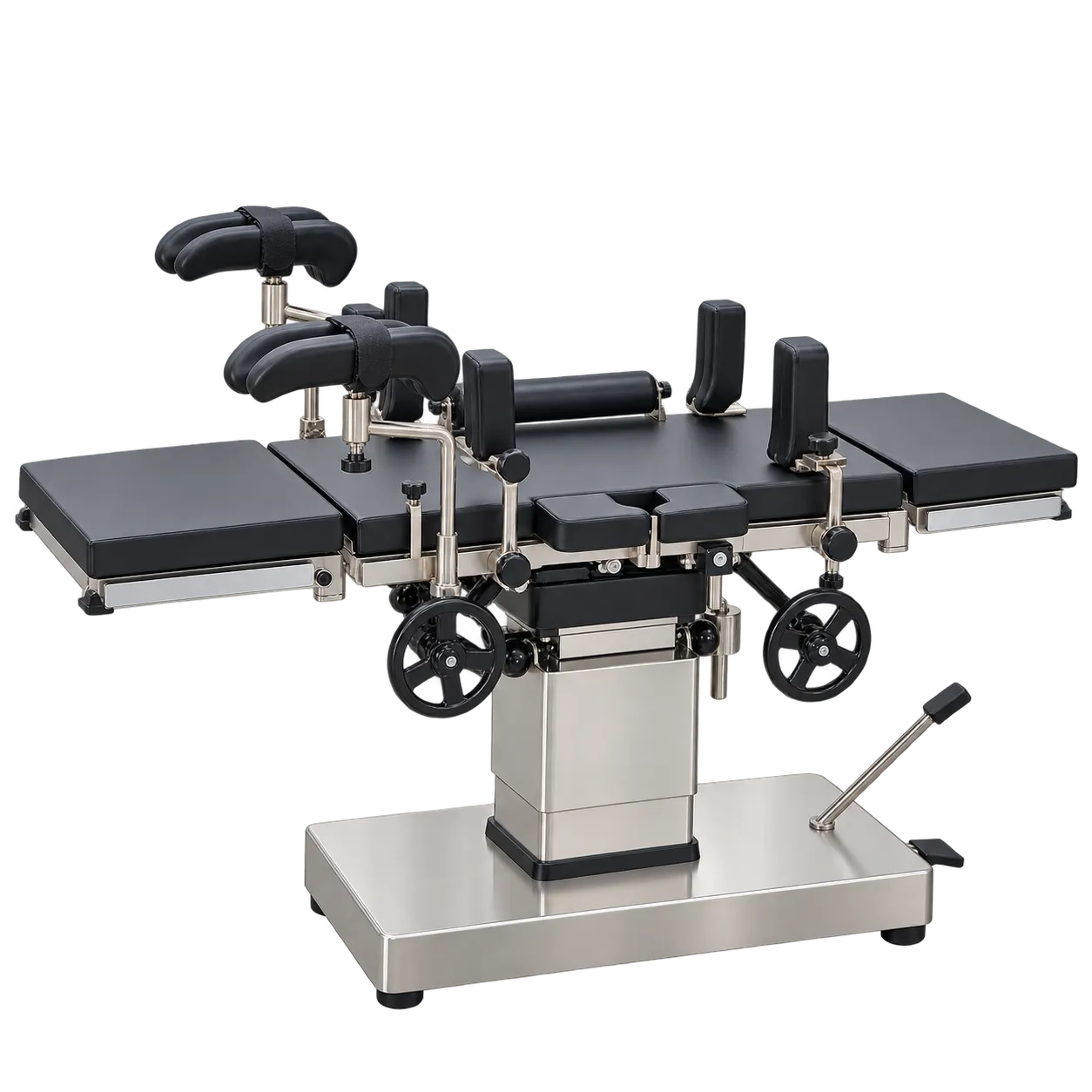
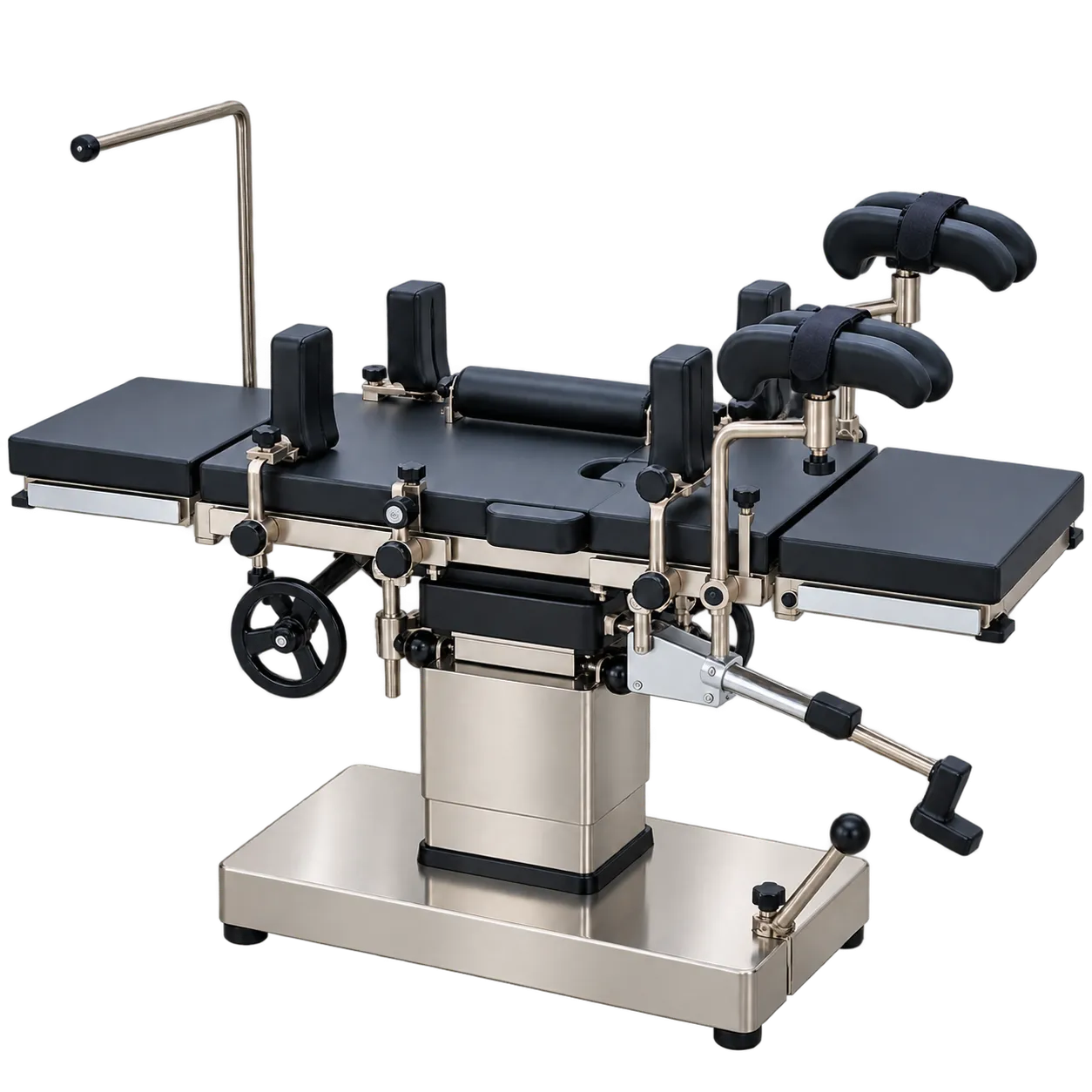
A table like this suits hospitals that want positioning without power, whether because supplies are unreliable or because a manual table serves as the theatre's fallback. Handwheels can give steady, controlled adjustment of tilt and section angles, and a hydraulic pedal lifts the patient without motors. That independence, however, demands time and effort during positioning, and staff who know the controls well. Training at handover, with the wheel functions labelled, helps avoid confusion during a case.
The accessories suit general theatre work. Knee crutches support lithotomy positioning for gynaecology, urology and obstetric procedures. The upright supports hold a patient on their side for renal or chest access, and the arm board serves supine cases such as abdominal surgery. At 2000 mm, the top shares the shortest length in Blackstone's table series with the HS-003F and HS-004F. Tall patients may therefore need head or leg extensions, if Blackstone offers them. Obstetric theatres, where emergencies arrive without warning, gain most from a table that needs no electricity.
Width and load deserve attention. At 480 mm, the top is narrow, and without a rated load nobody can confirm which patients it suits. Because the top's material is not stated, teams planning any imaging should wait for Blackstone's answer on radiolucency before booking fluoroscopy cases onto it. Medigear.uk gathers the load rating, tilt and section angles, top material, service needs and approved cleaning products from Blackstone.
It then passes this information to the theatre manager and the clinical engineers so that they can judge the table on complete information rather than a two-line sheet.