
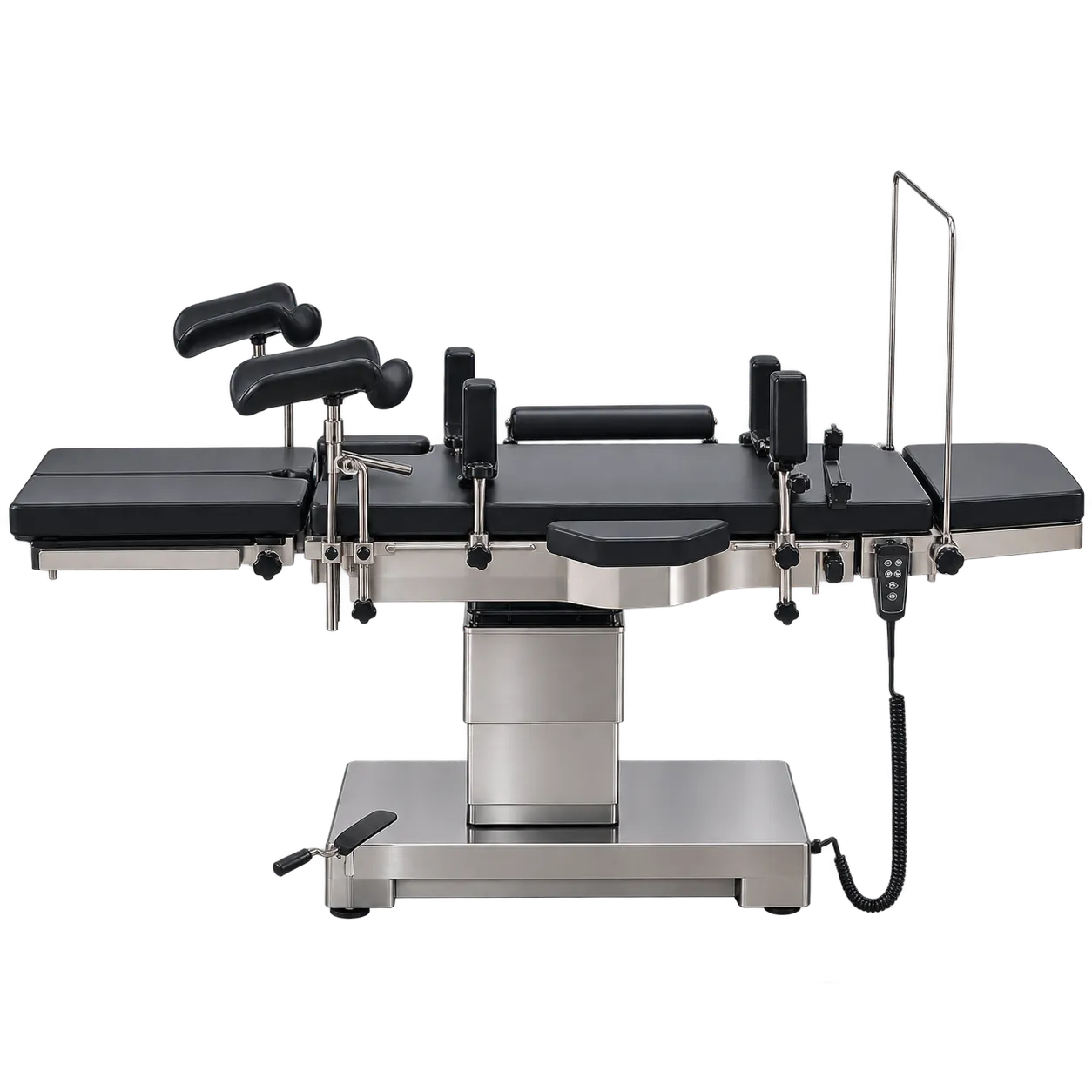
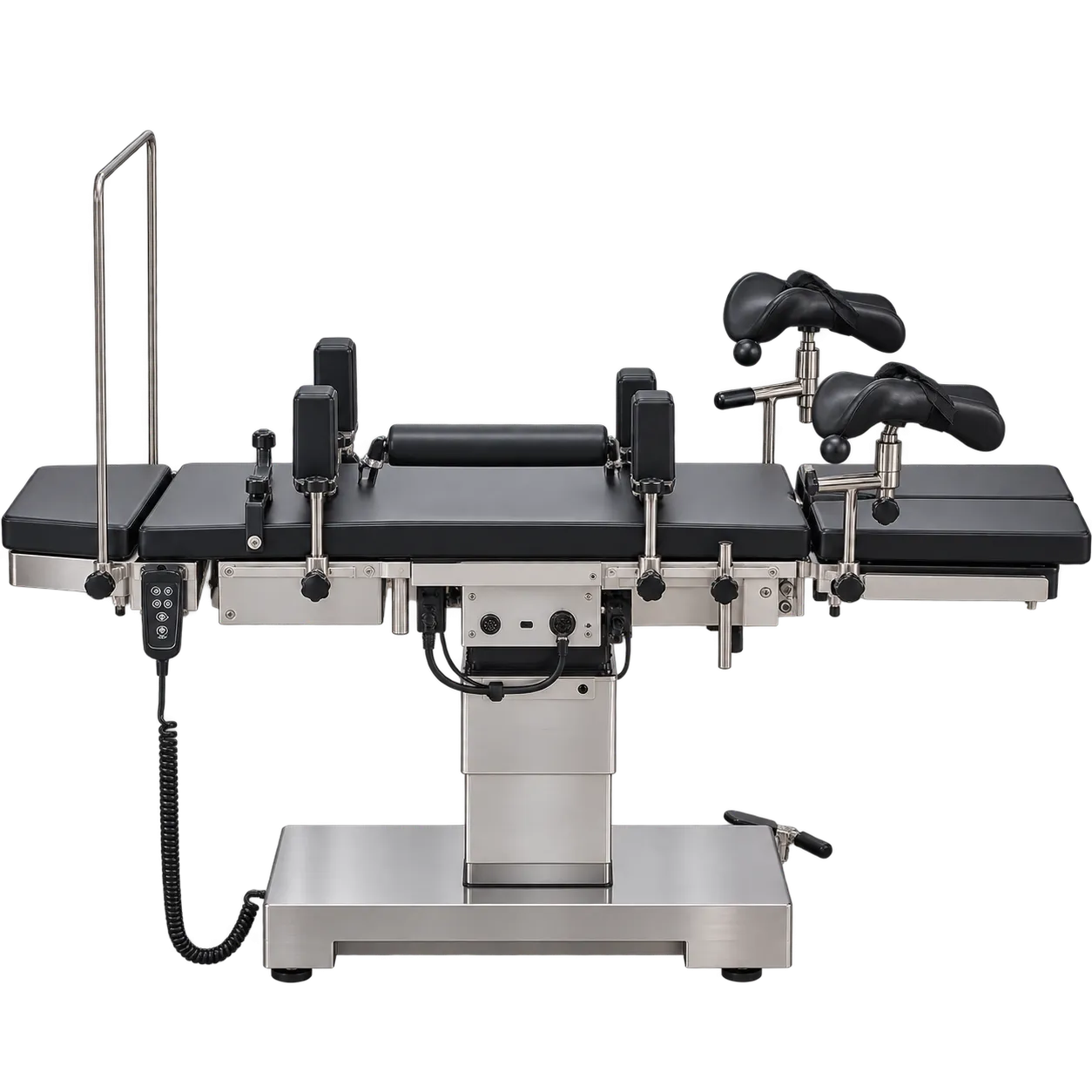
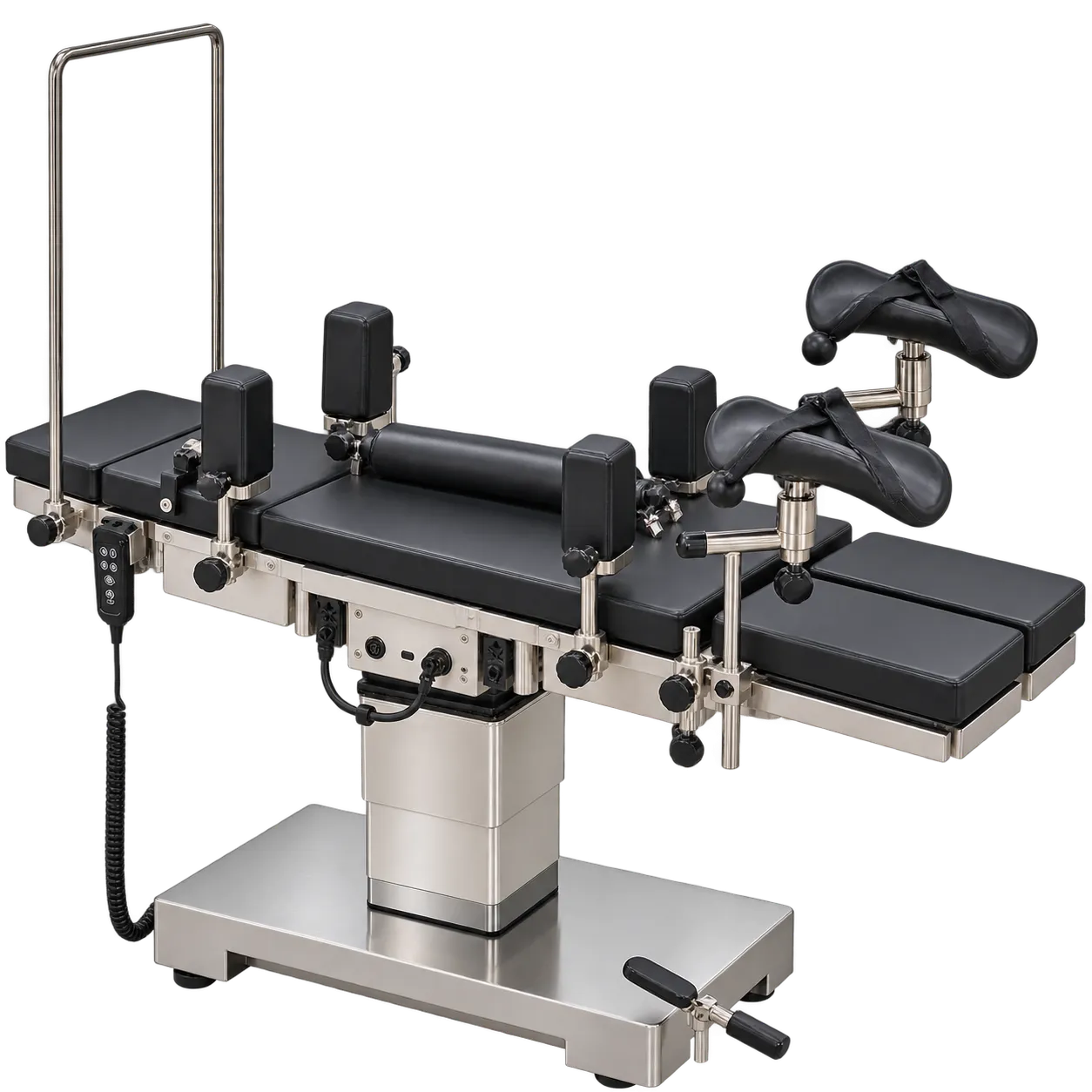
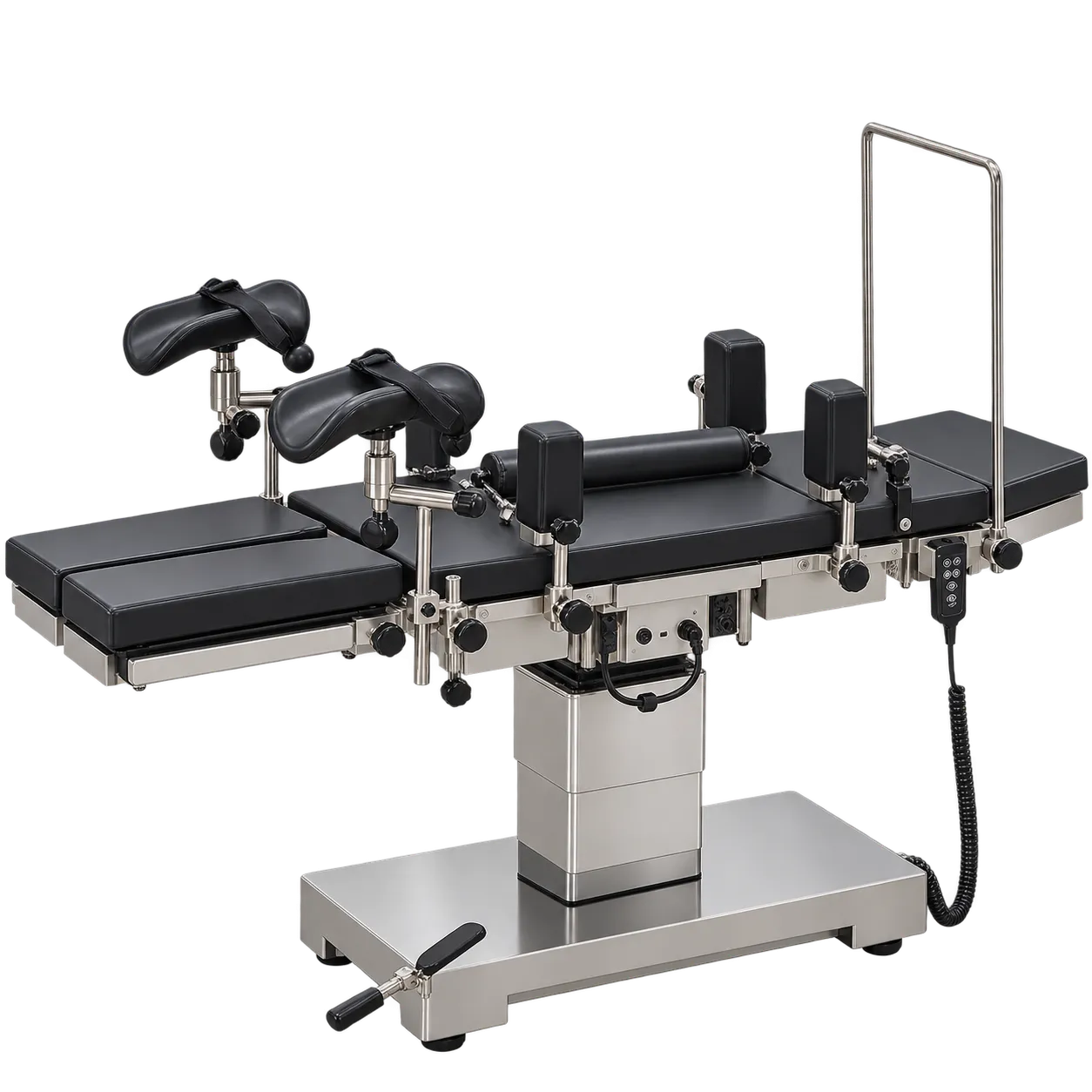
Without a slide or C-arm claim on its sheet, the HS-004F is best suited to theatres that do not image during surgery or that keep a separate table for imaging work. General surgery, gynaecology, urology, ENT and plastics lists often fit that description. The positioning accessories in the photograph cover lithotomy, lateral and supine positions for those specialities. If a list does need imaging now and then, Blackstone's confirmation of any radiolucent sections comes first.
Battery operation suits theatres where mains power is unreliable. It also helps where tables are moved between rooms and set up before a socket is reached, and it keeps cables off the floor during positioning. For a battery-powered operating table, the practical questions are simple. How long does one charge really last on a busy list? How quickly does it recharge overnight? What happens if the charge runs low during a case? Theatre teams should also know how long a flat battery takes to recover. Medigear.uk tests each of these.
Pressure care is where the polyurethane option could matter most. NICE guidance on pressure ulcers advises considering a high-specification foam theatre mattress, or an equivalent pressure-redistributing surface, for all adults undergoing surgery. Blackstone's polyurethane accessory is not stated to meet that description. Long operations raise the risk, and so do patients with diabetes or limited mobility.
The specifications of the standard pads and the optional item both need confirming before the table goes on a long- or high-risk list. Tissue viability nurses are well placed to review those details once Blackstone supplies them.