
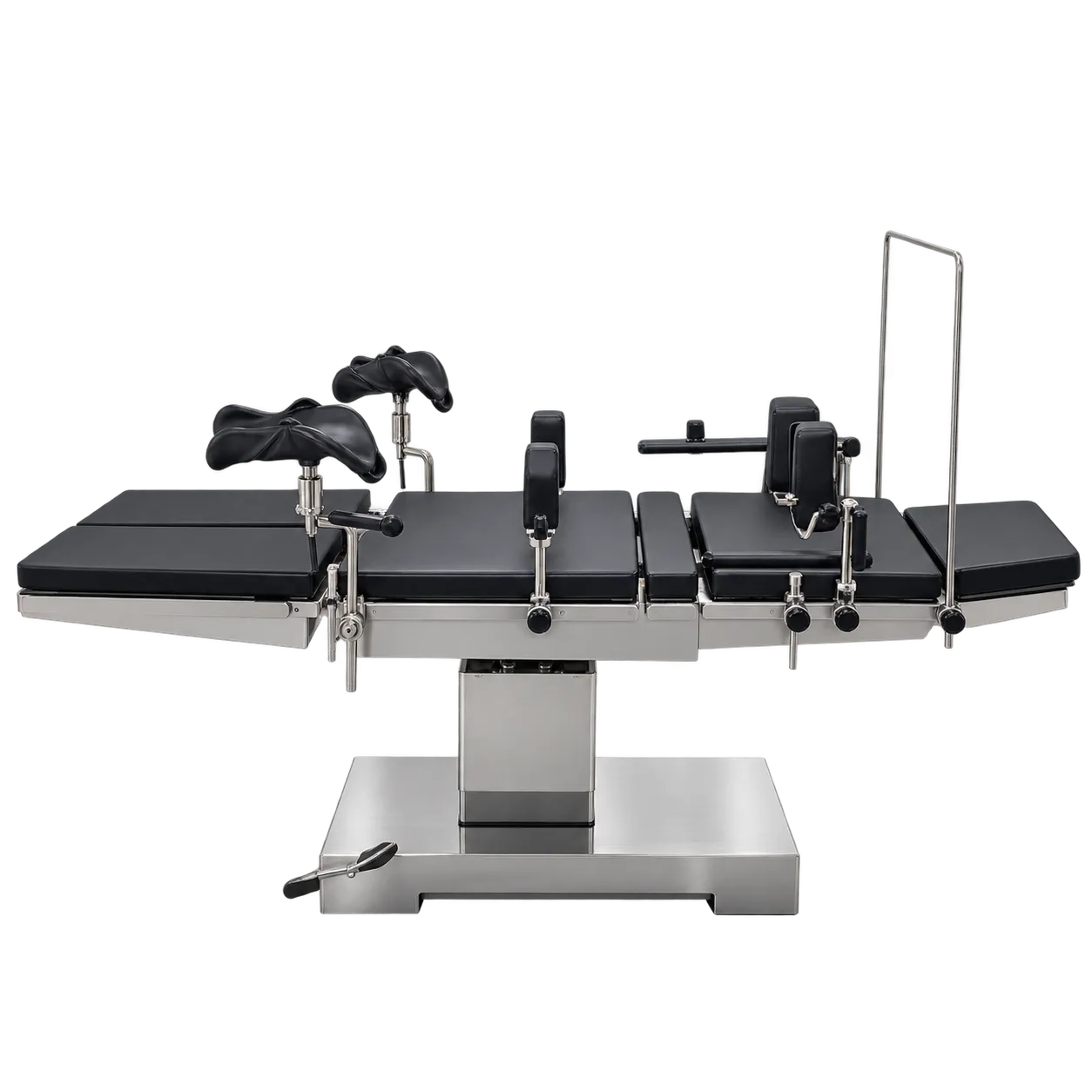
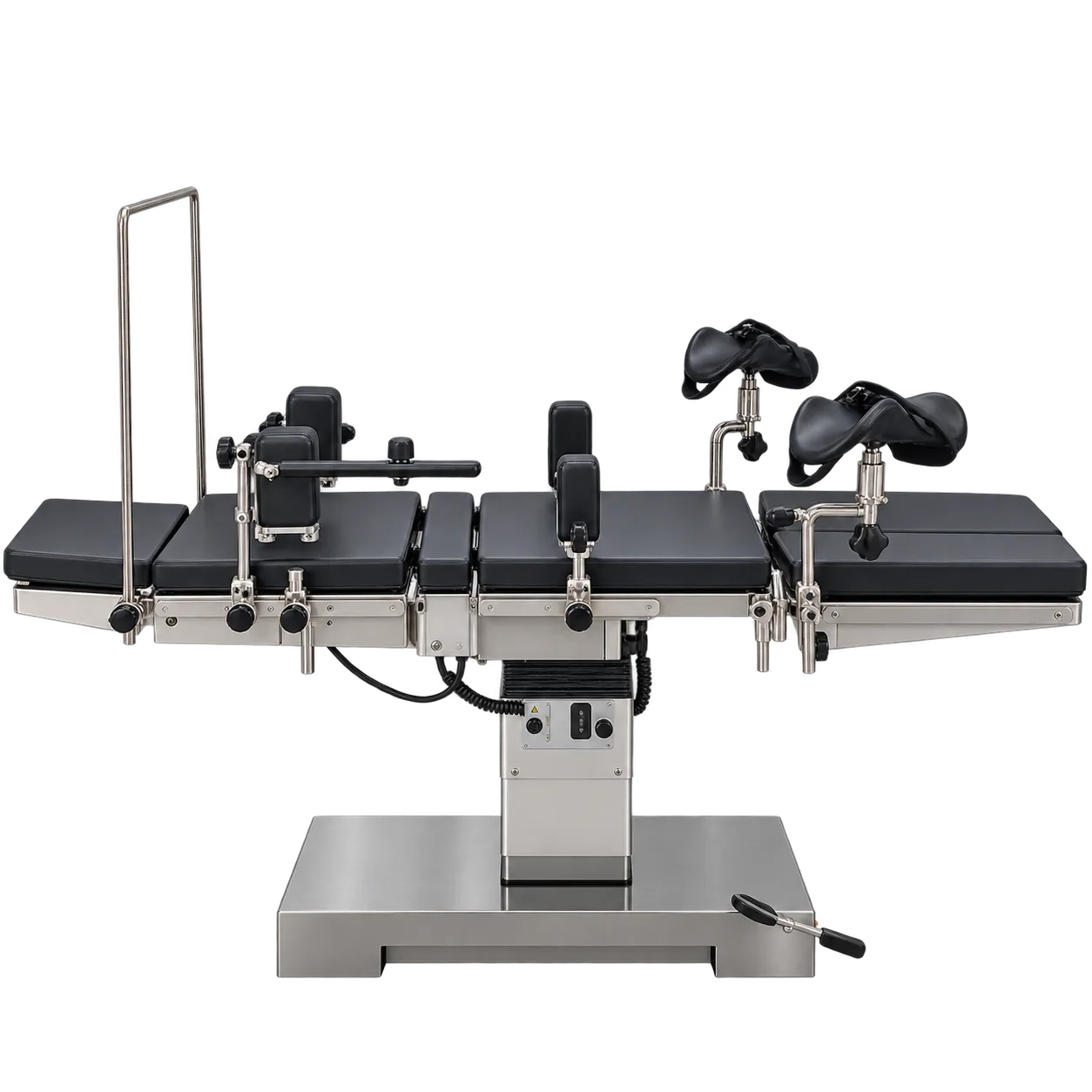
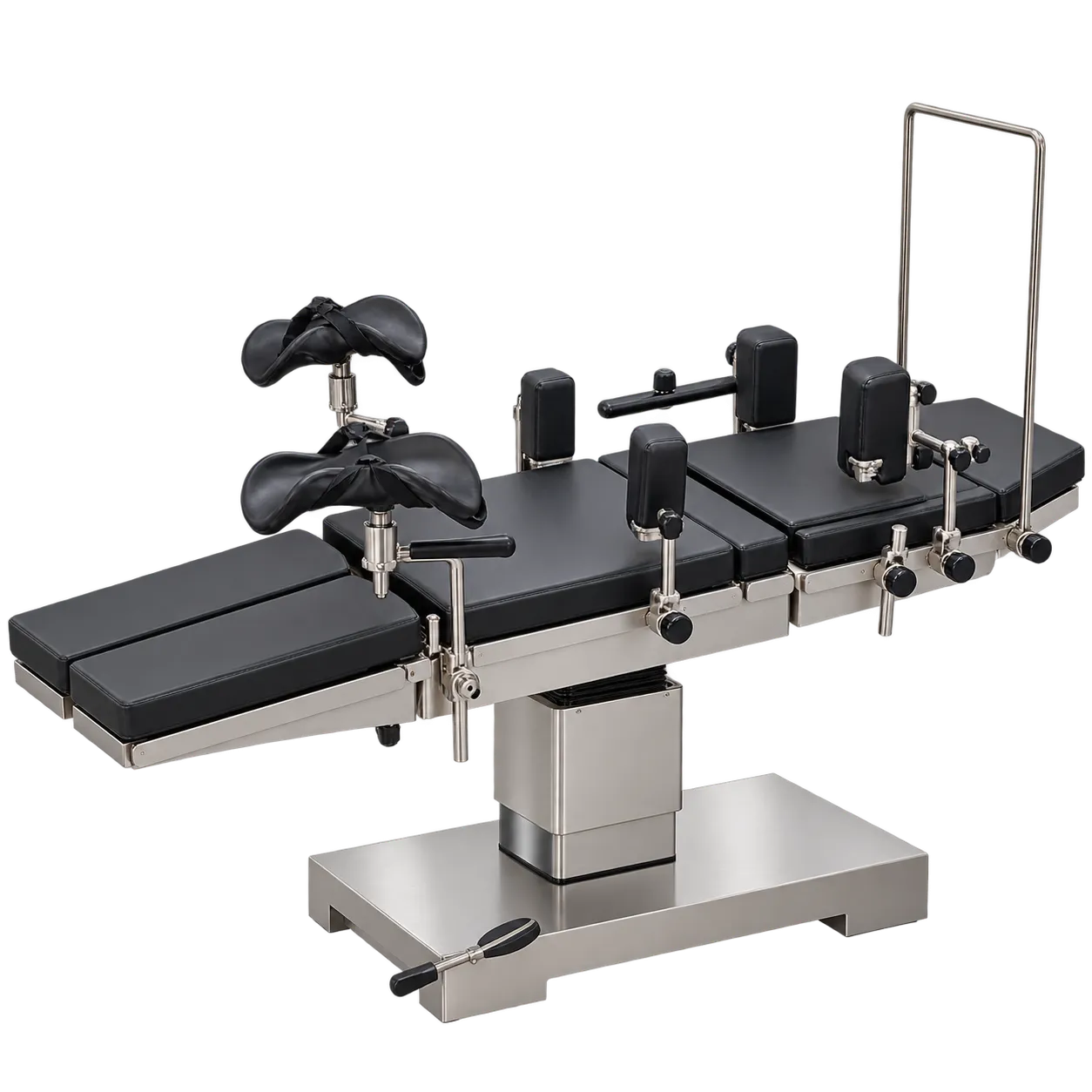
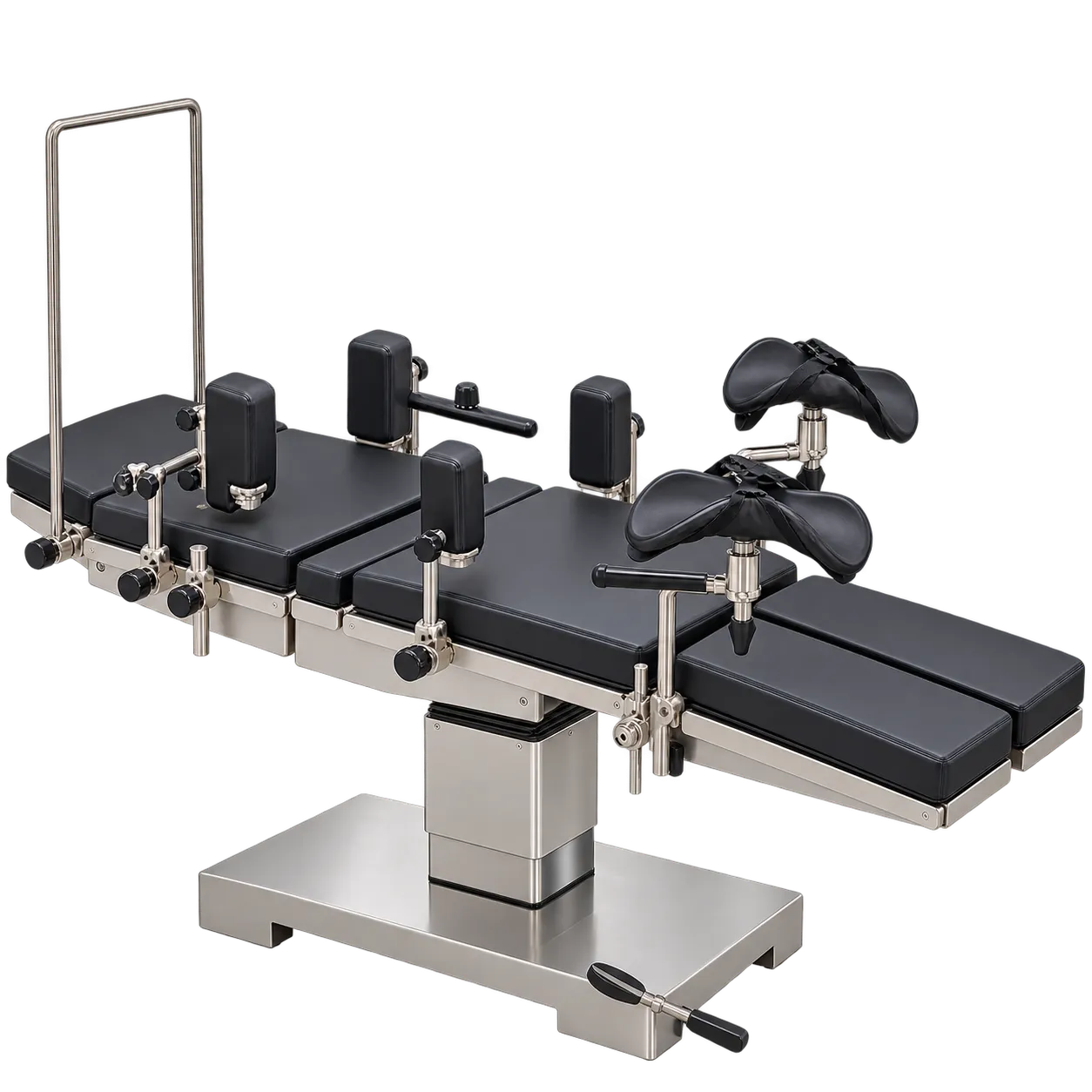
A universal operating table must cover the widest range of lists, and the accessories in the photograph reflect that. Leg holders support lithotomy positioning for gynaecology and urology. Lateral supports hold the patient on their side for renal or thoracic access, and an arm board extends the top for upper-limb procedures or intravenous access. With the slide and the C-arm clamp, the table can also serve orthopaedic and trauma lists that need imaging, provided the radiolucent areas are confirmed.
Its dimensions shape where it fits best. At 2000 mm, the top is 100 mm shorter than the HS-002F's, which matters for tall patients unless extensions are available. The 750 mm lowest setting is 40 mm higher than on Blackstone's other two tables. That may suit teams who operate standing, but less so surgeons who sit for fine work on the hand or face. The 260 mm lifting range is also the narrowest of the three, which limits how far the table can adapt to surgeons of different heights.
Choosing between the three Blackstone tables comes down to these trade-offs and to the figures the sheets leave out. Safe working load, tilt ranges and radiolucent areas matter for every theatre. For this model, the control arrangement and the question of mobility come first, because they decide how staff will use it day to day.
Medigear.uk gathers the answers from Blackstone and presents them to the theatre lead so that the tables can be compared on complete specifications rather than partial sheets.