
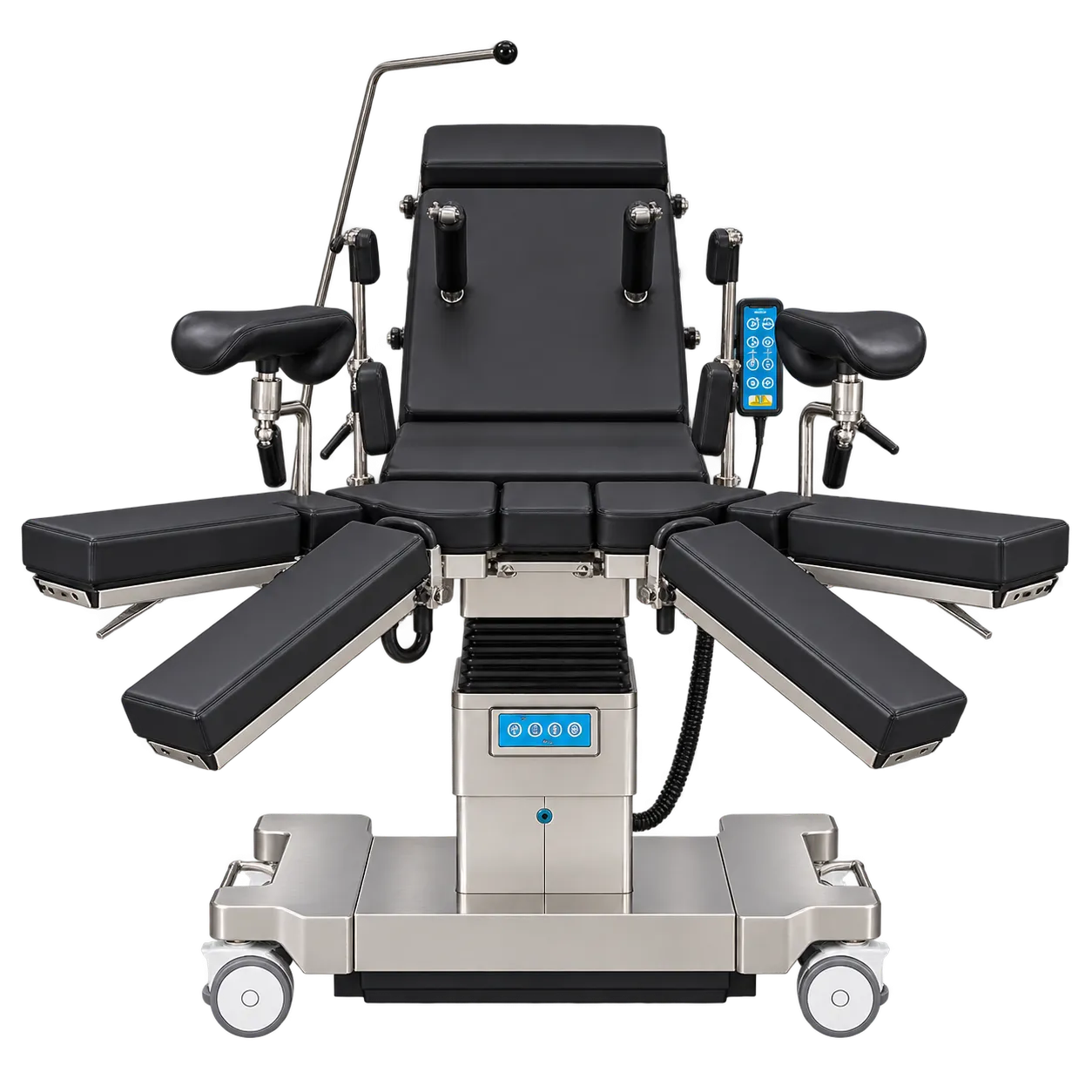
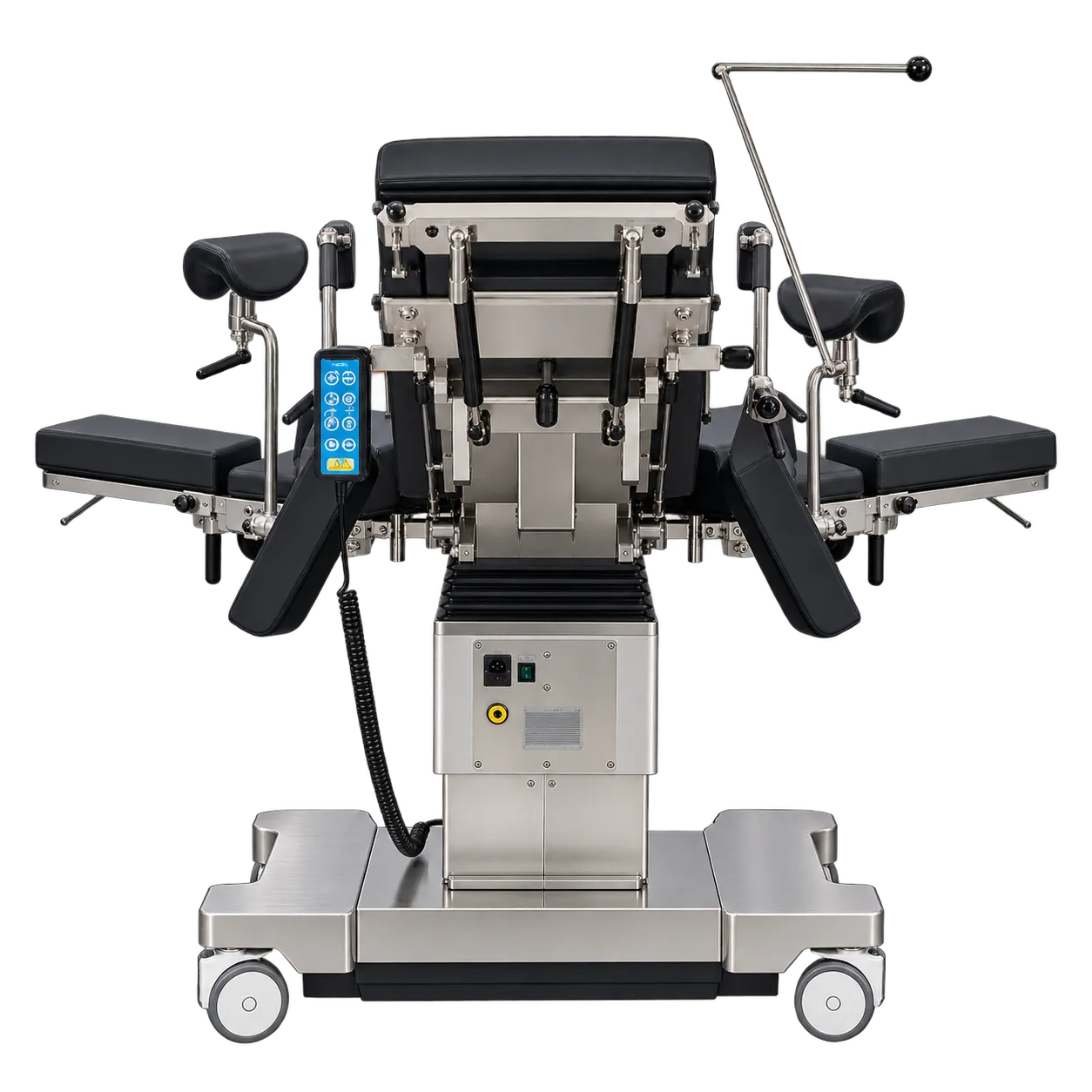
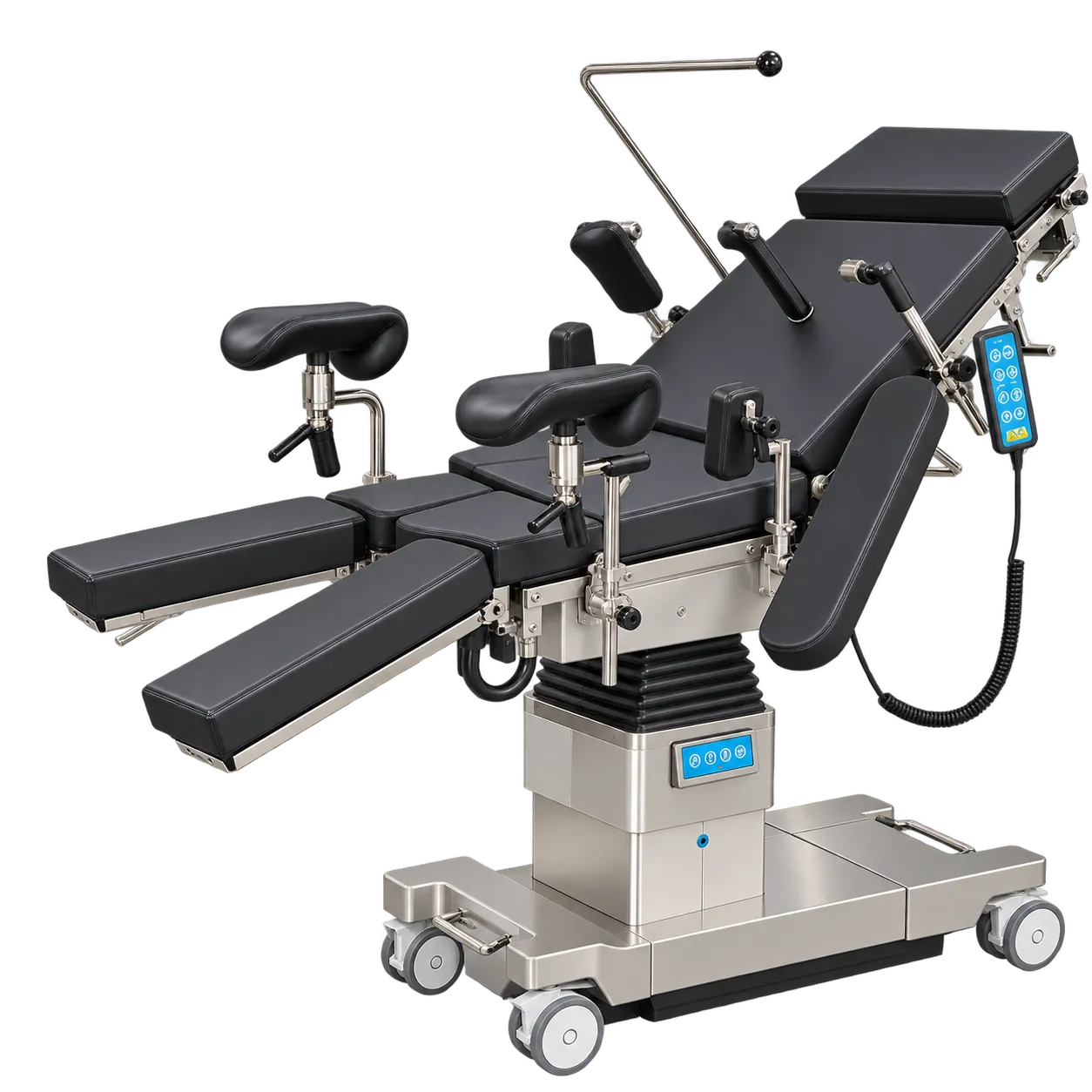
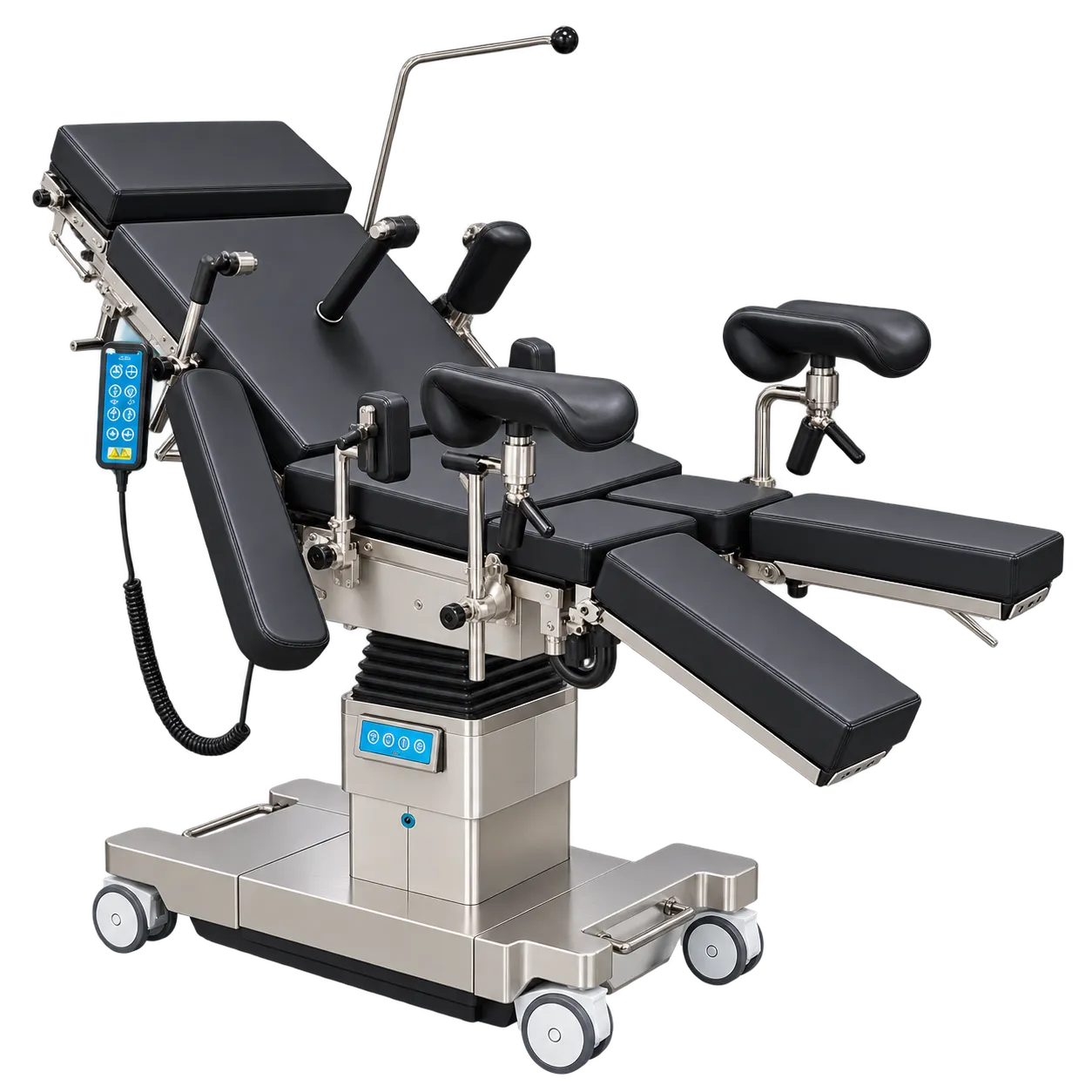
A mobile operating table suits departments that move tables between theatres, share one across a suite, or clear the floor for cleaning and other equipment. Castors of 12 cm roll more easily over lift joints and door strips than small wheels. Even so, the HS-002F's safe threshold rating is not stated. Once in position, the table has to hold firm during surgery, and the sheet does not describe how it locks.
The configuration in the photograph points to its clinical range. Split leg plates allow each leg to be positioned separately, which helps in hip, knee and lower-limb work. The leg holders support lithotomy positioning for gynaecological and urological access. A steeply raised back section can suit sitting positions, such as those used in some shoulder surgery. The 350 mm slide moves the patient along the top so a C-arm can reach the operative site. That matters in trauma fixation and spinal cases, where imaging is used throughout.
The 550 mm top offers a little more width across the shoulders and hips, but only the safe working load confirms which patients the table can take. Pressure care, mattress material, and positioning ranges also need confirming before choosing the table for a particular list. Staff moving the table between rooms should also know its weight, which the sheet leaves out.
Medigear.uk obtains the load rating, brake and threshold results, tilt ranges and radiolucency details from Blackstone. It passes them to the theatre lead and the medical engineering department, so the decision rests on complete information.