
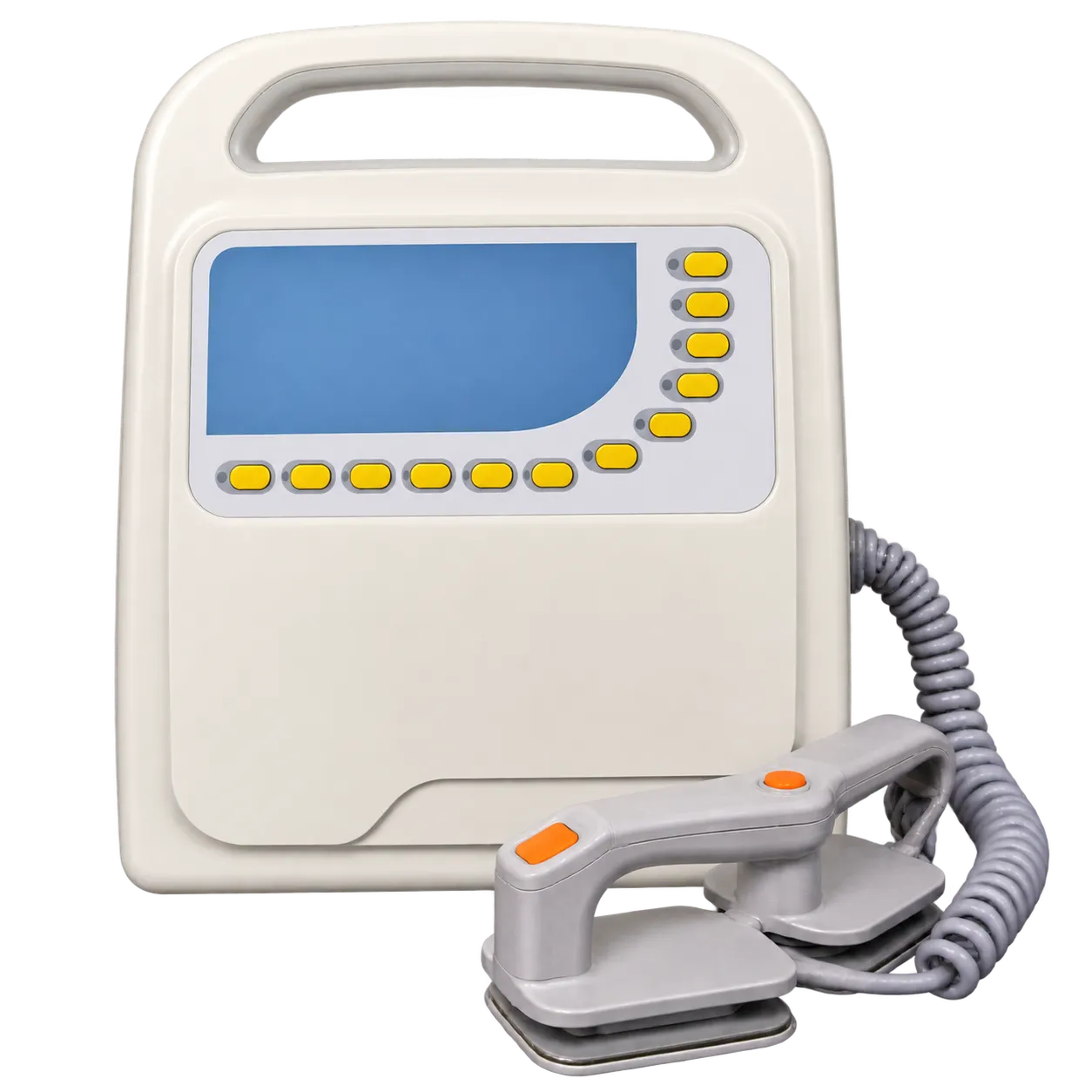
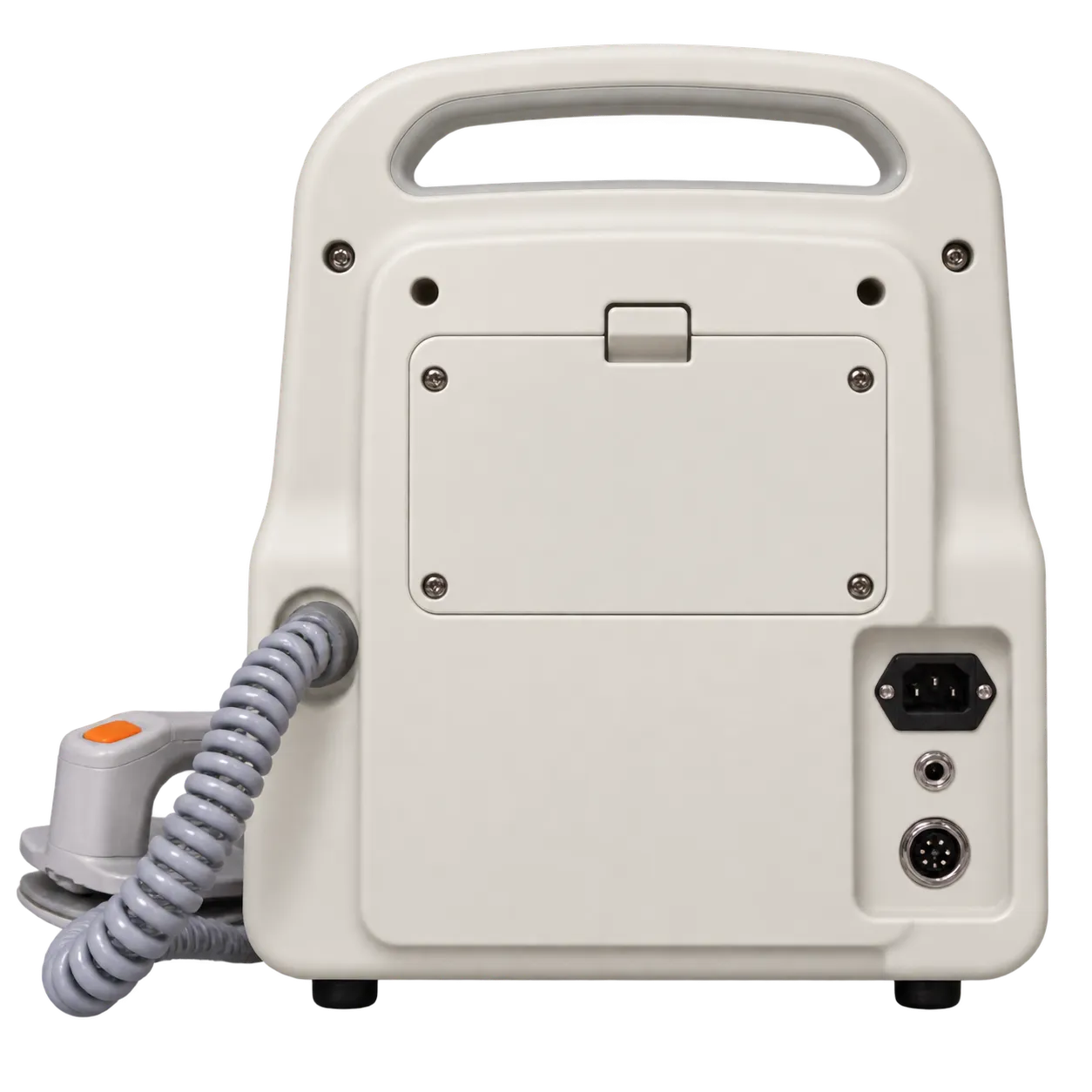
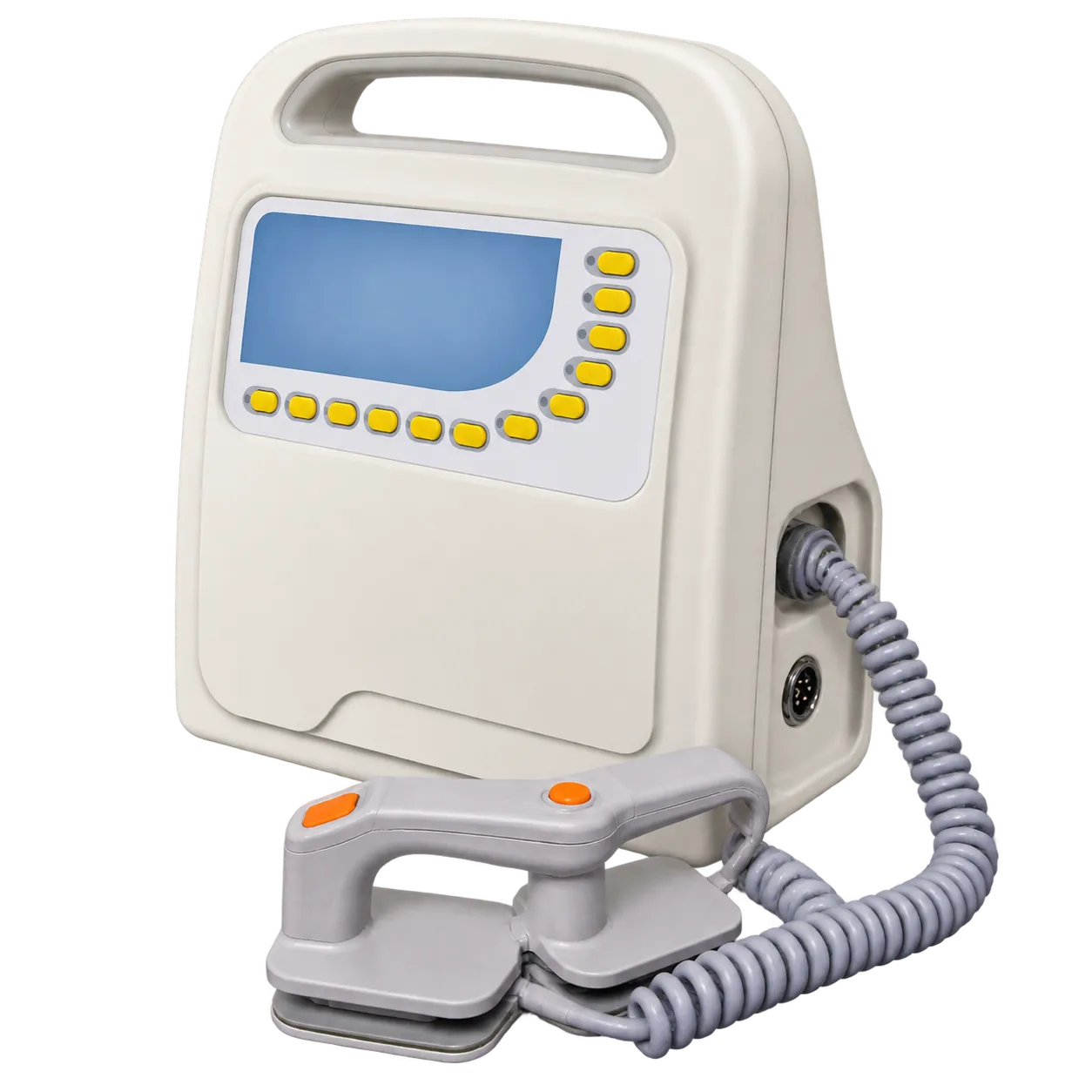
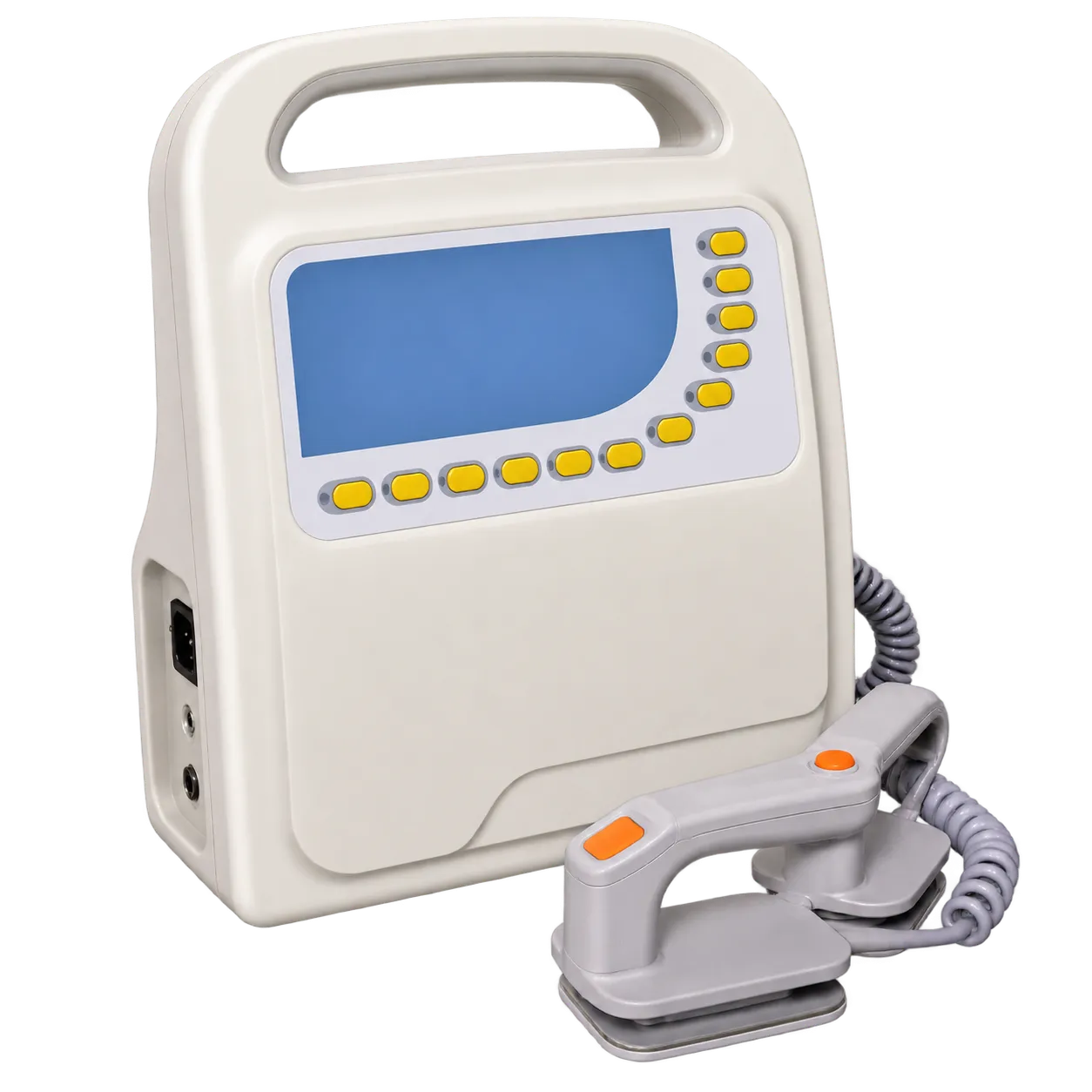
A monophasic defibrillator still works and still saves lives, and a great many remain in service worldwide. What has changed over that time is the evidence behind them. Biphasic waveforms terminate fibrillation more often on the first attempt, and do so at lower delivered energy, which in turn means less myocardial stunning afterwards, and resuscitation councils have recommended them for long enough now that monophasic units count as the exception rather than a genuine alternative. A department buying new equipment in Britain would find that difficult to justify, with a biphasic option available from the very same manufacturer.
The paediatric position is simpler still. Defibrillation in a child is calculated per kilogram, which needs energies well below twenty joules and paddles sized for a small chest. This machine has neither. No part of that amounts to a fault in an adult defibrillator. It does mean the unit cannot be the only one in a department that ever sees children, where the HS-001D covers both populations.
Where this sheet does better is the charge time. Under ten seconds to 360 joules is published here and nowhere on the biphasic sheet, and the interval between pressing charge and being able to shock is precisely the interval during which nobody is compressing the chest. That Blackstone states it on the older machine and omits it from the newer one is worth raising with the manufacturer directly.
Medigear.uk establishes the ECG specification, the battery endurance, and the conformity position before this monophasic defibrillator reaches a clinical area.