
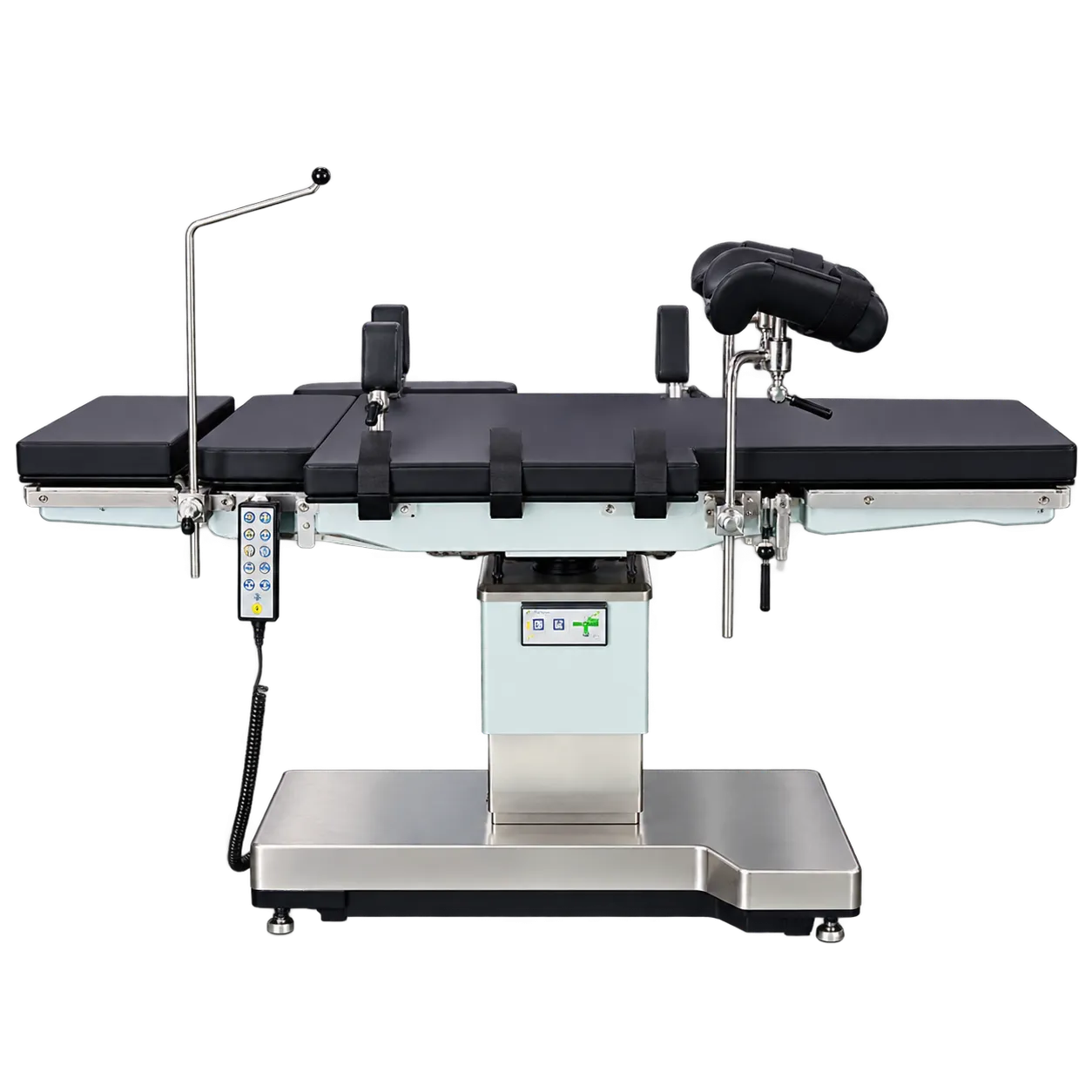
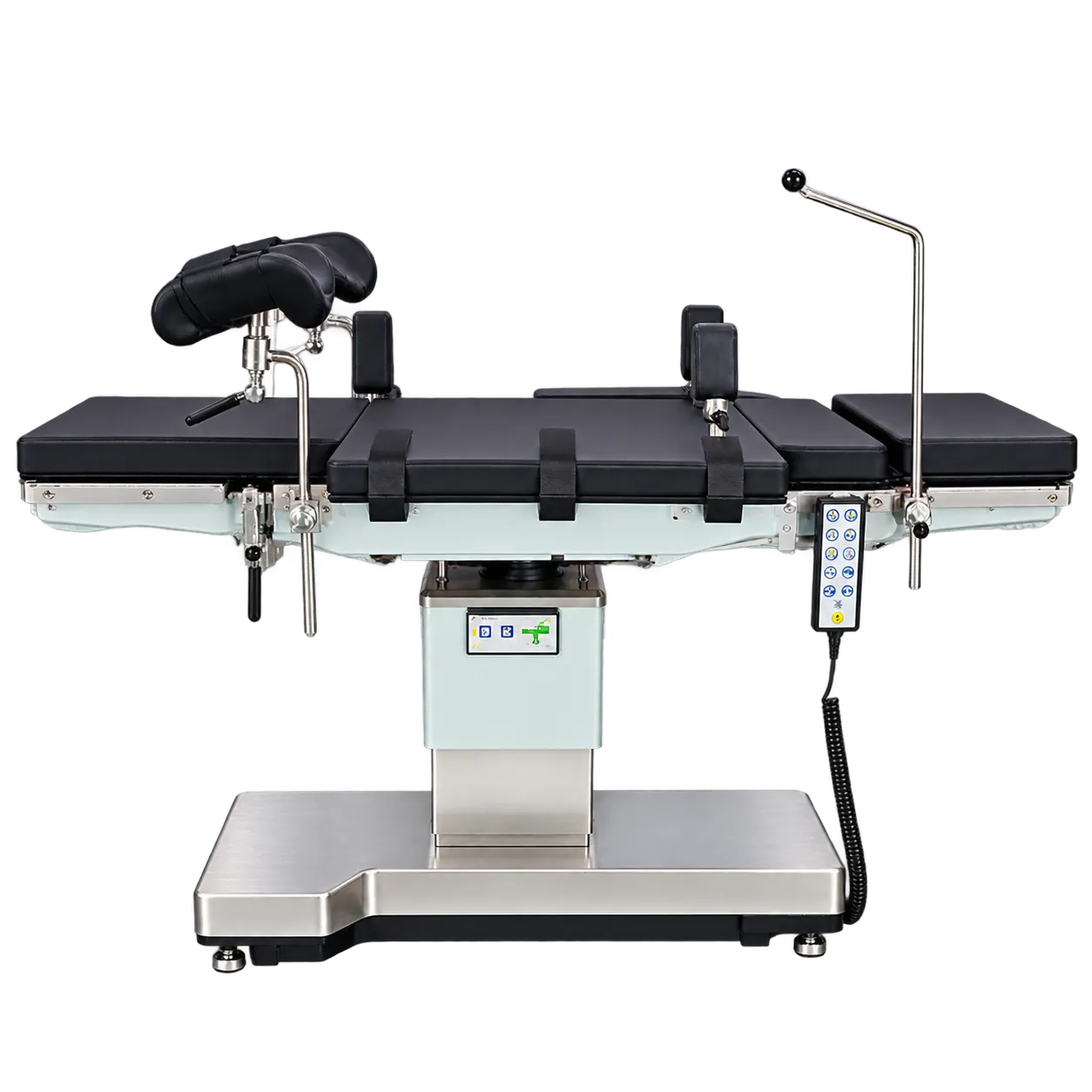
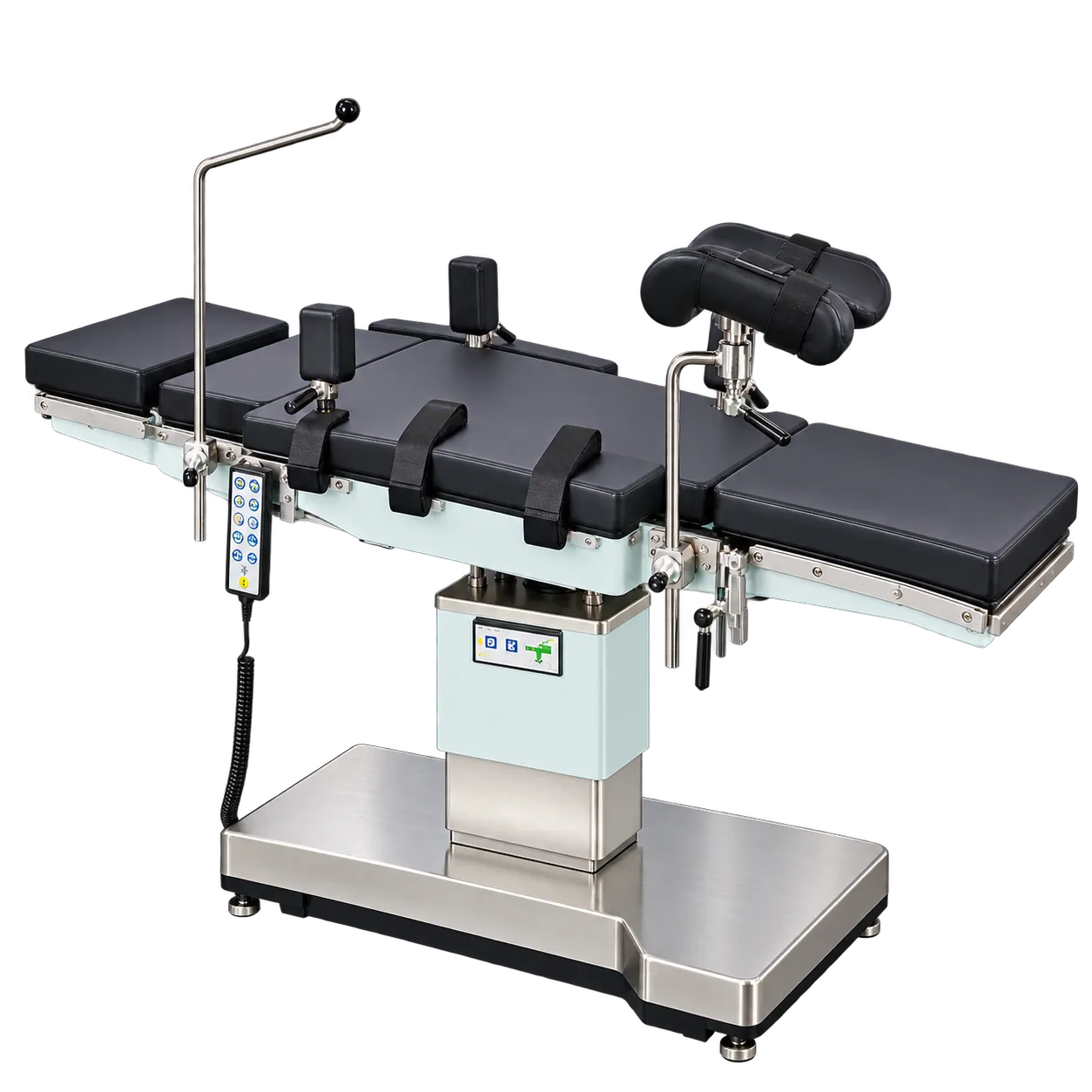
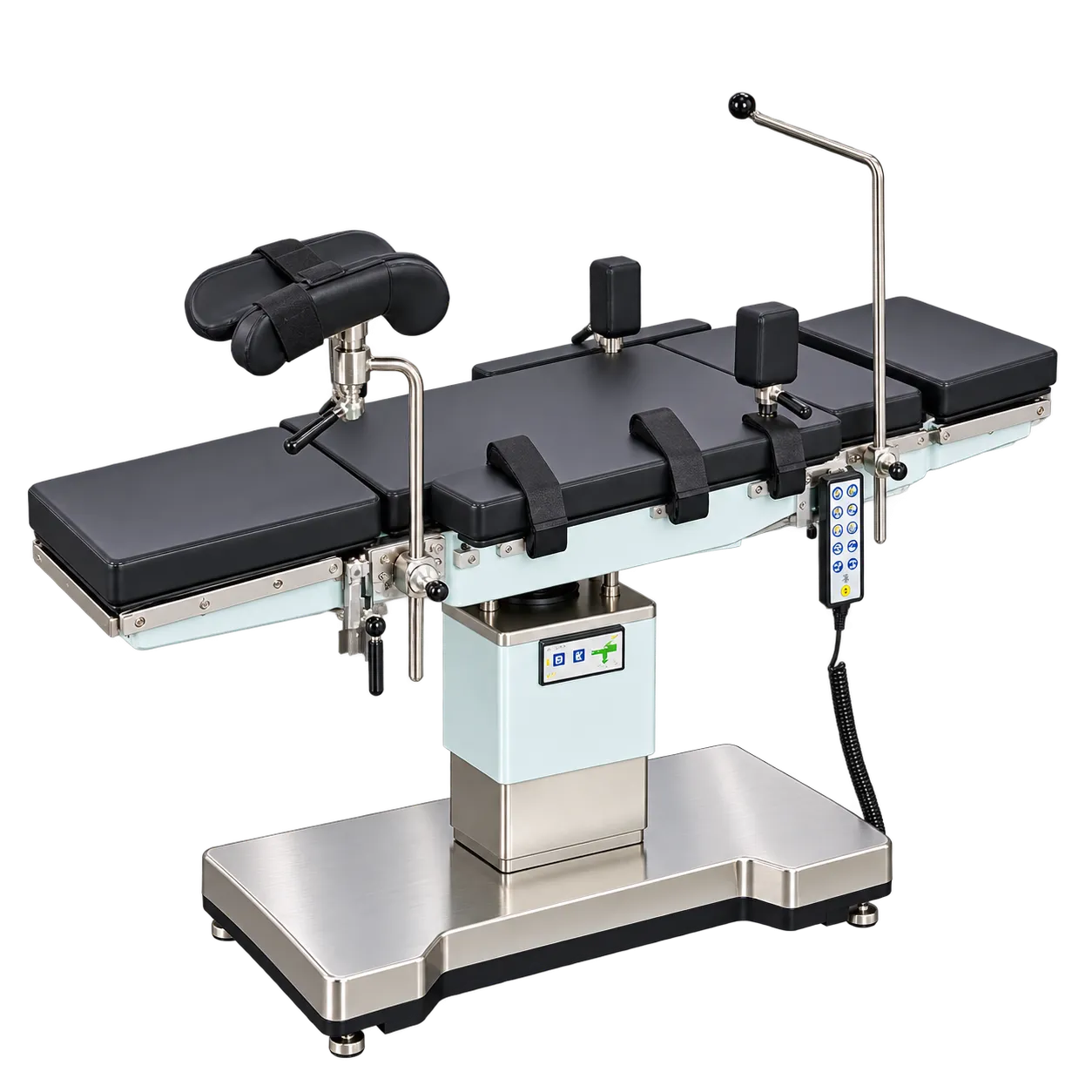
A powered table with a 300 mm slide and a C-arm is designed for general theatres that also image during surgery. Orthopaedic trauma fixation, spinal work, vascular procedures and urology all bring a C-arm to the table. The slide lets staff move the patient along the top so the column or base doesn't block the imaging arm. Whether that works for a given case depends on which sections are radiolucent. The sheet does not cover that point.
The electric drive and controls handle everyday positioning. The table can be raised or lowered by 350 mm to suit the surgical team's working height. The leg holder in the photograph points to lithotomy positioning for gynaecological and urological cases. The anaesthesia screen separates the sterile field from the anaesthetist at the head. Because the table has its own battery, staff can reposition it away from a socket, and Blackstone says one charge covers 50 to 80 cases.
Patient safety questions come first when choosing a table. The safe working load decides which patients it can take, including heavier patients. Theatres running bariatric lists should ask for the load rating first. The tilt ranges decide which positions are possible. Pressure care depends on the mattress, whose material and thickness are not given.
Medigear.uk obtains the load rating, the positioning ranges, the radiolucency details and the mattress specification from Blackstone. It then shares them with the theatre manager and the clinical engineering team before placing any order.